


Choosing between spiral and corrugated steel silos is a critical decision that directly impacts feed quality, operational efficiency, and long-term profitability. This technical guide, grounded in 15 years of field experience, provides an unbiased comparison of structural integrity, lifecycle costs, and material suitability to help feed mill operators avoid costly selection errors.
Structural Integrity: Seamless Body vs. Corrugated Panels
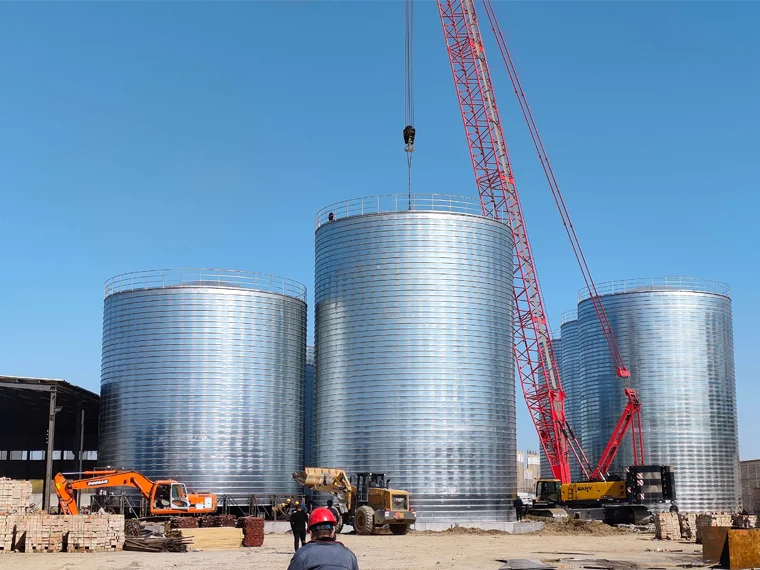
Spiral steel silos are manufactured using a continuous spiral crimping process that forms a smooth, seamless cylinder without horizontal welds. This design eliminates the leak risks inherent in bolted connections and provides uniform wall thickness, which is critical for resisting dynamic loads during feed loading and unloading. The smooth interior surface is particularly advantageous for high-moisture or sticky feed materials, such as distiller’s grains or wet corn, as it promotes first-in, first-out (FIFO) flow and prevents bridging or rat-holing—a common failure mode in corrugated silos.
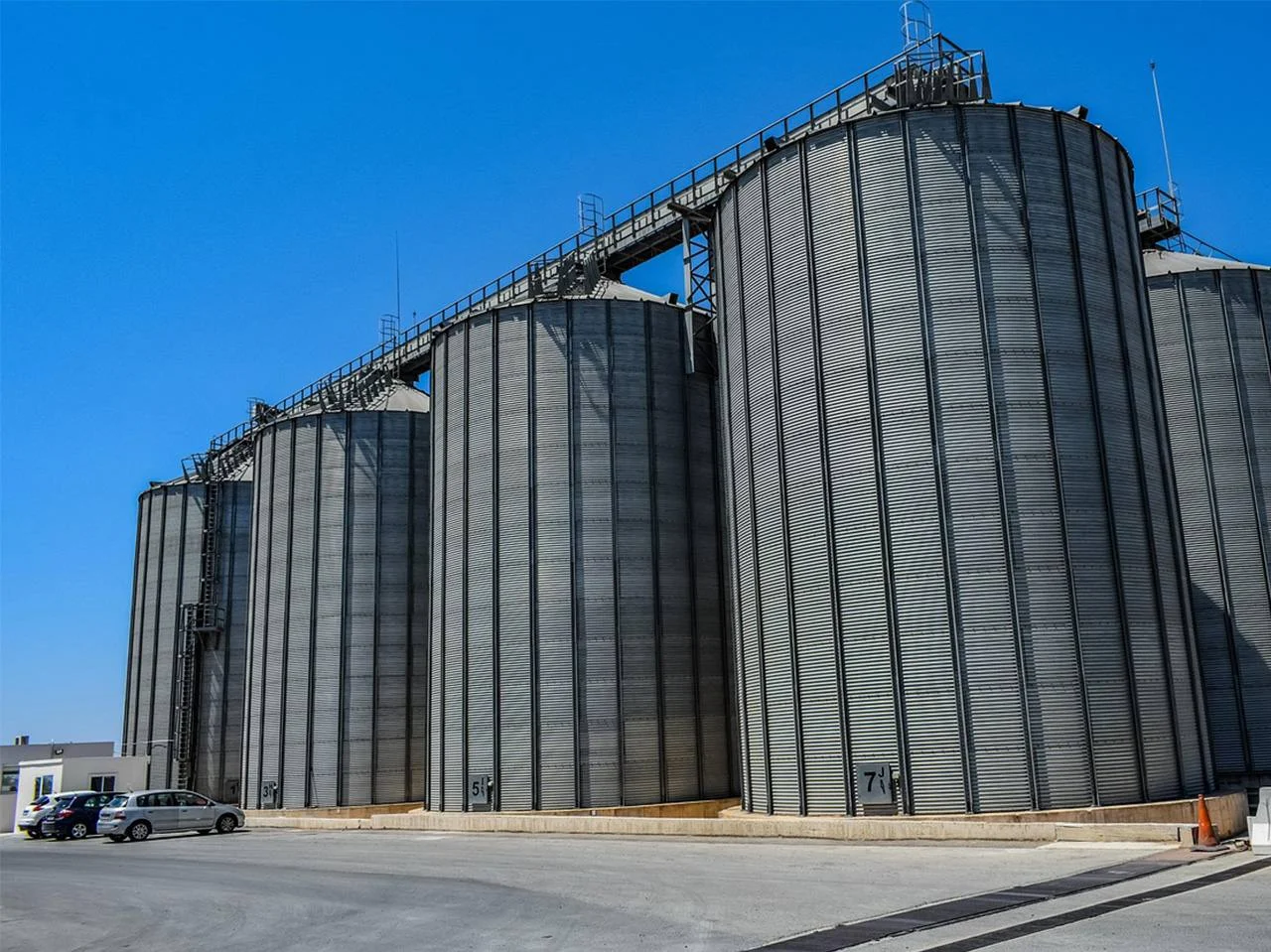
In contrast, corrugated steel silos are assembled from pre-formed, profiled panels that are bolted together. While the vertical ribs enhance the silo’s resistance to external pressure, the corrugated interior creates numerous recesses where feed particles can accumulate. Over time, this trapped material can lead to mold growth and pest infestation. For free-flowing dry grains like soybeans or wheat, corrugated silos offer adequate static storage performance. However, for the mixed feeds, additives, and high-protein meals common in the feed industry, flow efficiency typically drops by 15–20%, leading to incomplete discharge and increased energy consumption.
Cost Analysis: From Initial Investment to Total Lifecycle Value
Corrugated steel silos generally have a 20–30% lower initial investment compared to spiral silos of the same capacity. This cost advantage comes from the simple panel stamping process and rapid on-site bolted assembly. However, their design life is typically only 15–20 years, and they require joint sealant replacement and anti-corrosion coating maintenance every 3–5 years. These cumulative maintenance costs can reach up to 40% of the initial investment. Spiral silos, while carrying a 30–50% higher upfront cost, boast a design life of over 30 years and require almost no routine sealing maintenance. For a 1,000-tonne feed storage project analyzed over a 20-year operational period, the total cost of ownership (TCO) for a spiral silo is on average 18–25% lower than for a corrugated silo, depending on local labor and material prices.
Maintenance Cycles and Downtime Costs
The bolted joints of corrugated silos are a primary weak point. Under the combined effects of temperature fluctuations and material pressure, these bolts can loosen, leading to dust leakage and structural micro-deformation. A comprehensive annual inspection is mandatory, with a full re-torquing of bolts and seal replacement required every five years. In contrast, spiral silos, having no horizontal seams, present an extremely low risk of leakage. They only require a visual check of the external anti-corrosion coating every 3–5 years, reducing maintenance-related downtime by over 70%.
Material Suitability Dictates the Decision
When storing high-moisture, high-protein, or sugar-rich feeds—such as extruded feed or whey powder—the smooth interior wall of a spiral silo is the only reliable choice. For dry, uniformly sized grains under extremely tight budget constraints, a corrugated silo can serve as a short-term solution. However, it is critical to note that the internal ridges of corrugated panels can accelerate material breakage. For feeds requiring high particle integrity, such as raw materials before pelleting, this can increase the breakage rate by 2–5%.
Key Takeaways
- Key Data: Spiral silos offer 15–20% higher material flow efficiency and 18–25% lower Total Cost of Ownership (TCO) over a 20-year period compared to corrugated silos.
- Best Practice: Prioritize spiral silos for high-moisture or sticky feed materials. For dry grains with a strict budget, consider corrugated silos but plan for future upgrades.
- Watch Out For: The bolted joints of corrugated silos are primary failure points. A rigorous annual inspection protocol is essential to prevent a single leak from spoiling the entire batch of stored feed.
- Pro Tip: When planning for future capacity expansion, spiral silos are far more adaptable. They can be extended vertically by adding ring sections, whereas corrugated silos often require costly dismantling and replacement with a larger diameter unit.
- Bottom Line: For feed mill operators focused on long-term reliability, product quality, and minimized operational risk, the higher initial cost of a spiral silo is almost always justified by its superior performance and lower lifetime costs.
Construction Flexibility: Site Conditions and Future Expansion
The modular design of corrugated silos offers a distinct advantage in remote or logistically constrained areas. All components can be shipped in standard containers, and on-site assembly requires only lifting equipment and bolt wrenches. However, this advantage diminishes for large-scale projects exceeding 3,000 tonnes per silo, as the sheer number of bolted connections increases installation time and introduces quality control risks. Spiral silos require specialized spiral-forming equipment, either on-site or in a factory, and have specific requirements for site leveling and power supply. However, their continuous body can be built to any height, making them ideal for feed mills that anticipate future expansion. For example, a 500-tonne spiral silo can be later expanded to 800 tonnes by adding more rings, while expanding a corrugated silo typically requires removing the roof and replacing the entire body with a larger diameter—a far more expensive and disruptive process.
Frequently Asked Questions
Q: Does the "seamless" design of a spiral silo mean it requires absolutely no sealing treatment?
A: Not entirely. While the spiral crimp eliminates horizontal welds, the crimp itself has microscopic capillary gaps. For storing extremely fine powders like fishmeal or premixes, we recommend applying a food-grade sealant to the interior of the crimp. However, compared to the hundreds of bolt holes and panel joints in a corrugated silo, a spiral silo has over 90% fewer potential leak points, and a single sealing application can last over 10 years. For standard pellet feeds, the crimp gap is negligible and does not cause leakage or pest ingress.
Q: If my feed mill plans to relocate within 5 years, should I choose the cheaper corrugated silo?
A: This is a common but costly misconception. While corrugated silos have a lower initial cost, they are extremely difficult to dismantle and re-erect. Bolted connections are prone to deformation and loss during disassembly, and the re-assembled structure often suffers significantly reduced sealing performance, typically requiring 30–50% of seals and bolts to be replaced. A spiral silo, under the supervision of a professional team, can be cut into sections and re-welded with a recovery rate of over 90%. If relocation is a certainty, consider renting storage or using a fully bolted, flat-bottom corrugated silo designed for disassembly, but be sure to include the dismantling cost—which can reach 60–80% of the initial investment—in your total budget.
Q: How do the fire and explosion resistance properties of these two silo types compare?
A: Both silo types are made of steel, which is non-combustible. Their fire resistance depends on external coatings and internal dust control. The smooth interior of a spiral silo inhibits dust accumulation, reducing a primary condition for dust explosions. The recessed areas in corrugated silos are high-risk zones for dust buildup, requiring more frequent and thorough cleaning. While both can be equipped with explosion venting panels, the spiral silo’s geometry inherently provides a lower risk of dust accumulation, making it the safer choice for handling combustible feed dusts.
Q: What is the typical lead time for delivery and installation of a spiral vs. corrugated silo?
A: For a standard 1,000-tonne silo, a corrugated silo can often be delivered and installed in 4–6 weeks due to its modular, off-the-shelf panel design. A spiral silo, requiring specialized equipment and on-site forming, typically has a lead time of 8–12 weeks. However, the installation time for the spiral silo is generally shorter (1–2 weeks for the body) compared to the bolted assembly of a corrugated silo, which can take 3–4 weeks for a large unit. The total project timeline should consider both manufacturing and installation phases.
Q: Can either silo type be used for storing liquid feed ingredients or high-moisture byproducts?
A: For liquid or semi-solid materials like molasses or wet distiller’s grains, a spiral silo is the vastly superior option. Its welded or crimped continuous body provides the necessary liquid-tightness. Corrugated silos are fundamentally unsuited for liquid storage because their bolted joints cannot maintain a liquid seal under hydrostatic pressure, leading to immediate and severe leakage. Only spiral or welded steel silos should be considered for any feed material with a moisture content above 18%.
Need expert manxingsilo solutions for your feed storage project?
We provide professional design, manufacturing, and installation services for bulk storage and material handling systems worldwide. Our team has over 15 years of experience helping feed mills select the optimal silo technology for their specific materials and budget.
Get a Free Technical Consultation →