


For cooperative farms requiring long-term, large-scale grain storage, concrete silos offer a strategically superior alternative to steel bins, delivering unmatched structural strength, exceptional grain preservation, and drastically lower lifetime maintenance costs. This in-depth guide explores the core value, design considerations, and cost-efficiency of concrete silos in a cooperative farming context, empowering farm managers to make a sound storage investment that protects collective assets for decades.
Why Cooperative Farms Need Concrete Silos: Durability Meets Economies of Scale
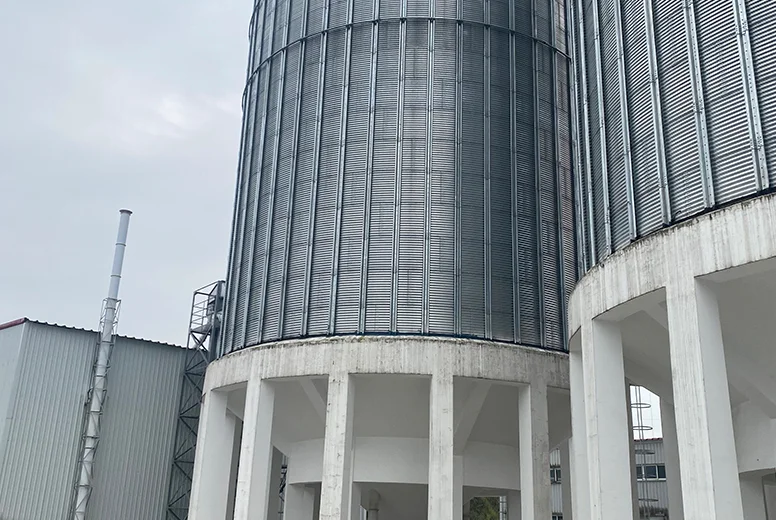
Cooperative farms face the unique challenge of consolidating storage from multiple members, often handling diverse crops in large volumes. Unlike individual operations, a cooperative’s storage infrastructure must guarantee long-term reliability, operational ease, and preservation of shared capital. Concrete silos, with their monolithic cast-in-place structure, are engineered to withstand extreme weather, seismic events, and significant thermal fluctuations. Their design service life routinely exceeds 50 years—far surpassing the 20-30 year lifespan typical of standard steel bins.
Furthermore, concrete’s inherent thermal mass helps stabilize internal temperatures, dramatically reducing the risk of condensation caused by daily temperature swings. This directly lowers grain spoilage rates from mold and moisture migration. For a cooperative, this “invest once, benefit for generations” model translates into a significantly lower cost per ton stored over the full lifecycle, making it a financially prudent choice for long-term asset management.
Core Advantages of Concrete Silos: Beyond Raw Strength
The advantages of concrete silos for cooperative farms extend far beyond mere structural robustness. Their superior airtightness and customizable design provide the technical foundation for managing multiple grain varieties and large volumes with precision.
Superior Grain Preservation and Pest Control
Concrete silos achieve a level of airtightness that is difficult to match with spiral-wound or bolted steel bins. When paired with professional aeration and fumigation systems, the sealed environment can maintain stable low-oxygen or high-CO₂ atmospheres, effectively suppressing insect reproduction. Additionally, concrete’s low thermal conductivity minimizes internal temperature fluctuations, slowing grain aging and preserving quality. For cooperatives storing premium crops like seed grain or high-value specialty grains, this preservation capability directly enhances market premiums and profitability.
Minimal Maintenance and Superior Corrosion Resistance
The biggest operational headache for steel bins is corrosion at weld joints or bolted connections, especially in high-humidity or coastal environments. Concrete silos are immune to metal fatigue and electrochemical corrosion. They require no periodic repainting, rust-proofing, or sealant replacement. For a cooperative, this eliminates tens of thousands of dollars in annual external maintenance costs and reduces downtime associated with repairs, freeing up capital and labor for core farming activities.
Key Takeaways
- Key Data: Concrete silos have a design service life of 50+ years, compared to 20-30 years for standard steel bins. Full lifecycle costs can be 30-40% lower.
- Best Practice: For new cooperative projects, prioritize the “slip-form” casting method. It shortens construction time and creates seamless, leak-free walls that maximize airtightness.
- Watch Out For: Concrete silos have significant dead weight, placing stringent demands on foundation design. Always conduct a detailed geotechnical survey to prevent differential settlement, which can cause tilting or cracking.
- Pro Tip: When planning multiple storage compartments, integrate a central control system from the start. Real-time temperature and humidity monitoring is far more effective when designed into the silo’s core architecture.
- Bottom Line: For a cooperative with a 20+ year planning horizon, the lower total cost of ownership and superior grain quality preservation of concrete silos make them the most strategic long-term investment. Related: Flat bottom silo for industrial use >
Application Scenarios: From Single Storage to Multi-Crop Management
The modular and compartmentalized design of concrete silos makes them exceptionally adaptable to the complex inventory needs of a cooperative. By constructing multiple independent bins within a single silo group, a farm can simultaneously store wheat, corn, soybeans, and other crops without risk of cross-contamination. Paired with bottom cone hoppers and a network of conveying tunnels, this setup enables rapid unloading, grain turning, and direct feeding to dryers. For
example, a concrete silo complex with six 1,000-ton bins can efficiently handle the intake and storage of three different crops, with a central control system monitoring temperature and humidity in real time, dramatically improving management efficiency.Frequently Asked Questions
Q: In a cooperative context, which is more economical: a concrete silo or a large steel bin (like a Lipp silo)?
A: The answer depends on your cooperative’s scale and investment horizon. For single-bin capacities exceeding 5,000 tons, the initial capital cost of a concrete silo is typically higher than a steel bin. However, when you perform a full Life Cycle Cost (LCC) analysis, the picture changes. Concrete’s 50-year lifespan and near-zero maintenance requirements mean the cost per ton stored over 20+ years is actually lower. Furthermore, concrete silos offer superior fire resistance and explosion-proof performance—a critical safety factor when storing oilseed crops like rapeseed, which are prone to spontaneous combustion. We strongly recommend cooperatives run a detailed LCC model before making a final decision.
Q: Will the construction of a concrete silo disrupt our cooperative’s normal farming operations?
A: The level of disruption depends heavily on the construction method chosen. Cast-in-place concrete silos using slip-form or jump-form techniques typically require a 3-6 month construction period, along with a sizable staging area for concrete batching, which may temporarily impact farm roads or drying yards. However, many experienced contractors offer phased construction plans, allowing you to commission and use a portion of the silos while the remaining bins are built. Alternatively, precast concrete silos (modular/assembled) can reduce on-site construction time to 1-2 months, though individual bin capacity is usually limited. We advise cooperatives to work with their contractor to develop a detailed site transition plan well before breaking ground.
Q: What specific foundation and geotechnical considerations are unique to concrete silos on a farm site?
A: The primary concern is differential settlement. A concrete silo loaded with grain exerts immense point loads on the foundation. Unlike steel bins that can tolerate some minor flexing, a concrete silo’s rigid structure is unforgiving. A geotechnical investigation must assess soil bearing capacity, groundwater levels, and the presence of any compressible layers. For weak soils, deep foundations like piles or a reinforced concrete mat may be required. The cost of this foundation work can be significant, but it is non-negotiable for preventing catastrophic structural failure. A proper soil analysis is the single most important pre-construction step.
Q: Can concrete silos be effectively retrofitted with modern automation and monitoring systems later on?
A: Yes, but it is far more effective to plan for this during the design phase. Concrete silos can be retrofitted with temperature cables, level indicators, and aeration fans. However, installing these systems after construction often requires core drilling through the walls, which can compromise the silo’s airtightness and structural integrity if not done carefully. For optimal results, we recommend embedding all sensor conduits, aeration ducts, and access ports into the concrete during the slip-form or pouring process. This “design-for-automation” approach ensures a seamless, high-performance system from day one.
Q: How does the fire resistance of a concrete silo compare to a steel silo for grain storage?
A: Concrete silos offer vastly superior fire resistance. Steel bins can lose their structural strength rapidly when exposed to high heat from a grain fire, potentially collapsing within minutes. Concrete, being non-combustible, acts as a fire barrier, containing the blaze and protecting adjacent structures. This is a critical safety advantage, especially for cooperatives storing grains with higher dust explosion risks or oilseeds prone to spontaneous heating. The passive fire protection of a concrete silo can be a decisive factor in reducing insurance premiums and ensuring the safety of personnel and assets.
Need a customized concrete silo solution for your cooperative farm?
We provide a full chain of services—from geotechnical survey and structural design to slip-form construction and automation system integration—ensuring your storage facility is efficient, safe, and built to last for generations.
Get a Free Technical Consultation →