
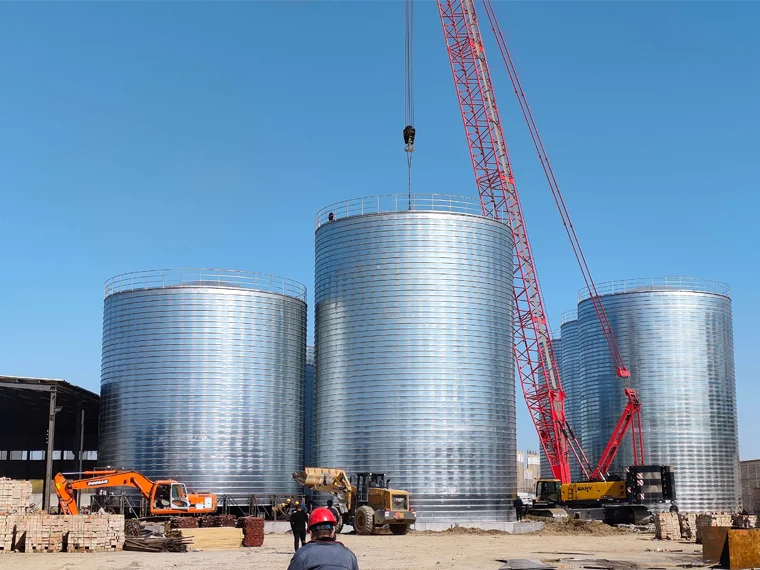
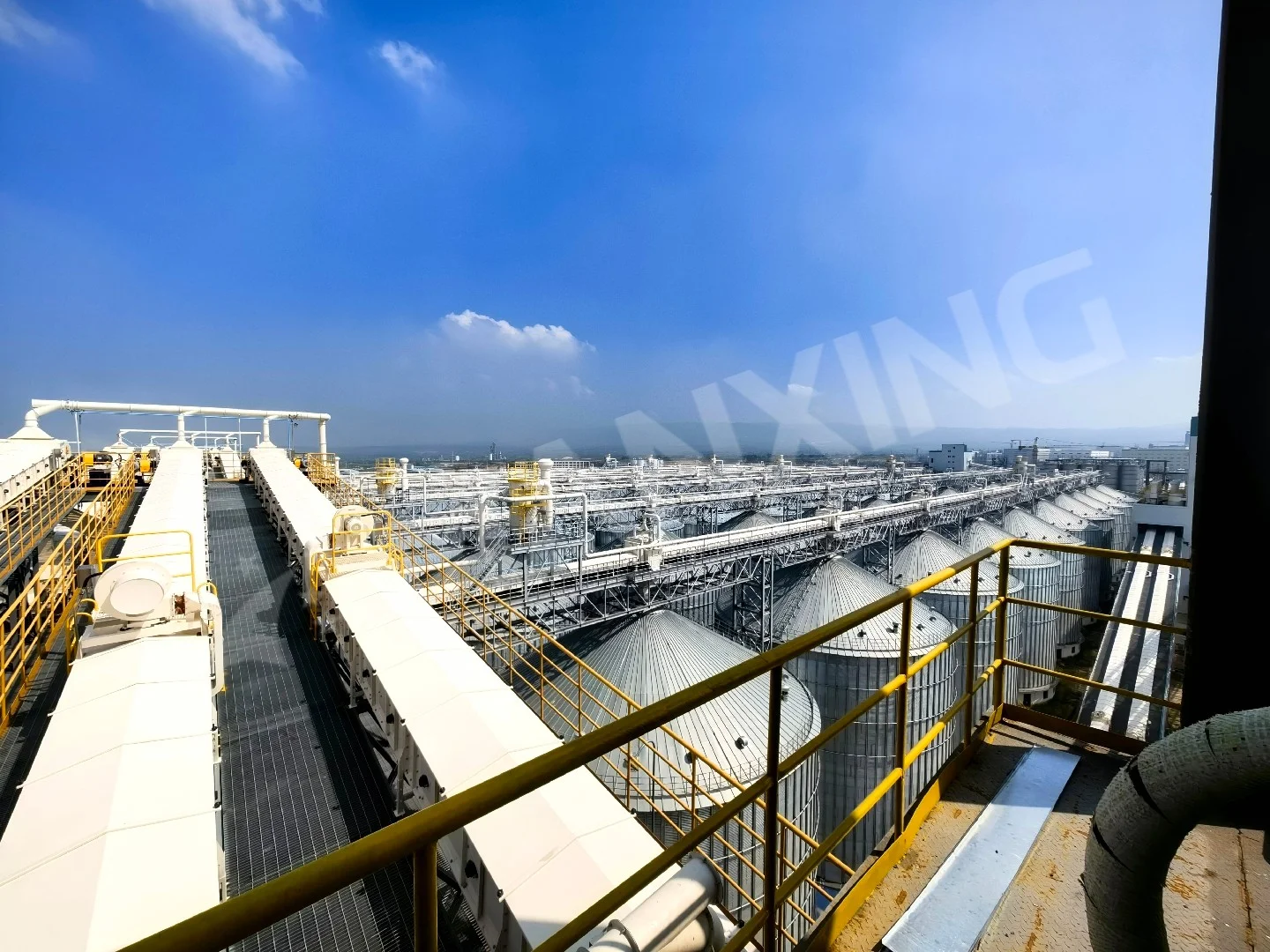


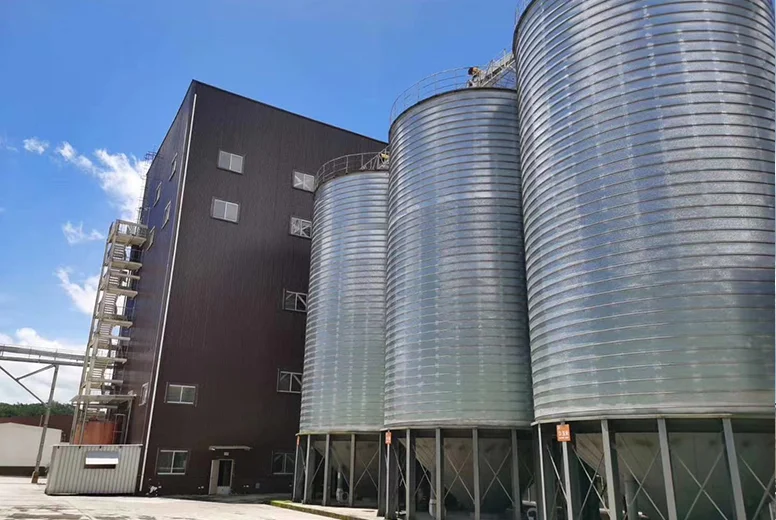
Unloading efficiency is the single biggest factor determining operational cost and safety in bulk material storage. The hopper bottom silo, leveraging gravity-assisted discharge, low-pressure design, and modular construction, has become the benchmark solution for high-efficiency, safe material management across agriculture, construction, and mining industries. This guide provides an in-depth technical analysis of its core advantages, design principles, and selection criteria.
Core Design Principles and Unloading Advantages of the Hopper Bottom Silo
The defining feature of a hopper bottom silo is its conical or funnel-shaped base. This design harnesses gravity as the primary discharge force, naturally channeling material toward the central outlet. Compared to traditional flat-bottom silos, this significantly reduces reliance on external vibrators or screw conveyors, thereby lowering energy consumption, mechanical wear, and the risk of blockages. Typical cone angles range from 40° to 60°, with the precise angle calculated based on the material's angle of repose and flowability to completely eliminate "bridging" and "rat-holing," ensuring a continuous and stable discharge process.
Beyond efficiency, this design offers substantial safety advantages. By minimizing manual intervention and mechanical clearing operations, personnel are no longer required to enter the silo to handle blockages, drastically reducing the hazards associated with confined space entry. For materials prone to arching or dust generation—such as grain, cement, and mineral powders—the "self-cleaning" characteristic of the hopper bottom silo is critical for protecting worker health and equipment integrity.
Solving Discharge Challenges: From Material Properties to System Integration
The physical properties of different materials—such as moisture content, particle size, and adhesiveness—have a profound impact on discharge flow. The hopper bottom silo, through its low-pressure design and precise chute angle calculation, effectively addresses the discharge challenges of high-adhesion, high-moisture materials. Furthermore, integrated discharge systems—including manual/automatic slide gates, chutes, and pneumatic conveying systems—provide flexible switching from "gravity free-flow" to "controlled metering," meeting diverse process requirements from grains to chemical raw materials.
Precise Chute Angle Design: Eliminating Material Bridging
The chute angle (the angle between the cone generatrix and the horizontal plane) is a critical design parameter. For materials with poor flowability (e.g., wet corn, certain mineral powders), the chute angle must be designed at 55°-60° or greater. For free-flowing materials (e.g., dry sand, plastic pellets), an angle of 40°-45° is typically sufficient. Professional structural engineers use material angle of repose test data combined with Finite Element Analysis (FEA) to optimize the chute angle, ensuring "zero-blockage" discharge under all operating conditions.
Integrated Discharge Valves and Control Systems
Modern hopper bottom silos are typically equipped with electric or pneumatic gate valves, rotary discharge valves, and load cells. These components can be integrated into a PLC control system for precise regulation of discharge speed. For example, during grain outloading, a constant flow rate can be set to prevent conveyor belt overloading. In chemical production, pneumatic conveying systems enable enclosed, dust-free material transfer, meeting stringent environmental and process requirements.
Key Takeaways
- Key Data: An optimally designed hopper bottom silo can improve discharge efficiency by 30%-50% and reduce energy consumption by over 40% compared to a flat-bottom silo with mechanical cleanout.
- Best Practice: Conduct material flowability testing at the project planning stage and commission a specialized manufacturer for integrated chute angle and discharge system design to avoid costly retrofits.
- Watch Out For: Never neglect corrosion protection for the cone section. For highly corrosive materials (e.g., fertilizers, salts), use stainless steel or high-grade galvanized sheet metal with an added wear-resistant liner.
- Pro Tip: For materials with extreme stickiness, consider adding a liner of Ultra-High Molecular Weight Polyethylene (UHMWPE) to the cone interior to reduce friction and prevent buildup.
- Bottom Line: The hopper bottom silo is not just a storage vessel; it is a precision-engineered discharge system that pays for itself through reduced downtime, lower maintenance, and enhanced safety.
Material Selection and Modular Configuration: Tailored Solutions
The construction material of a hopper bottom silo directly impacts its lifespan and maintenance costs. Galvanized steel sheet is widely used for grain and general industrial material storage due to its cost-effectiveness and good weather resistance. Stainless steel is preferred for food, pharmaceutical, and highly corrosive environments. For very large capacities or special operating conditions, prestressed concrete structures may also be employed. Mod
ern hopper bottom silos are predominantly modular in design, allowing flexible combinations based on site constraints and capacity requirements—from tens of tons to tens of thousands of tons. All modules are prefabricated in the factory and bolted together on-site, ensuring a short construction period and controllable quality.Furthermore, modular design offers excellent expandability. When a company's production capacity increases, additional silo modules can be added to the existing silo bank without major modifications to current facilities. This "capacity-on-demand" capability provides exceptional flexibility for long-term business growth, avoiding the need for excessive initial capital investment.
Frequently Asked Questions
Q: Is a hopper bottom silo suitable for all types of bulk materials?
A: No, it is not universally applicable. While the design handles most granular and powdery materials effectively, extreme materials—such as wet clay (high stickiness), large ore lumps, or ultra-light fly ash—may require special liners (like UHMWPE) or auxiliary fluidization devices. A thorough material characteristics analysis, including angle of repose, internal friction angle, moisture content, and corrosivity testing, is mandatory before selection. A professional engineer must conduct a suitability assessment based on this data.
Q: Is the initial investment cost for a hopper bottom silo higher than a flat-bottom silo, and what is the long-term return on investment?
A: Yes, the initial manufacturing cost is typically 15%-25% higher than a flat-bottom silo of the same capacity, due to the additional steel required for the cone and more complex structural calculations. However, from a total lifecycle cost perspective, the hopper bottom silo offers significant advantages: it eliminates the need for flat-bottom cleanout machinery (like screw reclaimers) and their maintenance; its faster discharge reduces waiting time for trucks and conveying equipment; and most importantly, it completely removes the safety risks and production losses associated with manual cleanout. The initial cost premium is typically recovered through operational savings within 2-3 years.
Q: How can I ensure the structural stability of a hopper bottom silo under extreme weather conditions like typhoons or heavy snow?
A: Structural stability is a primary design consideration. Professional silo manufacturers perform wind and snow load calculations in accordance with the project's local building codes (e.g., GB 50009, Eurocode 1, ASCE 7). For hopper bottom silos, the wind load coefficient on the cone section differs from the cylindrical section and must be analyzed separately. Critical safety factors include anti-overturning foundation design, strength verification of anchor bolts, and reinforced ring beams at the silo roof. We strongly recommend that clients request a structural calculation report reviewed by a third-party engineering firm.
Q: What is the typical maintenance schedule for a galvanized steel hopper bottom silo?
A: A well-maintained galvanized silo requires minimal routine maintenance. An annual visual inspection is recommended, focusing on the condition of the galvanized coating, especially at bolted joints and areas near the discharge cone. Check for any signs of corrosion, dents, or loose bolts. The discharge gate and any moving parts should be lubricated according to the manufacturer's schedule. A more thorough internal inspection, ideally when the silo is empty, should be conducted every 3-5 years to check for liner wear or material buildup.
Q: Can a hopper bottom silo be integrated with an existing flat-bottom silo facility?
A: Yes, integration is often feasible and can be a strategic upgrade. A hopper bottom silo can be added to an existing facility to handle materials that are problematic for flat-bottom storage, such as those that cake or bridge easily. The key is to design the new silo's discharge system (conveyor, pneumatic line) to tie into the existing downstream equipment. This hybrid approach allows a facility to benefit from the hopper bottom's advantages for specific materials without replacing all existing storage assets. A detailed site survey and engineering study are required to ensure seamless integration.
Need expert hopper bottom silo solutions for your project?
We provide professional design, manufacturing, and installation services for bulk storage and material handling systems worldwide, ensuring reliable, efficient, and safe operations for your specific material.
Get a Free Technical Consultation →