
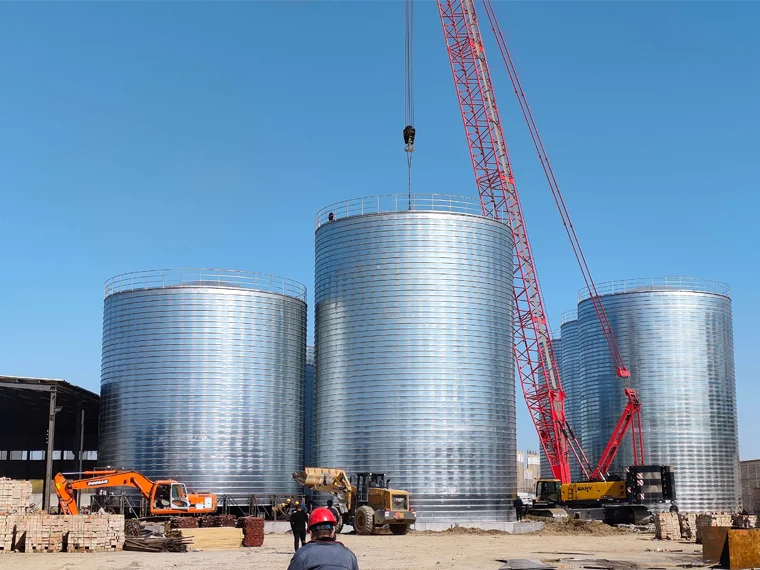
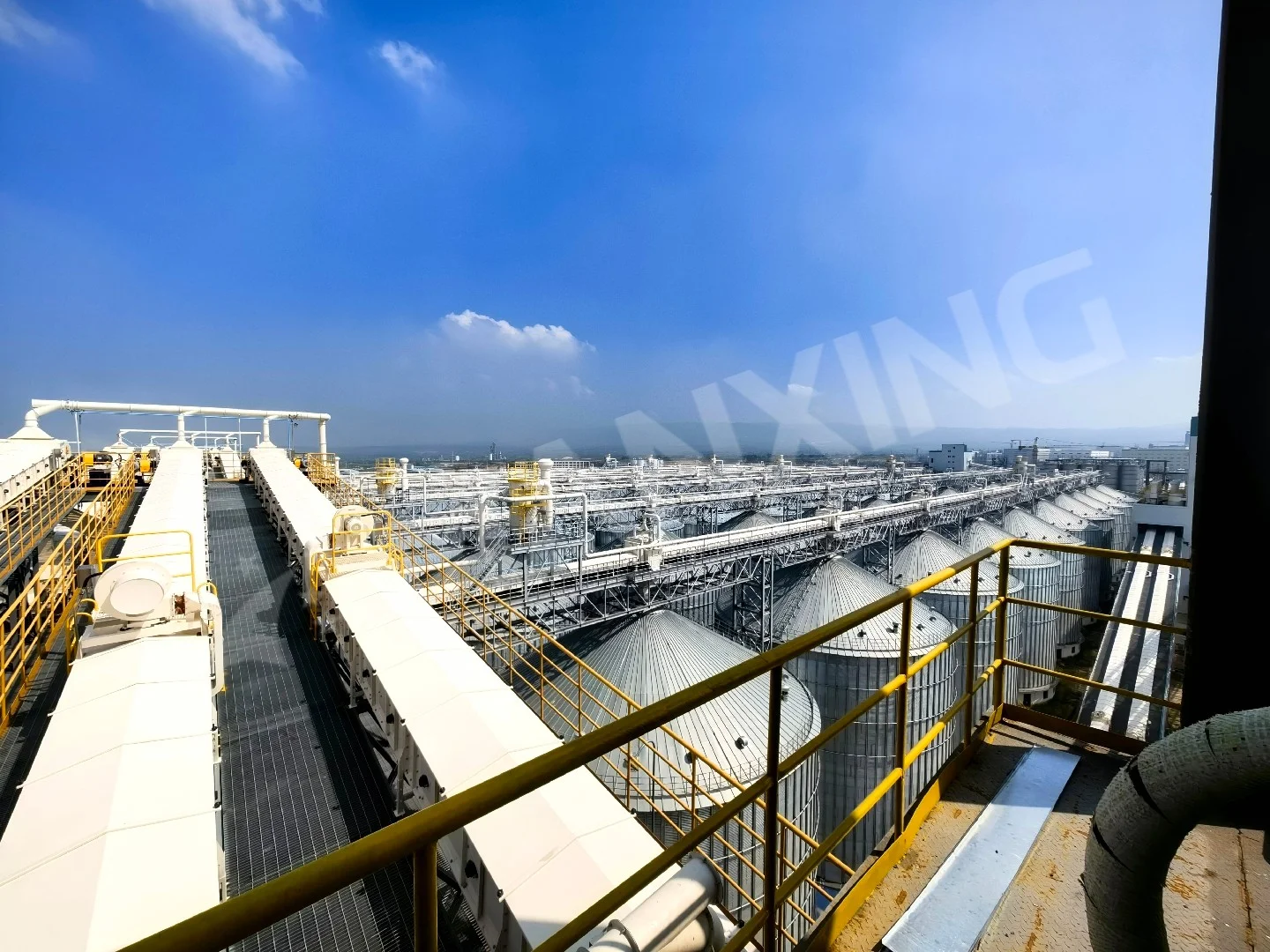


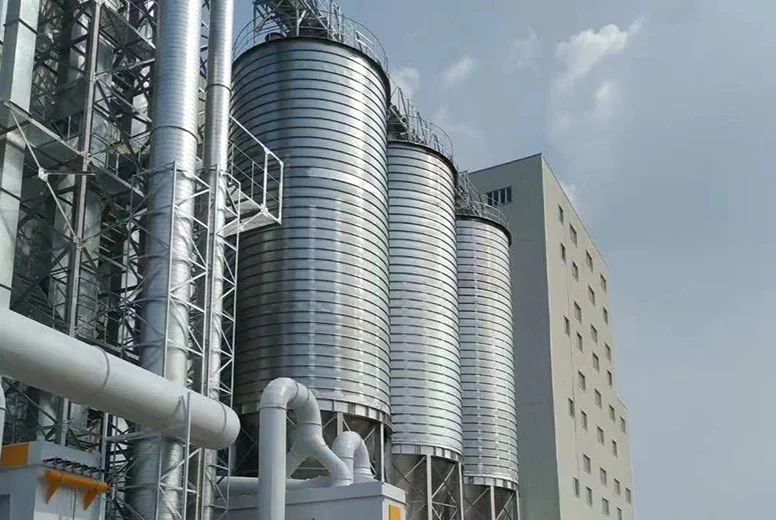
For bulk material storage in agriculture, construction, and manufacturing, the hopper bottom silo with an integrated ladder and safety cage represents the gold standard for efficient discharge and elevated work safety. This configuration is engineered to minimize material residue, maximize maintenance efficiency, and meet stringent food-grade and industrial storage standards through optimized structural design, material selection, and installation protocols.Related: Industrial Concrete Silo Foundation
rong>Optimizing Bulk Material Discharge with Hopper Bottom Silo Design
The defining feature of a hopper bottom silo is its steeply inclined bottom, typically engineered with a cone angle between 45° and 60°. This angle is not arbitrary; it is precisely calculated based on the repose angle and flow characteristics of the stored bulk material—such as grain, cement, or plastic pellets—to ensure reliable gravity-induced "mass flow" discharge. Unl
ike flat-bottom silos that require mechanical cleanout equipment, the hopper design drastically reduces material accumulation and the risk of cross-contamination. This makes it indispensable for facilities that frequently change product types, such as grain processing plants and chemical factories.The discharge outlet of a hopper bottom silo is typically fitted with pneumatic or manual gates, allowing for precise flow control. For materials with poor flowability—like wet corn or powdery additives—engineers employ advanced designs such as eccentric hoppers or segmented cone angles. These are often paired with vibrators or fluidization pads to completely eliminate bridging and clogging. This structural optimization not only boosts storage turnover efficiency but also significantly reduces the safety hazards associated with manual cleanout.
Ladder and Safety Cage: The Lifeline for High-Altitude Silo Access
On silos exceeding 10 meters in height, a ladder and safety cage are not optional accessories; they are mandatory safety requirements under OSHA (Occupational Safety and Health Administration) standards. The ladder provides the primary means of vertical access for inspection, maintenance, and sampling, while the safety cage—typically constructed from galvanized steel rings and vertical bars—encloses the climber to prevent falls. Modern designs integrate anti-slip rungs, rest platforms at regular intervals, and self-closing safety gates at entry points to further enhance worker protection.
Material and Corrosion Resistance for Long-Term Durability
Both the ladder and safety cage are fabricated from hot-dip galvanized steel or stainless steel to withstand harsh outdoor environments. Hot-dip galvanizing provides a zinc coating that offers sacrificial protection against rust, extending service life by 15–20 years compared to painted alternatives. For food-grade applications, stainless steel (304 or 316 grade) is preferred to prevent any contamination risk from corrosion byproducts. All fasteners and welds are also treated or selected for equivalent corrosion resistance.
Installation and Compliance Best Practices
Proper installation of the ladder and safety cage is critical. The ladder must be securely anchored to the silo wall at intervals not exceeding 3 meters, and the safety cage must extend at least 1.07 meters above the highest point of access. Rest platforms should be provided every 6 meters of vertical climb. Compliance with local building codes and international standards (such as OSHA 1910.28 and EN 14122) is non-negotiable. A certified inspection should be performed after installation and annually thereafter to verify structural integrity.
Key Takeaways
- Key Data: Hopper cone angles of 45°–60° are required for reliable mass flow discharge of most bulk materials.
- Best Practice: Always pair a hopper bottom silo with a certified ladder and safety cage for any silo over 10 meters in height to meet OSHA safety standards.
- Watch Out For: Avoid flat-bottom designs for facilities that change product types frequently, as they increase cross-contamination risk and require costly mechanical cleanout.
- Pro Tip: For poor-flowing materials like wet corn or fine powders, specify eccentric hoppers or segmented cone angles with vibrators to eliminate bridging.
- Bottom Line: A properly designed hopper bottom silo with integrated safety access delivers the highest operational efficiency, lowest maintenance cost, and safest working environment.
Material Selection and Food-Grade Compliance
For agricultural and food processing applications, the hopper bottom silo must comply with strict food-grade standards. The interior surfaces should be constructed from stainless steel or coated with FDA-approved epoxy linings to prevent contamination. All welds must be ground smooth to eliminate crevices where bacteria or residue could accumulate. The hopper's steep angle ensures complete discharge, preventing spoilage from material left in the bottom. For cement and industrial applications, carbon steel with appropriate corrosion protection (such as zinc-rich primers or polyurethane coatings) is typically sufficient, but the same discharge efficiency requirements apply.
Frequently Asked Questions
Q: How do I determine the correct hopper cone angle for my specific bulk material?
A: The cone angle must be calculated based on the material's repose angle and flow characteristics. For free-flowing grains like wheat or corn, a 45° angle is often sufficient. For cohesive materials like cement or wet additives, a steeper 55°–60° angle is required to achieve mass flow. Engineers use flow property testing (e.g., Jenike shear testing) to determine the exact angle needed to prevent bridging and rat-holing. Always consult a silo design specialist with material-specific data before finalizing the angle.
Q: What are the OSHA requirements for ladder and safety cage on a silo over 10 meters tall?
A: OSHA standard 1910.28 requires that fixed ladders over 7.3 meters (24 feet) in height be equipped with a personal fall arrest system or a ladder safety cage. The cage must consist of hoops at intervals not exceeding 1.07 meters (3.5 feet) and vertical bars spaced no more than 0.38 meters (15 inches) apart. Rest platforms are required every 9.1 meters (30 feet) of climb. Additionally, the ladder must have a minimum clear width of 0.41 meters (16 inches) and rungs must be slip-resistant. Annual inspection and certification are recommended.
Q: Can a hopper bottom silo be retrofitted with a ladder and safety cage after initial installation?
A: Yes, retrofitting is possible, but it requires careful structural assessment. The silo wall must be strong enough to support the ladder and cage loads, especially under wind and seismic conditions. The ladder must be anchored directly to the silo shell or a dedicated support structure, not just to the roof. It is often more cost-effective to specify the ladder and cage during the initial design phase, as the foundation and wall reinforcements can be integrated from the start. A structural engineer should evaluate the existing silo before proceeding with a retrofit.
Q: What maintenance is required for the hopper bottom and discharge system?
A: Regular inspection of the hopper interior for wear, corrosion, or material buildup is essential. For hoppers with vibrators or fluidization pads, check air lines and electrical connections monthly. The discharge gate (pneumatic or manual) should be tested for smooth operation and seal integrity. After each product changeover, the hopper should be cleaned to prevent cross-contamination. For food-grade applications, a full sanitation cycle using approved cleaning agents is recommended. Annual professional inspection of the hopper welds and structural supports is advised.
Q: How does a hopper bottom silo compare to a flat-bottom silo in terms of total cost of ownership?
A: While the initial capital cost of a hopper bottom silo is typically 15–25% higher than a flat-bottom silo of equivalent capacity, the total cost of ownership over a 20-year lifespan is often lower. The hopper design eliminates the need for mechanical sweep augers or cleanout equipment, reducing both capital expenditure and ongoing maintenance costs. It also minimizes material waste due to more complete discharge and reduces labor costs for manual cleaning. For facilities with frequent product changeovers, the savings from reduced downtime and cross-contamination risk can offset the higher upfront investment within 3–5 years.
Need expert manxingsilo solutions for your project?
We provide professional design, manufacturing, and installation services for hopper bottom silos with integrated ladder and safety cage systems worldwide. Our team of engineers specializes in optimizing discharge efficiency and safety compliance for bulk storage in agriculture, construction, and industrial applications.
Get a Free Technical Consultation →