


Flat bottom silos are the backbone of modern bulk material storage, offering superior structural stability, massive capacity, and cost-effective operations. This comprehensive guide explores the engineering principles, industry applications, and critical construction considerations for flat bottom silo projects, providing expert insights from design to deployment.
Flat Bottom Silo Engineering: Core Structure and Performance Advantages
The defining feature of a flat bottom silo is its horizontal base design, which provides a rock-solid platform for storing granular and powdered materials such as cement, fly ash, and grain. Compared to cone bottom silos, the flat bottom design simplifies manufacturing and maintenance, significantly reducing overall costs while ensuring structural integrity. The base can be flexibly integrated with conical discharge openings or sliding gates to achieve smooth, complete material evacuation, preventing blockages and residual buildup.
In terms of dimensional flexibility, flat bottom silos can be customized with varying heights and diameters to meet specific storage needs—from daily reserves in small factories to fully automated large-scale storage facilities. Thanks to partition walls and reinforced foundations, flat bottom silos offer excellent seismic and wind resistance, adapting to diverse environmental conditions and ensuring long-term stable operation.
Solving Industrial Storage Challenges with Flat Bottom Silos
In the construction and agricultural sectors, material storage often faces challenges such as low space utilization, poor discharge efficiency, and high maintenance costs. Flat bottom silos address these issues through the following mechanisms: the horizontal base maximizes warehouse floor area, providing greater effective storage space than cone bottom designs on the same footprint; the integrated bottom discharge system, combined with pneumatic or mechanical conveying equipment, enables automated, continuous material output, significantly boosting operational efficiency.
Structural Simplification and Cost Optimization
The flat bottom design reduces complex cone fabrication processes, lowering steel consumption and welding difficulty, making the per-unit silo cost more competitive. Additionally, the flat bottom facilitates internal cleaning and maintenance, reducing downtime and labor costs.
Disaster Resistance and Safety Redundancy
Through finite element analysis to optimize silo wall thickness and ring beam design, flat bottom silos can withstand seismic intensities above 8 degrees and typhoons up to Category 12. The reinforced raft foundation evenly transfers loads to the subgrade, preventing uneven settlement—especially critical for soft soil or high-seismic-intensity regions.
Key Takeaways
- Key Data: Flat bottom silos typically achieve 10%-15% higher effective utilization than cone bottom silos of the same volume, with discharge residue rates controllable below 1%. Related: Hopper bottom silo with moisture control >
- Best Practice: For materials prone to arching, such as cement and fly ash, install fluidizing rods or air cushion systems at the bottom to ensure smooth discharge.
- Watch Out For: Flat bottom silos are not suitable for materials with extremely poor flowability or those that easily cake; material property testing must be conducted before design.
- Pro Tip: When designing large-diameter flat bottom silos, always incorporate a slight floor slope (1-3 degrees) toward the discharge point to enhance gravity-assisted flow and minimize dead storage zones.
- Bottom Line: For high-volume storage of free-flowing bulk materials, flat bottom silos offer the best balance of capacity, cost, and operational simplicity.
Cross-Industry Applications and Engineering Case Studies
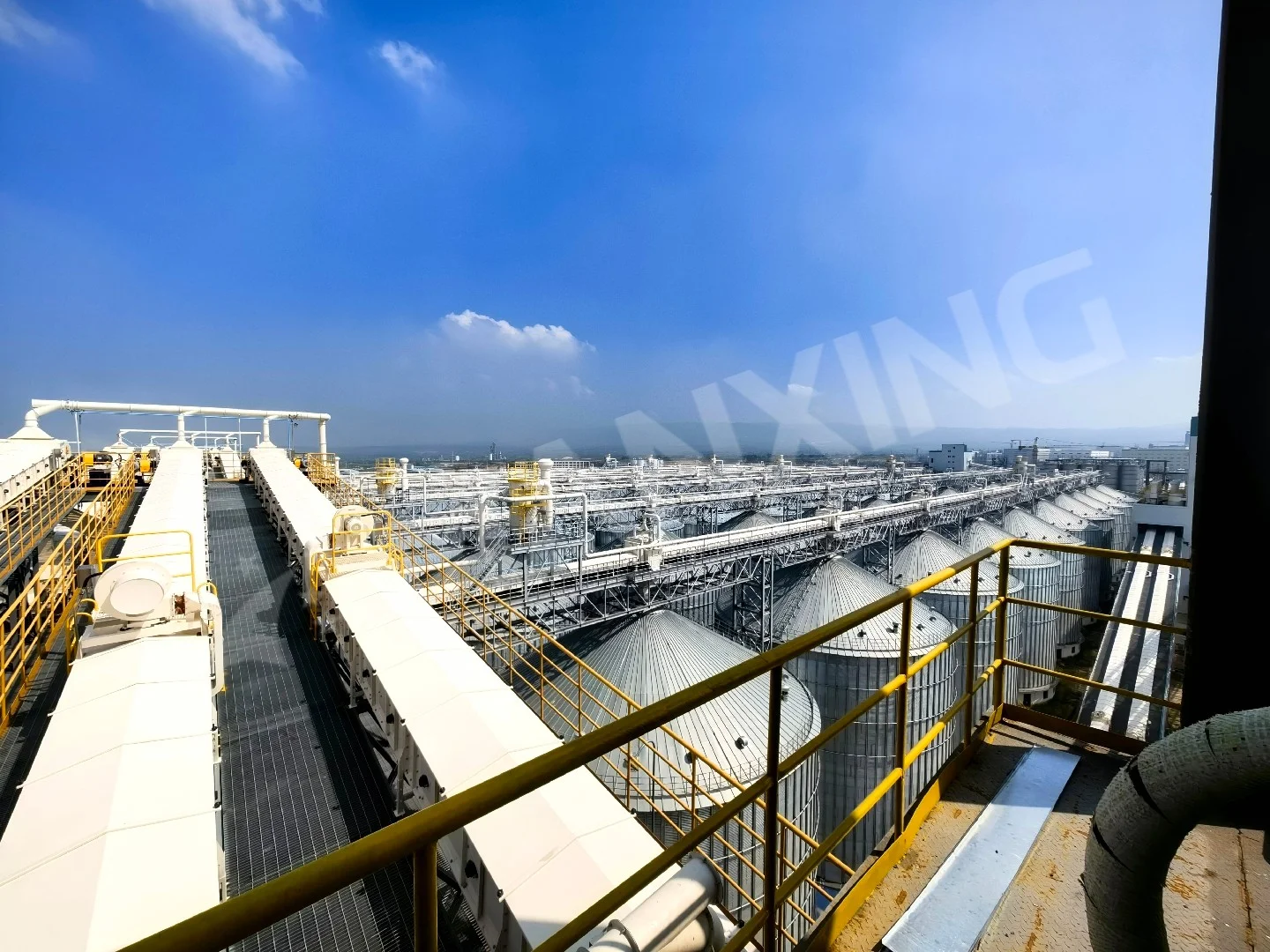
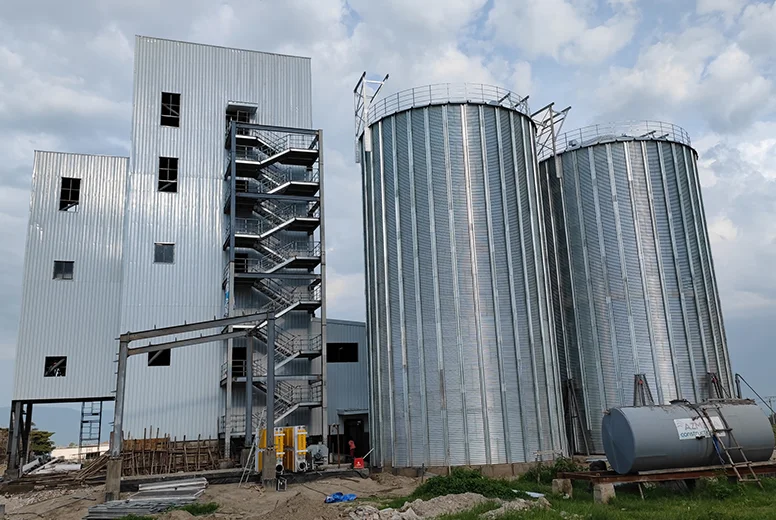
The versatility of flat bottom silos makes them indispensable across multiple key industries. In construction, they serve as the standardized storage solution for cement, fly ash, and mineral powder, supporting continuous production in concrete batching plants and precast component factories. In agriculture, they are widely used for long-term storage of wheat, corn, and soybeans, with integrated ventilation and temperature monitoring systems to preserve grain quality. In the chemical and mining industries, they store powders and minerals, preventing contamination and maintaining material integrity. In feed manufacturing, they ensure safe storage of large quantities of animal feed until distribution or further processing.
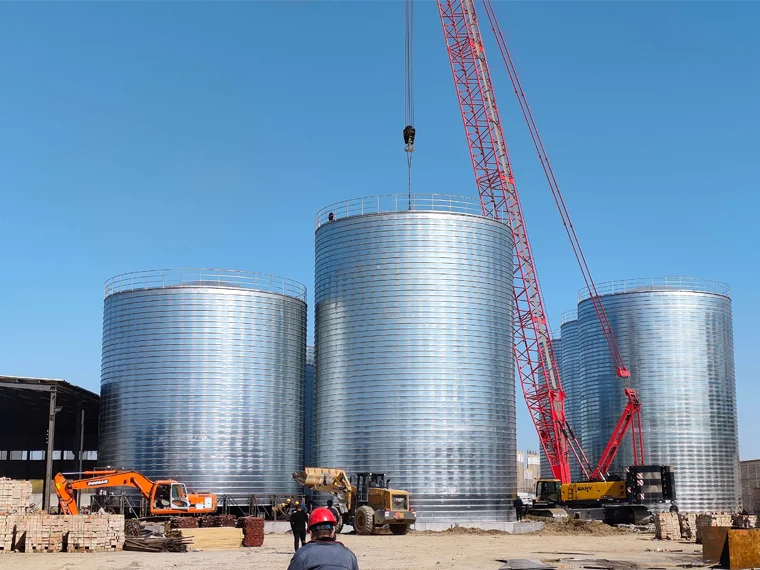
A typical engineering project case: For a major cement group, we designed and constructed a cluster of four flat bottom silos, each 25 meters in diameter and 30 meters in height, with a total storage capacity of 120,000 tons. The silo bodies were built using the spiral crimping process, equipped with a pneumatic discharge system at the bottom, and integrated with intelligent level monitoring and dust explosion-proof devices. This achieved fully automated control from material intake to discharge, increasing operational efficiency by over 30%.
Frequently Asked Questions
Q: How do you choose between a flat bottom silo and a cone bottom silo in engineering design? Is there an absolute conclusion that "flat bottom is better"?
A: There is no absolute superiority; the choice depends on material properties, site conditions, and budget. Flat bottom silos excel in large capacity, low cost, and easy maintenance, making them ideal for materials with good flowability (e.g., cement, grain) and applications where discharge speed is not critical. Cone bottom silos, with their angled bottom design, enable complete gravity discharge, making them more suitable for materials with poor flowability or that tend to clog (e.g., certain chemical powders), but they have higher construction costs and lower effective volume utilization. In engineering practice, the two are often combined: flat bottom silos for large-capacity storage and cone bottom silos for key batching bins.
Q: In high-salt-spray environments such as Southeast Asia or coastal areas, what special anti-corrosion requirements apply to flat bottom silos?
A: High-salt-spray environments accelerate steel corrosion rates to 3-5 times that of inland areas. Engineering design must adopt a heavy-duty anti-corrosion system: first, the silo steel plates must be shot-blasted to Sa2.5 gr
ade; second, the primer should be epoxy zinc-rich paint (zinc content ≥80%), the intermediate coat epoxy micaceous iron oxide, and the top coat high-durability polyurethane or fluorocarbon paint, with a total dry film thickness of no less than 280 microns. For areas in contact with the foundation, additional glass flake lining or stainless steel cladding is required. Furthermore, all bolted connections must be hot-dip galvanized, with regular coating thickness inspections.Q: What is the typical design lifespan of a flat bottom silo, and what factors most significantly affect its longevity?
A: A well-designed and maintained flat bottom silo typically has a service life of 25-35 years for steel structures and 50+ years for concrete structures. The most critical factors affecting longevity are corrosion protection (especially in coastal or humid environments), foundation settlement (uneven settlement can cause structural stress), and fatigue from cyclic loading (repeated filling and emptying). Regular inspections—including coating thickness checks, weld integrity testing, and foundation level surveys—are essential to maximize lifespan.
Q: Can flat bottom silos be retrofitted with automated inventory management and discharge control systems?
A: Yes, modern flat bottom silos are fully compatible with Industry 4.0 automation. Typical retrofits include radar or laser level sensors for real-time inventory monitoring, variable-speed screw conveyors or rotary feeders for controlled discharge, and PLC-based control systems that integrate with plant-wide ERP or MES platforms. For existing silos, retrofitting is usually straightforward, requiring installation of sensors through roof or wall ports and addition of actuators on discharge valves, with minimal structural modification.
Q: What are the key considerations when building a flat bottom silo on soft ground or reclaimed land?
A: Soft ground requires careful geotechnical investigation and foundation engineering. Common solutions include deep soil mixing, stone columns, or pile foundations to transfer loads to competent bearing strata. A reinforced concrete raft foundation is typically used to distribute the silo load evenly and minimize differential settlement. Ground improvement may also include preloading with surcharge or vertical drains to accelerate consolidation. For very soft soils, floating foundations or lightweight fill materials may be considered. Always engage a geotechnical specialist for site-specific recommendations.
Q: How does the spiral crimping construction method benefit large-diameter flat bottom silos compared to welded construction?
A: The spiral crimping method offers several advantages for large flat bottom silos: it eliminates the need for extensive field welding, reducing construction time by 30-50% and minimizing quality risks from weld defects. The interlocking seam design provides excellent structural integrity and leak resistance. This method also allows for continuous, automated erection, which is particularly beneficial for tall silos where scaffolding and welding access are challenging. However, spiral crimping is best suited for silo diameters up to 30 meters; for larger diameters, welded construction with stiffeners may be required.
Need expert flat bottom silo solutions for your project?
We provide professional design, manufacturing, and installation services for bulk storage and material handling systems worldwide, from geotechnical investigation and structural design to intelligent control system integration.
Get a Free Technical Consultation →