


In the world of bulk material handling, the hopper bottom silo stands out as a dual-purpose solution for both storage and drying. Its unique self-discharging conical design and integrated drying capabilities make it the preferred choice for industries ranging from agriculture to cement manufacturing. This guide explores its structural advantages, application scenarios, and key selection criteria to help you achieve efficient, low-loss inventory management.
The Core Design Principles and Structural Advantages of a Hopper Bottom Silo
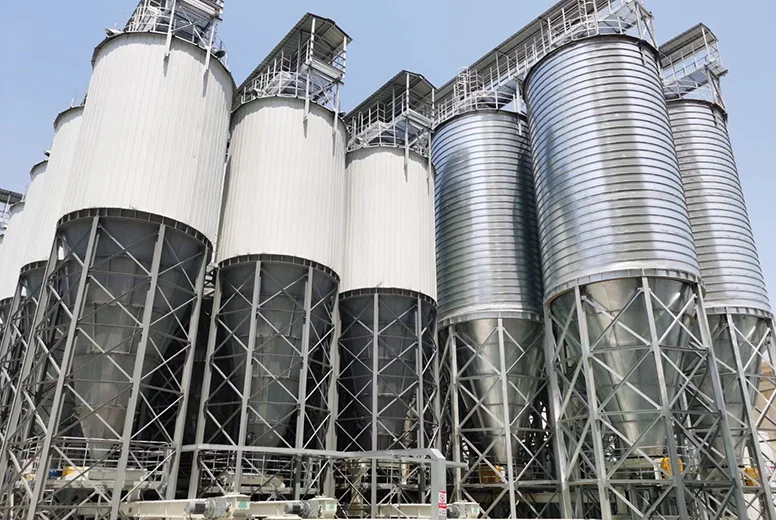
The most defining feature of a hopper bottom silo is its conical or V-shaped bottom structure. This geometric design enables true "gravity flow" discharge, where material automatically converges toward the central outlet without needing mechanical scrapers or air cushions. This significantly reduces energy consumption and equipment failure rates compared to flat-bottom silos. Furthermore, the conical bottom effectively eliminates dead zones, preventing mold, caking, or pest infestations caused by long-term material accumulation.
From a structural mechanics perspective, the conical walls convert internal material pressure into hoop tension, greatly enhancing the silo's seismic and wind resistance. Constructed from high-strength steel or galvanized composite materials, the silo body is not only corrosion-resistant but can also withstand extreme temperature fluctuations from -40°C to 60°C. This robust design makes hopper bottom silos ideal for storing grain, feed, cement, and chemical raw materials, particularly in dynamic storage scenarios requiring frequent in-and-out material flow.
How to Achieve Efficient Drying: Integrated Hot Air Circulation and Precise Humidity Control
The conical structure of a hopper bottom silo provides a natural advantage for integrating drying systems. By installing hot air distributors at the bottom or on the side walls, the drying medium—such as hot air or dehumidified gas—can uniformly permeate upward along the conical slope, penetrating the entire material column. This "counter-flow" drying path ensures consistent drying results from the bottom to the top of the silo, avoiding the common "center dry, edges wet" problem seen in flat-bottom silos.
Uniformity Control Technology
Modern hopper bottom silos are equipped with multi-zone temperature sensors and variable-frequency fans. These systems adjust the hot air flow and temperature in real time based on material moisture levels. For example, when storing corn or paddy rice, the system can keep temperature fluctuations within ±1.5°C, resulting in final moisture content variations of less than 0.5%. This precise control not only improves drying efficiency but also maximally preserves grain viability and nutritional content.
Energy Savings and Maintenance Advantages
Because gravity discharge reduces the number of mechanical drive components, the energy consumption of an integrated drying system is approximately 30%–40% lower than that of traditional drying towers. Additionally, the conical bottom facilitates regular cleaning of dust and impurities. When paired with an automatic discharge valve, it significantly reduces the frequency of manual cleaning. For feed processing plants, this translates to less downtime and higher capacity utilization.
Key Takeaways
- Key Data: Hopper bottom silos achieve a discharge rate of over 99.8%, far exceeding the 85%–92% typical of flat-bottom silos.
- Best Practice: For grain drying, it is recommended to control hot air temperature between 45–55°C and use intermittent ventilation to reduce energy consumption.
- Watch Out For: Avoid storing high-viscosity materials (e.g., wet sugar or clay) when the cone angle is less than 45°, as this can cause bridging and blockages.
- Pro Tip: Always customize the cone angle based on the material's angle of repose. For free-flowing grains (25°–30°), a 45° cone angle is sufficient; for feed or wood chips (35°–45°), the angle must be increased to 60° or more.
- Bottom Line: The hopper bottom silo is the optimal choice for high-efficiency, low-loss storage and drying, but its design must be precisely matched to the material's physical properties.
Deep Comparison of Agricultural and Industrial Application Scenarios
In agriculture, hopper bottom silos are core equipment for large farms and grain collection centers. For
instance, a corn drying tower with an annual throughput of 100,000 tons can use six sets of 12-meter-diameter conical bottom silos to simultaneously complete storage and drying, shortening the traditional 2–3 day drying cycle to just 12 hours. In the industrial sector, cement plants use conical bottom silos to store fly ash and slag. Through a fully enclosed pneumatic conveying system, dust emissions can be kept below 10 mg/m³, meeting the strictest environmental standards. Furthermore, the plastic pellet and fertilizer industries widely adopt stainless steel hopper bottom silos to handle corrosive materials and meet high cleanliness requirements.It is crucial to note that the cone angle design must be customized according to the material's angle of repose. For free-flowing grains (angle of repose 25°–30°), a cone angle of 45° is suitable. For feed or wood chips (angle of repose 35°–45°), the cone angle must be increased to 60° or more. Incorrect design can lead to discharge difficulties or even structural instability. Therefore, professional manufacturers typically provide CFD (Computational Fluid Dynamics) simulation analysis based on material properties to ensure precise parameter matching.
Frequently Asked Questions
Q: Can a hopper bottom silo store multiple different materials at the same time, and how can cross-contamination be avoided when switching materials?
A: Yes, but it requires a fast-drain and cleaning system. Recommended solutions include: ① Installing a rotary or diverter valve at the outlet to switch material flow; ② Applying a food-grade non-stick coating (e.g., PTFE) to the inner wall to reduce residue; ③ Before each material change, using high-pressure air guns or a water mist for a 30-minute internal rinse, discharging through the bottom drain. For high-hygiene food industries, 304/316L stainless steel with a CIP (Clean-in-Place) system is advisable.
Q: How does the drying system of a conical bottom silo prevent freezing or condensation in cold regions?
A: Cold environments require triple protection: ① Add a 100 mm thick polyurethane insulation layer to the silo exterior, wrapped with a stainless steel jacket; ② Install an electric pre-dehumidification heater at the hot air inlet to ensure the dew point of the incoming air is below -10°C; ③ Place heat tracing tape around the conical bottom discharge area to prevent condensation from freezing. Additionally, position the exhaust vent on the leeward side of the silo roof and install a rain cap to prevent cold, moist air from flowing back. These measures have proven to keep equipment operating stably in -30°C conditions.
Q: What is the maintenance cycle and cost for a hopper bottom silo compared to a flat-bottom silo?
A: The average annual maintenance cost for a hopper bottom silo is typically 40%–50% lower than that of a flat-bottom silo. Key maintenance tasks include: ① Quarterly inspection of cone welds and anti-corrosion coating (about 2 hours); ② Annual replacement of sealing gaskets and discharge valve seals (costing approximately $70–$280 USD); ③ Full internal ultrasonic inspection every 3 years. In contrast, flat-bottom silos require semi-annual dead zone cleaning (requiring 2–3 days of downtime), and scraper chains need replacement every 2 years, leading to higher overall costs. We recommend signing a regular inspection contract with the manufacturer to further reduce the risk of sudden failure.
Q: What is the typical lifespan of a steel hopper bottom silo, and what factors most affect its longevity?
A: A well-maintained steel hopper bottom silo can last 20–30 years or more. The primary factors affecting lifespan include: ① The quality of the anti-corrosion coating and its maintenance schedule; ② The abrasiveness and corrosiveness of the stored material; ③ Environmental conditions such as humidity, temperature extremes, and exposure to chemicals. For example, storing abrasive materials like cement clinker may require more frequent interior inspections and coating repairs. Using hot-dip galvanized steel or stainless steel in corrosive environments can significantly extend service life.
Q: How does a hopper bottom silo handle dust control during filling and discharge operations?
A: Effective dust control is a key design feature. During filling, a top-mounted dust collector or bag filter captures airborne particles, while a telescopic loading spout minimizes free fall height. During discharge, the system is fully enclosed from the cone outlet to the conveying equipment. For fine materials like cement or fly ash, a rotary airlock valve at the bottom prevents air ingress and dust leakage. Additionally, maintaining a slight negative pressure inside the silo with a dedicated vent fan helps contain fugitive dust, ensuring emissions stay below regulatory limits.
Need expert hopper bottom silo solutions for your project?
We provide professional design, manufacturing, and installation services for bulk storage and material handling systems worldwide, including integrated drying and dust control.
Get a Free Technical Consultation →