
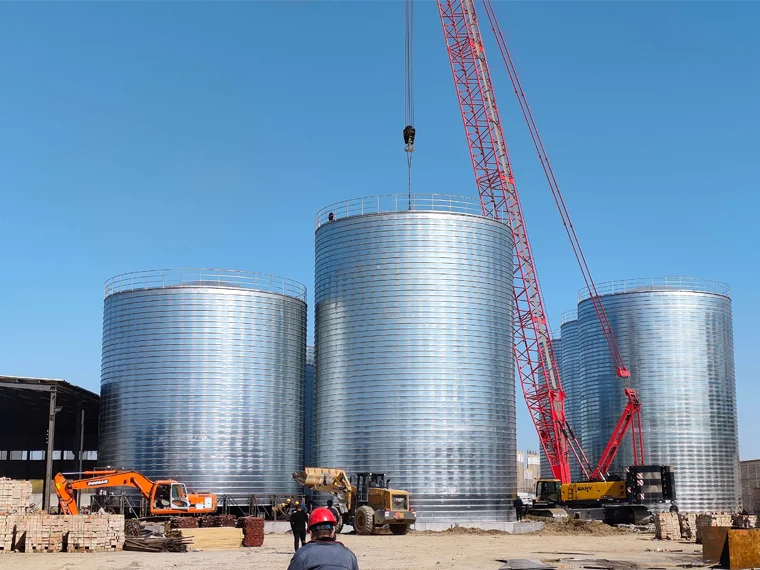
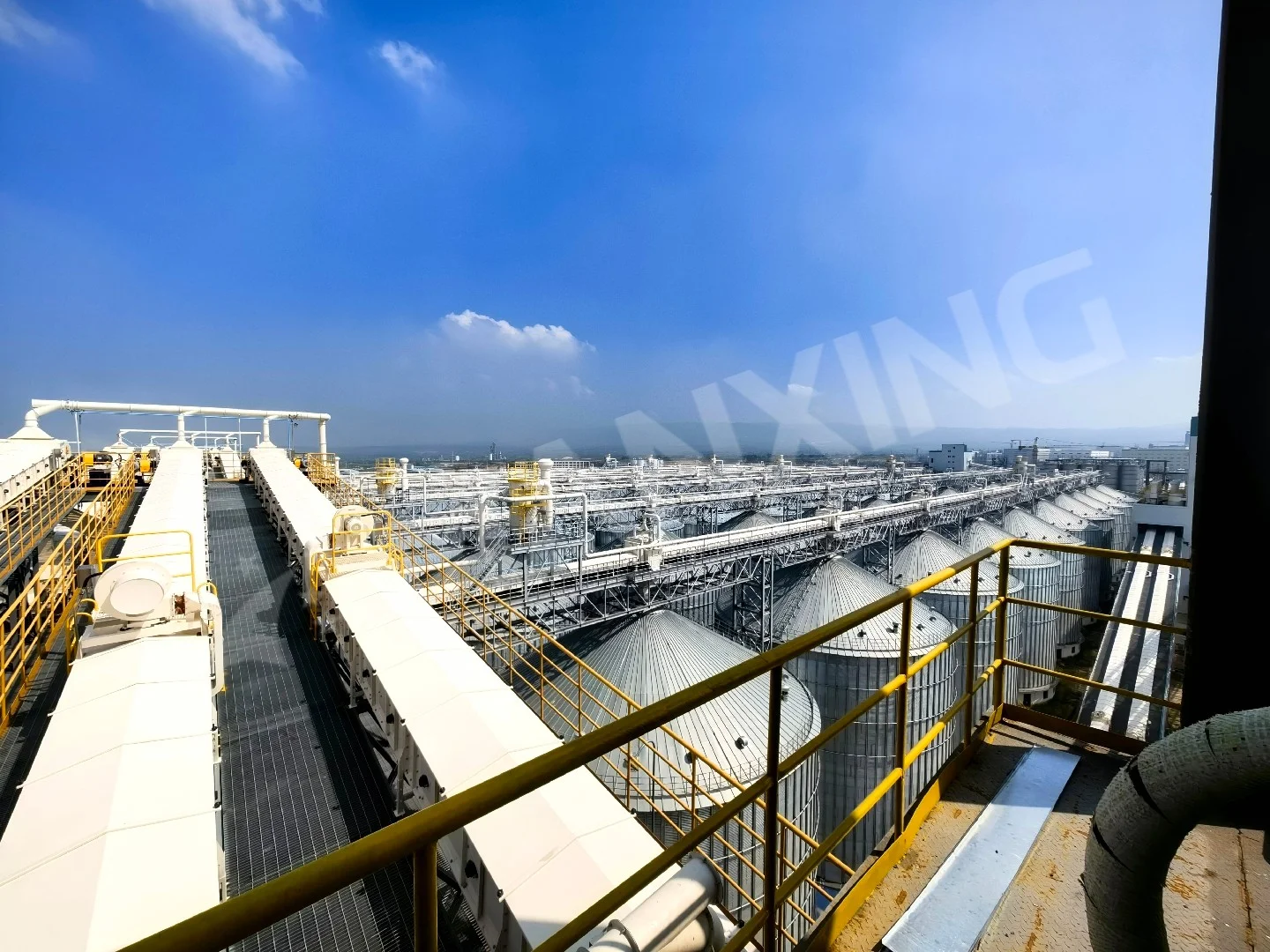


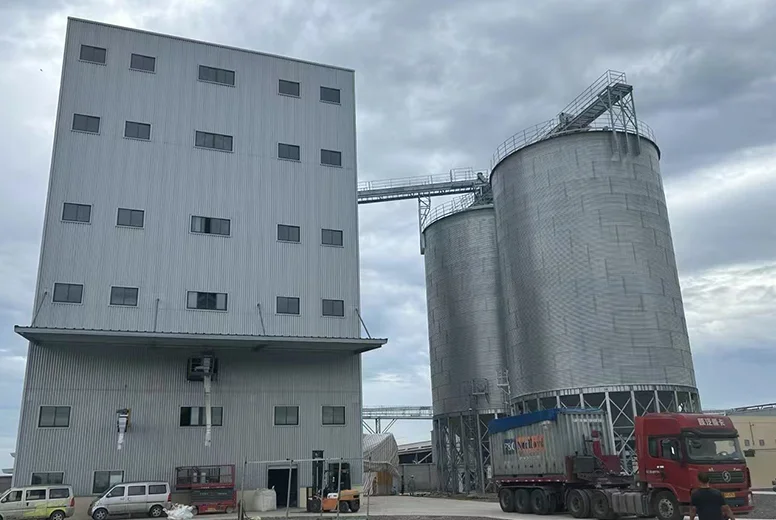
In modern bulk material handling, the hopper bottom feed silo has become the standard storage solution across agriculture, cement, chemical, and food processing industries due to its gravity-assisted self-flow, high-efficiency discharge, and structural durability. This article provides an in-depth analysis of the design principles, industry applications, and selection criteria that help businesses reduce operational costs and improve material flow efficiency.
Design Principles and Core Advantages of the Hopper Bottom Feed Silo
The defining feature of a hopper bottom feed silo is its unique base structure—a conical or curved sloping bottom that directs material toward the discharge outlet under the force of gravity. This design allows for complete or near-complete unloading with minimal or no mechanical assistance. Compared to flat-bottom silos, the hopper bottom significantly reduces the risk of material bridging and blockages, making it especially suitable for cohesive or poor-flowing powders and granular materials.
From a materials science perspective, modern hopper bottom silos are typically fabricated from carbon steel, stainless steel, or composite materials capable of withstanding corrosive environments and dynamic loads. The
smooth, angled interior surface not only facilitates material flow but also greatly simplifies cleaning and maintenance, ensuring hygienic standards for food-grade or high-purity chemical raw materials. Furthermore, key parameters such as hopper angle and outlet size can be customized based on material characteristics, achieving an optimal balance between flow efficiency and storage capacity.How Hopper Bottom Feed Silos Solve Critical Industry Pain Points
In traditional storage scenarios, common challenges include material blockages, uneven discharge, and excessive residue. The hopper bottom feed silo fundamentally addresses these issues through its gravity-driven discharge mechanism. In agriculture, for example, grains, seeds, and feed powders are prone to caking due to moisture or compaction during storage. The sloped design of the hopper bottom maintains continuous material flow, ensuring a steady supply to the production line and significantly boosting capacity utilization.
Reducing Operational and Maintenance Costs
Because hopper bottom silos rely less on mechanical discharge devices such as vibrators, air pads, or screw conveyors, both energy consumption and the frequency of spare part replacements are substantially reduced. The easy-to-clean interior walls also minimize manual cleaning time—a particular advantage for plants that frequently switch between different material types, such as food processing facilities.
Improving Material Quality and Safety
In the cement and chemical industries, the sealed design and controlled discharge process of hopper bottom silos effectively prevent dust leakage and cross-contamination. For food-grade materials, stainless steel construction and dead-angle-free designs meet international food safety standards such as HACCP, ensuring hygienic control from storage through to production.
Key Takeaways
- Key Data: Steel silos with a hopper bottom design can achieve 30%–50% higher discharge efficiency compared to flat-bottom silos, with residual material rates kept below 1%.
- Best Practice: For poor-flowing materials (e.g., moist grains or sticky chemical powders), a steep hopper angle of 60° or more is recommended, combined with polished interior lining.
- Watch Out For: Never ignore the relationship between the material’s angle of repose and the hopper angle. If the hopper angle is less than the material’s angle of repose, severe blockages will occur, actually increasing maintenance costs.
- Pro Tip: For applications requiring frequent material changeovers, specifying a fully welded, mirror-polished stainless steel interior (Ra ≤ 0.8 μm) dramatically reduces cleaning downtime and eliminates cross-contamination risks.
- Bottom Line: The hopper bottom feed silo is the most cost-effective solution for achieving reliable, self-cleaning discharge of bulk solids, provided the hopper geometry is correctly matched to the material properties.
Industry Applications and Selection Guide for Hopper Bottom Feed Silos
The versatility of the hopper bottom feed silo makes it a critical asset across multiple sectors. In agriculture, it is used to store wheat, corn, soybeans, and various animal feeds, ensuring rapid discharge to match planting or processing schedules. In the cement and building materials industry, it handles raw meal, clinker, and additives, guaranteeing stable material supply for continuous production lines. In chemical and food processing, it manages powders, granules, and flakes while meeting stringent requirements for explosion-proofing, corrosion resistance, and hygiene.
When selecting a hopper bottom silo, companies must carefully evaluate the following parameters: material characteristics (particle size, moisture content, cohesiveness, angle of repose), discharge frequency and flow rate requirements, site space constraints, and budget. For example, for highly cohesive materials, the addition of vibratory arch breakers or aeration devices may be considered. For very large capacity requirements, a segmented cone design can be used to reduce overall height.
Frequently Asked Questions
Q: Compared to a flat-bottom silo, how much can a hopper bottom feed silo actually save in long-term operational costs?
A: Based on industry practice, hopper bottom silos typically reduce annual maintenance costs by 40%–60% due to the reduced reliance on mechanical discharge equipment like screw conveyors and vibrators. Additionally, because discharge efficiency is higher, production line downtime for material handling is reduced, leading to an overall operational efficiency improvement of approximately 20%–30%. However, it is important to note that the initial fabrication cost of a hopper bottom silo is generally higher than that of a flat-bottom silo. Companies should perform a full life-cycle cost analysis based on their specific material properties and usage cycles.
Q: For the food industry, how does a hopper bottom silo ensure compliance with food safety standards?
A: Food-grade hopper bottom silos are typically constructed from 304 or 316L stainless steel with a mirror-polished interior surface finish (Ra ≤ 0.8 μm) to eliminate material residue and bacterial growth. All welds undergo passivation and pickling treatment to ensure there are no dead zones. The discharge valves are usually butterfly or slide valves, and the silo can be equipped with CIP (Clean-in-Place) connections, enabling automated cleaning without personnel entry. These features allow the silo to meet international certifications such as HACCP and FDA.
Q: What is the ideal hopper angle for materials like wet corn or sticky lime powder?
A: For materials with poor flowability, such as wet corn (moisture above 18%) or sticky lime powder, a hopper angle of 65° to 75° from the horizontal is recommended. The exact angle depends on the material’s angle of repose and wall friction characteristics. It is critical to conduct a flow properties test—such as measuring the wall friction angle and cohesive strength—before finalizing the design. A steep angle, combined with a smooth, low-friction lining (e.g., stainless steel or UHMW-PE), is the most reliable way to prevent bridging and ensure mass flow.
Q: Can a hopper bottom silo be retrofitted onto an existing flat-bottom silo foundation?
A: Yes, retrofitting is possible, but it requires careful structural engineering. The existing foundation and support structure must be evaluated to handle the additional vertical loads and potential overturning moments from the new hopper section. A common approach is to install a steel conical hopper insert inside the existing flat-bottom silo. However, this reduces the overall storage capacity by 10%–20%. For a more efficient solution, the entire bottom section can be replaced, but this is often more cost-effective only when the silo is already due for major maintenance.
Q: How do you prevent dust explosions in a hopper bottom silo handling combustible powders?
A: For combustible powders like grain dust, coal dust, or certain chemical powders, the silo must be designed with explosion venting panels, a robust grounding system to dissipate static electricity, and ATEX/IECEx-certified electrical equipment. The hopper bottom design itself helps by preventing material accumulation and reducing the risk of smoldering pockets. Additionally, inert gas blanketing (e.g., nitrogen) can be introduced into the headspace to keep oxygen levels below the minimum explosive concentration (MEC).
Need expert hopper bottom feed silo solutions for your project?
We provide professional design, manufacturing, and installation services for bulk storage and material handling systems worldwide.
Get a Free Technical Consultation →