
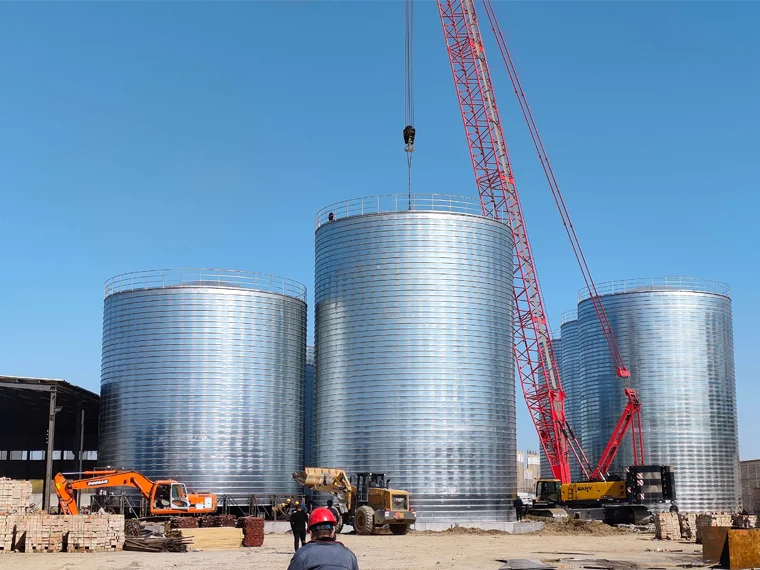
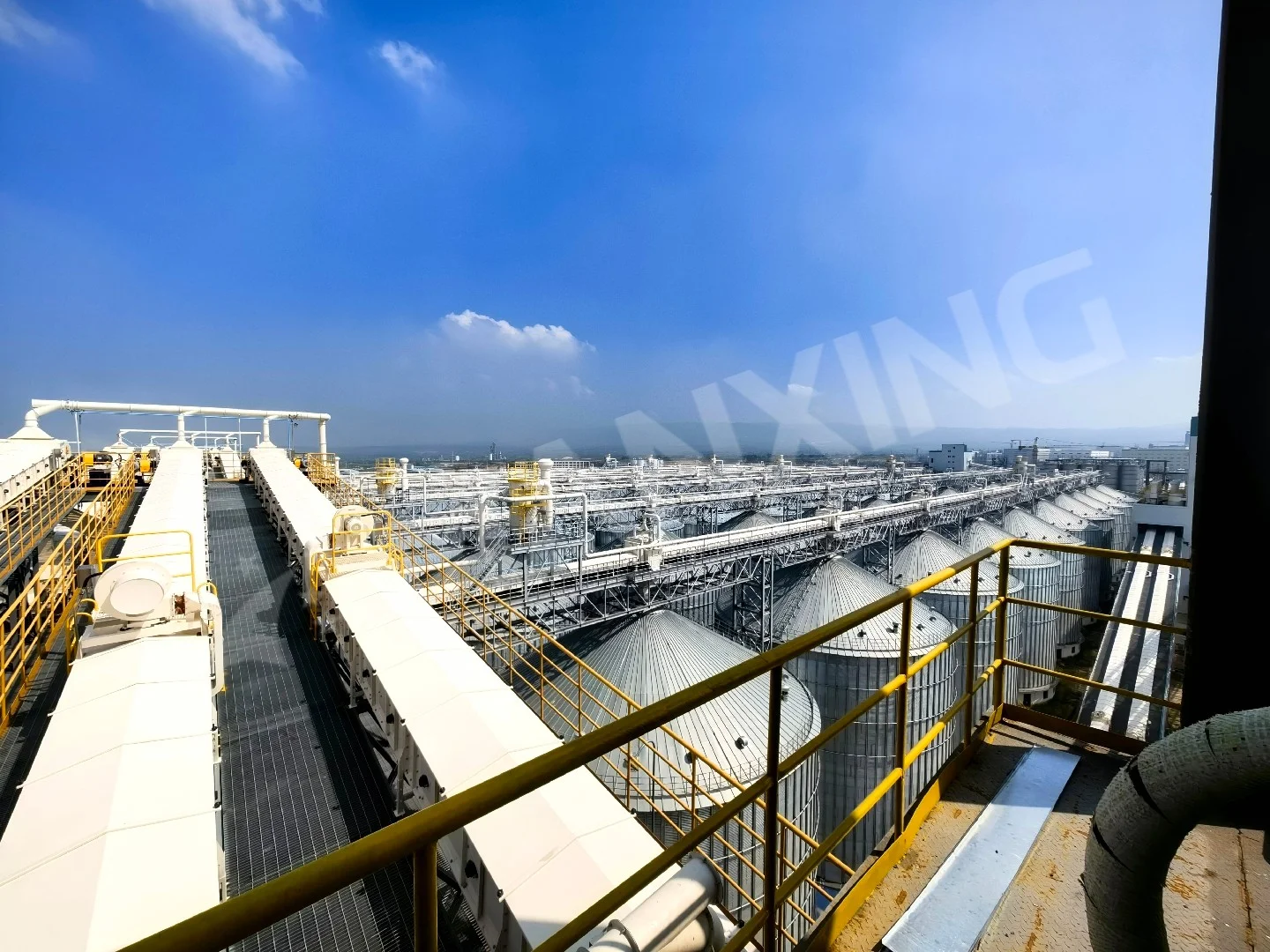


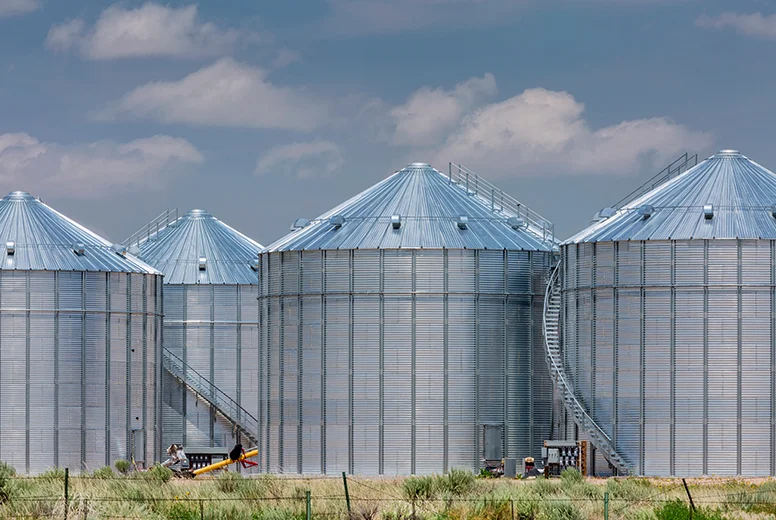
For specialty coffee processors and roasters, the flat bottom silo is emerging as the gold standard for preserving green bean viability and roasted bean flavor longevity. Unlike cone-bottom silos, the flat bottom design offers superior structural stability, unparalleled cleaning access, and precise microclimate control—directly addressing the industry’s most critical storage challenges from moisture migration to pest infestation.
Structural Advantages of Flat Bottom Silos for Coffee Bean Storage
The flat bottom silo (Flat Bottom Silo) differs fundamentally from cone-bottom or hopper-type silos, featuring a cylindrical or rectangular body with a reinforced flat floor plate. This design delivers three decisive benefits for coffee bean storage. First, the level floor enables uniform discharge, eliminating the material bridging and "rat-holing" common in cone-bottom designs where center outlets frequently clog, causing uneven quality and retention. Second, the flat floor provides ample internal access space, allowing personnel to enter the silo for thorough cleaning and pest control—critical for preventing mold growth and odor absorption in coffee beans. Third, the foundation load distribution of a flat bottom silo is far more uniform, significantly reducing the risk of differential settlement in large-scale projects, particularly on soft soil sites common in Southeast Asia and South America.
From a materials engineering perspective, flat bottom silos can be fabricated from galvanized steel, stainless steel, or reinforced concrete. For
coffee beans—a hygroscopic and temperature-sensitive agricultural product—galvanized steel silos offer outstanding airtightness and thermal insulation performance for controlling the internal microclimate. When equipped with insulation layers and active ventilation systems, a flat bottom silo can maintain internal temperature fluctuations within ±2°C and relative humidity in the optimal 55%–65% range, perfectly matching the dormancy requirements of green beans during long-term storage.Solving the Coffee Industry’s Three Core Storage Challenges
During the journey from farm to cup, coffee beans face three persistent threats: moisture migration, pest infestation, and flavor degradation. The flat bottom silo provides a systematic solution through integrated structural design and auxiliary systems.
Uniform Discharge and Moisture Control
Flat bottom silos equipped with rotating sweep augers or pneumatic discharge systems enable a true "first-in, first-out" (FIFO) flow principle. This feature is essential to prevent "hot spot" moisture migration caused by prolonged static pressure in deep bean piles. Research indicates that when green bean pile height exceeds 6 meters, uneven discharge can cause the moisture content of bottom-layer beans to rise by 1.5–2 percentage points, directly triggering mold proliferation. The flat floor design, combined with multiple discharge points, minimizes dead zones to virtually zero.
Cleaning Access and Pest Prevention
The coffee bean weevil (Araecerus fasciculatus) is the number one threat in storage. The walk-in accessibility of flat bottom silos makes regular fumigation and physical cleaning feasible. Compared to cone-bottom silos, cleaning efficiency in flat bottom silos improves by approximately 40%, and comprehensive inspections can be performed without dismantling any discharge equipment. For coffee processing facilities pursuing SQF (Safe Quality Food) or organic certification, this is a critical compliance advantage during audits.
Flavor Preservation and Airtight Management
Roasted coffee beans experience their most rapid flavor degradation within 24 hours of leaving the silo. Flat bottom silos can be retrofitted with nitrogen flushing systems to reduce internal oxygen levels below 2%, effectively slowing lipid oxidation. Combined with the high airtightness inherent to flat bottom construction, flavor preservation cycles can be extended from the conventional 3 months to 8–12 months, offering specialty coffee brands far greater flexibility in market timing and inventory management.
Key Takeaways
- Key Data: Coffee beans stored in flat bottom silos retain 12%–18% more flavor compounds (e.g., chlorogenic acid) compared to traditional cone-bottom silos.
- Best Practice: Install multi-point temperature sensors at ≤3 meter spacing on the silo floor, integrated with an automated ventilation system for real-time microclimate control.
- Watch Out For: Never commingle beans from different lots or with different moisture content in the same flat bottom silo; always discharge by batch to prevent cross-contamination.
- Pro Tip: For high-value specialty lots, specify a stainless steel flat bottom silo with food-grade welds to eliminate any risk of metallic taint or rust particle contamination.
- Bottom Line: The flat bottom silo’s combination of FIFO discharge, walk-in cleanability, and airtightness makes it the only storage solution that fully protects coffee bean quality from green bean dormancy through roasted bean shelf life.
Full-Scenario Applications Across the Coffee Value Chain
From origin washing stations to port terminals and roastery raw material storage, the flat bottom silo demonstrates exceptional adaptability. In Ethiopia’s Yirgacheffe region, local cooperatives use small galvanized flat bottom silos (50–100 ton capacity) for green bean temporary storage, effectively solving mold problems during the rainy season’s high humidity. In Vietnam’s Buon Ma Thuot coffee export port, large reinforced concrete flat bottom silos (single silo capacity 5,000 tons) paired with rail-mounted discharge systems achieve an efficient throughput of 2,000 tons per day.
For roasting facilities, the modular design of flat bottom silos allows flexible capacity expansion aligned with production growth. For example, a roastery processing 10 tons of green beans per day can configure three 100-ton flat bottom silos to separately store beans from Colombia, Brazil, and Yunnan, with precise blending achieved via overhead conveyor belts. This "separate storage, on-demand blending" model is becoming the standard paradigm for specialty coffee industrialization.
Frequently Asked Questions
Q: What is the core difference between a flat bottom silo and a cone bottom silo for coffee bean storage?
A: The core difference lies in discharge mechanism and cleaning accessibility. Cone bottom silos rely on gravity flow but are prone to "rat-holing" and bridging above the outlet, causing material retention and caking. Flat bottom silos use mechanical sweep augers or pneumatic systems for forced discharge, achieving discharge rates above 99.5%. Additionally, the flat floor can be fully opened for personnel entry, reducing cleaning dead zones by approximately 70%. This is critical for coffee beans—a high-value commodity highly susceptible to odor absorption. In terms of investment, flat bottom silos typically cost 15%–20% more upfront than equivalent-capacity cone bottom silos, but the savings in maintenance costs and product loss recovery typically recoup the difference within 2–3 years.
Q: How does a flat bottom silo manage the risk of temperature and humidity fluctuations during coffee bean storage?
A: Flat bottom silos employ a dual strategy of "passive insulation plus active ventilation." The passive insulation layer—typically polyurethane foam or rock wool sandwich panels—reduces the impact of external heat radiation by over 60%. The active ventilation system uses roof-mounted axial fans and floor-level air inlets to create a negative pressure airflow. In regions with large diurnal temperature swings, the system can automatically activate between 3:00 and 5:00 AM to draw in cool, dry air and displace warm, humid internal air. Advanced systems integrate dew point control logic: ventilation is only permitted when the outside air’s dew point is at least 3°C below the internal temperature, preventing surface condensation on the beans. This intelligent control keeps green bean moisture content stable within ±0.3% of the target value, even in challenging tropical climates.
Q: Can flat bottom silos be used for both green bean storage and roasted bean storage?
A: Yes, but with important design distinctions. For green bean storage, the silo should prioritize moisture control and pest prevention, typically using galvanized steel with moderate airtightness and active aeration. For roasted bean storage, the silo must be designed for absolute airtightness and inert gas flushing (nitrogen or carbon dioxide) to prevent oxidation and staling. Stainless steel construction is strongly recommended for roasted bean silos to avoid any metallic flavor transfer. A well-designed flat bottom silo can serve both purposes if it includes a clean-in-place (CIP) system, gas-tight doors, and a nitrogen purge port—but dedicated silos for each application are always preferred for maximum quality assurance.
Q: What is the recommended maximum pile height for coffee beans in a flat bottom silo?
A: Industry best practice recommends a maximum green bean pile height of 8–10 meters in a flat bottom silo, depending on bean density and moisture content. Exceeding this height increases the risk of compression damage to beans at the bottom and makes uniform temperature monitoring more difficult. For roasted beans, the maximum height should be reduced to 4–6 meters due to their fragile structure and higher oil content. The flat bottom silo’s sweep auger system can handle these depths efficiently, but the silo’s wall strength and foundation design must be engineered accordingly. Always consult a structural engineer with silo experience to determine the safe working height for your specific bean varieties and local climate conditions.
Q: How does the initial cost of a flat bottom silo compare to other silo types for a mid-sized coffee roastery?
A: For a mid-sized roastery requiring 300–500 tons of total storage capacity, a flat bottom silo system typically costs 15%–25% more than a comparable cone bottom silo system, and 10%–15% more than a hopper bottom silo. However, the total cost of ownership over a 10-year period often favors the flat bottom design. The reasons are threefold: reduced product loss (1%–2% less shrinkage from retained material and spoilage), lower cleaning labor costs (40% less time per cleaning cycle), and extended flavor shelf life (allowing higher-margin sales of aged or specialty lots). For a roastery processing 10 tons per day, the payback period on the additional investment is typically 18–24 months. Concrete flat bottom silos offer the lowest lifetime cost per ton but require the longest construction timeline.
Q: What maintenance schedule is recommended for a flat bottom silo used for coffee beans?
A: A comprehensive maintenance program should include: weekly visual inspection of the sweep auger and discharge system for wear or obstructions; monthly cleaning of the silo interior (full walk-down with vacuum and soft brush); quarterly calibration of temperature and humidity sensors; and annual inspection of the insulation layer, roof seals, and ventilation fan bearings. For silos with nitrogen flushing, the oxygen sensor and gas delivery system should be checked monthly. The flat bottom design’s accessibility makes these tasks significantly easier than in cone bottom silos—the entire floor can be cleaned in a single shift by two workers. Keep a detailed log of all inspections and cleaning events for SQF and organic certification audits, which typically require records spanning at least two years.
Need expert manxingsilo solutions for your coffee storage project?
We provide professional design, manufacturing, and installation services for flat bottom silos and complete bulk material handling systems worldwide. Our team has extensive experience with coffee bean storage facilities from origin to roastery.
Get a Free Technical Consultation →