
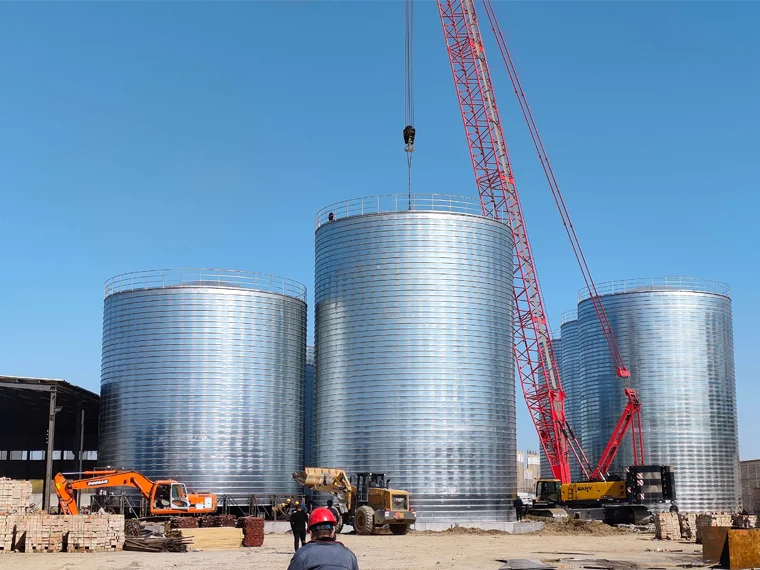
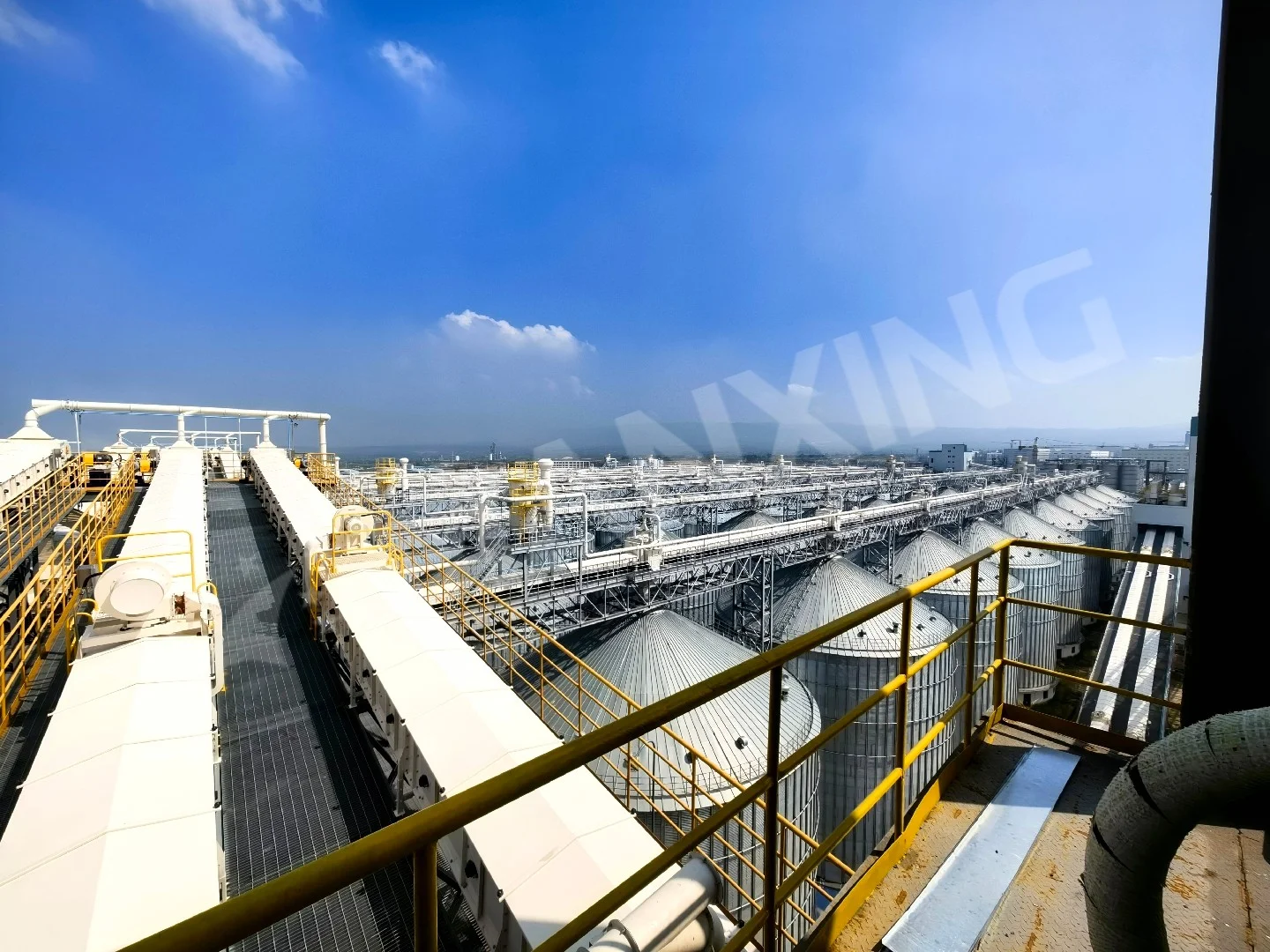


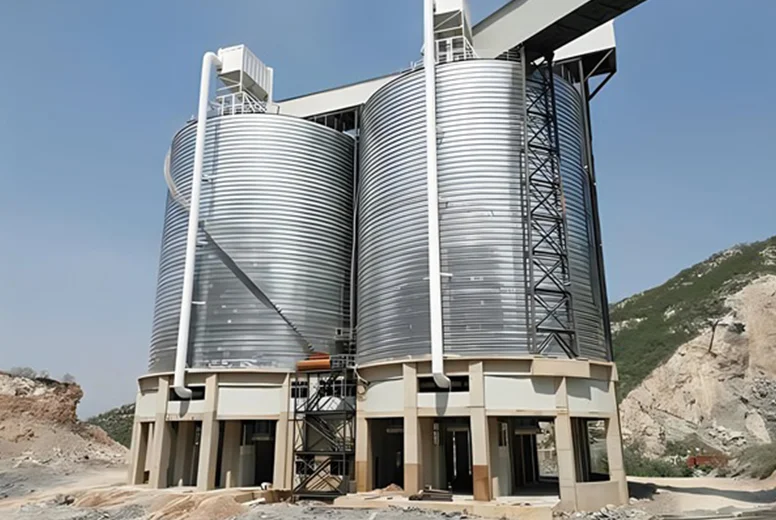
In the demanding world of mineral powder storage, concrete silos offer an unmatched combination of durability, corrosion resistance, and structural stability, with a design life exceeding 50 years. For handling highly abrasive and hygroscopic materials like phosphate, calcium carbonate, and clay, concrete silos provide a lower total cost of ownership over their lifespan compared to steel alternatives, making them the preferred choice for long-term, high-capacity bulk storage operations.
The Unique Advantages of Concrete Silos for Abrasive and Corrosive Mineral Powders
Mineral powders such as limestone powder, silica fume, and bauxite present extreme challenges to storage infrastructure due to their high abrasiveness, tendency to absorb moisture, and often slightly acidic or alkaline chemical nature. Concrete silos are uniquely engineered to address these specific material characteristics. The inherent structural durability of reinforced concrete allows it to withstand the immense lateral and vertical pressures exerted by deep columns of bulk powder, with significantly less creep and deformation under sustained full-load conditions compared to steel silos. This structural rigidity is critical for maintaining the silo's geometry and ensuring reliable discharge over decades of service.
Furthermore, the natural chemical inertness of concrete provides exceptional resistance to corrosion from a wide range of mineral powders. This is a decisive advantage when storing materials like phosphate rock powder or desulfurized gypsum, where steel would be susceptible to rust, leading to product contamination and dangerous wall thinning. Concrete’s superior thermal mass also plays a vital role. The thick walls buffer external temperature fluctuations, minimizing internal condensation and preventing the moisture-induced caking and bridging that plague metal silos. This thermal stability is essential for preserving the flowability and chemical consistency of mineral powders, particularly in regions with large diurnal temperature swings or for seasonal storage applications.
Solving Three Critical Pain Points in Mineral Powder Storage
The mineral processing industry has long struggled with three core operational challenges: difficult discharge, dust pollution, and structural safety risks. Concrete silos systematically address these issues through targeted design optimizations.
Anti-Bridging and Fluidization Design
To combat the common problems of arching and rat-holing in cohesive mineral powders, concrete silos can be designed with steep, inverted cone or eccentric discharge hoppers. These are often integrated with a multi-point air cushion fluidization system. Low-pressure air pulses are injected to break up internal arches, ensuring reliable and complete discharge. The hopper wall angles are typically designed between 60° and 70°, and when lined with high-molecular-weight polyethylene (UHMWPE) liners, the friction coefficient is dramatically reduced, further enhancing material flow.
Environmental Protection and Dust Control
Concrete silos can be seamlessly integrated with top-mounted pulse-jet baghouse dust collectors and a negative-pressure suction system at the base. Because the concrete structure itself offers superior air-tightness, it is much easier to maintain a stable micro-negative pressure inside the silo, preventing fugitive dust emissions. Additionally, by incorporating a side aeration homogenization system, the silo can perform blending operations during storage, effectively creating a "storage + homogenization" integrated unit that improves product quality consistency.
Seismic Resistance and Foundation Settlement Control
In seismically active zones, the massive weight and stiffness of a concrete silo provide a natural resistance to overturning moments. By employing a raft foundation or a pile foundation combined with a ring beam, differential settlement can be controlled to millimeter-level precision. Even in the event of a rare, severe earthquake, the ductile failure mode of a properly reinforced concrete structure provides valuable time for personnel evacuation and post-disaster assessment, a critical safety advantage over brittle steel failures.
Key Takeaways
- Key Data: Concrete silos have a design life of over 50 years, which is 2-3 times longer than steel silos (15-25 years), resulting in a 30%-40% reduction in total lifecycle cost.
- Best Practice: When storing highly abrasive mineral powders, install micro-crystal or UHMWPE liners on the inner concrete wall to reduce wear rates by over 90%.
- Watch Out For: Never overlook the use of sulfate-resistant cement in the concrete mix. When storing sulfur-bearing minerals, ordinary Portland cement can suffer significant chemical attack within 5-8 years.
- Pro Tip: For ultra-fine powders, combine a steep hopper design with air cannons, not just fluidization pads, to break up the extremely strong cohesive forces that form during storage.
- Bottom Line: For long-term, high-capacity storage of abrasive, corrosive, or moisture-sensitive mineral powders, a concrete silo offers superior durability, safety, and economic value over its entire service life.
Typical Applications of Concrete Silos in the Mineral Processing Industry
The versatility of concrete silos spans the entire value chain, from mining to fine chemicals. In primary mining and processing, they are extensively used to store crushed limestone, iron ore concentrate, and bauxite. Their enormous single-unit capacity, often exceeding 10,000 tons, effectively buffers production fluctuations between mining and beneficiation plants. In the chemical and building materials sectors, concrete silos are the standard configuration for storing industrial byproducts like phosphogypsum, carbide slag, and fly ash, where their inherent corrosion resistance ensures long-term structural integrity and environmental safety. Furthermore, for food-grade minerals such as calcium carbonate and kaolin, concrete silos can be designed to meet strict hygiene and contamination prevention standards, passing rigorous food safety certifications. The ability to customize the silo's internal finish and lining system makes it adaptable to virtually any mineral powder, from coarse aggregates to ultra-fine particulates.
Frequently Asked Questions
Q: How does the total lifecycle cost of a concrete silo compare to a welded steel silo for storing abrasive mineral powders like bauxite?
A: While the initial capital investment for a concrete silo is typically 20-40% higher than a comparable steel silo, the total lifecycle cost is significantly lower. Steel silos storing abrasive materials often require major internal repairs or relining every 5-10 years and may need complete replacement after 15-25 years due to wall thinning from abrasion and corrosion. A concrete silo, with proper design and liners, can operate for 50+ years with only routine maintenance. Factoring in downtime, repair costs, and replacement, concrete silos can reduce the total cost of ownership by 30-40% over the long term.
Q: What specific concrete mix design considerations are critical for a silo storing phosphogypsum or other acidic mineral byproducts?
A: For acidic mineral byproducts like phosphogypsum, the concrete mix must be designed for chemical resistance. The most critical factor is using sulfate-resistant Portland cement (Type V or equivalent) which has a limited amount of tricalcium aluminate (C3A) that is vulnerable to sulfate attack. A low water-to-cement ratio (below 0.45) is essential to reduce permeability. The use of pozzolanic admixtures like silica fume or fly ash can further densify the concrete matrix, blocking the ingress of aggressive ions. A protective coating or lining on the interior wall is also highly recommended as a secondary barrier.
Q: Can a concrete silo be effectively retrofitted with a fluidization system to solve ongoing discharge problems for cohesive mineral powders?
A: Yes, retrofitting is often a viable and cost-effective solution. The most common approach is to install a series of fluidizing pads or porous tiles on the hopper walls. These are connected to a low-pressure air supply system. For more difficult materials, air cannons can be added to deliver a powerful, short burst of air to break large arches. The concrete structure's strength makes it ideal for anchoring these systems. The key is to perform a flow properties test on the powder to determine the optimal air pressure, pulse duration, and pad placement for the specific silo geometry.
Q: How do concrete silos handle the risk of thermal stress and cracking in extreme climates, and how does this affect stored mineral powders?
A: Concrete silos are designed with specific reinforcement detailing to manage thermal stress. Temperature and shrinkage reinforcement is placed in both the inner and outer faces of the wall to control crack width. In extreme climates, post-tensioning can be applied to the concrete to keep the entire structure in compression, preventing tensile cracks from forming. This crack control is vital for mineral powder storage because any through-wall crack can become a pathway for moisture ingress, leading to localized caking and material degradation. The massive thermal mass of concrete also naturally dampens the internal temperature swings that cause condensation.
Q: What are the key differences in foundation design for a large concrete silo cluster versus a single, stand-alone steel silo for mineral storage?
A: A concrete silo cluster exerts a massive, concentrated load on the soil. Foundation design typically involves a thick reinforced concrete raft slab or a deep pile foundation to distribute this load and control total and differential settlement. The design must account for the combined loading from all silos in the cluster, including wind and seismic forces. In contrast, a single steel silo, being much lighter, often requires a simpler ring beam foundation. The key difference is the precision required for concrete silos; differential settlement of even a few millimeters between silos in a cluster can induce severe structural stresses in the connecting structures and conveying systems.
Need expert manxingsilo solutions for your mineral powder storage project?
We provide professional design, manufacturing, and installation services for concrete and steel bulk storage systems worldwide. Our engineers specialize in handling abrasive, corrosive, and hygroscopic materials.
Get a Free Technical Consultation →