


Choosing the right poultry feed silo is a capital decision that directly impacts feed quality, labor efficiency, and flock performance. A silo that is too large can lead to feed spoilage, while a poorly selected auger system can cause bridging and thousands of dollars in losses. This guide provides a weighted decision framework based on farm size, feed type, logistics, and expansion plans to help you select the perfect silo the first time.
Capacity Calculation: Precisely Matching Flock Needs with Storage Duration
Capacity is the primary parameter when purchasing a poultry feed silo. The correct formula is: flock size × daily feed intake per bird × storage days. For broilers, daily feed intake is 0.15–0.25 lbs per bird; for layers, it is 0.25–0.30 lbs per bird. For example, with 10,000 broilers consuming 0.20 lbs per bird per day and a planned 14-day storage period, the total requirement is 28,000 lbs (approximately 14 tons). We recommend adding a 10% safety margin to this baseline.
However, oversizing capacity is a common pitfall. In hot and humid climates, storage periods exceeding 21 days significantly increase the risk of feed mold and nutrient loss. The correct approach is to set a reasonable storage duration based on your feed supplier's delivery frequency and seasonal demand fluctuations, rather than simply aiming for "bigger is better."
Material Selection: Balancing Galvanized Steel, Stainless Steel, and Polyethylene
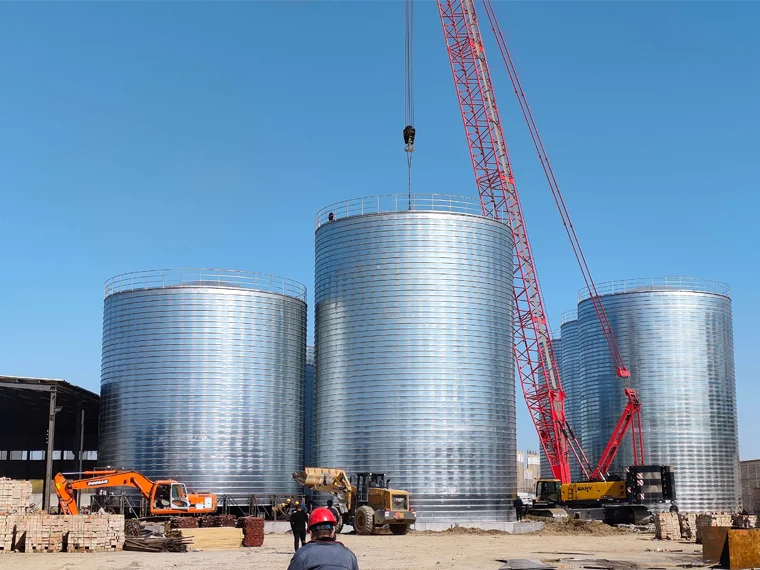
Silo material directly affects service life and maintenance costs. Galvanized steel (with G90 or G115 coating) is the standard choice for most farms, offering a balance of durability and economy. Stainless steel (304 or 316) performs excellently in coastal, high-humidity, or corrosive environments but costs 2–3 times more than galvanized steel. Polyethylene silos are lightweight and corrosion-resistant, but their capacity is typically limited to under 10 tons, and long-term UV exposure can cause embrittlement and cracking.
For powdered feed, we recommend galvanized steel silos with smooth interior walls to reduce clumping and material buildup. If your farm is near the coast or uses high-moisture ingredients, stainless steel is a more reliable long-term investment.
Auger System Selection: Choosing Between Flexible, Core Auger, and Chain-and-Flighter Systems
The conveying system is the "heart" of the silo. A wrong choice can lead to feed breakage, bridging, or poor discharge efficiency.
Flexible Augers (Spring-Type)
These are gentle on pelleted feed, minimizing fines generation. However, their maximum conveying length is typically limited to 200 feet, and they are not suitable for powdered or high-moisture feed.
Core Augers (Rigid Shaft)
These feature a rigid shaft with spiral flights. They are effective for conveying powdered feed but can crush pellets. Using a variable-pitch design can reduce pellet damage. Core augers can reach lengths of up to 300 feet, making them suitable for large farms.
Chain-and-Flighter Systems
These are robust and suitable for high-volume conveying but are noisy and have higher maintenance costs. For farms using both pellets and powder, a core auger with variable-pitch flights offers the best balance of performance and cost.
Key Takeaways
- Key Data: When silo capacity exceeds 21 days of storage, the risk of feed mold increases by over 40%, especially in hot and humid climates.
- Best Practice: For farms using both pellets and powder, prioritize a core auger with variable-pitch flights to balance conveying efficiency and feed integrity.
- Watch Out For: The silo fill port is typically 12–15 feet high. You must verify that your feed delivery truck's discharge auger can reach this height; otherwise, loading will be impossible.
- Pro Tip: In coastal areas or high-humidity environments, invest in an epoxy interior coating for galvanized steel silos to extend service life beyond 20 years.
- Bottom Line: The single most important takeaway is to match silo capacity to your feed delivery schedule—never exceed 21 days of storage in hot climates—and select a conveying system that matches your primary feed type.
Logistics Compatibility: Fill Port, Truck Access, and Discharge Alignment
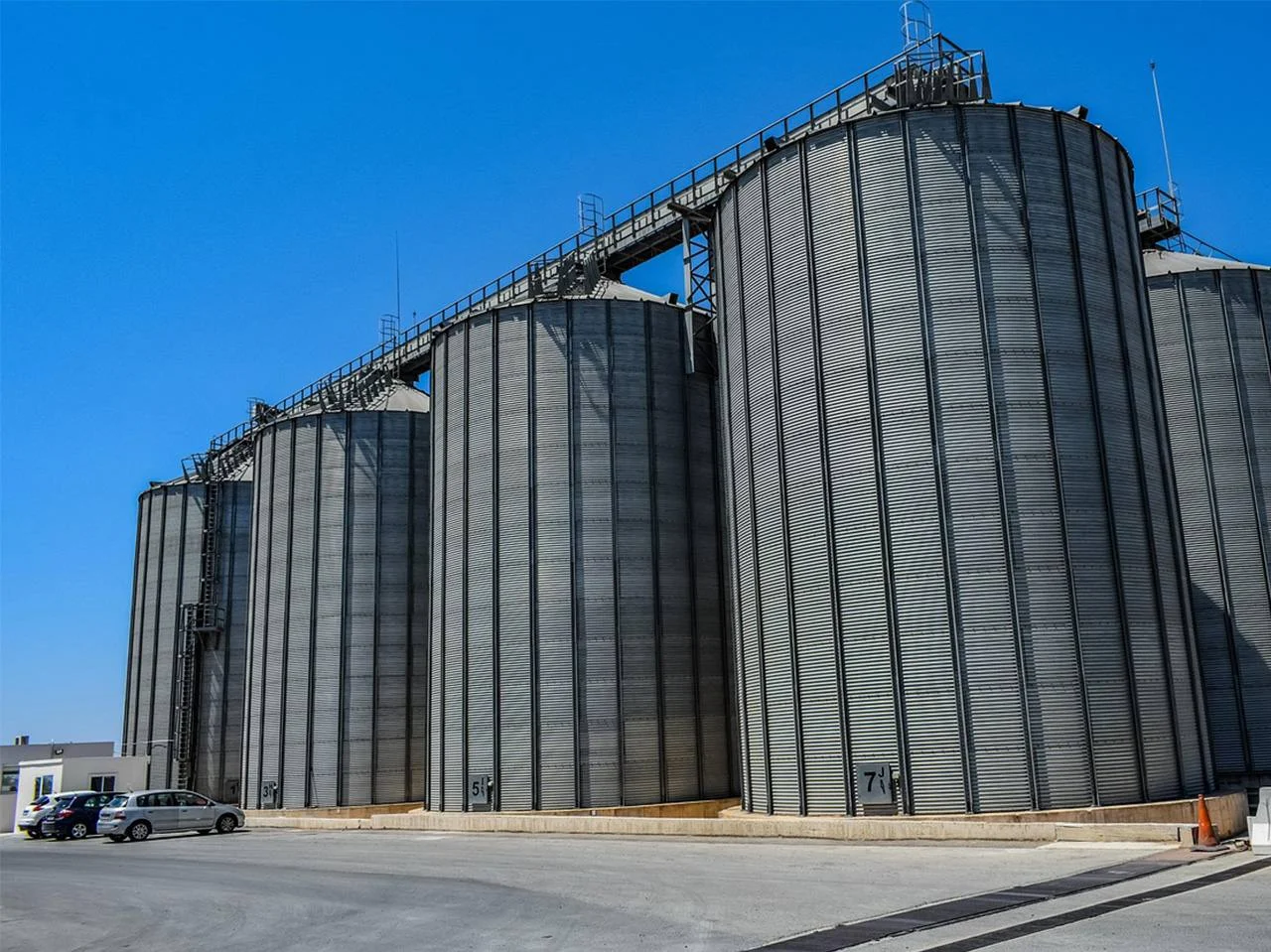
Standard feed delivery trucks have a discharge opening of 8–10 inches in diameter. Your silo's fill hopper opening must match this size; a minimum of 8 inches is required to prevent clogging or slow unloading. Add
itionally, the fill port height is typically designed at 12–15 feet. You need to confirm that the truck's auger can reach this height.Site planning is equally critical: the silo should be located near the road to allow adequate turning radius and reversing space for the truck. Also, reserve future expansion interfaces to avoid the costly scenario of "demolishing and rebuilding" a silo when you scale up your operation.
Frequently Asked Questions
Q: In hot and humid climates, how long does a galvanized steel silo typically last, and does it need an extra coating?
A: In hot and humid environments, a standard galvanized steel silo (G90 coating) typically lasts 10–15 years, depending on maintenance frequency. We recommend applying an additional epoxy interior coating during installation. This effectively prevents corrosion and feed caking, extending the service life to over 20 years. For coastal areas, stainless steel is the more reliable long-term choice.
Q: My farm uses both pelleted and powdered feed. Can I use a single auger system for both?
A: Yes, but careful selection is required. Flexible augers are gentle on pellets but inefficient and prone to clogging with powder. A core auger with variable-pitch flights is the better solution: the variable-pitch design reduces pellet breakage during conveying, while the rigid shaft ensures stable discharge for powder. We recommend installing a variable frequency drive (VFD) to adjust the speed based on feed type, further minimizing degradation.
Q: Why is a 10% safety margin recommended in capacity calculations instead of 20%?
A: A 10% safety margin is sufficient to cover delivery delays or short-term demand fluctuations. Increasing it to 20% significantly extends the feed's residence time in the silo, especially during hot, humid summers, exponentially increasing the risk of spoilage. A more scientific approach is to set your storage days based on your supplier's delivery cycle (e.g., 7 days for weekly delivery), then add the 10% margin, rather than blindly increasing total capacity.
Q: What is the optimal distance between a poultry feed silo and the feed lines inside the chicken house?
A: The optimal distance depends on your chosen auger system. For flexible augers, keep the distance under 200 feet to maintain conveying efficiency and minimize feed degradation. For core augers, distances up to 300 feet are acceptable. However, longer runs increase power requirements and the risk of bridging. We recommend positioning the silo as close to the house as possible—ideally within 50–100 feet—to reduce system wear and energy costs.
Q: How do I prevent feed from bridging or rat-holing in a poultry feed silo?
A: Bridging is most common with high-moisture or finely ground feed. To prevent it, ensure your silo has a steep cone angle (60–70 degrees) and a smooth interior finish. For existing silos, installing aeration pads or a vibrator on the hopper can help. For new installations, consider a core auger with a variable-pitch design, which actively breaks up material at the discharge point. Also, avoid storing feed for more than 21 days, as this increases moisture migration and caking.
Need expert poultry feed silo solutions for your farm?
We provide professional design, manufacturing, and installation services for bulk feed storage and conveying systems worldwide, ensuring your silo is perfectly matched to your farm size, feed type, and logistics.
Get a Free Technical Consultation →