
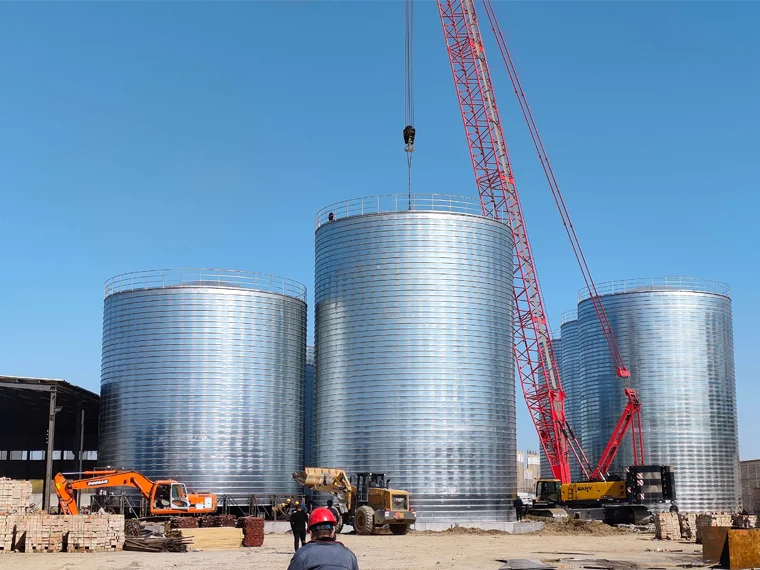
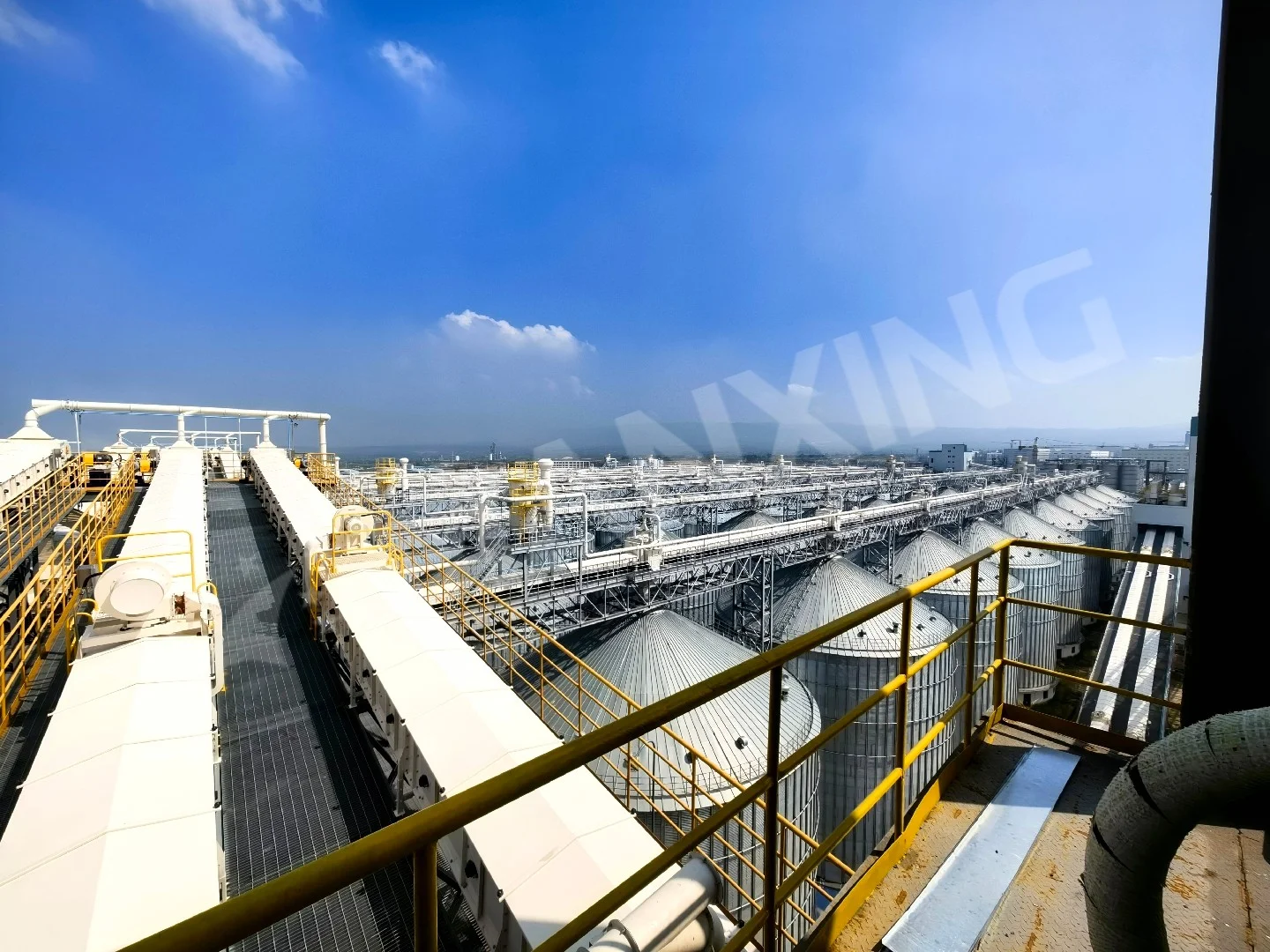


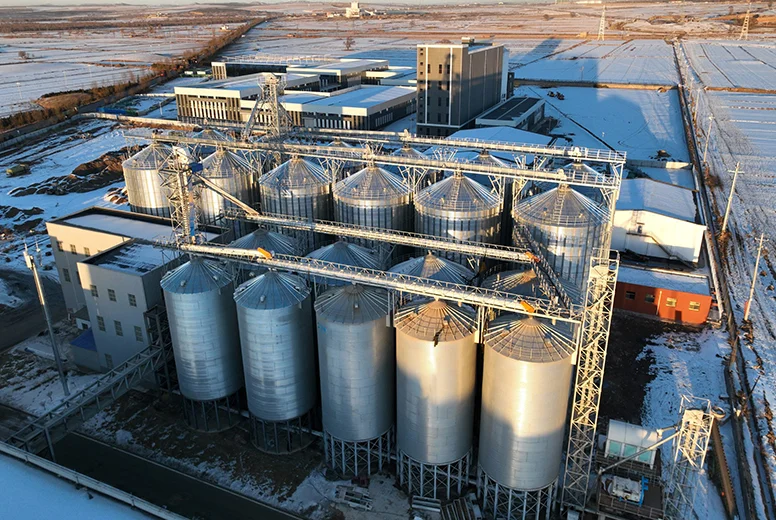
In the world of bulk material storage, the hopper bottom silo with a galvanized roof stands out as a superior solution for industries ranging from agriculture to cement and chemicals. Combining exceptional corrosion resistance, gravity-assisted discharge efficiency, and modular customization, this silo type offers a 15-20 year lifespan with up to 40% faster installation than concrete alternatives. This guide, grounded in 15 years of field expertise, explores its structural advantages, engineering selection criteria, and common pitfalls to help you make a smarter storage investment.
Core Structure and Material Durability of Galvanized Roof Hopper Bottom Silos
The competitive edge of a hopper bottom silo lies in the synergy between its conical bottom and galvanized steel roof. The hopper is typically fabricated from high-strength carbon steel or stainless steel, with the cone angle meticulously engineered between 45° and 60°. This design ensures complete gravity discharge—eliminating dead zones—and is particularly effective for powders and granular materials with poor flowability. The roof, made from hot-dip galvanized steel sheet, forms a dense zinc-iron alloy layer that provides 3 to 5 times the corrosion resistance of standard steel. This dual-protection structure significantly reduces the risk of material contamination from rust and drastically lowers maintenance frequency.
In high-humidity coastal areas or chemical parks, the anti-corrosion advantage of a galvanized roof is especially pronounced. It ensures structural stability over a 15-20 year lifecycle, while the silo’s lighter weight places lower demands on foundation bearing capacity compared to concrete silos. The result is a faster, more cost-effective installation process that can reduce project timelines by over 40%.
Solving Material Bridging and Uneven Discharge
Operators often struggle with material "bridging" or "ratholing" inside storage bins, leading to uneven discharge and lost capacity. The hopper bottom silo is engineered specifically to address these challenges. The conical bottom angle, calculated based on fluid dynamics, guides material to flow smoothly along the walls, preventing stagnant zones. When combined with optional vibration breakers or pneumatic fluidization devices, even sticky materials like wet sand or feed can achieve a discharge rate exceeding 95%. Furthermore, the outlet can be customized to a round or rectangular shape and fitted with manual or pneumatic gates for precise flow control—a critical feature for batching operations that boosts automation and reduces manual intervention.
Engineering Basis for Cone Angle Design
The cone angle is not a fixed value; it is dynamically determined by the material's angle of repose and internal friction. For example, free-flowing grains with a repose angle of ~30° require a 45° cone, while poor-flowing corn flour with a ~50° repose angle demands a 60° cone. An incorrectly specified cone angle is the leading cause of discharge problems.
Anti-Condensation Technology for Galvanized Roofs
In regions with large temperature swings, condensation on the silo roof is a major risk. High-quality galvanized roofs incorporate built-in insulation layers or vents, combined with moisture-proof gaskets, to prevent water vapor from condensing and dripping onto the stored material. This detail, often overlooked, is critical for preventing mold growth and caking, especially in grain storage.
Key Takeaways
- Key Data: A properly designed hopper bottom silo achieves a discharge rate of over 99%, reducing material residue loss by 5-8% compared to flat-bottom silos. Related: Flat bottom silo project in Thailand >
- Best Practice: Always provide material density, angle of repose, and moisture content data to your engineer for precise cone angle and wall thickness calculations.
- Watch Out For: Never cut costs by reducing the galvanized coating thickness below 180 µm. In corrosive environments, inadequate coating can lead to visible rust within 3-5 years.
- Pro Tip: For multi-material facilities, consider a "multi-silo parallel" layout sharing a single dust collection and conveying system to drastically reduce civil engineering costs.
- Bottom Line: The combination of a precisely angled hopper and a durable galvanized roof delivers the highest reliability and lowest total cost of ownership for challenging bulk solids.
Modular Customization: From Capacity to Outlets for Every Application
Modern hopper bottom silos with galvanized roofs are highly modular. Single silo capacities range flexibly from 10 tons to 5,000 tons, with diameters and cone heights customizable to fit site constraints. In space-limited plants, a "multi-silo parallel" layout can share a single dust collection and conveying system, significantly lowering civil works costs. Outlets can be integrated with screw conveyors, belt conveyors, or pneumatic conveying pipes to directly feed production lines in a fully enclosed, dust-free operation. Safety accessories like level indicators, temperature sensors, pressure relief valves, and explosion-proof doors can be added to meet the safety codes of different industries, from grain to chemicals. For users who frequently change stored materials, quick-opening manholes and internal cleaning devices can be designed for easy maintenance and product changeover.
Frequently Asked Questions
Q: How do I choose between a galvanized roof silo and a stainless steel silo for chemical storage?
A: This is a critical selection decision. A galvanized silo performs excellently in environments with a pH range of 5.5–12 and costs only 40-50% of a 304 stainless steel silo. However, if you are storing strong acids (like hydrochloric acid vapor) or strong alkalis, the zinc layer will corrode rapidly. In such cases, you must specify 316L stainless steel or an internal anti-corrosion lining. We recommend conducting a material corrosivity test before finalizing the material specification.
Q: How can I prevent condensation and mold growth in a hopper bottom silo used for grain storage?
A: Condensation typically occurs at the temperature differential between the roof and the wall. A three-part solution is most effective. First, install a 50mm thick polyurethane insulation layer beneath the galvanized roof. Second, set up a recirculation fumigation and ventilation duct in the upper cone area, using axial fans for forced air exchange. Third, deploy an online temperature and humidity monitoring system that automatically activates ventilation when internal humidity exceeds 65%. Field data shows that combining these measures can keep mold loss rates below 0.1%.
Q: What are the typical installation timelines and foundation requirements for a galvanized roof hopper bottom silo?
A: Unlike concrete silos that require 3-6 months of curing, bolted or welded galvanized steel silos can be erected on-site in just 15-30 days. The foundation is typically a reinforced concrete ring base. Its bearing capacity must be calculated based on the silo's full load weight, with a general requirement of ≥150 kPa. For soft soil conditions, piling is necessary, but the total cost still remains under 60% of an equivalent-capacity concrete silo.
Q: Can a hopper bottom silo handle materials that are abrasive or have a high temperature?
A: Yes, but with specific modifications. For abrasive materials like cement clinker or sand, the hopper bottom and lower wall sections should be lined with abrasion-resistant steel (e.g., AR400) or ceramic tiles to prevent premature wear. For high-temperature materials (up to 100°C or more), the silo design must account for thermal expansion, and the galvanized roof may need to be replaced with a painted or stainless steel option, as the zinc coating can degrade above 200°C. Always specify the material temperature and abrasiveness during the design phase.
Q: What is the typical maintenance schedule for a galvanized roof on a hopper bottom silo?
A: A properly applied hot-dip galvanized coating (≥180 µm) is very low maintenance. In normal industrial environments, a visual inspection every 2-3 years is sufficient. Look for signs of white rust (zinc oxide) or red rust (steel corrosion). In aggressive coastal or chemical environments, an annual inspection is recommended. If the coating is damaged (e.g., from a forklift impact), the area should be cleaned and repaired with a zinc-rich cold galvanizing compound to prevent localized corrosion from spreading.
Need expert hopper bottom silo solutions for your project?
We provide professional design, manufacturing, and installation services for bulk storage and material handling systems worldwide. With over 500 successful projects across grain, feed, cement, and chemical industries, we deliver tailored solutions that maximize efficiency and longevity.
Get a Free Technical Consultation →