
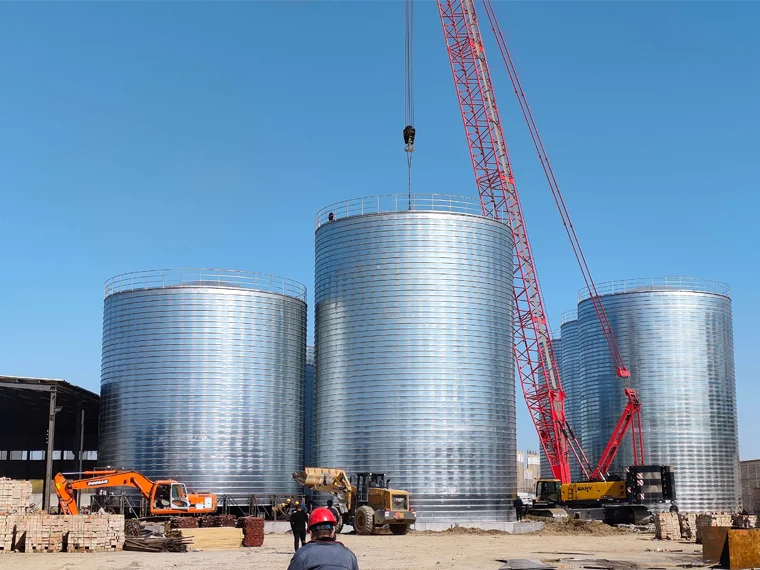
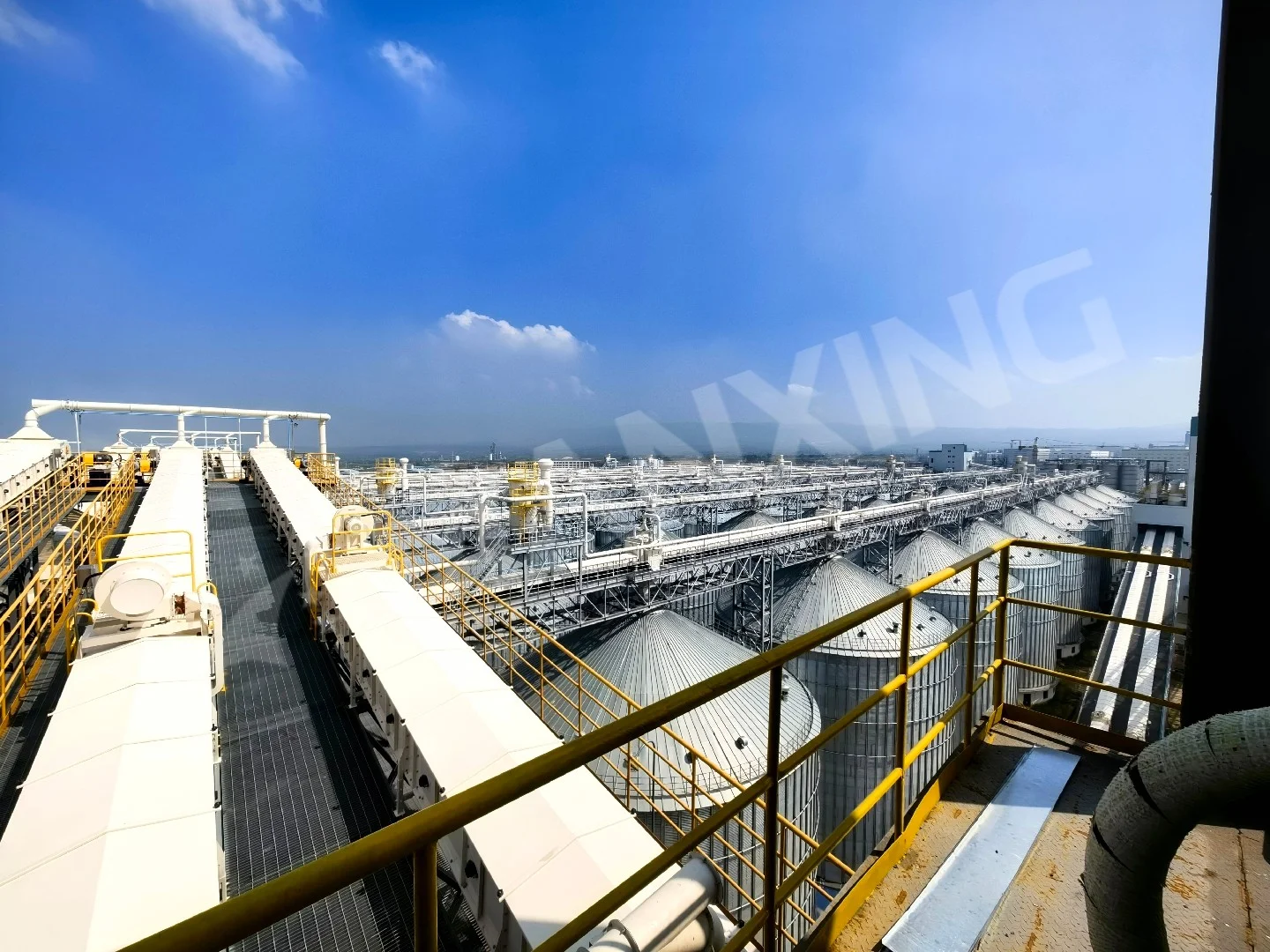


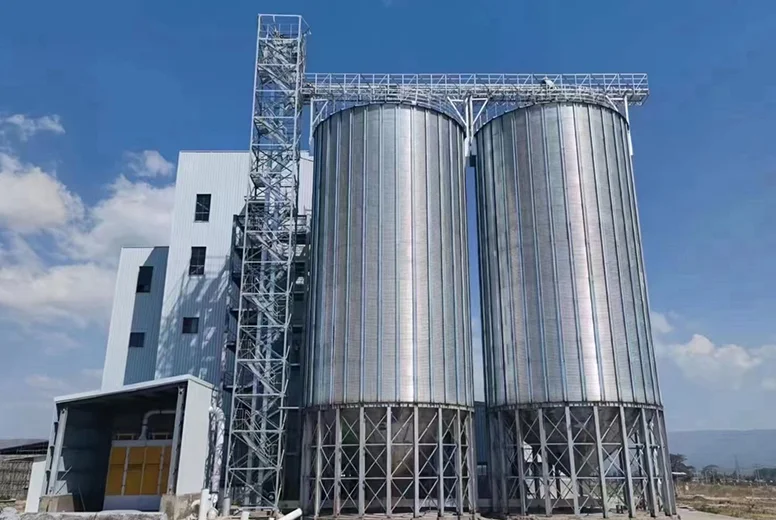
For commercial farms demanding operational efficiency, the hopper bottom silo has become the gold standard for grain and feed storage, leveraging gravity discharge and superior durability. This article breaks down its core engineering advantages, diverse applications, and critical selection criteria to help farm owners maximize their return on investment.
Hopper Bottom Silos: The Core Solution for Efficient Commercial Farm Storage
In modern commercial agriculture, efficient storage and handling of harvested crops are vital for boosting productivity and reducing post-harvest losses. The hopper bottom silo stands out among storage solutions due to its optimized design for bulk granular materials like grain, seeds, and feed. Unlike flat-bottom silos, its unique conical base enables self-cleaning gravity discharge, dramatically reducing material residue and manual intervention. Thi
s design makes it an indispensable link in the supply chain of large-scale farms.The philosophy behind this silo is "efficiency first." Every detail, from structural mechanics to material flow characteristics, is engineered to solve traditional storage pain points—such as discharge blockages, difficult clean-out, and material segregation. For commercial farms with massive annual throughput, a hopper bottom silo delivers not just operational convenience but a significant boost to economic performance.
Core Technical Advantages and Engineering Principles of Hopper Bottom Silos
The superior performance of a hopper bottom silo stems from its precision engineering. Compared to standard upright silos, it redefines bulk storage standards through three core technologies: gravity flow discharge, optimized structural strength, and precise flow control.
The Discharge Efficiency Revolution of the Conical Hopper
The cone angle at the bottom of the hopper is typically designed between 45° and 60°. This angle, calculated using fluid dynamics principles, ensures that grain flows smoothly and continuously toward the central outlet under the force of gravity. This design effectively eliminates "bridging" and "rat-holing"—common discharge obstacles in flat-bottom silos that often cause flow interruptions and require manual clearing. By enabling a "first-in, first-out" material flow pattern, the hopper bottom silo also significantly reduces the risk of spoilage from long-term storage.
Structural Materials and Durability Design
Commercial farms often face extreme weather and the challenges of continuous, long-term operation. Hopper bottom silos are constructed from high-strength galvanized steel or reinforced concrete, capable of withstanding wind, snow, and seismic loads. The spiral-folded steel sheet technology, in particular, enhances the ring strength of the silo body through a double-folded edge process, maintaining exceptional structural integrity even in large-scale applications. This durability directly translates into lower maintenance costs and a longer service life, often exceeding 30 years.
Key Takeaways
- Key Data: When the hopper angle is between 45° and 60°, discharge efficiency is maximized, and residual material can be reduced to less than 1% of total capacity.
- Best Practice: When installing a hopper bottom silo, equip it with adjustable discharge valves and level sensors to achieve precise flow control and automated management.
- Watch Out For: For materials with high moisture or stickiness (e.g., certain wet corn), assess whether to add vibrators or air cushion systems to prevent material from sticking to the hopper walls.
- Pro Tip: A steeper hopper angle (over 60°) may be necessary for oilseeds or high-moisture grains to ensure consistent flow and prevent bridging.
- Bottom Line: The hopper bottom silo’s gravity discharge and first-in-first-out flow make it the most efficient and low-maintenance choice for commercial grain and feed storage.
Diverse Applications of Hopper Bottom Silos in Commercial Agriculture
The flexibility of hopper bottom silos allows them to adapt to a wide range of scenarios, from major grain-producing regions to large livestock operations. Their application extends beyond simple storage, integrating deeply into the daily production and logistics rhythm of the farm.
For large grain farms, the hopper bottom silo serves as a "transit hub" during harvest season. Its rapid discharge capability allows trucks to be loaded in a short time, significantly shortening the turnaround time from field to storage. For livestock farms, these silos act as the front-end storage unit for precision feeding systems. Through pneumatic or screw conveyors, feed is delivered directly to the feeding line, enabling a fully automated process from storage to feeding.
Frequently Asked Questions
Q: What are the specific differences in long-term operating costs between a hopper bottom silo and a flat-bottom silo?
A: While the initial investment for a hopper bottom silo is typically 15%–25% higher than a flat-bottom silo, its long-term operating costs are significantly lower. First, gravity discharge reduces electricity consumption (no sweep auger is needed), saving thousands of dollars annually in power costs. Second, near-zero material residue reduces labor costs for clean-out and losses from mold spoilage. Finally, its "first-in, first-out" flow pattern helps maintain grain quality, and when market prices fluctuate, the premium for high-quality grain can easily cover the initial investment difference.
Q: What specific adjustments are needed for a hopper bottom silo when storing different grains like corn, soybeans, and wheat?
A: Different grains have varying angles of repose and flow characteristics. For example, corn flows well, while soybeans and some oilseeds, due to their smooth and fragile skins, can cause "slipping" or "segregation" at the hopper. To address these differences, we recommend: 1) Adjusting the hopper cone angle based on material properties—materials with poor flowability require a steeper angle (e.g., over 60°); 2) Sizing the outlet to match the maximum particle diameter to prevent blockages; 3) Using discharge valves with buffer designs for fragile seeds to reduce breakage. Professional silo manufacturers typically offer customized hopper designs based on material characteristics.
Q: How does a hopper bottom silo improve the efficiency of a livestock farm's feed management system?
A: Hopper bottom silos are ideal for integration with automated feeding systems. Their gravity discharge provides a consistent, reliable flow of feed into conveyors or pneumatic lines, eliminating the need for mechanical extraction. This allows for precise rationing and on-demand delivery to feeding stations, reducing labor costs and feed waste. The "first-in, first-out" design also ensures that older feed is used first, maintaining freshness and nutritional value for livestock.
Q: Can a hopper bottom silo be used for storing high-moisture corn or other wet grains for silage?
A: Yes, but with specific considerations. High-moisture grains are more prone to sticking and bridging. To ensure reliable discharge, the hopper angle should be steeper (often 60° or more) and the interior surface must be smooth and corrosion-resistant. Adding a vibrator or an aeration pad at the hopper outlet can help dislodge any clinging material. It's also critical to have a robust aeration system to control fermentation and prevent spoilage in the stored grain mass.
Q: What is the typical lifespan of a galvanized steel hopper bottom silo, and what factors affect its durability?
A: A well-maintained galvanized steel hopper bottom silo can last 30 years or more. Key factors affecting its lifespan include: the quality of the galvanization (zinc coating thickness), the corrosiveness of the stored material (e.g., high-sulfur grains), and exposure to harsh environmental conditions. Regular inspections for rust or damage, especially at seams and the hopper transition, are essential. Proper foundation design and ensuring the silo is not overloaded also play a critical role in long-term structural integrity.
Need expert hopper bottom silo solutions for your commercial farm?
We provide professional design, manufacturing, and installation services for bulk storage and material handling systems worldwide, ensuring your silo integrates perfectly with your farm's logistics.
Get a Free Technical Consultation →