
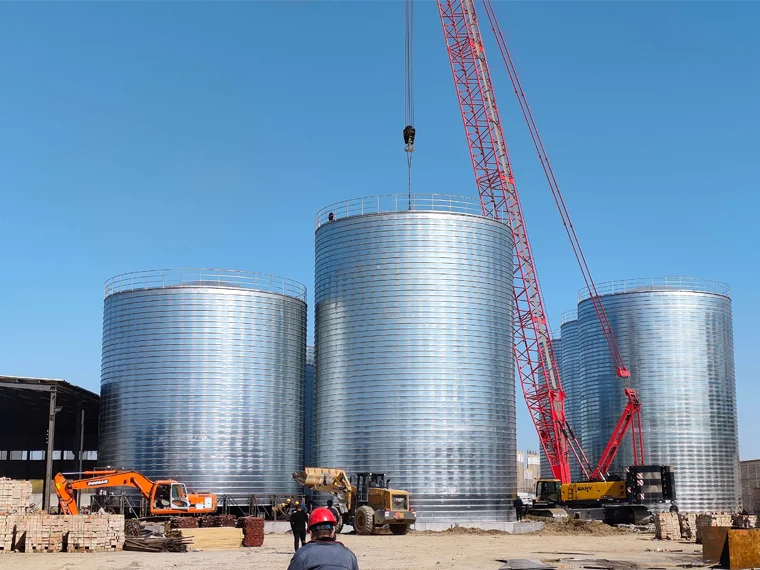



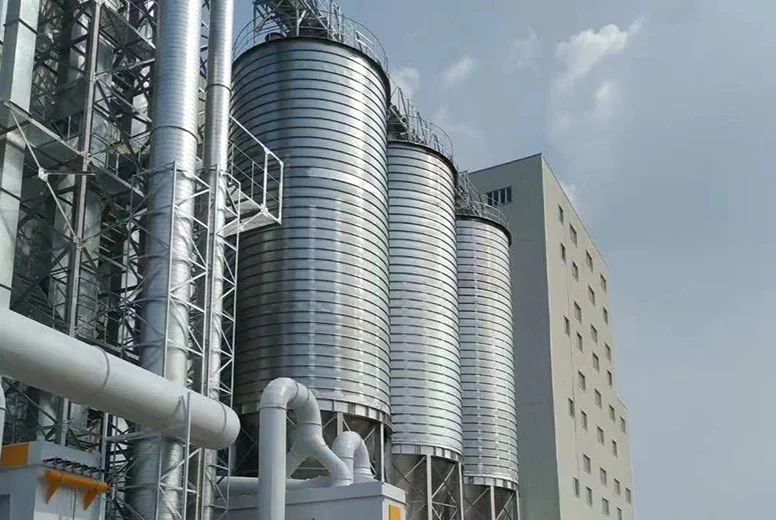
Precision weighing meets efficient discharge: the hopper bottom silo with an integrated weighing system is becoming the core equipment for automated inventory management and batch control in grain processing, chemical, and food industries. This article provides a deep dive into its technical principles, application advantages, and key selection criteria, offering actionable insights for engineers and plant managers seeking to optimize their bulk material handling operations.
Technical Principles and Core Advantages of the Hopper Bottom Silo with Weighing System
In the field of bulk material storage and handling, the hopper bottom silo with an integrated weighing system represents a significant technological advancement. Its core innovation lies in the deep integration of the discharge advantages of a hopper bottom (conical or pyramidal) with a high-precision load cell system. This design not only leverages gravity to achieve smooth, residue-free discharge but also provides plants with unprecedented inventory visibility and batch control through real-time weight monitoring. For industries requiring precise proportioning and continuous production, such as flour mills, feed plants, and plastic pellet processing, this system significantly reduces material waste and ensures consistency in final product quality.
Unlike traditional level indicators or volume estimation methods, the weighing system directly measures material mass, effectively eliminating errors caused by changes in material density, fluffiness, or compaction. This means plant managers can rely on real-time data for accurate procurement planning, production scheduling, and cost accounting. Furthermore, the optimized structural design of the system ensures long-term durability in high-temperature, high-pressure, or corrosive environments, making it an indispensable component of modern industrial storage.
Solving Industry Pain Points: Achieving Precise Inventory and Automated Control
Traditional bulk storage faces two core pain points: first, inaccurate inventory data, relying on manual estimates or low-precision level indicators, leading to discrepancies between records and actual stock; second, coarse discharge control, making it difficult to achieve precise batch proportioning, resulting in raw material waste and product quality fluctuations. The hopper bottom silo with a weighing system solves these problems precisely through the following methods:
Real-Time Weighing and PLC Integration
The weighing module (typically compression or tension sensors) at the silo base transmits weight signals in real-time to a PLC (Programmable Logic Controller) system. The PLC can automatically control inlet valves, discharge gates, and conveying equipment, enabling automatic stoppage of filling at a preset weight, precise extraction of batch materials according to a recipe, and automatic recording of every in-and-out transaction to form a complete electronic ledger.
Residue-Free Discharge Design
The hopper bottom (typically with a cone angle of 60 degrees or greater) ensures that material flows out entirely by gravity, effectively avoiding the "dead zones" and "rat-holing" common in flat-bottom silos. Thi
s not only reduces the risk of material degradation and cross-contamination but also guarantees that the weighing system can be zeroed or calibrated after each discharge, maintaining long-term measurement accuracy.Key Takeaways
- Key Data: Hopper bottom silos with weighing systems can achieve dynamic weighing accuracy of ±0.1% to ±0.5%, far superior to traditional volume estimation methods.
- Best Practice: During installation, ensure all pipes and supports connected to the silo use flexible connections to prevent external structural forces from affecting the load cell readings.
- Watch Out For: Regularly perform "zero" and "span" calibration of the load cells, especially when changing materials or during significant seasonal temperature and humidity variations, to maintain system reliability.
- Pro Tip: For materials prone to bridging, consider using a steeper cone angle (e.g., 70°) and a polished stainless steel inner liner to ensure consistent flow and accurate weight readings.
- Bottom Line: Integrating a high-accuracy weighing system with a hopper bottom silo is the most effective way to eliminate inventory guesswork and achieve precise, automated batch control in bulk material handling.
Cross-Industry Applications: Customized Solutions from Grain to Chemicals
The application of hopper bottom silos with weighing systems extends far beyond traditional grain storage. In the food industry, they are used for the precise receiving and recipe feeding of ingredients like flour, sugar, and starch, ensuring consistent product taste and meeting HACCP traceability requirements. In the chemical and plastics industries, they are ideal for storing resin pellets and powder additives, using the weighing system to achieve precise control over small-dose配料 (batching), thereby reducing waste of expensive raw materials. In the building materials industry, such as for cement and aggregate storage and batching, this system significantly enhances the automation level and production efficiency of mixing plants. Whether for free-flowing granules or powders prone to bridging, stable operation can be achieved by customizing the silo cone angle, polishing the inner wall, or installing flow-promoting air pads.
Frequently Asked Questions
Q: What are the different installation methods for a weighing system on a hopper bottom silo, and how do I choose the right one?
A: There are three main installation methods: 1) Compression sensors installed under the silo legs—simple structure, suitable for small to medium-sized silos; 2) Tension sensors suspended from above—ideal for large silos or applications requiring high isolation from external forces; 3) Modular weighing platforms with sensors integrated into the silo base—fast to install. The choice depends on silo capacity, site space, accuracy requirements, and budget. For applications requiring frequent relocation or modification, the modular platform is often the most advantageous.
Q: How can I handle material bridging or arching inside the hopper bottom silo, which can affect weighing accuracy?
A: Material bridging causes a portion of the material to hang up, leading to a lower weight reading than actual inventory and obstructing discharge. Solutions include: 1) Optimizing the hopper cone angle (typically recommended to be at least 15 degrees steeper than the material's angle of repose); 2) Lining the inner wall with ultra-high molecular weight polyethylene (UHMWPE) sheets or using polished stainless steel to reduce friction; 3) Installing flow aids such as air cannons, vibrators, or fluidizing pads. These measures ensure smooth material flow, allowing the weighing system to reflect the true, complete material weight.
Q: Can a hopper bottom silo with a weighing system handle materials that are sticky or have high moisture content?
A: Yes, but special design considerations are necessary. For sticky or high-moisture materials, a steeper cone angle (e.g., 70-80 degrees) is critical. Additionally, the inner surface should be polished to a high finish or lined with a low-friction material like stainless steel or UHMWPE. The weighing system itself must be sealed against dust and moisture ingress. In some cases, a flexible diaphragm or bellows may be needed at the discharge point to prevent mechanical interference with the weigh system from the downstream equipment.
Q: What is the typical calibration frequency for the load cells in this system, and what does the process involve?
A: For most applications, a full calibration (zero and span) is recommended at least once every six months. However, more frequent calibration (e.g., quarterly) is advised after initial installation, after major structural modifications, or when switching to materials with significantly different bulk densities. The process involves first performing a "zero" calibration with the silo empty and all discharge gates closed. Then, a "span" calibration is performed using known test weights or a certified material weight to set the system's full-scale reading. The PLC software typically guides the operator through this process.
Q: How does the weighing system integrate with existing plant PLC and SCADA systems for data logging and reporting?
A: The weighing system typically outputs a standard analog signal (e.g., 4-20 mA) or a digital signal (e.g., via Modbus, Profibus, or Ethernet/IP) directly to the plant's PLC. The PLC can then log all weight data, including fill start/stop times, discharge quantities, and alarms. This data can be transmitted to a higher-level SCADA system for comprehensive inventory tracking, batch reporting, and integration with ERP software for automated procurement and cost analysis. The entire process is designed to create a seamless, paperless audit trail.
Need a professional hopper bottom silo with weighing system for your project?
We provide one-stop customized services from structural design and weighing system integration to PLC automation control, ensuring your material management is precise and efficient.
Get a Free Technical Consultation →