
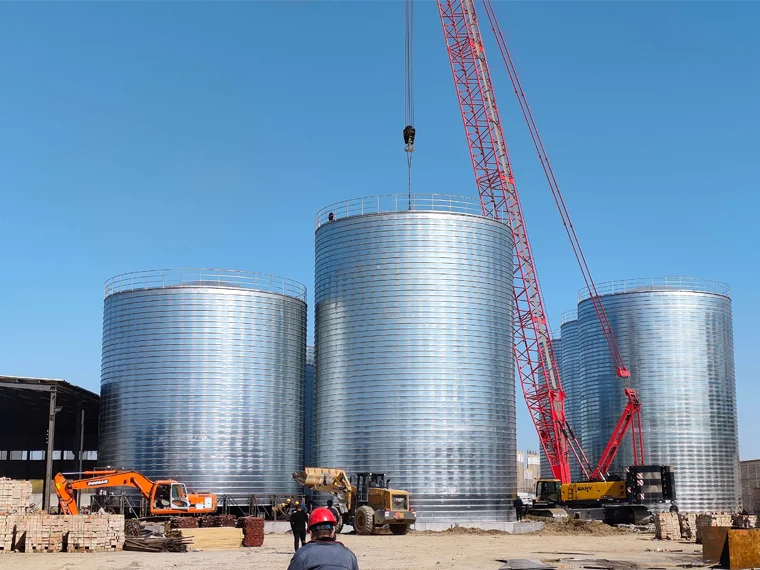
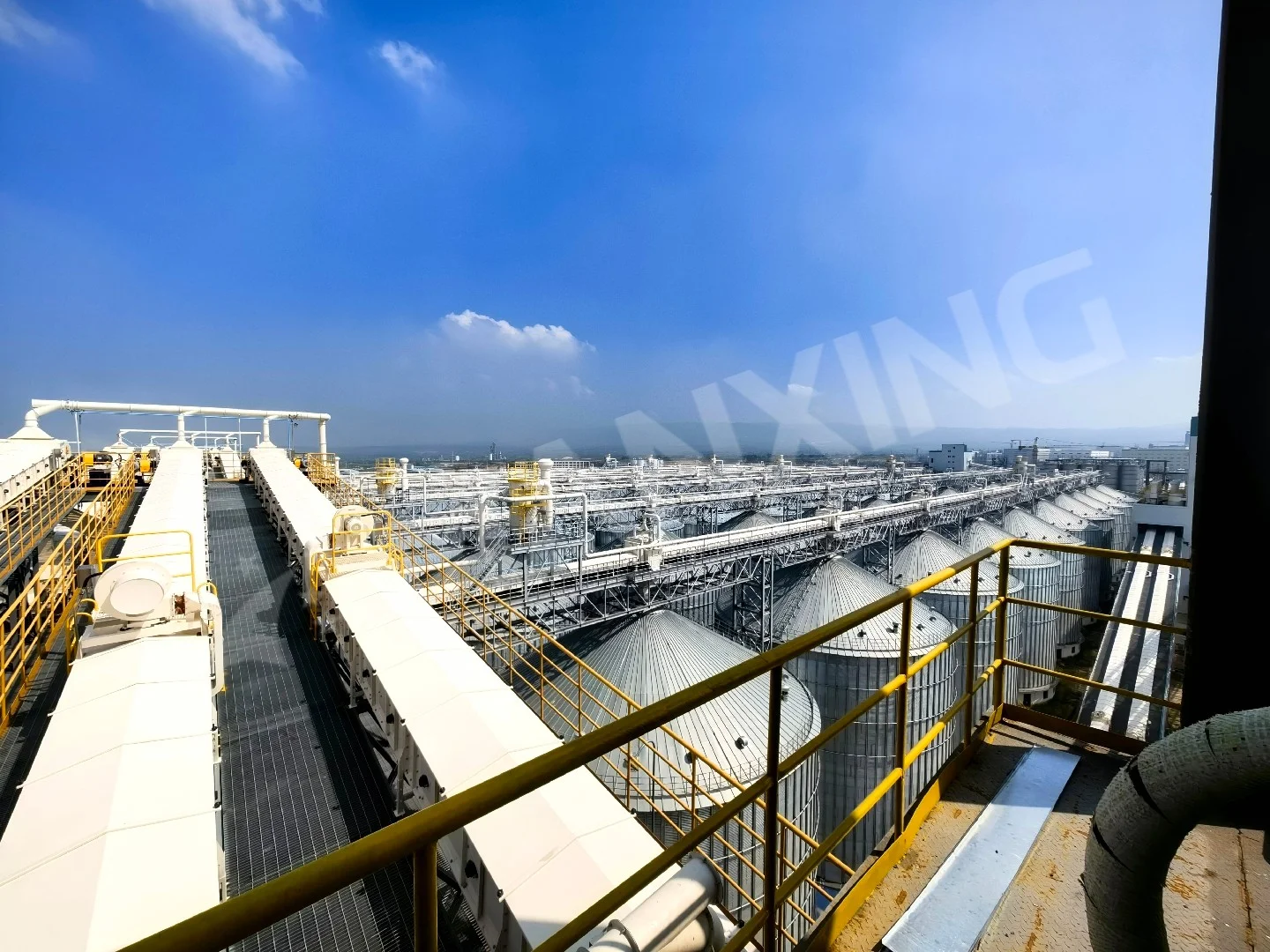


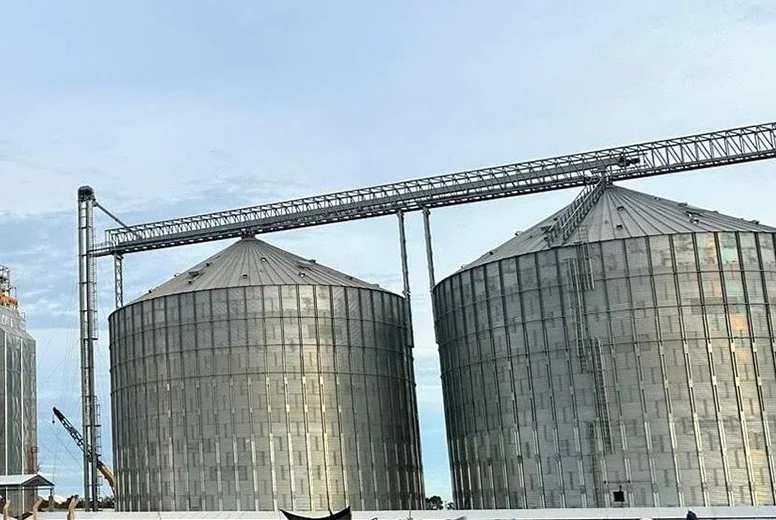
For engineers and project managers in bulk material handling, the flat bottom silo is prized for its discharge efficiency and low maintenance. However, the roof structure is the critical weak point that can determine long-term safety and operational lifespan. This article provides an in-depth technical analysis of the flat bottom silo with strong roof support, covering its structural advantages, engineering solutions to common failure modes, and actionable selection criteria for building a more reliable storage system.
Core Structure and Technical Advantages of a Strong Roof Flat Bottom Silo
The defining feature of a flat bottom silo is its horizontal floor, which provides a completely unobstructed, stable base for the stored material. Compared to a cone-bottom silo, this design fundamentally eliminates the risk of "bridging" or "ratholing" near the discharge point, dramatically improving discharge continuity and reliability. However, this advantage places a significantly higher structural burden on the roof. Especially for large-diameter silos, the roof must not only support its own dead weight but also resist external stresses from wind loads, snow loads, and seismic forces. This is where the "strong roof support" design becomes essential.
By employing reinforced steel frames, trusses, or arched structures, the roof load is evenly transferred to the silo wall, ensuring the overall structural integrity and safety under extreme conditions. From a materials science perspective, a strong roof typically utilizes high-strength steel (such as Q355B or higher grades) or composites, integrated with stiffeners and robust support nodes. This design enhances bending and compressive resistance while optimizing stress distribution to prevent fatigue failure caused by localized stress concentrations. According to industry standards, a strong roof on a 15-meter diameter flat bottom silo can be designed for a load of over 1.5 kN/m², sufficient to handle extreme snowfall conditions and heavy maintenance traffic.
Engineering Solutions to Common Roof Failure Modes
One of the most overlooked risks in flat bottom silo design is roof collapse due to inadequate support. In conventional designs, the roof is often treated as a secondary structural element, but in practice, it acts as a critical load-bearing component. Without strong roof support, the silo is vulnerable to buckling under asymmetric loads—such as wind pressure on one side combined with snow accumulation on the other. The strong roof support system counters this through a network of radial and circumferential stiffeners that distribute loads uniformly.
Reinforced Frame and Truss Integration
The integration of a reinforced steel frame or truss system into the roof structure is a proven method to enhance rigidity. These frames are typically fabricated from hot-rolled sections and welded or bolted to the silo wall at multiple connection points. This creates a continuous load path from the roof surface down to the foundation, reducing stress concentrations at the wall-to-roof junction—a common failure point in older silo designs.
Material Selection and Corrosion Protection
High-strength steel grades like Q355B offer superior yield strength (355 MPa minimum) compared to standard structural steel, allowing for lighter yet stronger roof structures. Additionally, advanced coating systems—such as hot-dip galvanizing or epoxy-based paints—are applied to protect against corrosion in humid or chemically aggressive environments. This extends the service life of the roof assembly and reduces lifecycle maintenance costs.
Key Takeaways
- Key Data: A strong roof on a 15-meter diameter flat bottom silo can be designed for a load exceeding 1.5 kN/m², handling extreme snowfall and operational loads.
- Best Practice: Specify high-strength steel (e.g., Q355B or higher) with reinforced truss or frame systems to ensure uniform load distribution and prevent localized failure.
- Watch Out For: Treating the roof as a secondary element—inadequate roof support is a leading cause of silo collapse under asymmetric wind or snow loads.
- Pro Tip: Use finite element analysis (FEA) during design to model stress distribution across the roof and wall interface, optimizing stiffener placement.
- Bottom Line: A flat bottom silo with strong roof support delivers unmatched discharge reliability and structural safety, but only if the roof is engineered as a primary load-bearing component.
Actionable Selection Criteria for Building a Reliable Storage System
When selecting a flat bottom silo with strong roof support, engineers must evaluate several critical factors beyond basic capacity. First, assess the site-specific environmental loads: local wind speeds, snow accumulation depths, and seismic zone classifications. For example, in regions with heavy snowfall, the roof load rating should be increased by 20–30% above standard design values. Second, consider the material stored—abrasive or corrosive bulk solids may require thicker roof plates or specialized coatings to prevent accelerated wear.
Third, evaluate the roof-to-wall connection design. Bolted connections offer ease of installation and future disassembly, while welded connections provide superior rigidity and leak resistance. For large-diameter silos (over 20 meters), a combination of both—bolted primary frames with welded secondary stiffeners—is often optimal. Finally, verify that the manufacturer provides detailed structural calculations certified by a professional engineer, including load ratings for dead load, live load, wind load, and seismic load as per applicable codes like ASCE 7 or Eurocode 3.
Frequently Asked Questions
Q: What is the maximum diameter for a flat bottom silo with strong roof support?
A: Flat bottom silos with strong roof support can be built in diameters ranging from 5 meters to over 30 meters, depending on the structural design and material specifications. For diameters exceeding 25 meters, additional internal columns or advanced truss systems may be required to maintain roof rigidity without excessive steel weight. The key limiting factor is the roof's ability to span the full diameter without mid-span deflection exceeding acceptable limits—typically L/240 for storage structures.
Q: How does a flat bottom silo compare to a cone bottom silo in terms of discharge efficiency?
A: The flat bottom silo offers superior discharge efficiency for free-flowing materials because the entire floor area acts as a discharge surface. This eliminates the bridging and ratholing issues common in cone bottom designs, where material flow is restricted to a central outlet. For cohesive or sticky materials, however, a flat bottom may require additional discharge aids such as vibrators or air cannons. The flat bottom design also allows for complete cleanout without manual intervention, reducing downtime and labor costs.
Q: What maintenance is required for the roof structure of a flat bottom silo?
A: Regular visual inspections should be conducted at least twice per year, focusing on weld joints, bolted connections, and coating integrity. Any signs of rust, cracking, or deformation must be addressed immediately. For silos in coastal or industrial environments, more frequent inspections (quarterly) are recommended due to accelerated corrosion. Additionally, after extreme weather events (e.g., heavy snow or high winds), a structural assessment should be performed to verify that no permanent deflection or damage has occurred. Proactive maintenance can extend roof service life by 15–20 years.
Q: Can a flat bottom silo with strong roof support be used for cement storage?
A: Yes, flat bottom silos with strong roof support are widely used for cement storage. Cement's high density (typically 1.2–1.6 t/m³) and fine particle size require a robust roof design to handle the vertical load from the material column. The strong roof support ensures that the roof does not deflect under the weight of the cement column, which can reach significant heights in large silos. Additionally, the flat bottom allows for efficient discharge using fluidized bed systems or mechanical reclaimers, making it ideal for high-throughput cement terminals.
Q: What are the typical installation timelines for a large flat bottom silo?
A: For a 15-meter diameter flat bottom silo with strong roof support, the installation timeline typically ranges from 4 to 8 weeks, depending on site conditions and crew size. Foundation preparation (including soil testing and concrete curing) takes 2–3 weeks upfront. The steel structure erection—including wall panels, roof trusses, and stiffeners—requires another 2–4 weeks. Final commissioning, including leak testing and load verification, adds 1–2 weeks. Bolted designs can reduce installation time by 20–30% compared to fully welded structures, as they allow for faster on-site assembly.
Need expert manxingsilo solutions for your project?
We provide professional design, manufacturing, and installation services for bulk storage and material handling systems worldwide. Our team of structural engineers specializes in flat bottom silos with strong roof support, ensuring your storage system meets the highest safety and performance standards.
Get a Free Technical Consultation →