
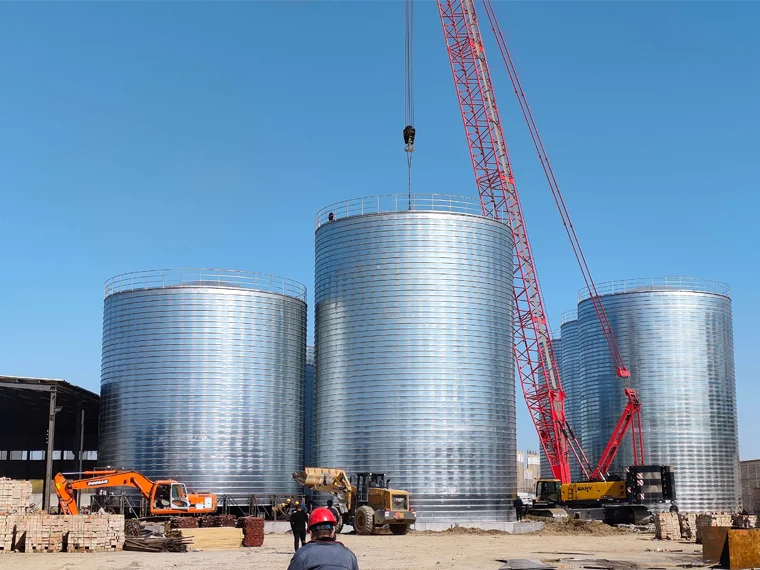
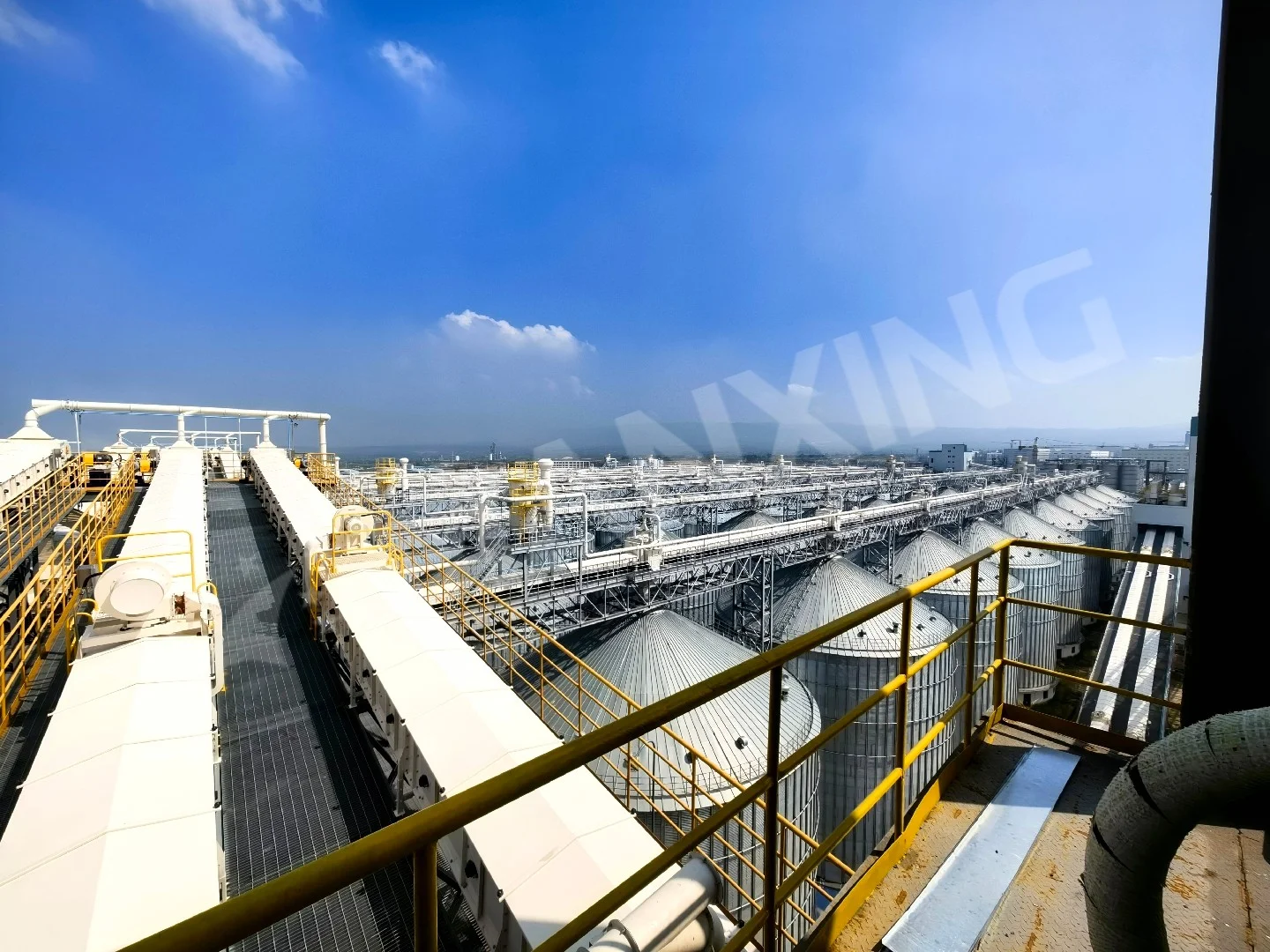


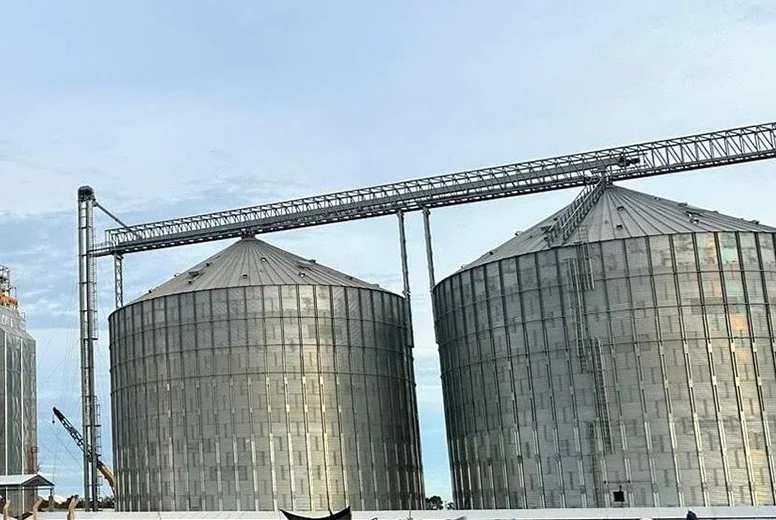
For government-led grain reserve programs, the flat bottom silo stands as the most strategic infrastructure choice, offering superior space utilization, structural stability, and full mechanization. This guide explores how flat bottom steel silos solve critical challenges in national food security, from long-term quality preservation to emergency response and lifecycle cost optimization.
Why Flat Bottom Silos Are the Core Infrastructure for Government Grain Reserves
In the strategic framework of safeguarding national food security and stabilizing market supply, large-scale flat bottom silos serve as the cornerstone infrastructure for government grain reserve depots. Their horizontal base design distinguishes them from hopper-bottom silos, delivering irreplaceable value in national-level bulk grain storage projects. The
flat bottom configuration maximizes volumetric efficiency, storing significantly more grain per square meter of land compared to conical-bottom alternatives. For government facilities tasked with stockpiling wheat, paddy rice, corn, and other staple crops, this efficiency translates directly into greater reserve capacity within the same footprint.Beyond space utilization, flat bottom silos offer exceptional structural simplicity and stability. Their robust design makes them suitable for construction on diverse geological conditions, from alluvial plains to seismic zones. When properly engineered, these silos can withstand earthquakes, typhoons, and other natural disasters, ensuring the safety of strategic grain reserves under extreme conditions. Furthermore, the flexible in-feed and out-feed systems can integrate seamlessly with belt conveyors, vibratory feeders, and other mechanized equipment, enabling fully automated operations that dramatically reduce labor costs and improve turnover efficiency. Fro
m a return-on-investment perspective, the modular expandability of flat bottom silos allows governments to incrementally increase storage capacity according to annual reserve plans or budget cycles, without disrupting existing operations—making them a long-term, sustainable investment in food security.Solving Critical Pain Points in Government Grain Storage
Government grain reserve programs face three core challenges: ensuring long-term stable storage quality, responding to sudden emergency demands, and achieving efficient cost control. Flat bottom silos address each of these through specific technical features.
Precise Temperature and Humidity Control with Pest Management
Flat bottom silos can integrate advanced ventilation and temperature monitoring systems. A network of floor-level aeration ducts and roof-mounted axial fans enables uniform regulation of temperature and humidity throughout the grain mass, effectively inhibiting mold growth and pest reproduction. When paired with a grain condition monitoring system, operators gain real-time visibility into temperature variations across different layers of the stored grain. This early-warning capability allows for proactive intervention, ensuring reserve grain consistently meets national quality standards. For long-term storage exceeding three years, this precision control is indispensable.
Emergency Response and Rapid Discharge Capability
When natural disasters or severe market fluctuations require swift grain mobilization, flat bottom silos deliver. Their discharge systems—whether employing drag chain conveyors or gravity-fed outlets—support high-volume, continuous extraction. A single silo can achieve daily discharge rates of thousands of tons, far surpassing traditional warehouse-style storage. This efficiency makes flat bottom silos the optimal choice for emergency reserve depots, where speed of deployment can mean the difference between market stability and crisis.
Lifecycle Cost Optimization for Government Budgets
Compared to concrete silos, flat bottom steel silos reduce construction timelines by 30% to 50%, while the steel itself is fully recyclable at end of life. This lowers both initial investment and eventual demolition costs. Additionally, the superior sealing performance and low maintenance requirements of steel silos reduce operational expenses for repairs and energy consumption. These attributes align perfectly with government projects' strict life-cycle cost (LCC) management requirements, delivering measurable savings over the silo's entire service life.
Key Takeaways
- Key Data: Flat bottom silos achieve 15%–20% higher grain storage capacity per unit area compared to hopper-bottom silos, enabling hundreds of additional tons of storage on the same footprint.
- Best Practice: Government projects should prioritize spiral-folded (roll-formed) steel silos. Their superior airtightness and corrosion resistance outperform traditional welded silos, extending service life beyond 30 years.
- Watch Out For: Flat bottom silos require dedicated clean-out equipment to prevent grain residue at the base from causing mold or pest infestations. Never rely on gravity discharge alone for complete evacuation.
- Pro Tip: For coastal or high-humidity regions, specify hot-dip galvanized steel with a zinc coating weight of ≥275 g/m², plus an additional epoxy zinc-rich primer or polyurethane topcoat for maximum corrosion protection.
- Bottom Line: Flat bottom silos are the most cost-effective, scalable, and resilient solution for government strategic grain reserves, particularly when paired with nitrogen-controlled atmosphere storage for green, low-oxygen preservation.
Real-World Applications in Government Grain Reserve Projects
Flat bottom silos are already deployed extensively across national grain reserve depots, regional grain logistics parks, and emergency supply centers. In national-level reserve programs, they are commonly used for strategic stockpiles of wheat and paddy rice, employing a "one silo, one grain type" dedicated storage model to ensure purity and quality consistency. At logistics hub grain depots, flat bottom silos connect directly with rail sidings or port loading systems, forming an integrated "receiving-storage-dispatch" operational chain that dramatically improves grain circulation efficiency.
For emergency reserves requiring long-term storage of 3 to 5 years, flat bottom silos paired with nitrogen-controlled atmosphere storage technology enable green grain preservation under low-oxygen, low-chemical, and low-temperature conditions. This meets the highest modern food safety standards. Notably, flat bottom silos excel in extreme climates. Through reinforced foundation design—such as pile foundations—and strengthened roof structures to handle heavy snow loads, these silos can adapt to environments ranging from frigid high-altitude regions to hot, humid tropical zones. This ensures that government grain reserves remain safe and reliable under any conditions.
Frequently Asked Questions
Q: How should government procurement teams choose between flat bottom and hopper-bottom silos for reserve projects? What is the core decision factor?
A: The core decision factor is the balance between "storage scale" and "discharge frequency." Flat bottom silos are superior for large-scale, long-term strategic reserves because they maximize space utilization and minimize construction cost per ton of capacity. Hopper-bottom silos, by contrast, are better suited for applications requiring frequent turnover and gravity self-discharge, such as feed mills or transshipment depots. For government strategic reserve programs, flat bottom silos are almost always the preferred choice, with mechanical clean-out equipment used to address residual grain at the bottom.
Q: Can flat bottom steel silos reliably achieve a service life of 25 years or more? How is corrosion protection ensured?
A: Yes, with proper specification and maintenance, flat bottom steel silos can exceed 30 years of service life. High-quality silos use hot-dip galvanized steel with a zinc coating weight of at least 275 g/m², combined with specialized sealing strips and bolted connections for excellent corrosion resistance. For aggressive environments like coastal zones or high-humidity areas, an additional application of epoxy zinc-rich primer or polyurethane topcoat is recommended. Regular maintenance—every 2 to 3 years—to inspect seals and coatings will ensure the silo meets or exceeds the 25-year requirement common in government projects.
Q: In a government tender for flat bottom silos, which technical parameters should the evaluation team scrutinize most carefully?
A: Five parameters are critical. First, the steel plate thickness and yield strength—typically Q355B grade or higher. Second, the roof live load design, which must cover the local maximum snow load and wind load. Third, the aeration system's airflow rate and uniformity—aim for at least 8 m³/h per ton of grain. Fourth, the grounding resistance value for lightning protection, which must be ≤4 ohms. Fifth, the manufacturer's track record with past government projects and their warranty commitments. These parameters directly impact safety, performance, and longevity.
Q: What specific advantages do spiral-folded (roll-formed) steel silos offer over welded silos for government grain storage?
A: Spiral-folded silos, manufactured using the roll-forming process, offer two decisive advantages: superior airtightness and enhanced corrosion resistance. The interlocking seam design eliminates the need for field welding, which is a common source of air leaks and weak points in welded silos. This airtightness is critical for maintaining controlled atmosphere conditions, such as nitrogen fumigation, and for preventing moisture ingress. Additionally, the continuous galvanized coating remains intact throughout the manufacturing process, whereas welding can damage galvanization at joint points, creating corrosion hotspots. These factors directly translate into longer service life and lower maintenance costs for government projects.
Q: How does a flat bottom silo system integrate with existing rail or port logistics for government grain distribution?
A: Flat bottom silos are designed for seamless integration with intermodal logistics. The discharge system can feed directly into below-grade belt conveyors or enclosed drag chain conveyors that transport grain to railcar loading spouts or ship-loader systems. The silo's modular layout allows for staging multiple discharge points to achieve high loading rates—often exceeding 1,000 tons per hour. For government logistics hub depots, this integration creates a continuous "receiving-storage-dispatch" workflow that minimizes dwell time and maximizes throughput, which is essential during emergency mobilization scenarios.
Need expert flat bottom silo solutions for your government grain storage project?
We provide full-cycle services from feasibility studies and custom design to manufacturing, installation, and operator training. Our team has delivered multiple national-level grain reserve projects worldwide.
Get a Free Technical Consultation →