
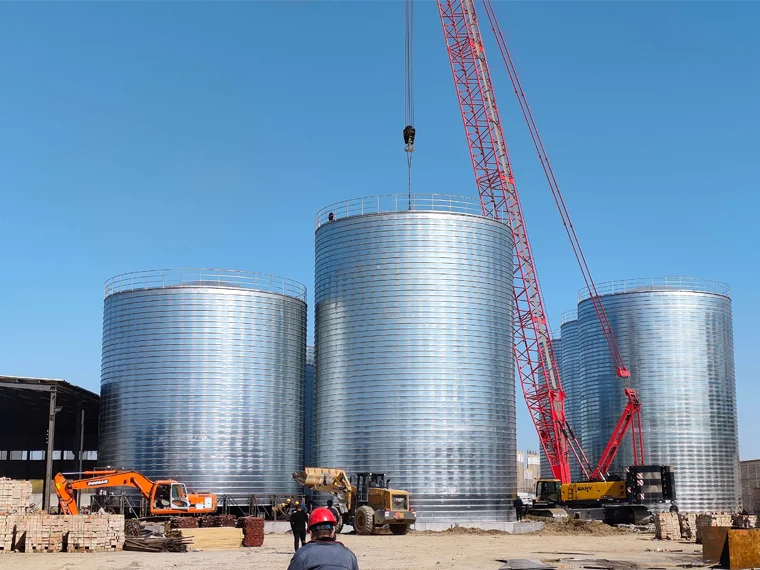
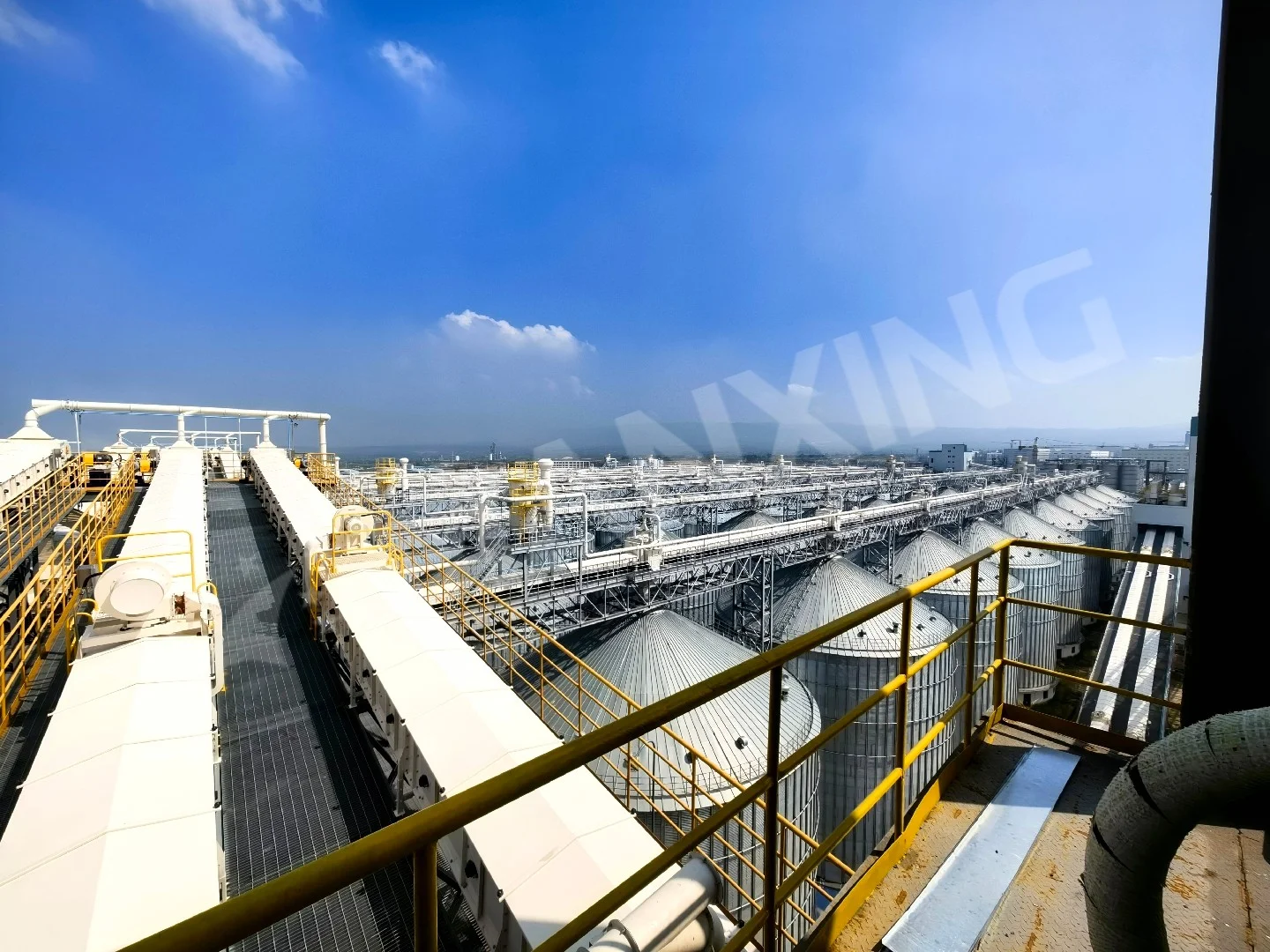


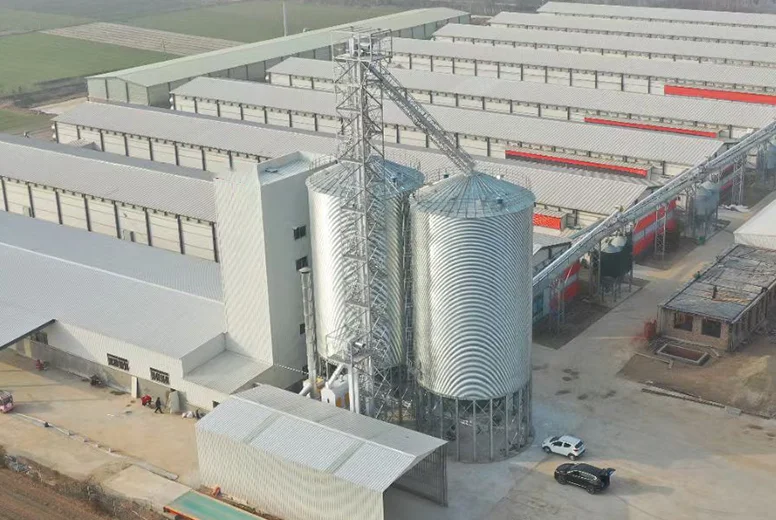
Turkey is rapidly emerging as a key agricultural hub between Europe and Asia, driving an urgent need to upgrade its grain storage infrastructure. The hopper bottom silo, with its gravity discharge, zero-residue capability, and modular expansion design, has become the preferred solution for local farms and processing enterprises. This article provides an in-depth analysis of the technical parameters, application scenarios, and return on investment for this highly efficient storage system in the Turkish context.
Hopper Bottom Silo Project in Turkey: Technical Architecture and Core Advantages
From the Anatolian Plateau to the Thracian plains, the hopper bottom silo is steadily replacing traditional flat-bottom silos. The core design feature is a conical hopper slope of 60° to 70°, which allows bulk grains like wheat and corn to discharge completely under gravity, eliminating the need for mechanical cleanout equipment. This structure not only reduces unloading time by over 40% but also completely solves the common "rat-holing" and dead zone problems associated with flat-bottom silos. For Turkish mixed farms that frequently switch between crop varieties, the rapid emptying capability of the hopper bottom silo means no manual cleaning is needed between seasons, allowing immediate storage of new batches.
From a materials science perspective, Turkey's climate—high salt spray in coastal areas and large diurnal temperature variations inland—demands exceptional weather resistance from the silo body. Current mainstream solutions use galvanized steel sheets (with a coating weight ≥ 275 g/m²) or thermally sprayed stainless steel, combined with a three-coat system of epoxy zinc-rich primer and polyurethane topcoat. Field tests show this system provides corrosion protection for over 25 years. Additionally, modular corrugated panel assembly technology allows single silo capacities to be flexibly adjusted from 50 tons to 5,000 tons, and expansion can be carried out without demolishing existing structures—a critical advantage for agricultural enterprises investing in phases.
Solving Real Pain Points in Turkish Grain Storage
Turkey's annual grain production exceeds 40 million tons, yet post-harvest loss rates once reached 8%–12%, primarily due to moisture, pests, and discharge residue. The
hopper bottom silo addresses these pain points through three key mechanisms. First, the hopper bottom is equipped with airtight discharge gates, combined with temperature and humidity sensors and forced ventilation systems, to keep relative humidity inside the silo below 14%, inhibiting mold growth. Second, the hopper's inclination ensures "first-in, first-out" material flow, preventing quality degradation from old grain accumulation. Finally, the fully enclosed structure, together with fumigation ports, allows phosphine gas to penetrate more evenly, boosting pest elimination efficiency to over 99.5%.In practical operations, a feed mill in southeastern Turkey with a daily output of 200 tons was losing approximately 3 tons of raw materials each month due to poor discharge from flat-bottom silos. After switching to a hopper bottom silo equipped with a variable-frequency screw conveyor, the residue rate dropped from 2.3% to below 0.1%, and the time needed to change production lines was reduced from 4 hours to 45 minutes. This efficiency gain translated into annual raw material savings of approximately 120,000 Turkish Lira and a significant boost in production capacity.
Hopper Angle and Material Compatibility
Not all materials are suitable for the same hopper angle. For poor-flowing materials like rapeseed or soybean meal, a hopper angle of 65° or more is recommended, along with a vibratory flow aid. For free-flowing grains like wheat and barley, 55°–60° is sufficient. In Turkish project practice, professional silo manufacturers use repose angle testing and discrete element modeling (DEM) to customize the optimal hopper geometry for each material type.
Explosion Protection and Safety Design
The rate of dust explosion incidents in Turkey's agricultural sector has been rising annually. Hopper bottom silos must integrate explosion vents (venting area ≥ 0.04 m²/m³), anti-static grounding (grounding resistance ≤ 4 Ω), and spark-free discharge gates. In a 2023 retrofit project in Konya Province, the installation of active explosion relief panels allowed pressure to be released within 15 milliseconds when dust concentrations exceeded safe limits, significantly reducing the risk of cascading explosions.
Key Takeaways
- Key Data: Hopper bottom silos can reduce discharge residue rates from 2.3% to below 0.1%, saving over 120,000 Turkish Lira per silo annually in raw material costs.
- Best Practice: Customize the hopper angle (55°–70°) based on the material's repose angle, and pair it with airtight discharge gates and integrated temperature-humidity control systems.
- Watch Out For: Neglecting explosion protection design (venting area, grounding resistance) is the leading cause of agricultural silo accidents in Turkey; compliance with the TS EN 14491 standard is mandatory.
- Pro Tip: Use discrete element modeling (DEM) simulations before fabrication to predict material flow behavior, especially for sticky or high-moisture Turkish crops like chickpeas.
- Bottom Line: Despite a 15%–20% higher initial cost, the hopper bottom silo delivers a payback period of just 18–24 months through drastically lower operating expenses and near-zero material loss.
Full Lifecycle Cost Analysis of Turkish Hopper Bottom Silo Projects
From an investment return perspective, the initial construction cost of a hopper bottom silo is typically 15%–20% higher than a flat-bottom silo of the same capacity. However, operating costs are significantly lower. For a 500-ton capacity, a flat-bottom silo requires a scraper conveyor or pneumatic cleanout system, with annual electricity and maintenance costs of approximately 80,000 Turkish Lira. In contrast, a hopper bottom silo relies solely on gravity discharge, with annual operating costs under 20,000 Turkish Lira. Combined with raw material savings from zero residue, the investment payback period is typically 18–24 months. Under Turkey's "Agricultural Infrastructure Support Program" (TKDK), eligible projects can also receive up to 50% capital subsidies, further shortening the payback period.
Furthermore, hopper bottom silos offer better land utilization. On the same 100-square-meter footprint, a hopper bottom silo provides up to 1.3 times the effective volume of a flat-bottom silo—a critical advantage in the high-land-cost Marmara region. When paired with solar-powered remote monitoring systems, a single farm can manage 10–20 silos simultaneously, reducing labor costs by over 70%.
Frequently Asked Questions
Q: How can hopper bottom silos be designed to withstand earthquakes in Turkey's seismically active zones?
A: Turkey lies on the Eurasian seismic belt, so silo seismic design must comply with the TEC 2018 code. Key measures include using high-strength steel (e.g., S355JR) for the hopper and silo walls, installing seismic isolation rubber bearings between the silo body and foundation (horizontal stiffness ≤ 1.5 kN
/mm), and employing a composite support structure of diagonal bracing and ring beams for the hopper to avoid stress concentration. After the 7.8-magnitude earthquake in Kahramanmaraş Province in 2023, silo groups designed with these principles remained standing, validating their reliability.Q: Can hopper bottom silos be used for storing Turkey's specialty crops like hazelnuts and chickpeas?
A: Yes, but with customized design. For hazelnuts and other nuts with fragile shells, the hopper interior should be lined with a 10 mm thick polyurethane buffer layer, and the discharge speed should be controlled to below 0.5 m/s. For high-protein crops like chickpeas that are prone to moisture absorption, the silo roof should be equipped with a dehumidification unit (dew point temperature ≤ 5°C). Hazelnut processors in Turkey's Black Sea region have successfully implemented such solutions, reducing breakage rates from 3% with mechanical conveying to below 0.3%.
Q: What is the typical maintenance schedule for a galvanized hopper bottom silo in Turkey's coastal climate?
A: For silos with a galvanized coating of ≥ 275 g/m², a visual inspection should be conducted every 6 months, focusing on the hopper-to-wall weld joints and the base ring. A full thickness measurement using an electromagnetic gauge is recommended every 3 years. In high-salt-spray areas like the Aegean coast, an additional sacrificial zinc anode system or a topcoat renewal every 5–7 years can extend the service life beyond 30 years.
Q: How does the "first-in, first-out" principle work in a hopper bottom silo, and why is it important for Turkish grain traders?
A: The steep hopper angle (typically 60°–70°) ensures that the entire column of grain moves downward as a plug flow during discharge, meaning the grain that entered first exits first. This prevents the accumulation of old grain at the bottom, which can lose germination rate, develop off-flavors, or become infested. For Turkish traders who store high-value durum wheat for pasta production, maintaining consistent quality across the entire batch is critical for export certification and premium pricing.
Q: What are the specific requirements for the discharge gate on a hopper bottom silo used for corn in Turkey?
A: Corn has a higher moisture content and can bridge or cake more easily than wheat. The discharge gate should be a rack-and-pinion or hydraulic slide gate with a minimum opening of 600 mm x 600 mm to prevent bridging. It must be made of stainless steel (304 or 316L) to resist corrosion from corn acids. A variable-frequency drive on the downstream conveyor is essential to control flow rate, and a sight glass or level sensor should be installed to monitor for blockages.
Q: Can a hopper bottom silo be retrofitted into an existing flat-bottom silo structure in Turkey?
A: Retrofitting is technically challenging and often not cost-effective. The existing flat-bottom silo's foundation and wall rings are not designed to support the concentrated loads of a steep hopper and its support structure. In most cases, it is more economical to demolish the old silo and install a new, purpose-built hopper bottom silo. However, for very large silos (over 3,000 tons), a partial retrofit using a steepened floor insert with aeration is sometimes feasible, but this must be verified by a structural engineer certified under TEC 2018.
Need expert hopper bottom silo solutions for your Turkish project?
We provide professional design, manufacturing, and installation services for bulk storage and material handling systems worldwide, with specific expertise in Turkish seismic and climatic conditions.
Get a Free Technical Consultation →