


The foundation of an industrial concrete silo is the invisible backbone that determines the safety, service life, and operational efficiency of the entire storage system. As the critical support for massive bulk material storage, its design must simultaneously address extreme loads, geological variability, and environmental challenges. This article provides an in-depth professional engineering perspective on the core characteristics, applications, and best practices for industrial concrete silo foundations.
Structural Characteristics and Engineering Essentials of Industrial Concrete Silo Foundations
An industrial concrete silo foundation is far more than a simple load-bearing platform; it is a highly engineered system. Its primary characteristic is structural robustness: through high-strength steel reinforcement and custom concrete mix designs, the foundation must withstand the silo’s self-weight, material loads (such as cement, fly ash, and grain), and the dynamic impact forces generated during loading and unloading. For
large silo groups, the foundation design must also account for lateral forces from wind loads and seismic activity to ensure overall stability.Another critical characteristic is a high degree of customization and flexibility. Soil bearing capacity, groundwater levels, and climatic conditions vary dramatically from site to site, requiring foundation designs to be tailored to local conditions. Options range from pad foundations for small to medium silos, to mat foundations for very large silos, and even pile foundations. Each solution must be backed by rigorous geotechnical analysis. Furthermore, excellent drainage design is a core component of foundation engineering—by incorporating drainage layers and using impermeable concrete, buoyancy damage and soil erosion caused by groundwater accumulation can be effectively prevented.
Solving Stability and Durability Challenges in Industrial Silo Foundations
In actual operation, the greatest challenges facing industrial concrete silo foundations involve managing differential settlement, resisting chemical attack, and maintaining long-term structural integrity under cyclic loading. Differential settlement—where one part of the foundation sinks more than another—can induce catastrophic cracking in the silo shell. To mitigate this, engineers employ deep pile foundations or soil improvement techniques such as stone columns or dynamic compaction. Additionally, the foundation concrete must be formulated to resist sulfate attack and other chemical degradation from stored materials like cement or industrial byproducts. A robust foundation design also incorporates a properly designed waterproofing membrane and a sub-drainage system to keep the base dry and stable over decades of service.
Load Distribution and Stress Analysis
Proper load distribution is the cornerstone of any industrial concrete silo foundation. The design must calculate the combined dead load (silo structure), live load (stored material), and environmental loads (wind, snow, seismic). Finite element analysis (FEA) is commonly used to model stress concentrations under the silo walls and center column. This analysis ensures that the foundation thickness and reinforcement pattern are optimized to prevent cracking and excessive deformation, particularly at the junction between the silo wall and the base slab.
Geotechnical Investigation and Soil Improvement
No foundation design can succeed without a thorough geotechnical investigation. This includes borehole drilling, standard penetration tests (SPT), and laboratory testing of soil samples. If the native soil has low bearing capacity (e.g., soft clay or loose sand), soil improvement methods such as vibro-compaction, preloading, or deep soil mixing are employed. For sites with high groundwater tables, dewatering systems may be required during construction, and the final foundation design must account for uplift forces to prevent flotation.
Key Takeaways
- Key Data: A typical large industrial concrete silo foundation can transfer loads exceeding 10,000 tons to the soil, requiring a mat thickness of 1.5 to 3.0 meters.
- Best Practice: Always commission a site-specific geotechnical investigation before finalizing foundation type—pad, mat, or pile.
- Watch Out For: Differential settlement is the #1 cause of structural failure in silo foundations; never assume uniform soil conditions without testing.
- Pro Tip: Incorporate a continuous waterproofing membrane and a perimeter drainage trench to protect the foundation from groundwater and chemical attack.
- Bottom Line: A well-designed industrial concrete silo foundation is a custom-engineered solution that balances load capacity, soil conditions, and long-term durability—it is not a one-size-fits-all product.
Foundation Types and Their Applications for Concrete Silos
Selecting the right foundation type is a critical engineering decision that directly impacts project cost and safety. For
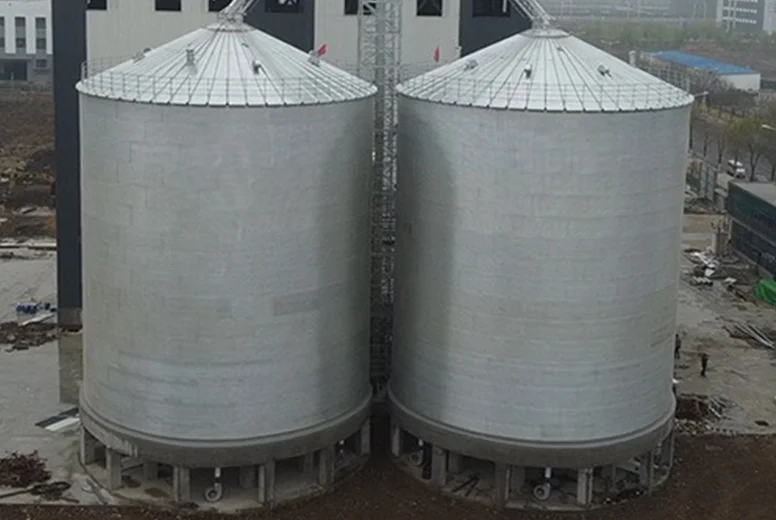
small to medium concrete silos (typically under 15 meters in diameter), a reinforced concrete pad foundation is often sufficient, provided the soil has adequate bearing capacity. For larger silos or silo groups, a mat (raft) foundation distributes the load over a wider area, reducing soil pressure. In cases where surface soils are weak, deep pile foundations—driven or bored piles—transfer loads to competent strata at depth. Each type has specific design criteria, reinforcement detailing, and construction sequencing that must be followed precisely to ensure performance.Frequently Asked Questions
Q: What is the typical depth of an industrial concrete silo foundation?
A: The foundation depth varies widely based on soil conditions and silo size. For a pad foundation on good soil, depth may be 1 to 2 meters. For mat foundations on moderate soil, depth can range from 1.5 to 3 meters. Pile foundations may extend 10 to 30 meters or more to reach load-bearing strata. A geotechnical investigation is essential to determine the exact depth required for your specific site.
Q: How do engineers prevent differential settlement in silo foundations?
A: Differential settlement is prevented through a combination of thorough soil investigation, uniform load distribution, and appropriate foundation design. Engineers may specify a stiff mat foundation to bridge over soft spots, or use deep piles to anchor the structure to stable soil layers. In some cases, soil improvement techniques like stone columns or grouting are used to homogenize the ground. Continuous monitoring during and after construction is also recommended to detect any movement early.
Q: Can concrete silo foundations be built on high groundwater sites?
A: Yes, but special precautions are required. The foundation design must account for buoyancy (uplift) forces. This often involves increasing the foundation weight, using tension piles, or installing a permanent dewatering system. A waterproof concrete mix (e.g., with integral crystalline admixtures) and a continuous waterproofing membrane are essential to prevent water ingress. Proper drainage around the foundation perimeter is also critical to relieve hydrostatic pressure.
Q: What is the difference between a pad foundation and a mat foundation for a concrete silo?
A: A pad foundation is a thick, reinforced concrete slab that supports a single silo or a small group. It is economical for smaller silos on good soil. A mat foundation (also called a raft foundation) is a large, continuous slab that supports the entire silo structure or multiple silos. It distributes the load over a much larger area, reducing soil pressure, and is preferred for large silos or when soil conditions are variable. Mat foundations are more expensive but offer greater stability and settlement control.
Q: How long does it take to construct an industrial concrete silo foundation?
A: Construction time depends on the foundation type, size, and site conditions. A typical pad foundation may take 2 to 4 weeks, including excavation, reinforcement, pouring, and curing. A mat foundation can take 4 to 8 weeks. Pile foundations require additional time for pile driving or boring, testing, and cap construction, often extending the schedule to 6 to 12 weeks. Proper curing time (typically 7 to 14 days) is critical for achieving design strength and durability.
Q: What maintenance is required for a concrete silo foundation over its service life?
A: Regular inspection is the key to long-term performance. Annual checks should look for cracks, signs of settlement, drainage blockages, and any water accumulation around the base. The waterproofing membrane and drainage system should be inspected and cleaned as needed. Any cracks wider than 0.3 mm should be evaluated by a structural engineer and repaired with epoxy injection or other suitable methods. Proper maintenance can extend the foundation’s service life to 50 years or more.
Need expert industrial concrete silo foundation solutions for your project?
We provide professional design, manufacturing, and installation services for bulk storage and material handling systems worldwide. Our engineering team has decades of experience in custom foundation design for concrete and steel silos.
Get a Free Technical Consultation →