
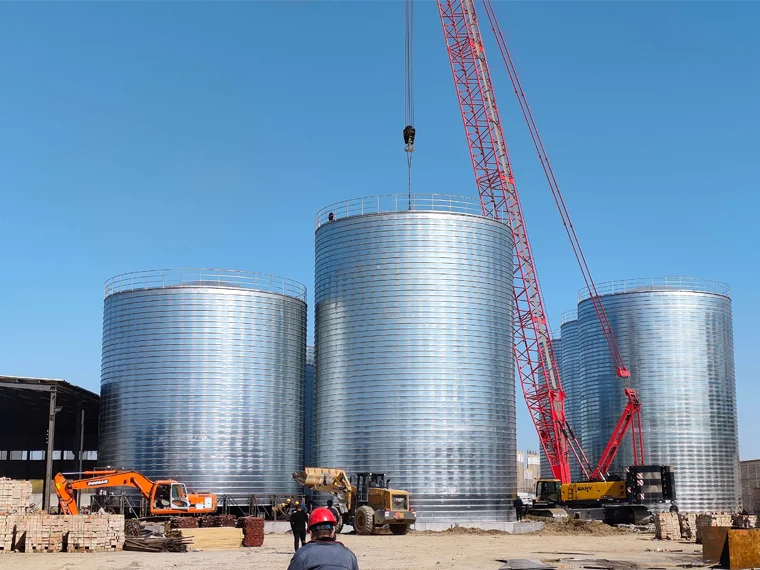
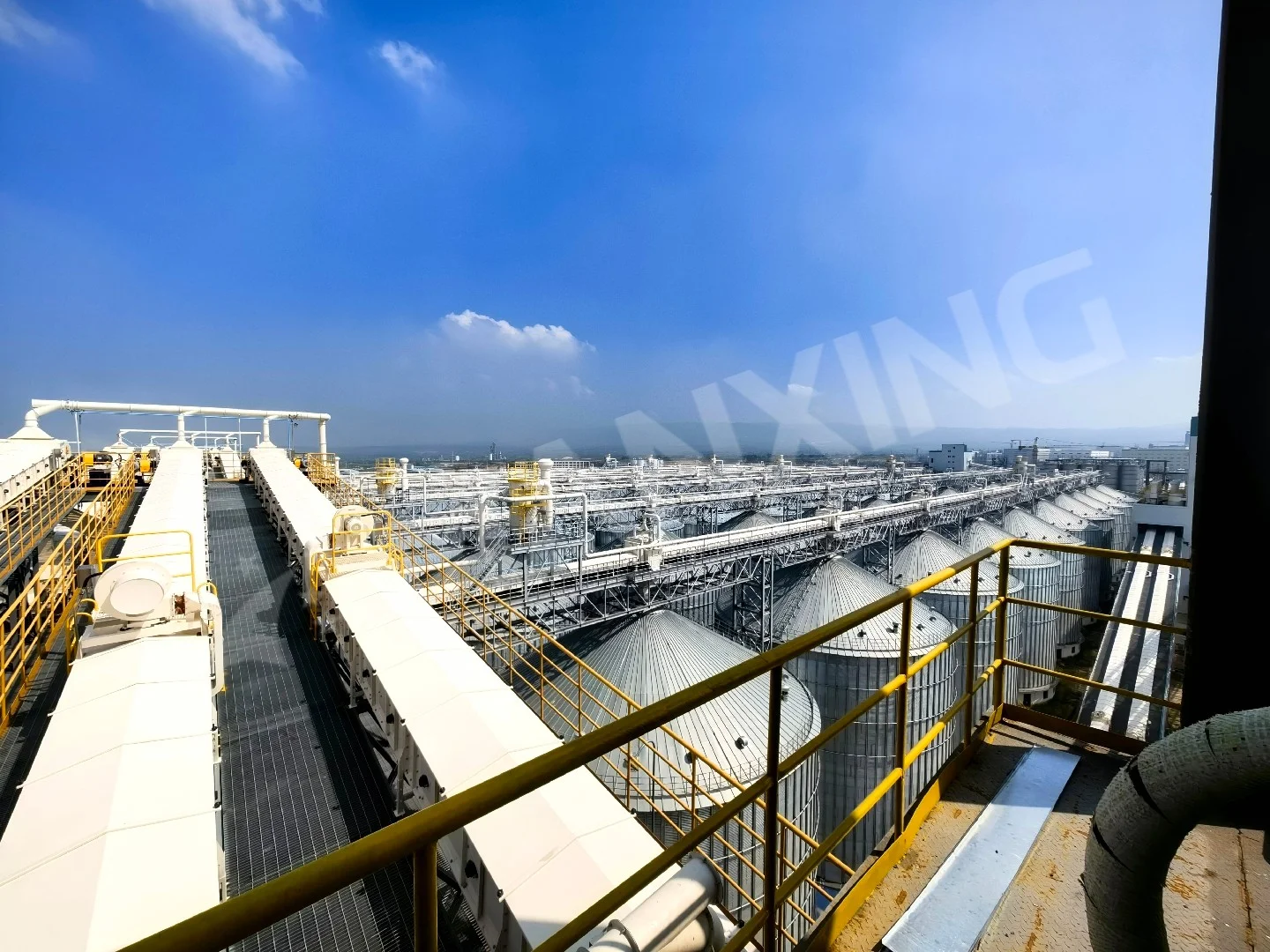


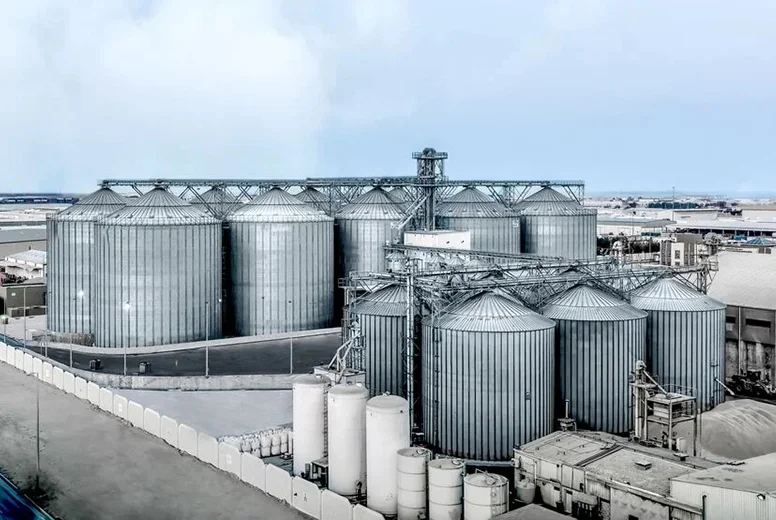
In the world of bulk material storage, the combination of a flat bottom silo with aeration fans has become the gold standard for preserving grain quality and optimizing industrial material management. This integrated system uses forced-air technology to actively control internal climate, directly solving the industry's most persistent challenges including temperature and humidity imbalances, caking, mold growth, and difficult discharge, making it a critical investment for modern storage facility upgrades.
Flat Bottom Silo with Aeration Fans: System Design and Core Advantages
A flat bottom silo is defined by its horizontal base design, which offers a simpler structure and lower construction cost compared to its cone-bottom counterpart. This design allows for significantly larger single-silo storage capacities. When this stable structure is paired with a professional aeration fan system, it becomes an active environmental control unit. The fans, operating through positive pressure (blowing) or negative pressure (suction), uniformly introduce external air into the bulk material pile, effectively displacing accumulated heat, moisture, and harmful gases. This design is not only ideal for the long-term, safe storage of agricultural commodities like rice, wheat, and corn, but is also widely applied in industrial sectors for moisture-proofing and temperature control of materials such as cement, plastic pellets, and chemical powders. The core value lies in actively maintaining the storage environment within an optimal range, drastically reducing losses and extending the shelf life of the stored product.
How Aeration Fans Solve the Three Core Problems in Storage
In traditional storage, heat and moisture generated by the respiration of grains or chemical reactions within industrial materials cannot dissipate naturally, often leading to localized spoilage. The introduction of aeration fans fundamentally changes this passive situation. By forcing convection, these systems achieve precise control over the microclimate inside the silo, directly addressing three major challenges:
1. Precise Temperature and Humidity Control to Prevent Mold and Caking
For grain, temperature and humidity are the primary catalysts for microbial growth. An aeration system can be programmed to operate during dry, cool periods based on external weather conditions. This can lower the internal silo temperature by 5–10°C and maintain relative humidity below 65%, effectively inhibiting the activity of mold spores and insect eggs. For cement and chemical powders, the fans prevent condensation and caking caused by temperature differentials, ensuring the material remains free-flowing during discharge, preserving its fluidity and consistent quality.
2. Uniform Airflow Distribution to Eliminate Storage Dead Zones
The large storage capacity of a flat bottom silo can be a liability if airflow is uneven, creating "dead zones" in the center or near the bottom. Modern aeration systems are equipped with floor aeration ducts or pipe networks, often paired with variable frequency drives (VFDs) on the fans. These systems automatically adjust air pressure and volume based on the material height and resistance, ensuring that airflow penetrates the entire cross-section of the pile. This uniformity not only improves treatment efficiency but also prevents quality inconsistencies caused by localized overheating or over-drying.
3. Optimized Discharge Efficiency to Reduce Energy and Mechanical Wear
During the discharge process, the aeration system can act as a "pneumatic loosener," reducing the coefficient of friction between material particles. This allows the material to flow more smoothly toward the discharge outlet. This reduces the load and wear on clean-out machinery while shortening the overall discharge time. For sticky or cohesive materials, this assisted airflow is particularly critical, effectively preventing bridging and rat-holing, ensuring continuous and stable system operation.
Key Takeaways
- Key Data: A flat bottom silo equipped with an intelligent aeration system can reduce grain storage loss rates from the traditional 3%–5% to less than 1%, saving hundreds of thousands of dollars annually in operating costs.
- Best Practice: Implement a "phased aeration strategy": forced cooling immediately after filling, intermittent equalizing aeration during storage, and drying/conditioning aeration just before discharge.
- Watch Out For: Incorrect fan selection is a common mistake. Oversized fans can cause surface overdrying and dust generation, while undersized fans fail to provide adequate airflow. Always use explosion-proof motors in combustible dust environments.
- Pro Tip: For the most uniform airflow, ensure the aeration floor is designed with a proper pressure plenum and that the duct layout accounts for the specific angle of repose of your stored material.
- Bottom Line: The flat bottom silo with aeration fans is not just a storage container; it is an active preservation system that pays for itself through reduced spoilage, improved efficiency, and extended product life.
Cross-Industry Applications: From Agriculture to Industrial Processing
The combination of a flat bottom silo with aeration fans is not a one-size-fits-all solution; its modular design allows for flexible adaptation across multiple industries. In agriculture, it has become the standard configuration for large-scale grain depots and seed processing plants. By precisely controlling the storage environment, it achieves the goal of preserving freshness, quality, and quantity. In the industrial sector, for materials requiring long-term storage like plastic masterbatches, fertilizers, or mineral powders, this system effectively prevents changes in physical properties caused by temperature fluctuations. Furthermore, in environments where dust explosion risks are a concern, aeration systems equipped with explosion vents and inert gas purging capabilities can significantly enhance operational safety. This cross-industry adaptability makes this technology the mainstream choice for upgrading global bulk storage facilities.
Frequently Asked Questions
Q: Is a flat bottom silo aeration system suitable for high-humidity regions, and how does it handle challenges during the monsoon season?
A: Yes, it is fully suitable. In high-humidity areas, the system must be equipped with intelligent humidity sensors and controllers. The system will not activate when the external humidity exceeds a set threshold (typically 75% RH) to avoid drawing moist air into the silo. Instead, it will utilize dry nighttime air or cold winter air for "cooling aeration." In extreme cases, it can activate auxiliary heating elements to dehumidify the incoming air. This smart strategy ensures the stored material maintains a safe moisture content even during the wettest seasons.
Q: Compared to a cone bottom silo, does a flat bottom silo with aeration fans still lag in discharge efficiency?
A: The traditional view is that cone bottom silos discharge faster due to gravity flow. However, modern flat bottom silos have dramatically closed this gap using a "aeration + mechanical clean-out" combination. The aeration fans can "fluidize" the material before discharge, reducing its internal angle of friction and making it behave more like a liquid. When paired with a center discharge outlet and a rotating sweep auger, the residual discharge rate of a flat bottom silo can be controlled to below 0.5%. Furthermore, the discharge speed can be flexibly controlled by adjusting the fan frequency and the sweep speed. For materials requiring highly uniform blending, the plug-flow discharge pattern of a flat bottom silo is actually superior.
Q: How can I assess whether my existing flat bottom silo is suitable for retrofitting an aeration system, and is the modification difficult?
A: The feasibility of retrofitting depends primarily on three factors: the silo's air-tightness, the condition of the existing floor structure, and the availability of electrical power. For both steel and concrete silos, the modification typically involves laying aeration ducts or channels on the silo floor and installing fan ports on the wall. The
retrofit cycle is generally 1–2 weeks, and the return on investment (ROI) is usually realized within two storage cycles. We strongly recommend a professional on-site inspection to evaluate the load-bearing capacity of the walls and floor to ensure the new system can be safely installed and operated.Q: What is the ideal air volume and static pressure requirement for aeration fans in a large flat bottom grain silo?
A: The ideal parameters are highly material-specific. For grain, a common industry benchmark is an airflow rate of 0.1 to 0.2 cubic meters per minute per ton of grain (m³/min/ton). The static pressure required depends on the height of the grain column and the resistance of the aeration floor. For a 10-meter high silo of wheat, you might need 5–10 inches of water gauge (in. w.g.). The key is to consult with a silo engineer who can perform a resistance calculation based on your specific material's permeability and the silo's geometry to avoid undersizing or oversizing the fan.
Q: Can an aeration system be automated to run without manual intervention, and what sensors are required?
A: Yes, full automation is not only possible but is a best practice for modern facilities. A fully automated system requires a PLC controller, temperature cables suspended throughout the grain mass, and external weather sensors (temperature and humidity). The controller is programmed with logic to compare internal and external conditions. For example, it will only start cooling aeration when the outside air is cooler and drier than the grain. This "adaptive aeration" strategy eliminates human error, saves energy, and provides the best possible preservation results, operating 24/7 without an operator.
Need expert manxingsilo solutions for your project?
We provide professional design, manufacturing, and installation services for bulk storage and material handling systems worldwide, including flat bottom silos with fully engineered aeration systems.
Get a Free Technical Consultation →