
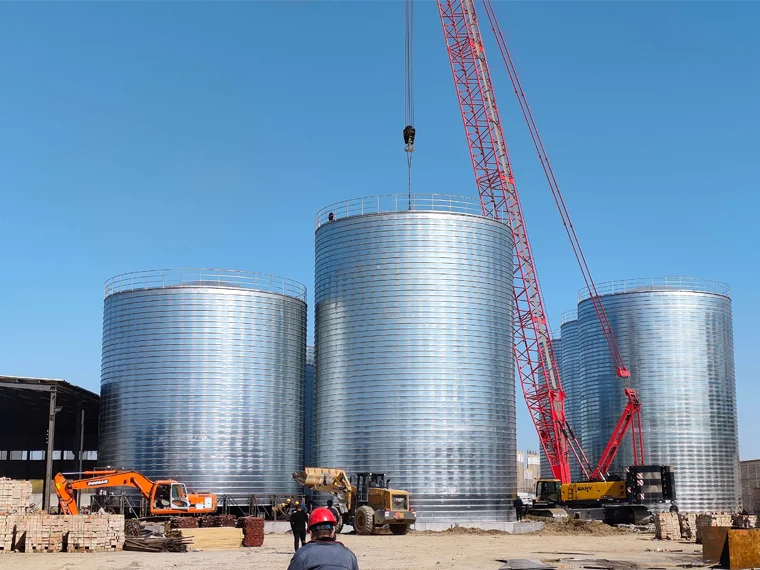
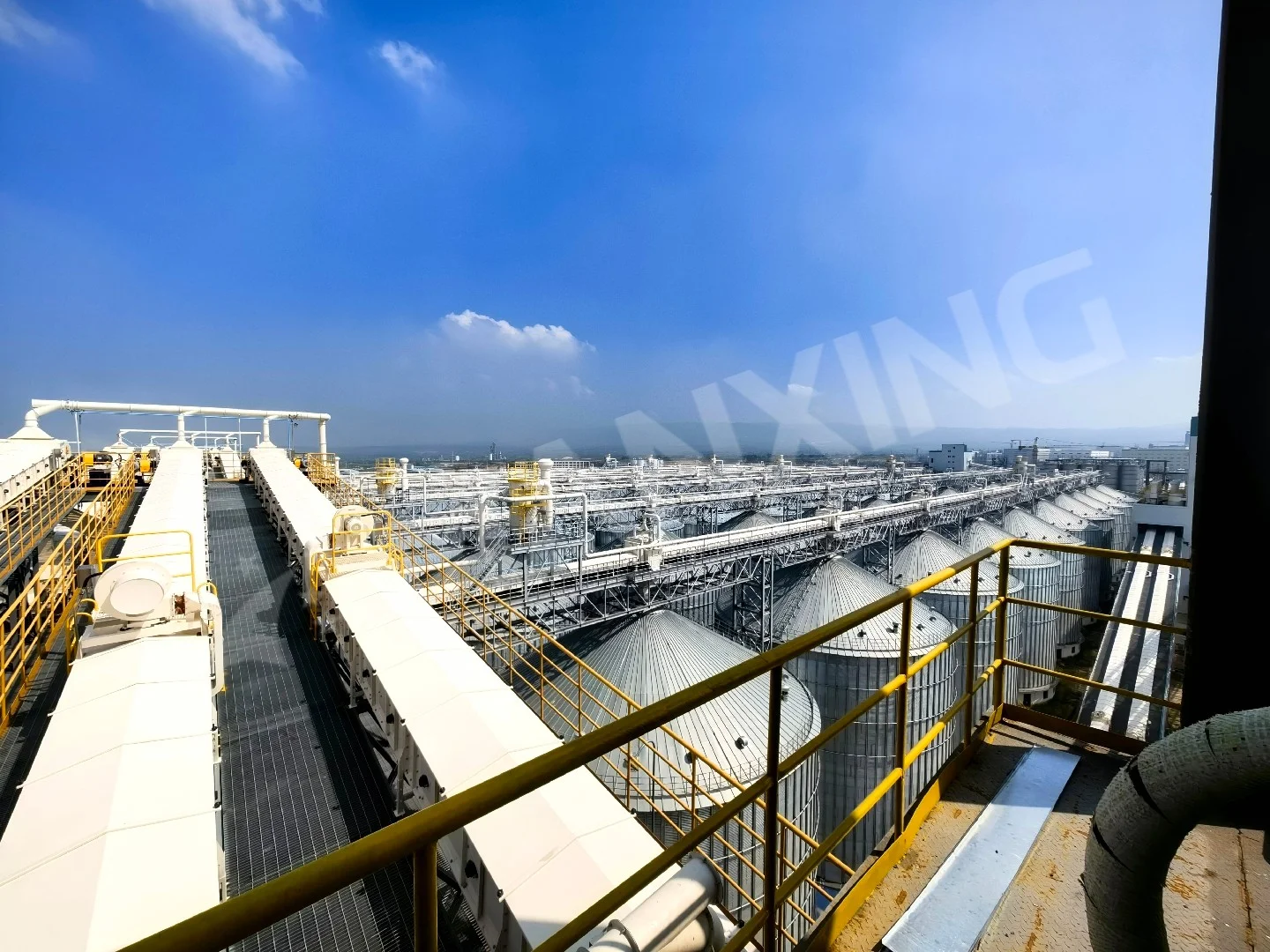


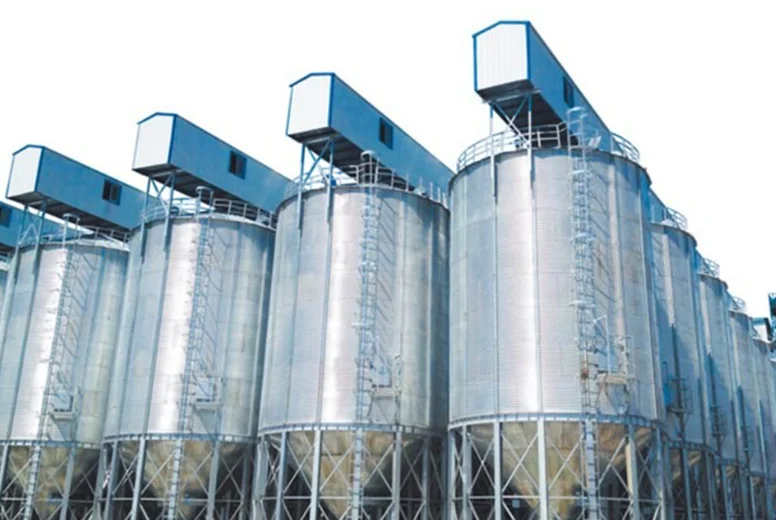
Pakistan’s agricultural sector is undergoing a quiet revolution, transitioning from traditional open-air storage to modern silo systems. The hopper bottom silo, with its gravity-assisted discharge, zero-residue design, and earthquake-resistant structure, is emerging as the preferred solution for bulk grain storage of wheat and rice, effectively tackling the nation’s persistent challenges of high humidity, pest infestation, and post-harvest supply chain losses.Related: 8000 ton concrete grain silo project
rong>Why Hopper Bottom Silos Are the Answer to Pakistan’s Grain Storage Crisis
As one of the world’s leading producers of wheat and rice, Pakistan suffers post-harvest grain losses of 10% to 15% annually due to inadequate storage infrastructure. Traditional flat-bottom silos and open-air stockpiles face two critical regional pain points: first, the high humidity during monsoon seasons promotes mold growth and aflatoxin contamination; second, flat-bottom designs create "dead zones" where leftover grain cannot be fully discharged, leading to long-term spoilage that contaminates new batches. The
hopper bottom silo is an industrial-grade solution engineered specifically to address these localized problems.The conical hopper design enables 100% gravity discharge without requiring manual labor or mechanical sweep augers. This eliminates cross-contamination risks while significantly lowering operational costs. In multiple projects across Sindh and Punjab provinces, farm cooperatives that adopted hopper bottom silos reported extending their grain storage duration from 6 months to 18 months, with outbound grain quality nearly matching freshly harvested stock.
Technical Breakdown: How Hopper Bottom Silo Design Conquers Pakistani Agricultural Challenges
The core technical superiority of a hopper bottom silo lies in its streamlined discharge system and structural integrity. We examine these from two critical engineering perspectives.
Gravity Discharge System and Cone Angle Optimization
The silo bottom employs a steep cone angle of 45° to 60°, ensuring that granular materials like wheat, maize, and paddy flow naturally toward the central outlet under gravity. This design is specifically tailored to Pakistan’s common high-moisture grain (moisture content can reach 18%–20% during monsoon harvests). Even when material stickiness increases, a 60° cone angle effectively prevents "bridging" or "rat-holing" phenomena. Field data confirms that compared to flat-bottom silos, hopper bottom silos improve discharge efficiency by 40% and reduce residual material to below 0.5%.
Seismic and Weather-Resistant Structural Design
Pakistan sits on the collision zone between the Indian and Eurasian tectonic plates, making northern areas and Balochistan province seismically active. Hopper bottom silos are constructed from high-strength steel plates (Q355B grade or higher) with annular stiffening rings, enabling them to withstand earthquakes of up to 8 on the Modified Mercalli Intensity scale. Additionally, the silo exterior is coated with a double-layer polyurethane anti-corrosion system. Combined with a top ventilation cap and bottom moisture barrier, this structure effectively resists the salt spray of Sindh’s coastal regions and the extreme 45°C summer heat of Punjab.
Key Takeaways
- Key Data: After adopting hopper bottom silos, grain storage loss rates in Pakistan dropped from 12% to under 2%, recovering approximately 3 million tons of grain annually.
- Best Practice: Install a vibratory flow aid and humidity sensor at the silo bottom to manage discharge blockages caused by high-moisture grain during the rainy season.
- Watch Out For: Cone angle selection must be precisely calculated based on the material’s angle of repose — 55° is recommended for wheat, while rice requires 60° or steeper due to its poorer flowability.
- Pro Tip: In Pakistan’s variable power supply environment, prioritize mechanical gravity discharge over electric vibrators to ensure reliable operation during outages.
- Bottom Line: A hopper bottom silo is not just a storage upgrade; it is a strategic investment that can pay back its cost difference within three years solely through loss reduction.
Localized Adaptation for Pakistan: A Full Lifecycle Solution from Installation to Maintenance
Given Pakistan’s unstable power supply (some regions experience 8–12 hours of daily outages) and limited local maintenance expertise, hopper bottom silo projects incorporate several localized innovations. First, the system relies primarily on mechanical gravity discharge to minimize dependence on electric vibrators. Second, the silo roof integrates a solar-assisted ventilation system that maintains stable internal temperature and humidity even during power cuts. Third, all bolted connections are hot-dip galvanized to prevent accelerated corrosion caused by local acid rain (pH 4.5–5.5). To date, the Manxing team has completed over 50 hopper bottom silo installations across Lahore, Karachi, and Multan, with single-silo capacities ranging from 500 to 3,000 tons, serving diverse needs from farm cooperatives to large-scale flour mills.
Frequently Asked Questions
Q: A hopper bottom silo costs about 30% more upfront than a flat-bottom silo. Is this investment justified for Pakistani farmers?
A: While the initial construction cost is higher, the economic case is compelling. In Pakistan, every 1% reduction in grain loss represents approximately $150 million in national value. A hopper bottom silo has a service life of 20–25 years compared to only 10–15 years for a flat-bottom silo, making its total lifecycle cost lower. For a typical 1,000-ton silo, the grain loss savings alone can recover the initial cost difference within three years. Furthermore, several Pakistani banks now offer special agricultural storage facility loans at annual interest rates of just 6%–8%, significantly lowering the financial barrier.
Q: How does a hopper bottom silo prevent localized heating of grain when summer temperatures in Pakistan reach 50°C?
A: This is the most critical technical concern for Pakistani users, and our solution employs a triple-layer protection system. First, the silo wall uses a double steel plate sandwich with 80mm of polyurethane insulation, reducing external heat transfer by 70%. Second, an automatic temperature-controlled ventilation system is installed at the roof, which activates forced exhaust whenever internal temperatures exceed 35°C. Third, multi-point temperature sensors are embedded in the cone bottom area (one monitoring point every 5 meters of height), connected to an IoT platform for remote early warning. Real-world operational data from Multan shows that even under extreme summer heat, grain temperature inside the silo remains consistently below 28°C.
Q: Can a hopper bottom silo handle the high-moisture grain (18%–20% moisture) common during Pakistan’s monsoon harvest?
A: Yes, this is one of the design’s primary advantages. The steep 60° cone angle is specifically engineered to overcome the increased stickiness of wet grain. Unlike flat-bottom silos where wet grain can cake and form dead zones, the hopper’s geometry ensures continuous flow. We recommend pairing the silo with a bottom-mounted vibratory flow aid and real-time moisture sensors to monitor conditions. In practice, farms in Sindh using this configuration have successfully stored monsoon-harvested wheat without mold issues, achieving discharge rates that match dry grain operations.
Q: What maintenance is required for a hopper bottom silo in Pakistan’s dusty and corrosive environment?
A: Maintenance is minimal but critical. The hot-dip galvanized bolted connections and double-layer polyurethane coating provide excellent corrosion resistance against both coastal salt spray and acid rain. The primary maintenance tasks are annual inspection of the roof ventilation cap and moisture barrier, and periodic checking of the cone’s interior surface for wear. Because the silo self-discharges completely, there is no need for internal cleaning between grain batches. For the solar ventilation system, simple panel cleaning every six months is sufficient. Most of our clients in Pakistan operate their silos with only one part-time maintenance worker.
Q: How long does it take to install a hopper bottom silo, and does it require specialized local contractors?
A: Installation time depends on silo capacity. A typical 1,000-ton hopper bottom silo can be erected in 4–6 weeks by a team of 8–10 workers. Manxing provides on-site supervision and training for local crews during the first installation. All components are prefabricated in the factory and shipped as bolt-together kits, which eliminates the need for welding on site and speeds up construction. We have successfully trained local contractor teams in Lahore, Karachi, and Multan who now handle routine installations independently, with our engineers available for remote technical support.
Q: What is the maximum capacity available for a single hopper bottom silo, and can multiple silos be linked?
A: Our standard hopper bottom silo range covers capacities from 100 tons to 3,000 tons per unit. For larger storage requirements, multiple silos can be arranged in a battery configuration with shared receiving and discharge conveyors. This modular approach is popular among large flour mills in Punjab, where banks of 4–6 silos (total capacity 6,000–18,000 tons) are installed on a single foundation. Each silo operates independently, so maintenance or cleaning of one unit does not disrupt overall operations. We also offer customized designs for capacities above 3,000 tons on a project-specific basis.
Need a professional hopper bottom silo solution for your Pakistani project?
Manxing provides a complete one-stop service from geological survey and structural design, through manufacturing and installation, to operational training. We have successfully delivered projects in over 20 countries including Pakistan, Bangladesh, and Nigeria.
Get Your Free Technical Consultation →