


Peru’s rapid agricultural and mining expansion demands storage solutions that can withstand the country’s challenging Andean geography and high seismic activity. Flat bottom steel silos have emerged as the preferred choice for grain and cement storage, offering superior earthquake resistance and massive capacity. This article explores the critical technical considerations and real-world applications of flat bottom silo projects in Peru, providing actionable insights for engineers and project managers.
Why Flat Bottom Steel Silos Dominate Peru’s Bulk Storage Market
Peru, the third-largest economy in South America, presents unique storage challenges due to its diverse geography—from coastal deserts to the Andean highlands and the Amazon rainforest. In agriculture, Peru is the world’s largest quinoa exporter and a top producer of coffee and cocoa, all of which require precise temperature and humidity control. In mining, Peru is the second-largest copper producer globally, demanding high-capacity storage for cement and mineral powders.
Traditional concrete silos are slow to build, costly, and difficult to maintain in seismic zones. Fla
t bottom steel silos, with their modular design, rapid construction, and excellent seismic performance, perfectly address these needs. The key driver is the country’s high seismic risk: local building codes require structures to withstand ground accelerations up to 0.4g, a standard that flat bottom silos meet through advanced structural engineering.Technical Advantages and Seismic Design of Flat Bottom Silos
The core strength of a flat bottom silo lies in its structural mechanics. Unlike cone-bottom or hopper silos, the flat bottom design uses a horizontal concrete or steel base to distribute the material weight evenly across the foundation, eliminating localized stress concentrations. This is critical in high-seismic zones like Peru, where uneven loading can lead to catastrophic failure during an earthquake. Additionally, internal coatings can be customized to protect against corrosive cement or moisture-sensitive grains, ensuring product integrity over long storage periods.
Seismic Performance Under 0.4g Ground Acceleration
Peruvian building codes mandate that all industrial structures withstand ground accelerations of up to 0.4g. Flat bottom steel silos achieve this through a combination of low center of gravity, flexible steel walls that absorb seismic energy, and robust anchor bolt systems connecting the silo to its concrete foundation. Finite element analysis (FEA) is routinely used during design to simulate earthquake loads and optimize stiffener ring placement, ensuring the silo remains stable even during a major seismic event.
Rapid Construction and Modular Scalability
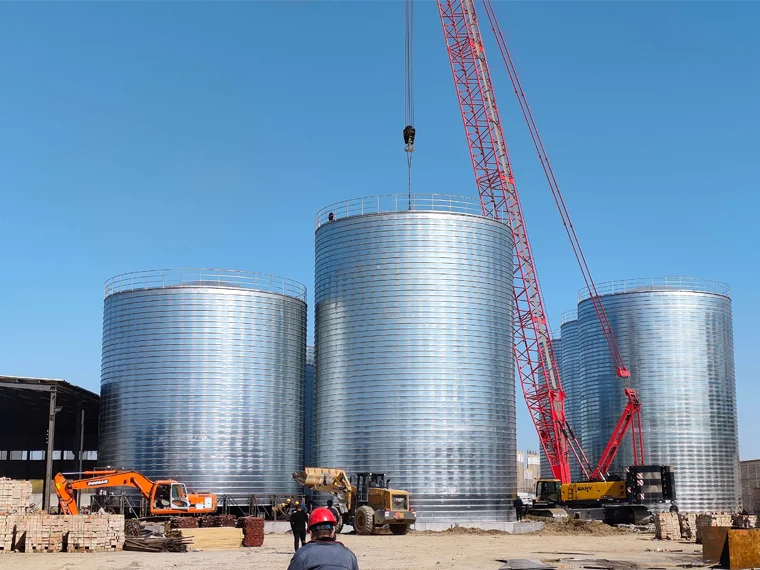
In Peru’s remote highland and jungle regions, construction timelines are critical. Flat bottom silos can be erected in weeks rather than months, using bolted or welded steel panels that are easily transported on narrow mountain roads. This modularity allows for future expansion—adding adjacent silos or increasing capacity—without disrupting ongoing operations. For a typical 10,000-ton grain storage project, the construction phase can be completed in 8–12 weeks, compared to 6–9 months for a comparable concrete silo.
Key Takeaways
- Key Data: Peruvian building codes require structures to withstand ground accelerations up to 0.4g—a standard flat bottom steel silos are engineered to meet through advanced FEA design.
- Best Practice: Specify internal coatings tailored to the stored material—epoxy for cement and food-grade zinc for grain—to extend silo lifespan and maintain product quality.
- Watch Out For: Avoid concrete silos in high-seismic Andean zones; their rigid structure can crack under cyclic loading, leading to costly repairs and downtime.
- Pro Tip: Use bolted flat bottom silos for projects in remote areas—they can be assembled by local crews with minimal heavy equipment, reducing logistics costs.
- Bottom Line: Flat bottom steel silos are the most cost-effective, durable, and seismic-safe storage solution for Peru’s agricultural and mining sectors.
Real-World Applications in Peru’s Agricultural and Mining Sectors
In Peru’s coastal agricultural regions, such as Ica and La Libertad, flat bottom silos are used to store quinoa, corn, and rice. These silos are equipped with aeration systems that maintain temperature below 15°C and relative humidity below 65%, preventing mold and insect infestation. In the mining sector—particularly in the copper-rich regions of Arequipa and Moquegua—flat bottom silos store cement and lime powder for mineral processing. The silos’ dust-tight seals and corrosion-resistant linings ensure that fine powders remain free-flowing and uncontaminated.
Frequently Asked Questions
Q: How does a flat bottom steel silo perform during a major earthquake compared to a concrete silo?
A: Flat bottom steel silos are inherently more flexible than concrete structures, allowing them to absorb and dissipate seismic energy through elastic deformation. Concrete silos, being rigid, are prone to cracking and shear failure under the cyclic loading of a 0.4g earthquake. Steel silos also have a lower center of gravity due to their wide base, which reduces overturning forces. For Peruvian projects, engineers typically add stiffener rings and anchor bolt reinforcements to meet local seismic codes, ensuring the silo remains operational even after a major tremor.
Q: What is the maximum capacity achievable for a flat bottom silo in a Peruvian highland project?
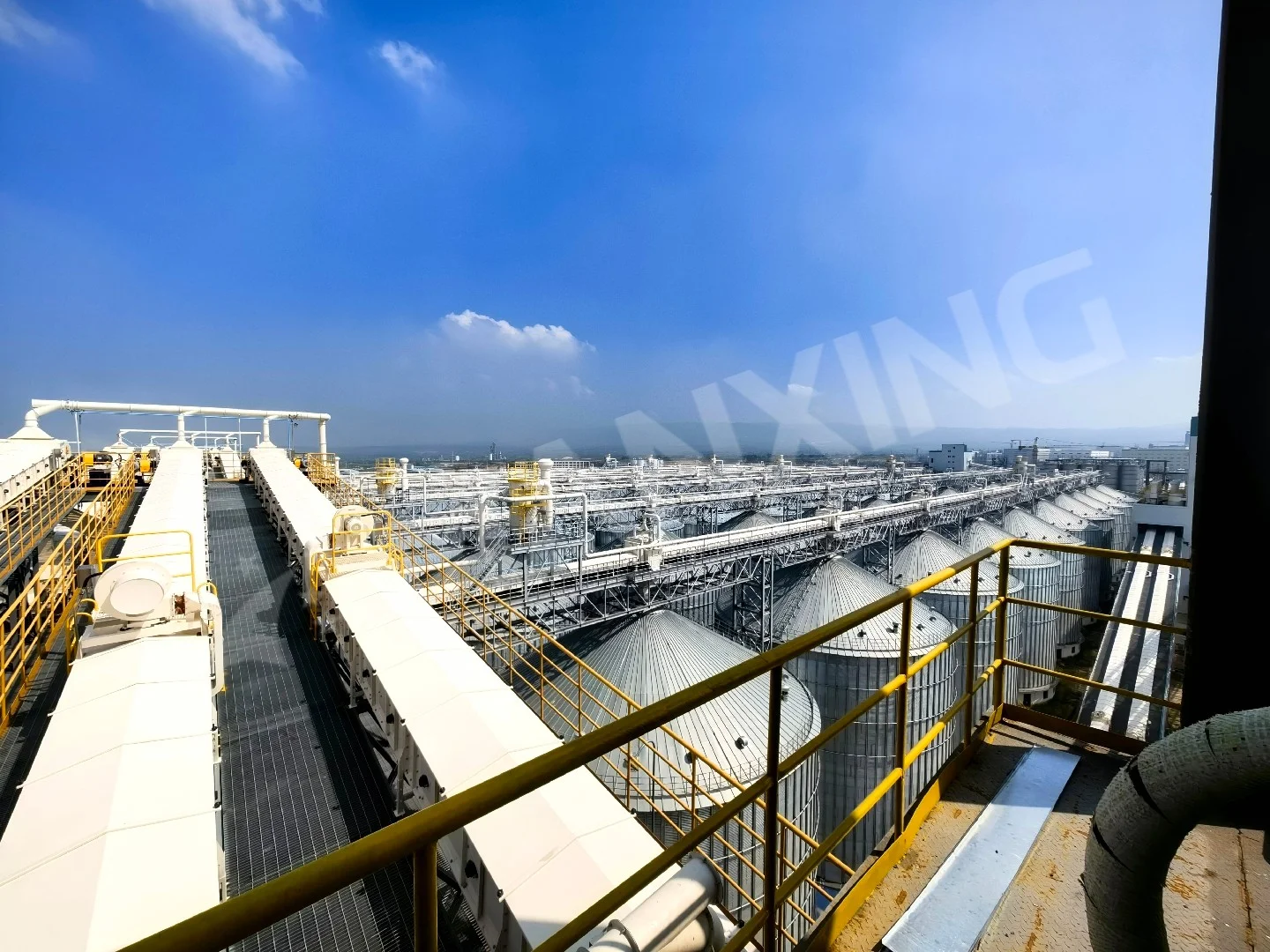
A: Single flat bottom silos can be designed for capacities up to 50,000 tons or more, depending on the material density and foundation conditions. In Peru’s highlands, where soil bearing capacity may be lower, engineers often use a reinforced concrete ring foundation to distribute the load. For very large projects, multiple silos are arranged in a battery configuration, sharing common walls or access tunnels. The largest flat bottom silo project in Peru to date involved a 40,000-ton cement storage facility in the Junín region, built to supply a major mining operation.
Q: How long does it take to construct a flat bottom silo in a remote Andean location?
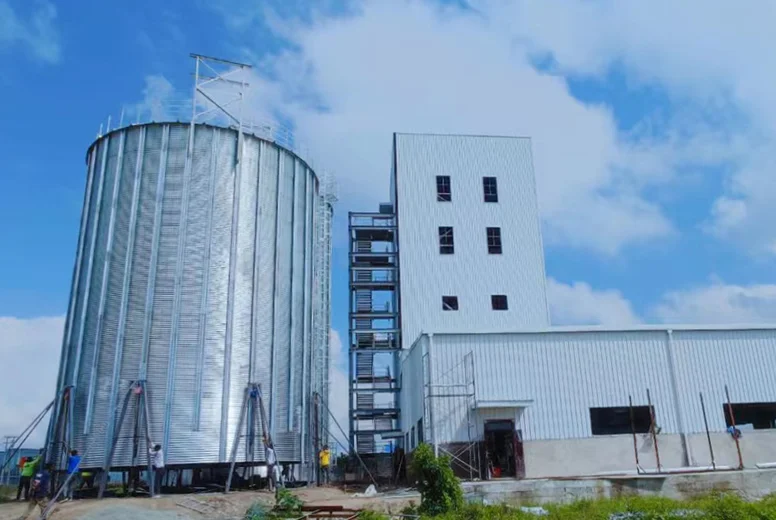
A: Construction time depends on silo size and site accessibility, but a typical 10,000-ton bolted flat bottom silo can be erected in 8–12 weeks. This includes foundation preparation (2–3 weeks), panel assembly (4–6 weeks), and installation of accessories like aeration systems and conveyors (2–3 weeks). For remote sites without road access, all steel components are pre-cut and numbered at the factory, then transported in flat-pack containers. Local crews with basic welding skills can complete the assembly under remote supervision from the manufacturer’s engineers.
Q: What maintenance is required for a flat bottom steel silo in a humid coastal environment like Lima?
A: In Peru’s coastal desert climate, humidity can reach 80–90% during the winter months, promoting corrosion on unprotected steel. Regular maintenance includes annual inspection of external coatings for rust spots, checking seal integrity around access hatches and discharge gates, and verifying that aeration fans and dehumidifiers are functioning. For silos storing hygroscopic materials like cement or quinoa, internal coatings should be inspected every 2–3 years. Applying a marine-grade epoxy coating to the exterior every 5–7 years will extend the silo’s service life beyond 25 years.
Q: Can flat bottom silos be used for both grain and cement storage in the same facility?
A: Yes, but careful planning is required to avoid cross-contamination and material degradation. The ideal approach is to dedicate separate silos or compartments for each material type. For grain storage, the silo must include aeration ducts, temperature monitoring probes, and food-grade interior coatings. For cement storage, the silo requires dust-tight discharge systems, moisture-proof seals, and wear-resistant linings at the discharge cone. If the same silo must be used for both materials (e.g., in a seasonal agricultural facility that also serves mining), a thorough cleaning protocol using vacuum systems and compressed air is mandatory between product changes.
Need expert flat bottom silo solutions for your Peruvian project?
We provide professional design, manufacturing, and installation services for bulk storage and material handling systems worldwide, with proven experience in high-seismic zones and remote locations.
Get a Free Technical Consultation →