
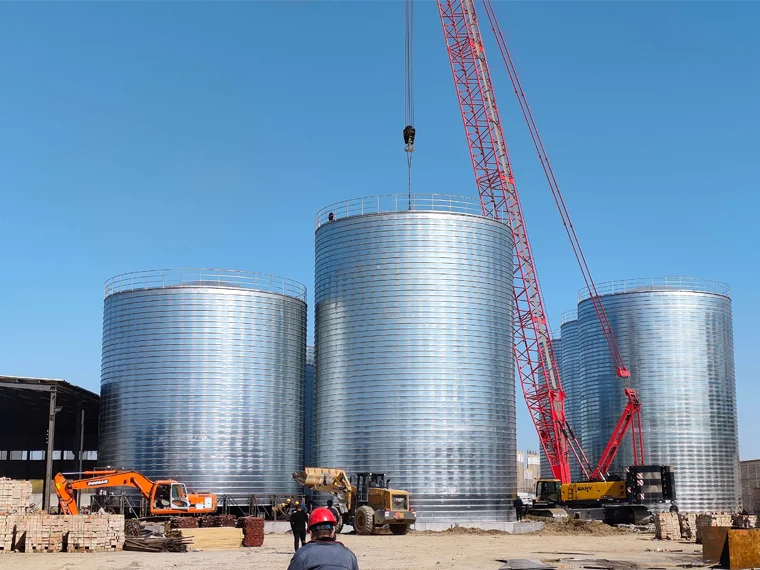
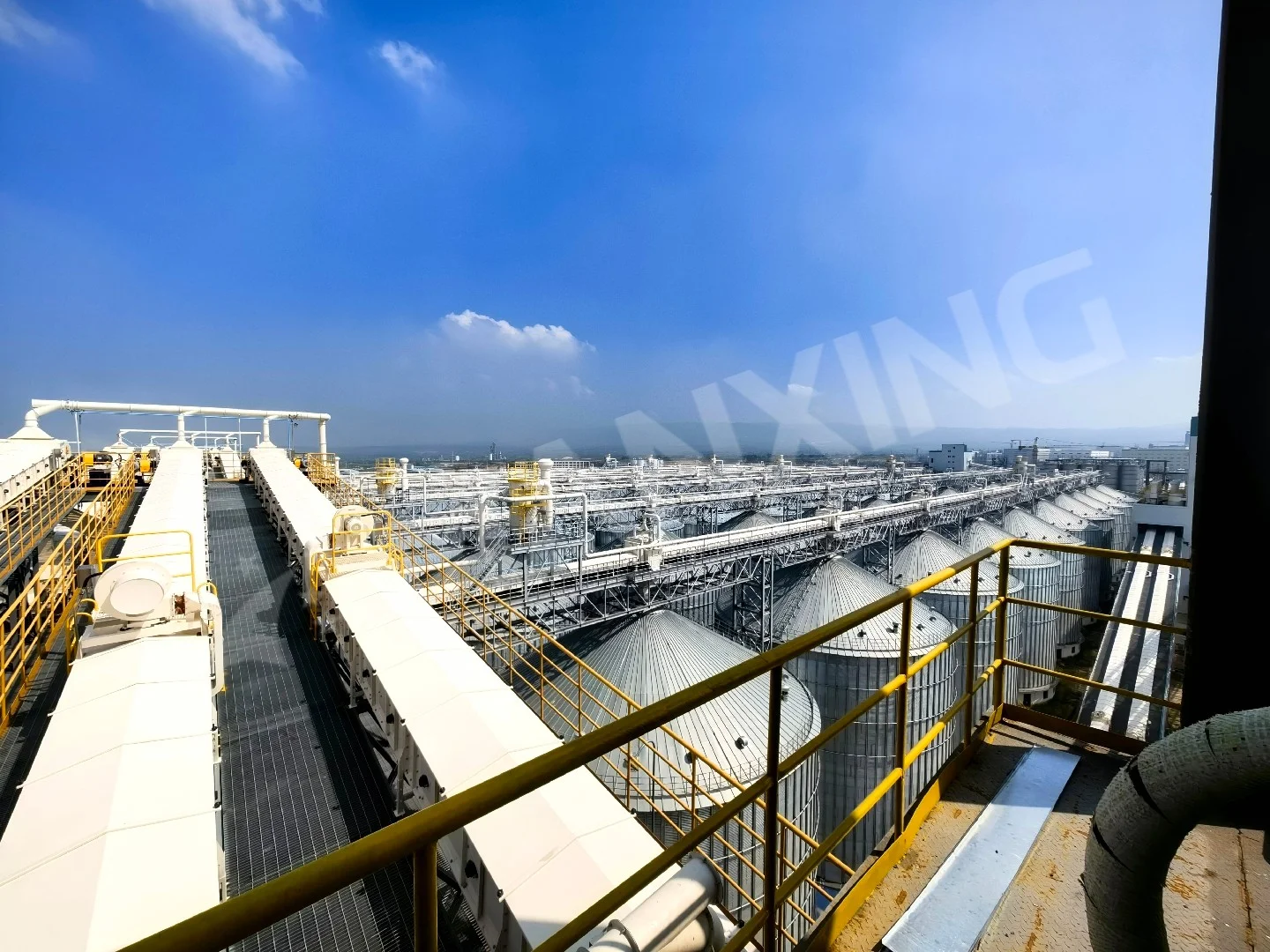


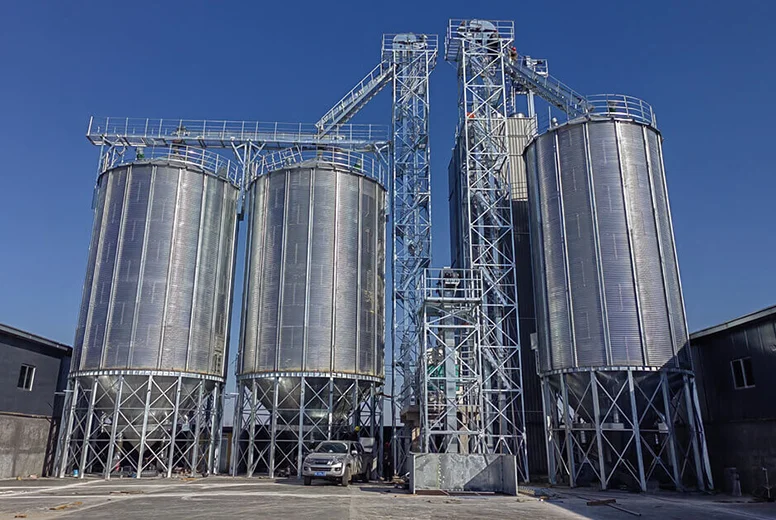
In the demanding world of bulk material storage, the hopper bottom silo with roof vents represents a pinnacle of engineering efficiency, combining gravity-driven discharge with intelligent climate control. This integrated design directly tackles the core challenges of material caking, mold growth, and pressure imbalance, making it an essential solution for industries from agriculture and feed to chemicals and cement.
The Hopper Bottom Silo with Roof Vents: Solving Two Core Storage Challenges
Traditional flat-bottom silos often rely on mechanical sweep augers for discharge, leading to high energy consumption, significant material residue, and the risk of cross-contamination. The
hopper bottom silo solves this through its conical funnel design, which leverages gravity for natural, "first-in, first-out" discharge. This dramatically reduces residual rates and lowers maintenance costs. However, gravity discharge alone cannot guarantee storage quality. In high-humidity environments or regions with large temperature swings, condensation inside the silo can cause grain to mold or powders to cake. Thi s is where roof vents become critical. As part of a passive or active ventilation system, they continuously expel warm, moist air and draw in dry, fresh air, maintaining a stable internal environment.This combined design is particularly vital for moisture-sensitive materials requiring long-term storage. For example, in grain reserves, even if the bottom discharges smoothly, the center of the grain pile can heat up due to respiration without top air circulation, leading to spoilage. The roof vents and hopper bottom work in synergy to create a complete airflow channel from the top to the outlet—a capability that neither design can achieve alone.
How the Hopper Bottom Design Optimizes Material Flow and Discharge Efficiency
The most defining feature of a hopper bottom silo is its conical base, typically angled between 45° and 60°, depending on the material's angle of repose. This precise angle ensures that material flows under gravity toward the central outlet, enabling a "first-in, first-out" flow pattern without the need for vibrators or scrapers. For granular materials like corn and soybeans, or powdered materials like cement and flour, this design effectively prevents "rat-holing" and "bridging"—the two most common discharge failures in flat-bottom silos.
Reducing Residue and Cross-Contamination
In food-grade or chemical storage, material residue is a major quality control hazard. The hopper bottom structure allows for near-complete evacuation, with residual rates typically below 0.5%. This is a significant improvement over the 3%–5% residue found in flat-bottom silos. This translates to shorter cleaning cycles between material changes and a drastically reduced risk of batch-to-batch contamination.
Adapting to Diverse Material Properties
Whether handling free-flowing granules or sticky, arch-prone powders, the hopper bottom design can be adapted by adjusting the hopper angle and outlet size. For example, for viscous feed ingredients, a steeper 60° angle can be used, and the hopper can be lined with stainless steel to reduce the coefficient of friction and ensure smooth flow.
Key Takeaways
- Key Data: Hopper bottom design reduces discharge residual rates from 3%–5% (flat bottom) to below 0.5%, significantly improving material utilization.
- Best Practice: When installing roof vents, choose adjustable louvered vents based on local climate conditions to flexibly control air intake and prevent rainwater ingress during storms.
- Watch Out For: Never overlook insect screens on vents. In grain storage, an unscreened vent can become a primary entry point for pests, compromising the entire batch.
- Pro Tip: For high-value seeds or pharmaceutical chemicals, integrate temperature and humidity sensors with the vent system for active climate control, keeping temperature swings within ±2°C.
- Bottom Line: The synergy between a properly angled hopper bottom and a climate-controlled roof vent system is the most effective defense against spoilage, bridging, and contamination in bulk storage.
Roof Vents: Evolution from Passive Ventilation to Active Climate Control
Modern roof vents are far more than simple openings. Today's ventilation systems for hopper bottom silos are often integrated with temperature sensors, humidity probes, and automatically adjustable louvers or turbine ventilators. When internal temperature or humidity exceeds a set threshold, the system automatically opens the vents or activates axial fans for forced ventilation. This active control capability is critical for high-value materials like seeds or pharmaceutical-grade chemicals. It can maintain internal temperature fluctuations within ±2°C and keep relative humidity below safe thresholds, effectively suppressing mold and insect growth.
Furthermore, roof vents play a crucial role in pressure balancing. During discharge, the descending material creates negative pressure inside the silo. Without timely air replenishment, this can cause silo wall deformation or impede material flow. The roof vent acts as a natural air intake channel, synchronizing with the discharge rhythm of the hopper bottom to ensure smooth airflow. For silos with high sealing requirements, breather valves or pressure balance pipes can be added to complement the vents.
Frequently Asked Questions
Q: Can roof vents on a hopper bottom silo function reliably in extreme climates like typhoons or dust storms?
A: Yes, but they require targeted design. For high-wind areas, use turbine ventilators with high wind-pressure ratings or fixed vents with wind-resistant louvers, ensuring robust installation. In dusty environments, equip vents with removable, high-efficiency filter screens that are cleaned regularly. For regions facing both high humidity and sandstorms (e.g., grain depots in northwest China), a "vent + air filtration box" combination is recommended to filter impurities while introducing fresh air.
Q: For self-igniting materials like coal powder or sulfur, do roof vents increase the risk of fire?
A: The risk depends entirely on the vent type and control system. For combustible dusts, explosion-proof vents are mandatory, and metal components that could generate static sparks (such as aluminum louvers) must be avoided. Critically, the ventilation system should be interlocked with gas detection. If carbon monoxide or dust concentration exceeds safe limits, the vents should automatically close and trigger an inert gas injection system. In chemical applications, roof vents are not simple "air exchangers"; they are an integral part of the safety interlock system.
Q: What is the optimal hopper angle for materials prone to bridging, such as wet distillers grains or sticky clay?
A: For materials with a high angle of repose or cohesive properties, a hopper angle of 60° or steeper is recommended. This steep angle, combined with a larger outlet diameter and a smooth internal lining (e.g., stainless steel or ultra-high molecular weight polyethylene), minimizes friction and encourages mass flow. In extreme cases, aeration pads can be installed in the hopper section to introduce low-pressure air, further breaking bridges without mechanical agitation.
Q: How do you prevent condensation inside a hopper bottom silo when storing hot materials like freshly dried grain?
A: This is a common challenge. The solution involves a combination of strategies. First, use a "cooling" or "tempering" bin to allow hot material to cool before entering the main storage silo. Second, install insulated roof vents that minimize heat transfer and reduce the temperature differential between the silo wall and the material. Finally, active ventilation controlled by dew-point sensors can be programmed to purge moist air before it condenses, maintaining a dry environment even with warm material.
Q: Can a flat-bottom silo be retrofitted with a hopper bottom and roof vents?
A: Retrofitting a flat-bottom silo with a true hopper bottom is structurally complex and often not cost-effective, as it requires significant foundation and steel structure modifications. However, it is possible to retrofit a flat-bottom silo with a steep-sided, self-cleaning discharge cone that sits on the existing floor. Adding roof vents to an existing silo is much more straightforward and can be done by cutting openings in the roof and installing the vent units with proper flashing to prevent leaks. This upgrade alone can significantly improve ventilation and reduce condensation issues.
Need professional hopper bottom silo and ventilation system solutions?
We provide end-to-end custom services from structural design to ventilation control systems, covering grain, feed, chemical, and building materials industries. Whether you need to optimize an existing facility or plan a new project, our engineering team offers a free technical consultation and solution assessment.
Get Your Customized Solution Now →