
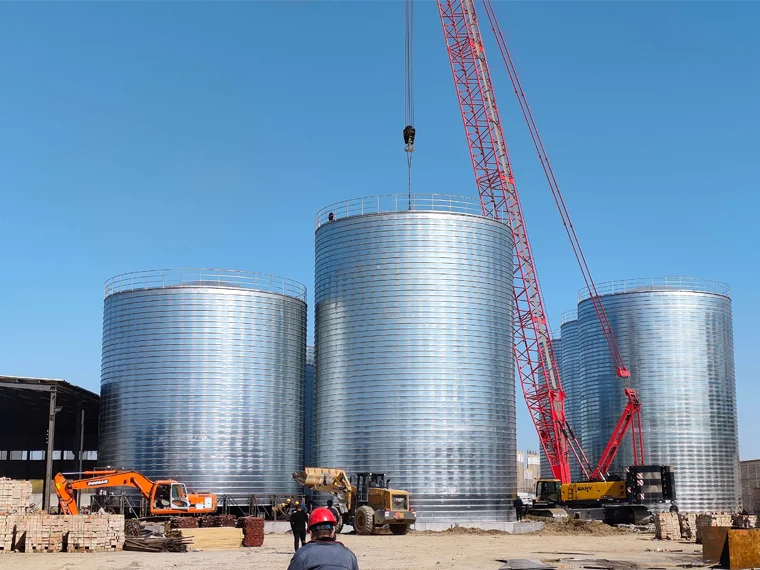
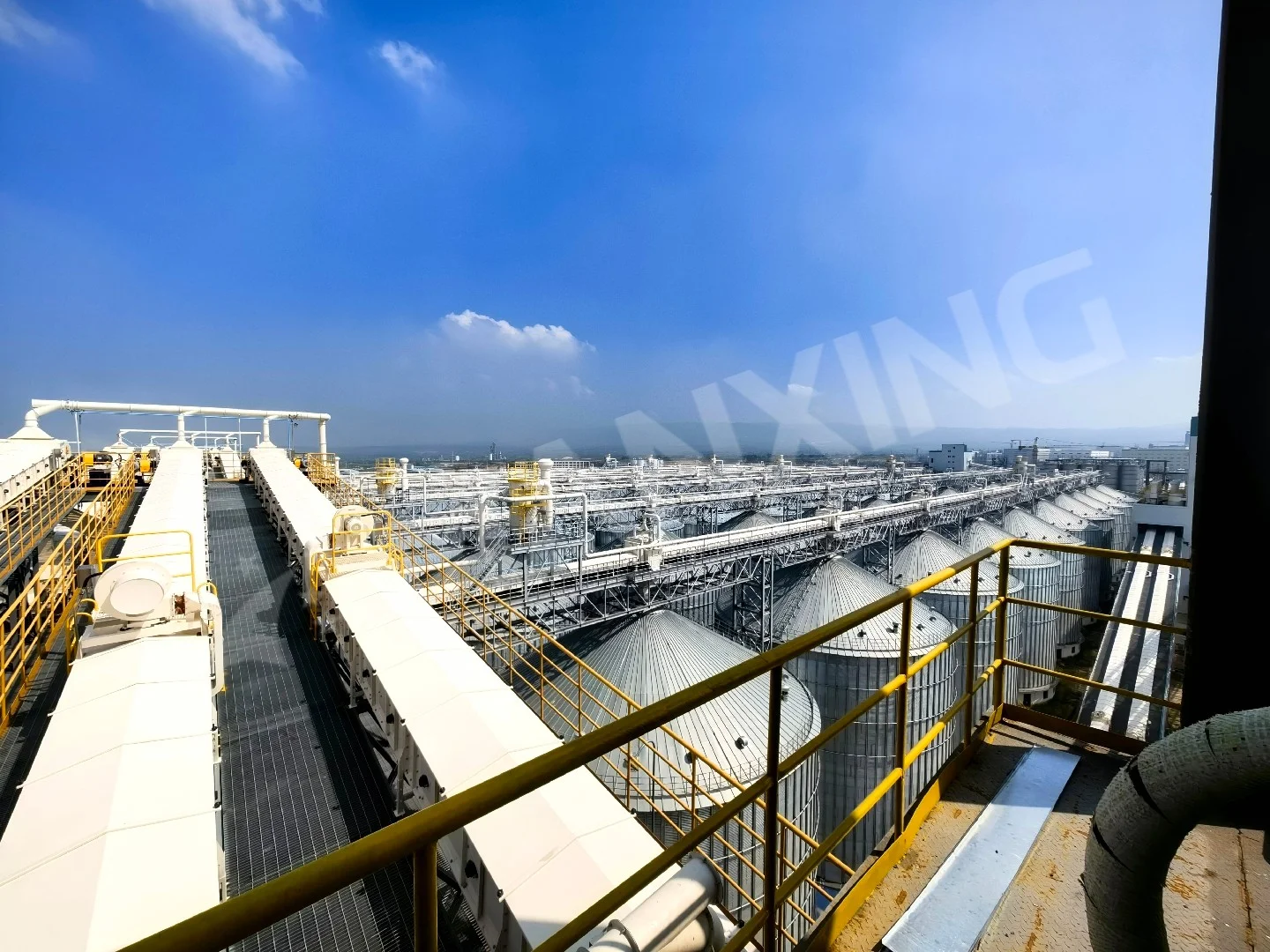


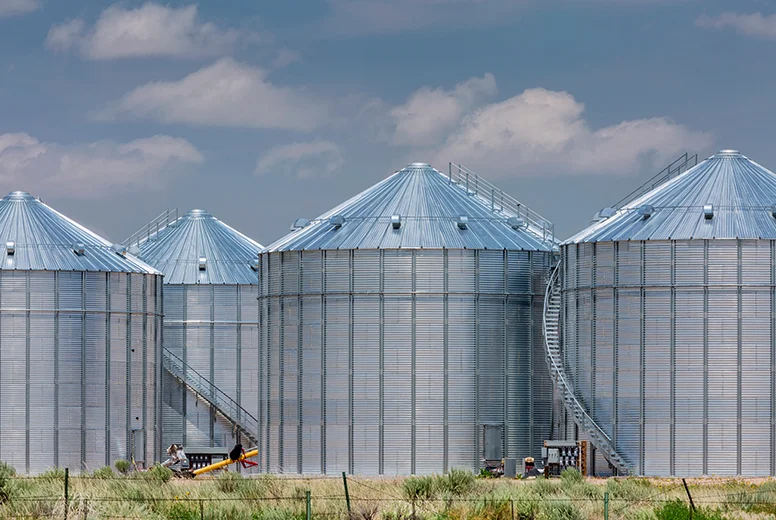
Maximize soybean storage efficiency and quality with a flat bottom silo. Engineered for superior structural integrity and rapid discharge, this design reduces initial investment by up to 20% and achieves a discharge residual rate of less than 0.5%, making it the preferred choice for large farms, oil mills, and export terminals seeking to minimize spoilage and operational costs.
Structural Design Advantages of the Flat Bottom Soybean Storage Silo
Unlike traditional cone-bottom silos, the flat bottom soybean storage silo utilizes a level, horizontal base to distribute the vertical load of thousands of tons of soybeans evenly. This design dramatically reduces the complexity of foundations and support structures, while also significantly lowering steel consumption and welding difficulty. As a result, initial investment in manufacturing and installation is reduced by 15% to 20%. For large-scale storage projects, the construction cycle for a flat bottom silo is shorter and more adaptable to varying site conditions.
From a structural mechanics perspective, the flat bottom design eliminates the localized stress peaks common at the cone-to-wall junction of cone-bottom silos, which are prone to fatigue cracks. When constructed with high-strength steel plate or corrosion-resistant alloys, the service life of a flat bottom silo consistently exceeds 20 years, far surpassing the average lifespan of traditional silo types. This engineering advantage translates directly into long-term asset reliability.
Solving Discharge and Quality Challenges in Soybean Storage
Soybeans, as a high-protein oilseed crop, are extremely sensitive to storage conditions. The flat bottom silo enables a "first-in, first-out" (FIFO) flow pattern through its gravity-assisted discharge system. This effectively prevents mold, pest infestation, and rising fatty acid values caused by prolonged retention. The flat floor surface minimizes residue accumulation, achieving a cleaning rate of over 99%—a critical factor for processing plants that require frequent inventory turnover.
Discharge Efficiency and Residual Control
Flat bottom silos are typically equipped with a central discharge port or multi-point discharge systems, often supplemented by sweep augers or air cushion assist devices. This ensures continuous, uniform soybean flow during unloading. Field data shows that for the same storage volume, the discharge speed of a flat bottom silo is over 30% faster than a cone-bottom silo, with residual material accounting for less than 0.5% of total capacity. This directly reduces manual cleaning costs and equipment downtime.
Temperature, Humidity, and Ventilation Management
The roof and sidewalls of a flat bottom silo can be flexibly configured with ventilation ducts and temperature monitoring systems, enabling layered temperature control and directional aeration. For soybeans, which have a high respiration rate, precise temperature and humidity management is key to preventing "hot spots." The flat geometry allows ventilation air to penetrate the entire grain mass uniformly, eliminating dead zones and keeping storage losses within 1%.
Key Takeaways
- Key Data: Flat bottom silos achieve a discharge residual rate of less than 0.5%, reducing cleaning workload by 2–3 times compared to cone-bottom silos.
- Best Practice: Install multi-point discharge ports with an air cushion assist system at the silo bottom to boost discharge efficiency by over 30%.
- Watch Out For: Flat bottom silos are not suitable for free-flowing powder materials. For granular materials like soybeans, ensure the floor slope is ≥5° to facilitate gravity flow.
- Pro Tip: Integrate a roof-mounted insulation layer and forced ventilation system to combat condensation during large diurnal temperature swings.
- Bottom Line: Over a 10-year operational cycle, a flat bottom silo can reduce total ownership costs by approximately 18%–25% compared to a cone-bottom design.
Typical Applications for Flat Bottom Soybean Storage Silos
In large commercial farms, flat bottom silos are commonly used for centralized harvest storage, with single-unit capacities ranging from 5,000 to 10,000 tons. When paired with drying and cleaning systems, they enable fully automated operations from field to warehouse. For oil processing plants and feed manufacturers, the continuous discharge capability of flat bottom silos makes them ideal buffer bins at the front of the production line, ensuring an uninterrupted raw material supply. Additionally, at export terminals, flat bottom silos can feed directly into belt conveyors or pneumatic conveying systems for ship loading, significantly reducing vessel berthing time.
Frequently Asked Questions
Q: What are the specific differences in long-term operational costs between a flat bottom silo and a cone-bottom silo?
A: From a full life-cycle cost perspective, the initial construction cost of a flat bottom silo is typically 10%–15% lower than a cone-bottom silo. However, the operational advantages extend further. Cone-bottom silos, while relying entirely on gravity for discharge, require significantly more steel for the cone section and demand higher welding standards; the cone is also more susceptible to wear from material impact. The flat bottom silo’s level structure allows internal inspection and cleaning to be performed by a single person, whereas cone-bottom silos often require specialized equipment or a multi-person team. Comprehensive calculations indicate that over a 10-year operational period, the total cost of a flat bottom silo is approximately 18%–25% lower.
Q: How does a flat bottom silo handle the risks of condensation and mold during soybean storage?
A: Condensation primarily occurs on the silo roof and inner walls, especially during seasons with large day-night temperature differences. The flat bottom silo design allows for the installation of high-efficiency insulation layers and forced ventilation systems on the roof. Multiple temperature sensors can be placed along the wall to monitor thermal gradients in real time. If a localized temperature rise is detected, bottom aeration or grain turning operations can be initiated immediately. Furthermore, the flat floor facilitates the installation of moisture barrier layers and drainage channels, effectively preventing groundwater vapor infiltration. Field experience shows that a properly configured flat bottom silo can keep the mold rate during soybean storage below 0.3%.
Q: Is a flat bottom silo suitable for storing other grains besides soybeans, such as wheat or corn?
A: Yes, flat bottom silos are highly versatile and are widely used for storing wheat, corn, barley, and other free-flowing granular grains. The key requirement is that the material must have good flowability. For grains with higher moisture content or those prone to bridging, such as wet corn, it is essential to incorporate a sweep auger or air cannon system to assist discharge. The same structural advantages—uniform load distribution, low residual rates, and efficient aeration—apply across these commodities, making the flat bottom silo a multi-crop storage solution.
Q: What maintenance is required for the flat bottom structure to ensure longevity?
A: Routine maintenance is straightforward but critical. The flat floor should be inspected annually for signs of corrosion or abrasion, particularly around discharge openings. The ventilation system and temperature cables should be tested before each storage season. It is also important to check the condition of seals at the roof-wall joint to prevent water ingress. Unlike cone-bottom silos, where the cone apex is a high-wear zone, the flat bottom’s uniform stress distribution means that wear is more evenly spread, typically requiring less frequent structural repairs. Repainting or recoating the interior every 10–15 years, depending on the material stored, will maintain the silo’s integrity.
Q: Can a flat bottom silo be retrofitted with aeration systems after installation?
A: Yes, retrofitting is possible, but it is far more cost-effective to plan for aeration during the initial design phase. For existing flat bottom silos, under-floor aeration ducts can be installed by cutting channels into the concrete or steel floor, or by using lateral wall-mounted ducts. Roo
f-mounted exhaust fans can also be added. However, the flat geometry makes it easier to achieve uniform airflow distribution compared to cone-bottom silos, as the duct layout is simpler. We always recommend consulting with a silo engineering specialist to optimize the retrofit for your specific bin dimensions and grain type.Need expert manxingsilo solutions for your project?
We provide professional design, manufacturing, and installation services for bulk storage and material handling systems worldwide. Our flat bottom silos are available in custom capacities from 500 to 20,000 tons.
Get a Free Technical Consultation →