


Choosing between a flat bottom silo and a hopper bottom silo is one of the most consequential decisions for grain storage efficiency, operational costs, and grain quality. This comprehensive guide, grounded in 15 years of industry experience, delivers an in-depth comparison of structural design, unloading methods, application scenarios, and long-term return on investment to help agricultural enterprises and grain depot managers make the optimal choice.
Flat Bottom vs. Hopper Bottom Silos: Core Structural Design and Configuration Differences
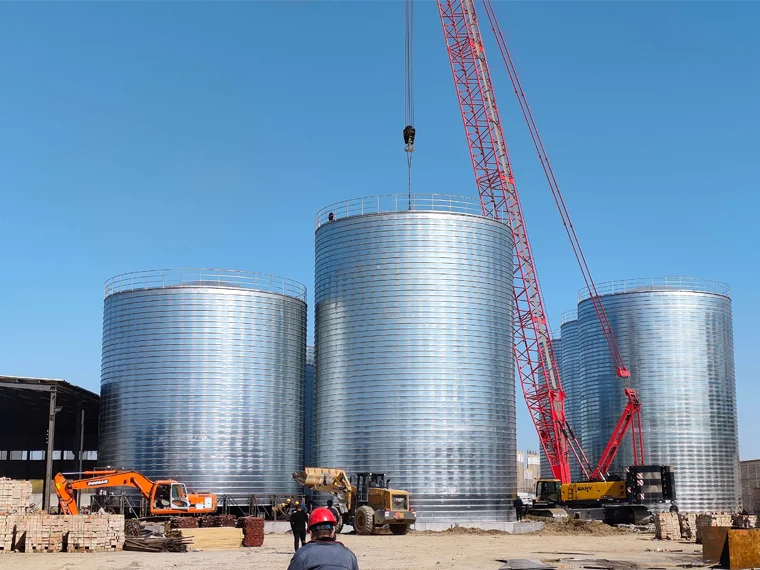
The fundamental distinction between flat bottom and hopper bottom silos lies in the bottom structure, which directly dictates unloading methods, capacity ranges, foundation requirements, and optimal applications. Flat bottom silos feature a level concrete or steel base with vertical walls extending to the ground, creating a flat storage plane. This design enables massive single-silo capacities, ranging from small farm bins of 500 bushels to giant commercial units exceeding 1 million bushels. Large flat bottom silos are typically assembled on-site from segmented steel sheets. Their foundations require reinforced concrete slabs capable of supporting uniform load distribution. For ultra-large silos, engineers must design load-bearing footings to prevent long-term soil compression.
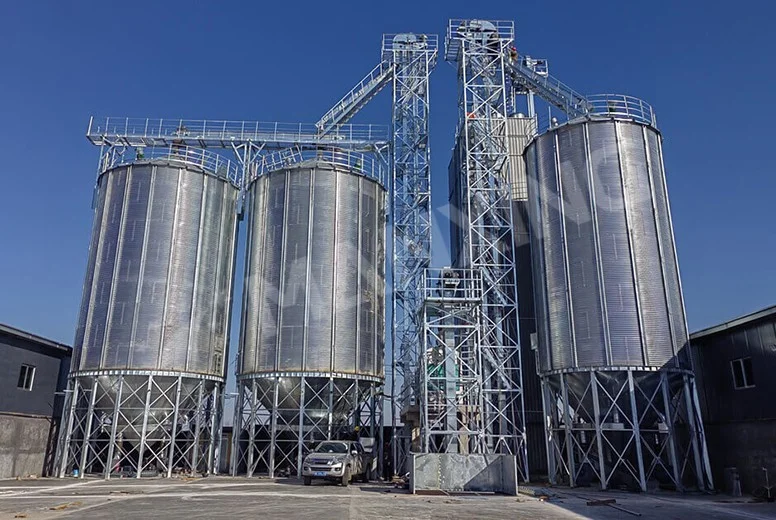
In contrast, hopper bottom silos utilize a conical or sloped bottom—typically angled at 30 to 45 degrees—that tapers downward to a central discharge outlet. This design allows grain to flow by gravity to the outlet without manual intervention. Hopper bottom silos are most common in the medium capacity range (1,000 to 50,000 bushels). While larger hopper bottom silos exist, the conical shape becomes structurally uneconomical at extreme sizes, and the foundation requirements are more complex, needing to support both the silo weight and the lateral thrust generated by the cone.
How to Choose a Silo Based on Unloading Method and Operational Efficiency
The unloading mechanism is where these two silo types diverge most dramatically in operational impact. Flat bottom silos require mechanical sweeping equipment—such as sweep augers, screw conveyors, or front-end loaders—to move grain from the periphery to a central or side discharge. This process is labor-intensive and time-consuming, often requiring workers to enter the silo for final cleanup, which introduces safety risks. The power consumption for flat bottom unloading can be 30-50% higher per ton than gravity-based systems due to the continuous operation of mechanical sweepers. Conversely, hopper bottom silos achieve complete discharge by gravity alone. The 30-45 degree cone angle ensures that grain flows freely to the central outlet, eliminating the need for internal machinery. This reduces labor costs, lowers energy consumption, and minimizes grain damage from mechanical handling. For operations requiring frequent in-and-out movement of grain, such as seed processing plants or feed mills, the hopper bottom design can cut unloading time by up to 60% compared to flat bottom configurations.
Grain Quality Considerations During Unloading
Grain quality preservation is a critical factor in silo selection. In flat bottom silos, the grain at the bottom center is discharged first, while grain near the walls remains static for extended periods. This creates a "first-in, last-out" flow pattern that can lead to spoilage, mold growth, and insect infestation in the dead zones. The mechanical sweeping action also causes kernel breakage and fines generation, which further degrades quality. Hopper bottom silos achieve a near-perfect "first-in, first-out" flow pattern. The conical shape ensures that all grain moves uniformly toward the outlet, minimizing residence time variation. This reduces the risk of hot spots and condensation buildup. For high-value grains like malting barley, food-grade corn, or certified seed, hopper bottom silos are strongly recommended to maintain market-grade quality standards.
Foundation and Installation Complexity
Foundation costs represent a significant portion of total silo investment. Flat bottom silos require large, reinforced concrete slabs that distribute the enormous weight of stored grain evenly across the soil. For a 500,000-bushel flat bottom silo, the foundation slab may be 80-100 feet in diameter and 18-24 inches thick, requiring extensive soil testing and compaction. Installation is straightforward but requires heavy crane capacity for lifting roof sections and wall sheets. Hopper bottom silos require more complex foundations due to the concentrated load at the cone apex and the lateral thrust forces. The foundation typically consists of a central pier surrounded by a ring beam, with reinforced concrete walls supporting the cone structure. While the total concrete volume may be less than for a flat bottom silo of equal capacity, the engineering and forming costs are higher. For capacities under 50,000 bushels, hopper bottom foundations are generally more cost-effective; above that threshold, flat bottom foundations become increasingly economical.
Key Takeaways
- Key Data: Hopper bottom silos can reduce unloading time by up to 60% and lower energy consumption by 30-50% compared to flat bottom designs.
- Best Practice: For high-value grains requiring first-in-first-out flow (malting barley, food corn, seed), choose hopper bottom silos to preserve quality and minimize spoilage.
- Watch Out For: Flat bottom silos create dead zones where grain can spoil; never use them for long-term storage of moisture-sensitive or high-value commodities without active aeration systems.
- Pro Tip: For capacities above 50,000 bushels, flat bottom silos with automated sweep augers become more economical than hopper bottom designs, despite higher operational energy costs.
- Bottom Line: Your choice should be driven by capacity requirements, grain value, and turnover frequency—not just initial purchase price.
Application Scenarios: Matching Silo Type to Your Operation
Flat bottom silos excel in large-scale commercial grain storage where long-term holding and low capital cost per bushel are priorities. They are the standard choice for export terminals, large elevators, and government strategic grain reserves where silos routinely exceed 500,000 bushels. The flat design allows for efficient aeration systems that can maintain grain quality over months or years of storage. Flat bottom silos also accommodate multiple grain types in a single facility, as the flat floor can be sectioned off with temporary dividers. Hopper bottom silos dominate in applications requiring rapid, complete discharge and frequent turnover. They are ideal for feed mills, ethanol plants, seed processing facilities, and flour mills where grain moves through the system daily. The gravity discharge eliminates the need for sweep augers and reduces maintenance costs. Hopper bottom silos are also preferred for materials that tend to bridge or cake, such as high-moisture corn, soybeans, or small grains like canola, as the steep cone angle promotes reliable flow.
Long-Term Return on Investment: Total Cost of Ownership Analysis
When evaluating total cost of ownership over a 20-year lifespan, several factors beyond initial purchase price must be considered. Flat bottom silos typically have a lower initial cost per bushel of storage capacity—often 15-25% less than hopper bottom silos for large installations. However, operational costs are higher due to mechanical unloading equipment, increased labor, and higher electricity consumption. Maintenance costs for sweep augers, conveyors, and motors add $5,000-$15,000 annually per silo. Hopper bottom silos command a premium of 20-35% in initial capital cost for equivalent capacity, but they offer significantly lower operational expenses. With no internal mechanical equipment, maintenance is limited to the discharge gate and conveyor system. Labor costs are reduced by 50-70% for unloading operations. Energy savings from gravity discharge versus mechanical sweeping can amount to $2,000-$8,000 per year per silo, depending on local electricity rates. For operations with high turnover (more than 6 cycles per year), the payback period for the hopper bottom premium is typically 3-5 years.
Frequently Asked Questions
Q: Can a flat bottom silo be retrofitted with a hopper bottom to improve discharge efficiency?
A: Retrofitting a flat bottom silo with a conical hopper is technically possible but rarely economical. The structural modifications required—including cutting the existing floor, installing a steel cone, reinforcing the foundation to handle lateral thrust, and adding new support columns—typically cost 60-80% of a new hopper bottom silo. Most operators find it more cost-effective to sell the flat bottom silo and purchase a dedicated hopper bottom unit. For existing flat bottom silos, a better retrofit option is installing a center sump with a sweep auger system, which improves discharge efficiency without the structural upheaval of a full cone conversion.
Q: What is the maximum practical capacity for a hopper bottom silo before the cone becomes uneconomical?
A: Industry experience shows that hopper bottom silos become structurally and economically impractical above approximately 50,000 bushels (about 1,400 metric tons of wheat). At this scale, the cone height alone can reach 30-40 feet, requiring massive steel reinforcement and complex foundation engineering. The cost per bushel of storage capacity increases exponentially beyond 50,000 bushels due to the disproportionate amount of steel needed for the cone versus the cylindrical walls. For capacities above this threshold, flat bottom silos with mechanical sweep systems are the standard industry solution, offering 15-25% lower capital cost per bushel.
Q: How does grain moisture content affect the choice between flat bottom and hopper bottom silos?
A: Moisture content is a critical selection factor. Grains with moisture above 14%—such as high-moisture corn for ethanol production or wet soybeans—are prone to bridging and caking in flat bottom silos, where static grain at the periphery can spoil rapidly. Hopper bottom silos with steep cone angles (40-45 degrees) are strongly recommended for high-moisture materials, as the gravity flow prevents bridging and ensures complete discharge. For dry grains below 14% moisture, flat bottom silos perform well when equipped with proper aeration systems. However, even for dry grain, hopper bottom designs offer superior quality preservation during long-term storage by eliminating dead zones where moisture migration can occur.
Q: What safety considerations should be evaluated when choosing between these silo types?
A: Safety profiles differ significantly. Flat bottom silos require workers to enter the silo for cleanup and maintenance, exposing them to engulfment hazards, dust explosions, and toxic atmospheres from fumigants or mold spores. OSHA and industry standards mandate confined space entry protocols, including air monitoring, harness systems, and standby attendants. Hopper bottom silos eliminate the need for entry during normal operations, as gravity discharge clears the silo completely. This drastically reduces confined space risks. However, hopper bottom silos present their own hazards: the cone structure creates a confined space below the silo that requires lockout/tagout procedures for maintenance, and the steep walls can make rescue operations challenging. For facilities prioritizing worker safety, hopper bottom designs are generally preferred due to the elimination of routine entry.
Q: How do flat bottom and hopper bottom silos compare in terms of aeration efficiency and temperature control?
A: Aeration efficiency is a key differentiator. Flat bottom silos allow for uniform aeration through a network of floor ducts or perforated floors, enabling consistent temperature control across the entire grain mass. This makes them superior for long-term storage where maintaining grain temperature below 60°F (15°C) prevents insect activity and mold growth. Hopper bottom silos present aeration challenges because the conical shape creates variable air path lengths—air moves more easily through the shorter path at the center than through the longer path at the periphery. This can lead to uneven cooling and moisture migration. Specialized aeration systems with multiple zones and variable-speed fans are required for hopper bottom silos. For storage durations exceeding 6 months, flat bottom silos with properly designed aeration systems provide more reliable temperature management and grain quality preservation.
Need expert manxingsilo solutions for your grain storage project?
We provide professional design, manufacturing, and installation services for flat bottom and hopper bottom silos, along with complete bulk storage and material handling systems. Our engineers have delivered over 2,000 silo projects across 40 countries, serving agricultural cooperatives, grain processors, and industrial facilities worldwide.
Get a Free Technical Consultation →