
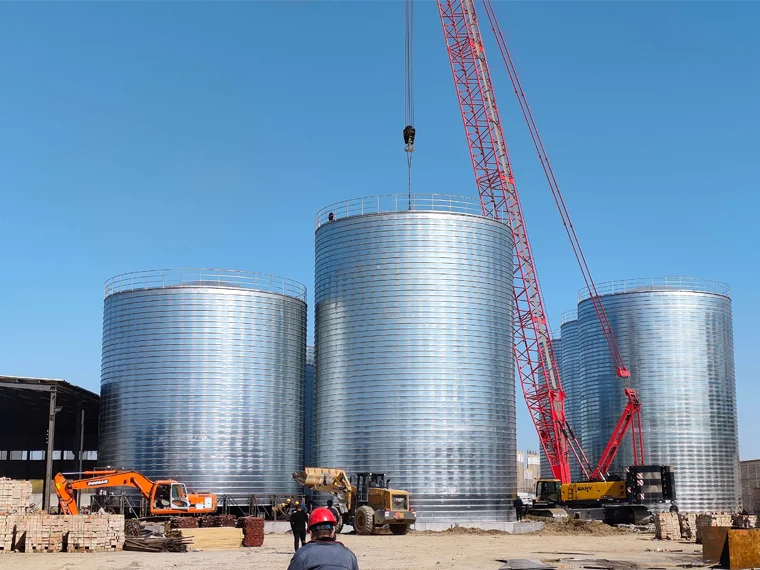
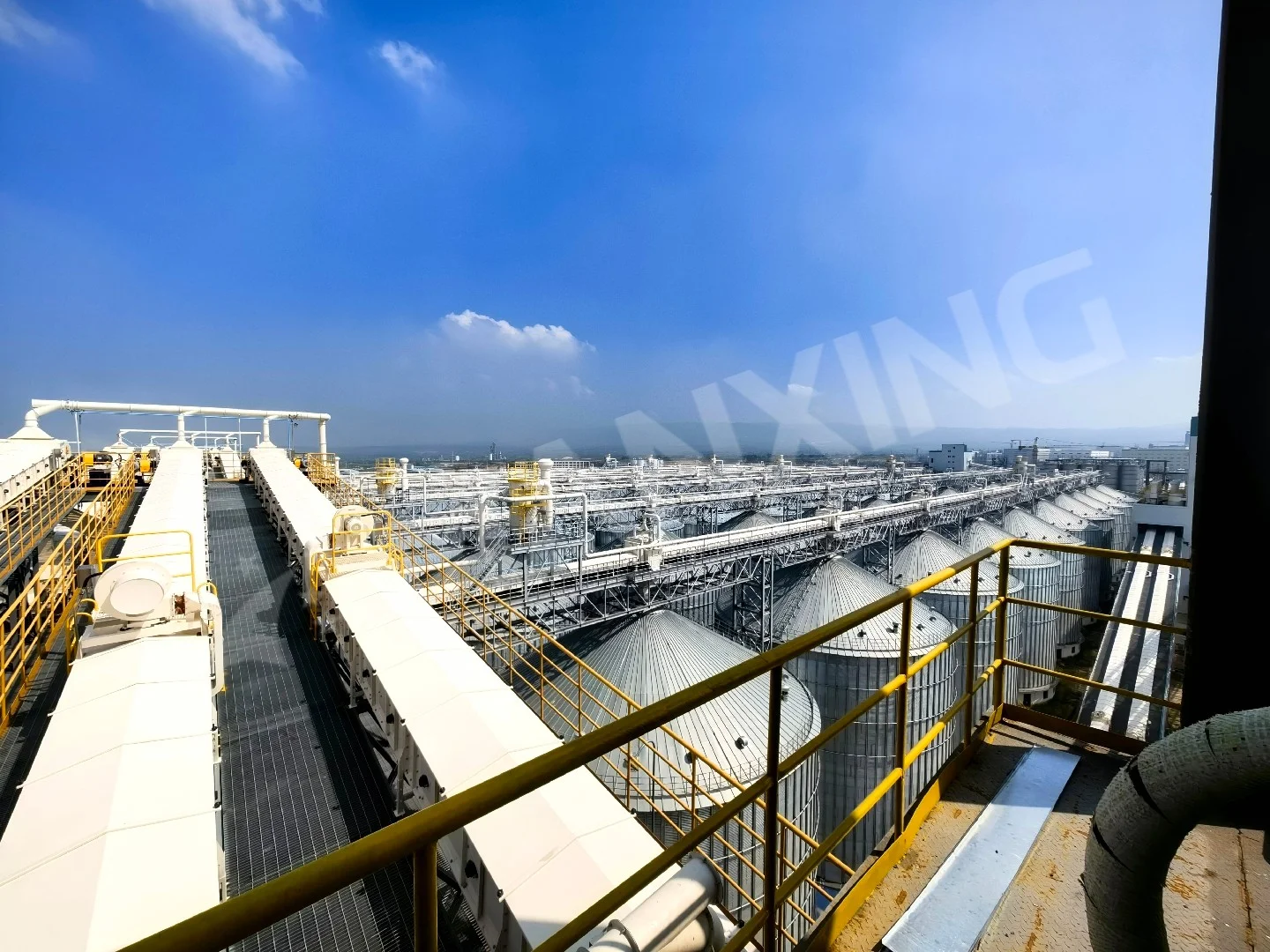


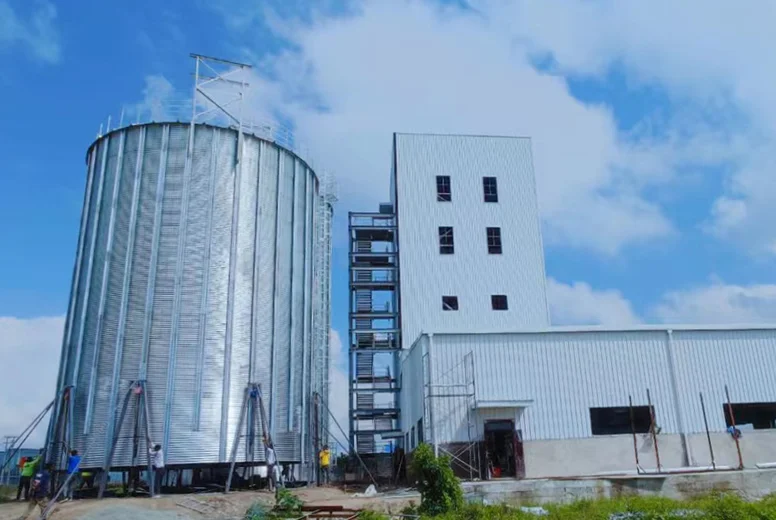
Choosing the right flat bottom silo manufacturer in China is critical for ensuring structural integrity, operational efficiency, and long-term cost savings in bulk storage. ManxingSilo, with over 15 years of industry expertise, delivers custom-engineered solutions from 50 to 10,000+ tons for agriculture, cement, feed, and food processing sectors. This guide provides an in-depth technical analysis of flat bottom silo design, selection criteria, and maintenance best practices to help you make an informed procurement decision.
Structural Advantages and Industrial Applications of Flat Bottom Silos
Flat bottom silos (also known as flat base silos) occupy a critical position in bulk material storage due to their unique horizontal base design. Unlike cone-bottom or hopper silos, the flat bottom structure incorporates a planar base combined with a central conical discharge area, enabling efficient material evacuation. This design delivers three core advantages: First, the flat base provides exceptional structural stability, particularly on sites with complex soil conditions, reducing foundation construction costs by an estimated 15%–20%. Second, standardized steel plate fabrication allows flexible capacity configurations ranging from 50 tons to over 10,000 tons, serving applications from small farms to large industrial parks. Third, the flat interior facilitates easy inspection and cleaning — a critical requirement in food-grade storage environments.
In practice, flat bottom silos have been widely adopted across key industries. In agriculture, they are used for long-term grain and seed storage, with temperature and humidity control systems preserving grain quality. The cement industry relies on them for airtight storage of dry powder materials, effectively preventing moisture ingress. The feed industry uses them to maintain raw material hygiene and safety, while the food industry employs them for controlled storage of bulk materials like flour and sugar. According to industry statistics, the Chinese flat bottom silo market maintains an annual growth rate of 8%–12%, with the agriculture and cement sectors accounting for over 60% of total demand.
How to Select a Reliable Flat Bottom Silo Manufacturer
When evaluating a flat bottom silo manufacturer in China, procurement professionals must scrutinize several critical technical parameters and qualifications: steel plate thickness and material grade (typically Q235B or Q355B steel), anti-corrosion treatment (hot-dip galvanizing or epoxy coating), discharge system efficiency (drag chain conveyors or pneumatic conveying), and seismic design standards. A professional manufacturer should provide complete structural calculation reports and finite element analysis (FEA) documentation.
Verification of Technical Specifications
Demand detailed load calculations from the manufacturer, including wind load, snow load, seismic load, and material lateral pressure. Qualified manufacturers design in accordance with GB 50009-2012 “Load Code for the Design of Building Structures” and provide third-party inspection reports. For example, a 10,000-ton flat bottom silo typically requires wall thicknesses of 6–12 mm, with additional reinforcement rings at the bottom.
Manufacturing and Installation Capabilities
Assess the manufacturer’s production capacity and installation team experience. Leading manufacturers such as ManxingSilo operate automated coil-winding production lines and hold ISO 9001 certification, with an annual production capacity exceeding 500 units. Installation teams must possess高空作业 (high-altitude work) certifications and a minimum of five years of project experience to ensure on-site welding quality and schedule control.
Key Takeaways
- Key Data: Maximum single-silo capacity exceeds 10,000 tons, ideal for large-scale centralized storage.
- Best Practice: Prioritize manufacturers that provide finite element analysis and third-party inspection reports to ensure structural safety.
- Watch Out For: Avoid selection based solely on price — low quotes often involve reduced steel thickness or simplified anti-corrosion processes, leading to higher long-term maintenance costs.
- Pro Tip: For materials with poor flowability, always request a discharge system design that includes a vibratory breaker or fluidization pads to prevent bridging.
- Bottom Line: A properly engineered flat bottom silo from a certified manufacturer delivers a service life exceeding 20 years with routine maintenance.
Discharge Systems and Maintenance Essentials for Flat Bottom Silos
Discharge efficiency is one of the core design challenges for flat bottom silos. Because the bottom is flat, materials are prone to forming “rat holes” or “bridging” phenomena. Solutions include: using a conical discharge hopper (with an angle 15°–20° greater than the material’s angle of repose), installing fluidization devices (suitable for powder materials), or configuring rotary sweep augers. For materials with poor flowability, it is recommended to add vibratory bin activators. On the maintenance side, flat bottom silos require regular inspections: check the integrity of the anti-corrosion coating quarterly, perform internal cleaning and weld seam inspection annually, and replace seals every three years. Good maintenance practices can extend equipment life to over 20 years.
Frequently Asked Questions
Q: What is the actual cost difference between a flat bottom silo and a cone bottom silo?
A: The initial manufacturing cost of a flat bottom silo is typically 10%–15% lower than that of a cone bottom silo of the same capacity, due to reduced steel plate usage and simpler structure. However, the discharge system for flat bottom silos (such as sweep augers or drag chains) adds additional investment. Over the full lifecycle, flat bottom silos have lower maintenance costs, especially in industries requiring frequent emptying. When considering total lifecycle cost, flat bottom silos become more economical for capacities exceeding 1,000 tons.
Q: How can I ensure the export quality of a flat bottom silo manufactured in China?
A: Leading Chinese manufacturers like ManxingSilo strictly adhere to international standards, including ISO 9001 quality management systems, AWS welding certification, and dual GB/ASME codes. Export projects typically use hot-dip galvanizing for corrosion protection, meeting salt spray test requirements of over 500 hours. It is recommended that buyers request the following before signing a contract: material certificates, Welding Procedure Qualification Records (WPQR), and third-party inspection reports. Additionally, selecting a manufacturer with export experience ensures that packaging and sea freight comply with international logistics standards.
Q: Can flat bottom silos be used for storing flammable or explosive materials?
A: Yes, but special design features are required. For example, when storing coal powder or grain dust, the silo must be equipped with explosion vent panels (area calculated per GB 50016-2014), a grounding system (resistance less than 4 ohms), and explosion-proof electrical equipment. The interior of the silo must use non-sparking materials, and the discharge system should utilize explosion-proof motors. Such projects should be designed by manufacturers with chemical or grain industry qualifications and must include an explosion-proof certificate.
Q: What steel grades are standard for flat bottom silos, and how do they affect performance?
A: The standard steel grades used are Q235B and Q355B. Q235B is suitable for smaller capacities and less demanding environments due to its lower yield strength (235 MPa). Q355B offers higher yield strength (355 MPa), allowing for thinner wall sections in larger silos (over 5,000 tons) while maintaining structural integrity. For corrosive environments or food-grade applications, manufacturers often specify additional anti-corrosion treatments such as hot-dip galvanizing (minimum 85 µm coating thickness) or specialized epoxy linings.
Q: What is the typical lead time for a custom-engineered flat bottom silo from a Chinese manufacturer?
A: Lead times vary based on capacity and complexity. For standard capacities (500–3,000 tons), the typical lead time is 6–8 weeks from design approval to factory delivery. Large-scale projects (5,000–10,000 tons) may require 10–14 weeks due to additional engineering, finite element analysis, and third-party inspections. On-site installation usually adds 4–8 weeks depending on site conditions and team size. It is advisable to include a detailed project timeline in the contract to manage expectations.
Q: How does the foundation design differ for a flat bottom silo compared to other silo types?
A: The flat bottom silo distributes the load uniformly across its entire base area, which reduces the point load on the foundation compared to cone bottom or hopper silos. This allows for simpler, shallower foundations — typically a reinforced concrete ring beam with a compacted base pad. For
soft soil conditions, a piled foundation may still be required. The foundation cost saving of 15%–20% is a direct result of this uniform load distribution. Always require a geotechnical survey and foundation design report from the manufacturer before proceeding.Need expert flat bottom silo solutions for your project?
We provide professional design, manufacturing, and installation services for bulk storage and material handling systems worldwide, with capacities from 50 to 10,000+ tons.
Get a Free Technical Consultation →