
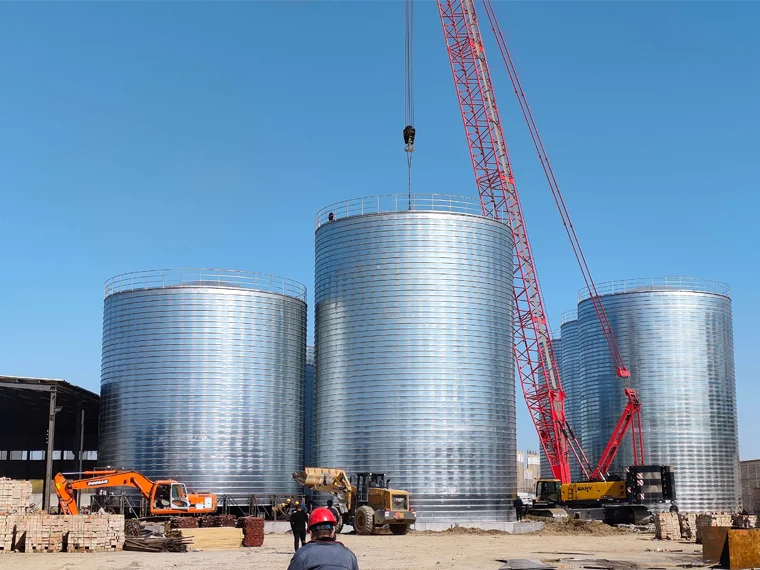
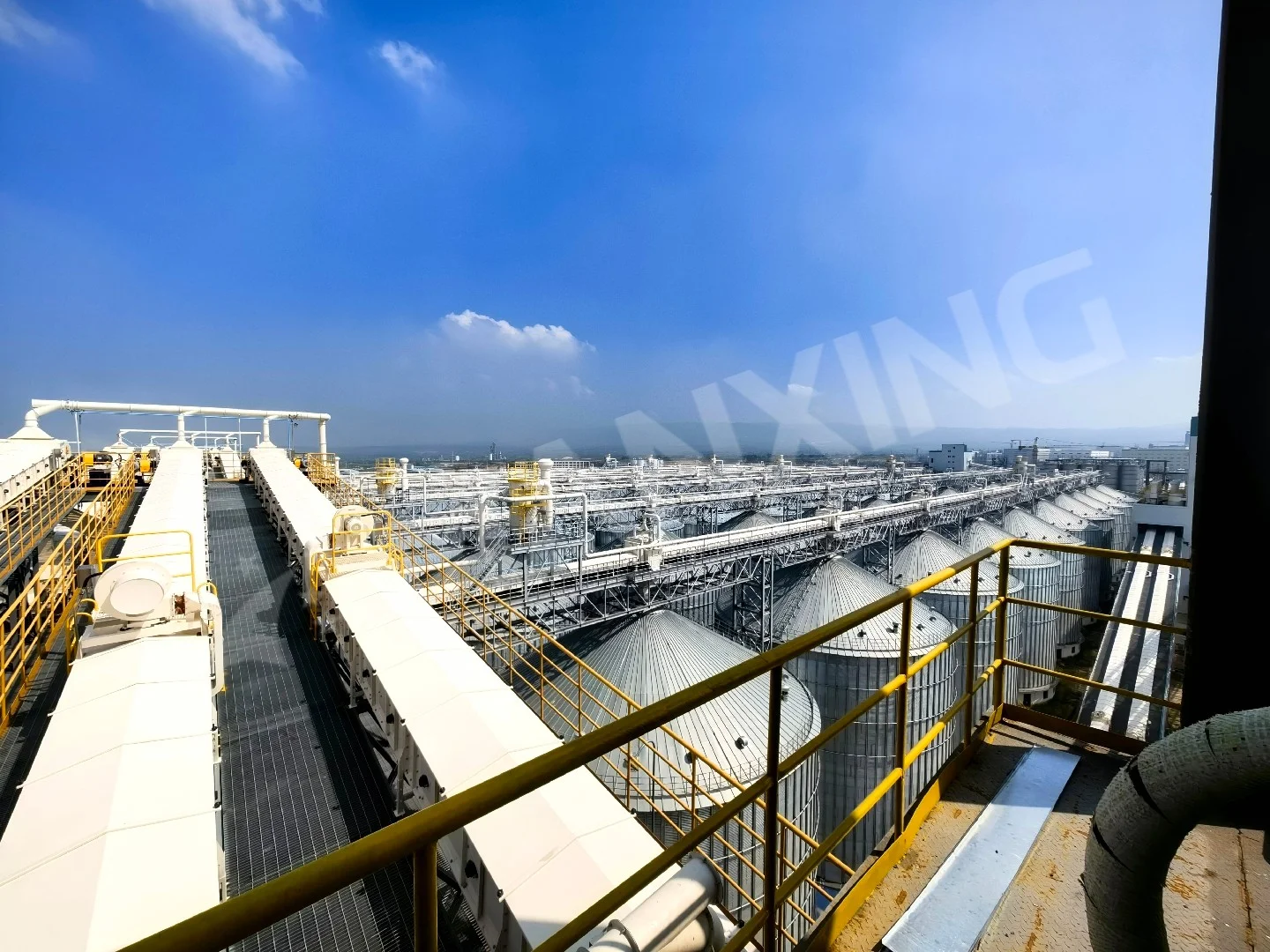


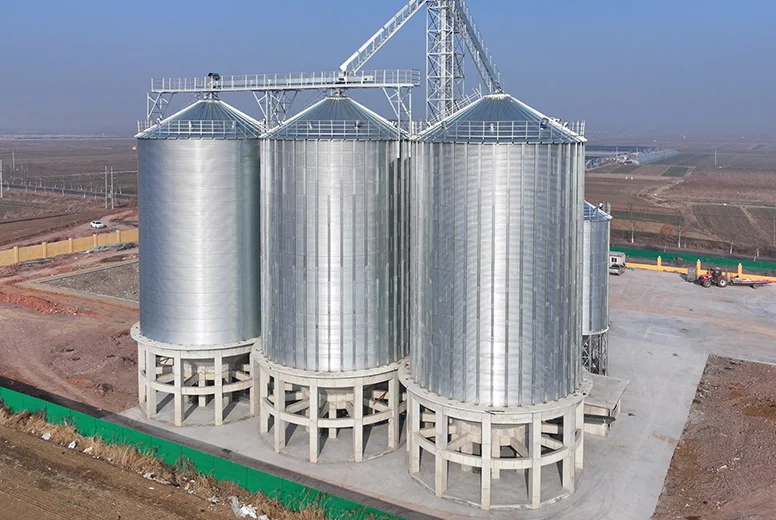
Russia’s recently completed concrete silo project represents a major leap forward in agricultural and industrial storage infrastructure, specifically engineered to withstand the brutal extremes of Siberian winters. By combining high-performance C50/60 concrete with advanced slipform construction, the project delivers a durable, modular, and expandable storage solution capable of handling Russia’s volatile grain harvests for over 50 years.
Engineering Breakthroughs in Russia’s Concrete Silo Project for Extreme Climates
Russia’s vast territory spans from the extreme cold of Siberia to temperate continental climate zones, imposing stringent demands on storage structures. Traditional steel silos are prone to material embrittlement and corrosion under freeze-thaw cycles at -40°C. Concrete silos, with their high thermal inertia and superior frost resistance, have become the preferred choice for this environment. This project utilized C50/60 grade high-strength concrete with specialized air-entraining and antifreeze admixtures, enabling the structure to withstand over 300 freeze-thaw cycles without any spalling or surface degradation.
The reinforcement cover was increased to 50 mm—far exceeding standard international requirements—effectively blocking chloride ion penetration and extending the design service life to over 50 years. In terms of construction methodology, the project adopted slipform casting technology, achieving monolithic forming of the silo walls and eliminating leakage risks from cold joints. This continuous construction method shortened the overall schedule by 30% while ensuring wall thickness uniformity within a tolerance of ±5 mm, laying a solid foundation for subsequent sealing and insulation layers.
Modular Design Solves Russia’s Storage Expansion Challenges
Russia’s grain production fluctuates significantly from year to year. For example, wheat output hit a record 92 million tons in 2023 but may drop to 85 million tons in 2024 due to drought. Such annual volatility demands flexible storage expansion capabilities. This project adopted a modular design approach, allowing operators to add additional silo units incrementally as harvest volumes increase, without disrupting existing storage operations. This flexibility is critical for managing the unpredictable output of Russian agriculture.
Precision Load Management for Dynamic Grain Storage
The project incorporated a precision load management system that continuously monitors the weight distribution within each silo. Sensors embedded in the foundation and walls provide real-time data to a central control system, enabling operators to optimize filling and discharge sequences. This prevents overloading of individual cells and minimizes structural stress, ensuring safe and efficient operation even during peak harvest seasons.
Thermal Insulation and Moisture Control in Harsh Winters
To combat the extreme cold, the silos were fitted with a multi-layer insulation system. A 150 mm thick layer of rigid polyurethane foam was applied to the exterior walls, followed by a weatherproof cladding. This insulation maintains a stable internal temperature, preventing condensation and mold growth that can spoil stored grain. Additionally, a vapor barrier was installed to protect the concrete from moisture ingress during the spring thaw, further enhancing the structure’s longevity.
Key Takeaways
- Key Data: The concrete silo withstands over 300 freeze-thaw cycles at -40°C, with a design life exceeding 50 years.
- Best Practice: Use C50/60 high-strength concrete with air-entraining admixtures and a 50 mm reinforcement cover for extreme cold climates.
- Watch Out For: Traditional steel silos are prone to embrittlement and corrosion in Siberian winters—concrete is the more reliable choice.
- Pro Tip: Slipform casting eliminates cold joints and ensures wall thickness uniformity within ±5 mm, reducing leakage risks and speeding up construction by 30%.
- Bottom Line: Modular, expandable concrete silos with precision load management are the optimal solution for Russia’s volatile grain production and harsh climate. Related: Hopper bottom silo with ladder and safety cage >
Construction Methodology and Quality Assurance for Long-Term Reliability
The slipform casting technique was central to the project’s success. By continuously pouring concrete into a moving formwork system, the team achieved a seamless, monolithic wall structure. This method not only eliminated the weak points associated with cold joints but also significantly reduced construction time. Each silo cell was completed in a single continuous pour, ensuring uniform density and strength throughout the wall. Post-construction testing confirmed that the walls met all specified tolerances, with no voids or structural defects.
Quality assurance measures included real-time monitoring of concrete temperature and slump during pouring, as well as non-destructive testing (ultrasonic pulse velocity) of the cured walls. The project team also conducted freeze-thaw cycle tests on sample cores, verifying that the concrete mix could withstand over 300 cycles without significant loss of compressive strength. These rigorous protocols ensure that the silos will perform reliably for decades, even in the most challenging Russian winters.
Frequently Asked Questions
Q: Why are concrete silos preferred over steel silos for extreme cold climates like Siberia?
A: Concrete silos offer superior thermal inertia and frost resistance compared to steel. At temperatures as low as -40°C, steel can become brittle and is highly susceptible to corrosion from freeze-thaw cycles. Concrete, especially when formulated with air-entraining admixtures, can withstand hundreds of freeze-thaw cycles without spalling. Additionally, concrete’s higher mass helps stabilize internal temperatures, reducing condensation and spoilage risks for stored grain.
Q: How does the modular design of this concrete silo project help manage Russia’s fluctuating grain harvests?
A: The modular design allows operators to add new silo units incrementally as needed, without interrupting existing storage operations. Given Russia’s annual wheat production can vary by 7 million tons or more (e.g., 92 million tons in 2023 vs. an estimated 85 million tons in 2024), this flexibility is crucial. Instead of building oversized capacity that sits idle in low-yield years, operators can expand storage in line with actual harvest volumes, optimizing capital expenditure and operational efficiency.
Q: What specific concrete mix design was used, and why was it chosen for this project?
A: The project used C50/60 grade high-strength concrete, which offers a compressive strength of 50-60 MPa. This mix was enhanced with air-entraining admixtures to create microscopic air bubbles that relieve internal pressure during freeze-thaw cycles, preventing cracking. Antifreeze admixtures were also added to lower the freezing point of the water in the mix, ensuring proper curing even in cold weather. This combination ensures the structure can withstand over 300 freeze-thaw cycles without spalling, a critical requirement for Siberian conditions.
Q: How does the slipform construction method improve the quality and durability of concrete silos?
A: Slipform casting involves continuously pouring concrete into a moving formwork system, creating a monolithic wall structure without cold joints. Cold joints are weak points where two separate concrete pours meet, often leading to leakage and structural vulnerabilities. By eliminating these joints, slipform construction ensures uniform wall thickness (within ±5 mm tolerance), higher structural integrity, and better resistance to moisture ingress. It also speeds up construction by approximately 30%, reducing overall project timelines.
Q: What maintenance is required for concrete silos in extreme cold climates to ensure a 50-year service life?
A: Minimal maintenance is required if the silo is properly designed and constructed. Key practices include: periodic inspection of the exterior cladding and insulation for damage from wind or ice; checking vapor barriers for tears; and ensuring drainage systems around the foundation are clear to prevent water pooling. The concrete itself, with its 50 mm reinforcement cover and air-entraining admixtures, is highly resistant to freeze-thaw damage. However, any cracks that develop should be sealed promptly to prevent moisture ingress and chloride penetration.
Q: Can this concrete silo design be adapted for other extreme climate regions or different bulk materials?
A: Yes, the design principles—high-performance concrete, slipform construction, modular expansion, and precision load management—are highly adaptable. The concrete mix can be adjusted for specific climate conditions (e.g., higher sulfate resistance for coastal areas). The modular design allows for scaling to different capacities, and the load management system can be calibrated for various bulk materials, from grain and cement to minerals and chemicals. This makes the solution replicable for projects in Canada, Scandinavia, northern China, and other cold regions.
Need expert concrete silo solutions for your project in extreme climates?
We provide professional design, manufacturing, and installation services for bulk storage and material handling systems worldwide, with proven expertise in cold-weather construction.
Get a Free Technical Consultation →