
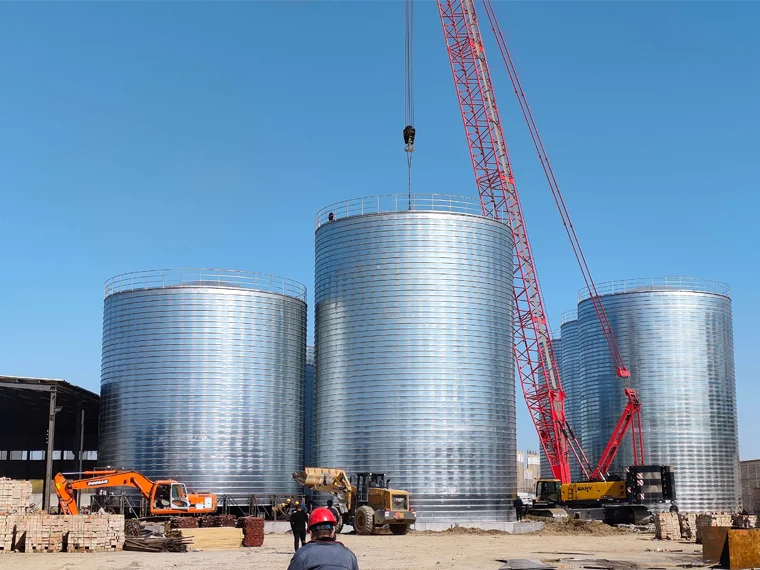
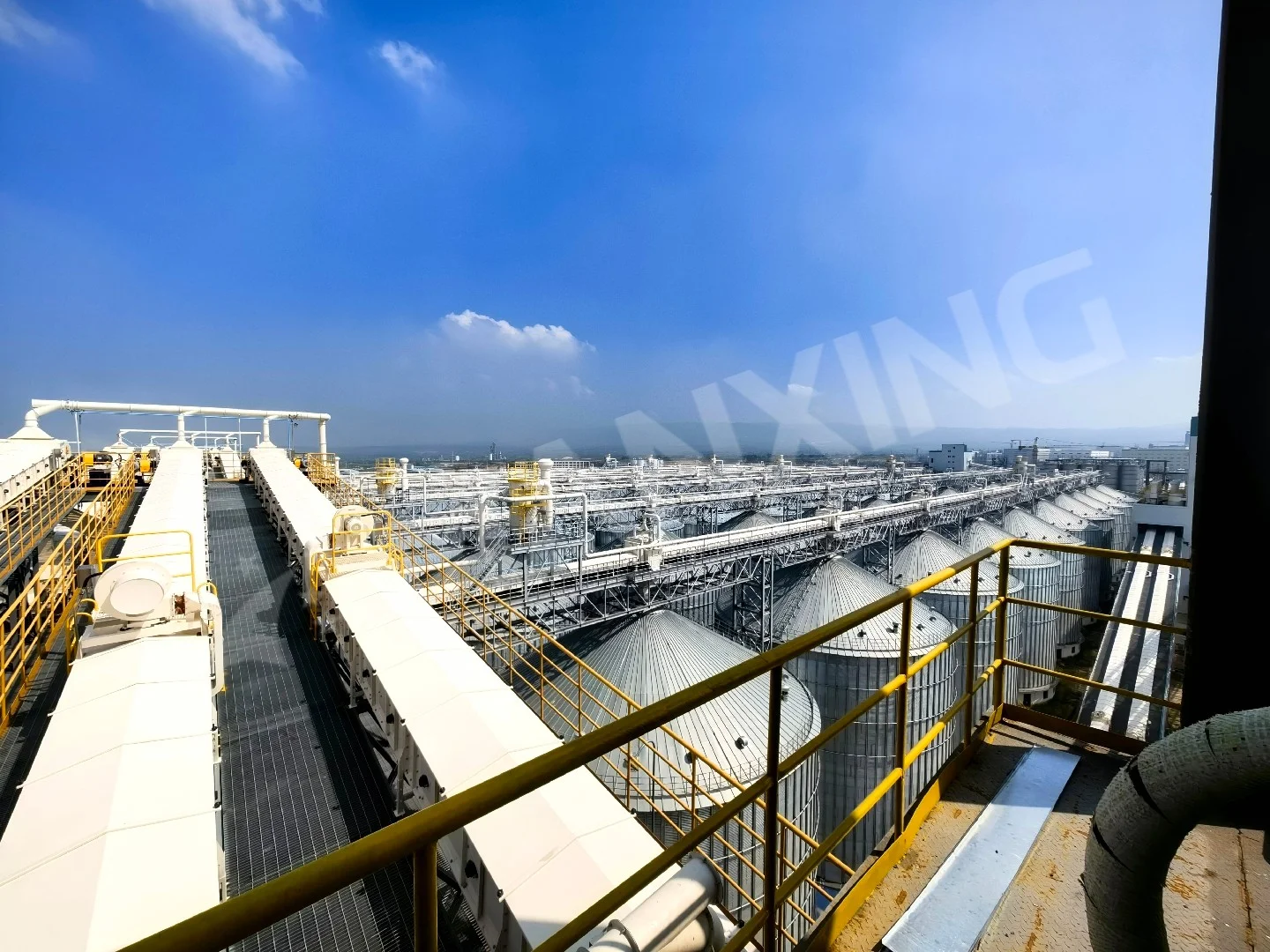


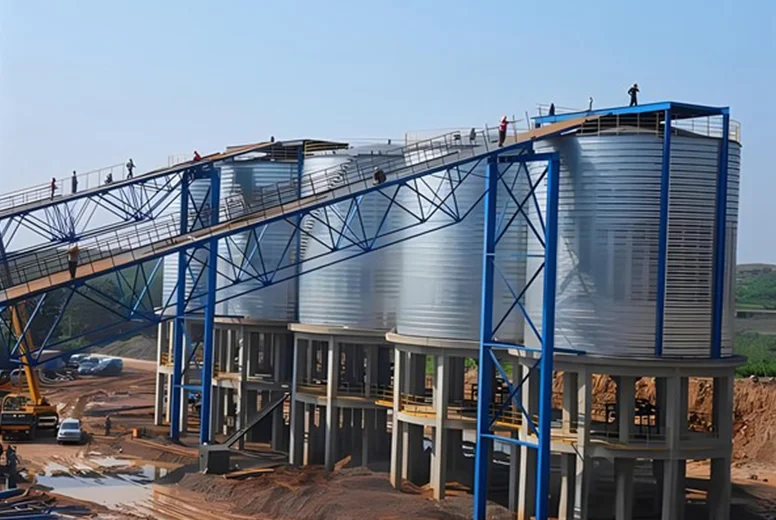
Concrete silos have long been the backbone of bulk storage, but integrating a high-performance aeration system transforms them from passive containers into intelligent, active preservation units. By precisely controlling internal temperature and humidity, these systems can reduce grain storage losses by 30–50% and prevent costly material caking, delivering a rapid return on investment. Thi s guide explores the engineering, benefits, and real-world applications of concrete silos with aeration systems.
The Evolution of Concrete Silos: From Passive Storage to Active Protection
Traditional concrete silos provide an exceptionally strong and durable physical barrier for bulk materials like grain, cement powder, and aggregates. However, structural strength alone cannot address the internal microclimate challenges that lead to moisture accumulation, uneven temperature distribution, caking, mold growth, and pest infestations. A concrete silo with aeration system fundamentally changes this dynamic by integrating a proactive airflow network that goes far beyond simple air exchange.
This system is a precision temperature and humidity control mechanism. By installing strategically placed air inlets and outlets in the silo wall or floor, and coupling them with fans and an intelligent control system, operators can deliver directed, metered airflow throughout the stored material. This design upgrades the silo from a mere "container" into a "breathing" storage unit that actively eliminates thermal gradients and maintains long-term product quality. From an engineering perspective, this integration requires highly coordinated planning: ventilation ducts, fan bases, and control interfaces must be embedded or reserved during the concrete pouring phase. This integrated approach prevents structural damage from retrofitting and ensures uniform, dead-zone-free ventilation for maximum system efficiency.
Three Core Advantages of Concrete Silos with Aeration Systems
Compared to non-aerated concrete silos or those made from other materials, the aerated concrete silo offers superior product preservation, lower operational costs, and better structural adaptability. These three advantages are critical to maximizing your return on investment.
1. Superior Product Quality Preservation and Consistency
The core value of an aeration system lies in actively intervening in the storage environment. For grain storage, the system uses intermittent or continuous ventilation to keep internal temperature and humidity within safe thresholds, effectively suppressing mold, fungi, and insect reproduction. For industrial powders like cement and fly ash, aeration prevents moisture-induced caking and hardening, ensuring the material remains free-flowing upon discharge. Studies show that a well-designed aeration strategy can reduce grain storage losses by 30–50% while maintaining critical quality indicators like protein and starch content.
2. Significantly Lower Operational Costs and Maintenance Frequency
Material caking and bridging are common pain points in traditional silos, often requiring frequent mechanical cleaning or manual intervention that leads to costly downtime and high maintenance expenses. A concrete silo with aeration system uses continuous airflow to prevent material accumulation on walls and in hoppers, drastically reducing blockage risks. Furthermore, the uniform temperature and humidity distribution minimizes structural corrosion caused by localized overheating or condensation, extending the lifespan of both the silo body and discharge equipment. In practice, the initial investment in an aeration system is typically recovered within 2–3 years through energy savings and reduced maintenance.
3. High Structural Strength and Environmental Adaptability
The inherent advantages of concrete silos—high compressive strength, fire resistance, and wind load capacity—are not diminished by the addition of aeration; they are enhanced. The aeration system can be designed as a supporting structure, such as placing fans and ducts on the silo roof to minimize impact on the main body. Additionally, the thermal mass of concrete, combined with the active regulation of the aeration system, creates an excellent "thermal buffer" to handle extreme temperature swings and harsh climates. This synergistic design is particularly valuable for storage projects in high-humidity, high-temperature, or earthquake-prone regions.
Key Takeaways
- Key Data: A properly designed aeration system can reduce grain storage losses by 30–50% and significantly cut downtime caused by material caking.
- Best Practice: Embed and reserve all aeration components during the silo design phase to avoid structural risks and retrofitting costs.
- Watch Out For: Airflow path design and fan selection must be customized based on material properties (density, angle of repose, hygroscopicity)—never rely on standard generic designs.
- Pro Tip: For cement and fly ash, use a low-pressure, high-volume aeration system to fluidize the powder without causing dust explosions.
- Bottom Line: An aerated concrete silo is not an expense—it is an investment that pays for itself through reduced product loss, lower maintenance, and extended storage life. Related: Flat bottom silo manufacturer in China >
Typical Applications and Engineering Case Studies
Concrete silos with aeration systems are used across a wide range of industries, but their value is most pronounced in three key scenarios:
Large-Scale Agricultural Grain Storage: In major grain collection stations or port transfer terminals, tens of thousands of tons of corn, wheat, or soybeans require long-term storage. The aeration system, linked with temperature monitoring, can adjust ventilation strategies in real-time to prevent "hot spots" in the grain mass. For example, in the North American plains, many million-bushel concrete grain silos equipped with floor aeration networks have extended safe storage periods from 3 months to over 12 months.
Industrial Powder and Chemical Storage: Cement, lime, mineral powders, and certain chemical raw materials are highly sensitive to moisture. An aerated concrete silo not only prevents caking but also uses airflow to carry away water vapor, preventing material from hardening inside the silo. In coastal high-humidity regions of Southeast Asia, these silos have become standard equipment for cement plants and grinding stations.
Biomass and Wood Pellet Storage: Biomass fuel storage faces dual risks of spontaneous combustion and mold. The aeration system here serves both cooling and dehumidification functions. By designing the correct airflow volume, internal temperatures can be kept below safety thresholds while maintaining stable moisture content, ensuring continuous operation for downstream power generation or heating processes.
Frequently Asked Questions
Q: How does the long-term operational cost of an aerated concrete silo compare to a steel silo with aeration?
A: The fundamental difference lies in structural durability and maintenance cycles. Steel silo aeration systems require frequent anti-corrosion maintenance because metal walls are prone to rust in condensing environments, and the connections between ducts and the silo wall are weak points. Concrete silos, with their inherently corrosion-resistant walls and high thermal mass, effectively suppress condensation. This means lower annual maintenance costs, fewer fan replacements, and a longer overall system lifespan. While the initial capital cost may be slightly higher, the total cost of ownership over 10–20 years is significantly lower for concrete.
Q: Can an aeration system be retrofitted into an existing concrete silo, or must it be designed from the start?
A: While retrofitting is technically possible, it is strongly discouraged. The ideal approach is to design the aeration system during the initial silo engineering phase. Retrofitting requires core drilling through reinforced concrete walls or floors, which can compromise structural integrity and create air leak paths. It is also much more difficult to achieve uniform airflow distribution in a retrofit. For new projects, embedding ducts and reserving ports during the concrete pour is the only way to guarantee airtightness, structural safety, and optimal performance.
Q: What are the specific design parameters for an aeration system handling high-moisture corn versus dry cement powder?
A: The design parameters are vastly different. For high-moisture corn (e.g., 18–20% moisture), the system requires high airflow rates (0.1–0.2 m³/min per ton) for rapid cooling and drying, often using axial fans. The goal is to remove moisture and prevent mold. For dry cement powder (less than 1% moisture), the system uses low-pressure, high-volume air for fluidization—typically 0.01–0.03 m³/min per ton—using roots blowers. The goal is to keep the powder flowing and prevent bridging, not to dry it. Fan selection, duct sizing, and control strategies must all be tailored to the specific material's hygroscopicity, density, and angle of repose.
Q: How does the aeration system prevent "hot spots" in a large concrete grain silo?
A: Hot spots form due to biological respiration of grain and insects, which generate heat and moisture. The aeration system prevents this by creating a uniform, directional airflow through the grain mass. Temperature sensors placed at multiple depths and locations detect rising temperatures. The control system then activates fans to pull cool, dry air through the grain from the bottom or side, pushing the warm, moist air out through roof vents. This "pulling" method is preferred because it prevents condensation on the top grain layer. By maintaining a consistent temperature profile, the system stops hot spots before they can develop, preserving grain quality.
Q: Is an aeration system necessary for short-term storage of materials in a concrete silo?
A: Even for short-term storage (e.g., 30–90 days), an aeration system provides significant value. The primary risk is not spoilage but material flow issues. For powders like cement, a brief period of high humidity can cause surface caking at the silo wall, leading to ratholing and bridging. For grain, short-term moisture migration can create localized wet spots that lead to quality loss. Furthermore, an aeration system allows you to "turn" the material by circulating air, which can equalize temperature after a hot load is received. For any application where product quality and reliable discharge are critical, aeration is a worthwhile investment, even for short holding times.
Q: What maintenance is required for the aeration system itself on a concrete silo?
A: The maintenance is relatively straightforward but essential. Key tasks include: (1) Inspecting and cleaning fan blades and inlet screens quarterly to prevent dust buildup that reduces airflow. (2) Checking all duct connections and seals for air leaks, especially where ducts pass through the concrete wall. (3) Testing and calibrating temperature and humidity sensors annually. (4) Lubricating fan motors and bearings per manufacturer specifications. (5) After each major use cycle, running the fans dry for 15 minutes to purge any residual moisture from the ducts. With this routine, the system should operate reliably for 15–20 years with minimal component replacement.
Need expert manxingsilo solutions for your project?
We provide professional design, manufacturing, and installation services for bulk storage and material handling systems worldwide. Our team specializes in integrating high-efficiency aeration systems with concrete silos for grain, cement, and industrial powders.
Get a Free Technical Consultation →