
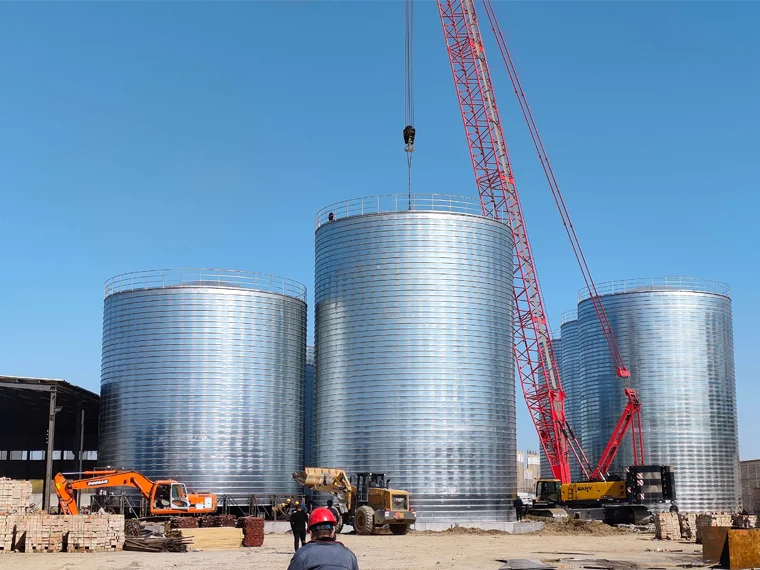
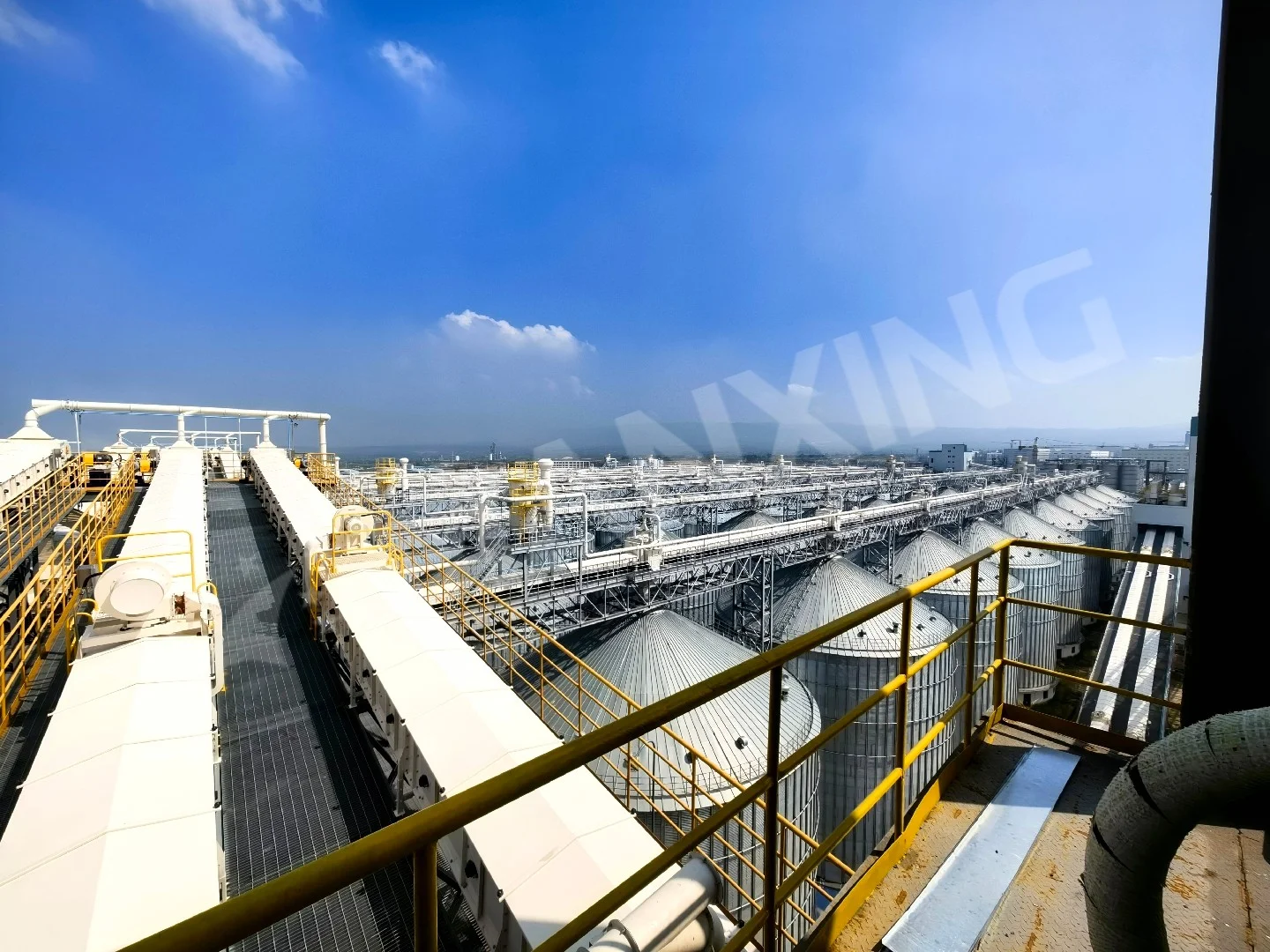


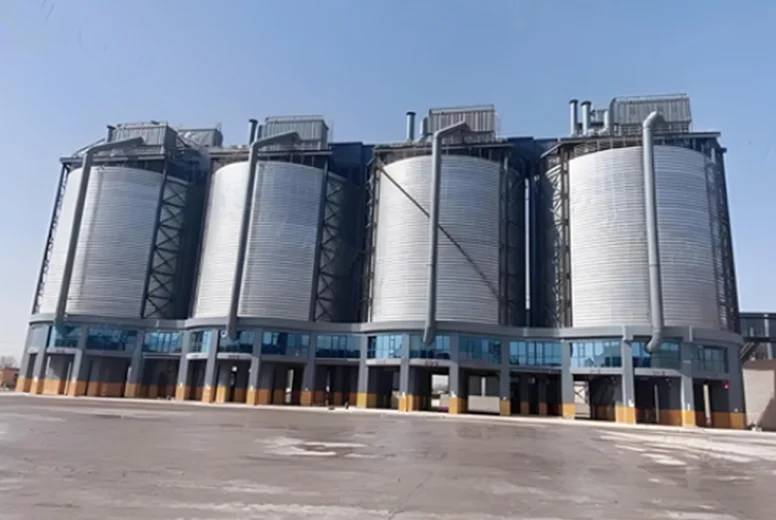
In the modern construction and aggregates industries, the efficient storage and seamless handling of bulk materials like cement and fly ash are critical for maintaining productivity and quality control. A concrete silo equipped with an advanced loading system offers a robust, customized, and integrated material handling solution that is becoming indispensable for large-scale projects and industrial processes. By combining the unmatched durability of reinforced concrete with intelligent pneumatic or mechanical loading technology, these systems deliver unparalleled long-term reliability and operational efficiency.
Core Advantages of Concrete Silos with Integrated Loading Systems
Concrete silos, built from reinforced concrete, provide unmatched durability and long-term reliability compared to other storage options. Unlike steel silos, concrete structures are inherently more resistant to harsh environmental factors such as moisture, extreme temperature fluctuations, and chemical corrosion. This structural resilience significantly extends the facility's service life, often exceeding several decades, while substantially reducing maintenance costs over the entire lifecycle. These advantages make concrete silos the ideal choice for long-term, stable bulk material storage requirements.
The true intelligence of this solution lies in the integration of the loading system. By employing advanced pneumatic conveying or mechanical filling components—such as air conveyors, rotary feeders, and screw conveyors—the system enables rapid and controlled material filling. This not only optimizes material flow and reduces dust emissions and spillage but also ensures a highly efficient and safe operation. The addition of an automated control system further enhances loading precision and repeatability, minimizing human error and maximizing throughput.
Solving Critical Industry Pain Points: Homogeneous Handling and Anti-Bridging Design
Common challenges in bulk material storage, such as "bridging" and "rat-holing," are persistent problems that cause discharge blockages and production interruptions. The unique design of concrete silos, combined with carefully calculated hopper angles and optimized lining arrangements, fundamentally solves these issues. The
structural design ensures a uniform and continuous flow of material under gravity, preventing blockages and the associated downtime for cleaning and lost production capacity.Integrated Sensors and Automation Control
Modern concrete silo systems integrate high-precision level sensors, pressure transmitters, and flow meters to monitor material status in real-time. This data is fed back to a central control system that automatically adjusts loading speeds, pneumatic conveying pressure, and other parameters. This enables fully automated management from material intake to discharge, dramatically improving operational stability and efficiency.
Flexibility and Scalability in Design
The capacity of concrete silos is highly flexible, ranging from small on-site storage units to large industrial silos with capacities exceeding several thousand tons. A modular design philosophy allows for future expansion by adding silo clusters or adjusting loading configurations. This adaptability perfectly accommodates the dynamic needs of projects from their initial phase to maturity, offering businesses exceptional investment flexibility.
Key Takeaways
- Key Data: Concrete silos constructed with high-quality reinforced concrete have a design service life of 30–50 years, significantly exceeding standard steel structures, with a 20%–40% reduction in long-term total cost of ownership.
- Best Practice: During the project planning phase, prioritize an integrated design of the loading system and silo structure rather than retrofitting later. This maximizes system efficiency and reliability.
- Watch Out For: Never underestimate the importance of hopper angle and internal liner material selection. An improper angle is the primary cause of material "bridging" and "rat-holing," directly impacting discharge efficiency.
- Pro Tip: For highly abrasive materials like fly ash, consider using a ceramic-lined or UHMWPE-lined hopper to extend service life and ensure consistent flow.
- Bottom Line: A concrete silo with a loading system is a long-term investment in operational reliability, offering superior durability, lower maintenance, and better material preservation than steel alternatives.
Application Scenarios and Industry Value
Concrete silos with loading systems play a central role in several key industries. In the cement and building materials sector, they are standard equipment for large concrete batching plants, precast component factories, and cement terminals, ensuring a continuous supply of raw materials for production. In the mining and metallurgy industries, they are used to store fine powders such as fly ash and mineral dust. Furthermore, in emerging fields like power plant desulfurization and environmental material processing, their excellent sealing and high degree of automation are highly valued. For example, a concrete batching plant with an annual output of 1 million cubic meters can improve raw material turnover efficiency by over 30% by using concrete silos with efficient loading systems, while keeping dust emissions within national environmental standards.
Frequently Asked Questions
Q: What are the specific long-term operational cost differences between a concrete silo and a steel silo?
A: While the initial construction cost of a concrete silo is typically higher than a steel silo, its superior durability and minimal maintenance requirements make it more cost-effective over the long term. Steel silos are susceptible to corrosion and usually require comprehensive anti-corrosion coating maintenance every 5–10 years, whereas concrete silos require virtually no such upkeep. Additionally, the better thermal insulation properties of a concrete structure help reduce material condensation and spoilage, lowering material loss. When calculated over a 10–15 year operational cycle, the total cost of ownership (TCO) for a concrete silo is often lower than that of a comparable steel silo.
Q: How do I choose the most suitable loading system (pneumatic vs. mechanical) for my materials like cement or fly ash?
A: The choice depends on material characteristics, conveying distance, height, and budget. Pneumatic conveying (positive or negative pressure) systems are sealed, ideal for long-distance, multi-pipe conveying, and perfect for dusty powders like cement and fly ash, but they have higher energy consumption. Mechanical conveying (e.g., bucket elevators, screw conveyors) has lower energy consumption and is better for short distances and high flow rates, but it offers less sealing and is not suitable for highly abrasive or friable materials. The best solution often combines both: using pneumatic conveying to fill the silo top and a bottom screw conveyor for precise discharge and metering. We recommend providing specific material parameters and site layout for a tailored system design optimization.
Q: Can an existing steel silo be retrofitted with a concrete loading system, or is a new concrete silo always required?
A: Retrofitting a loading system onto an existing steel silo is possible, but it often involves significant compromises. The structural integrity of the steel silo may not support the weight or vibration of certain heavy loading equipment. Furthermore, achieving an optimal hopper angle for anti-bridging is much harder to modify on an existing structure. For maximum efficiency and reliability, a new concrete silo designed with an integrated loading system from the ground up is almost always the superior choice.
Q: What automation features are typically included in a modern concrete silo loading system?
A: Modern systems typically include high-precision level sensors (e.g., radar or ultrasonic), pressure transmitters for pneumatic lines, and flow meters for discharge. These are integrated with a Programmable Logic Controller (PLC) that can automatically start/stop loading, adjust conveying pressure, manage multiple silo filling sequences, and provide real-time inventory data. Advanced systems can also integrate with plant-wide ERP systems for just-in-time material management, significantly reducing manual intervention and the risk of overfilling or run-outs.
Q: How does the thermal mass of a concrete silo benefit stored materials compared to a steel silo?
A: Concrete has a high thermal mass, meaning it resists temperature changes much better than steel. This is a critical advantage for storing materials like cement, which can degrade or set prematurely if exposed to high temperatures or condensation caused by rapid temperature swings. The concrete structure acts as a thermal buffer, keeping the internal temperature more stable and reducing the risk of material spoilage, clumping, or quality degradation, especially in climates with extreme diurnal temperature variations.
Need a professional concrete silo and loading system solution for your project?
We provide comprehensive turnkey services from structural design and equipment selection to manufacturing and installation, ensuring your storage and handling system is efficient, stable, and fully compliant.
Get a Free Technical Consultation →