
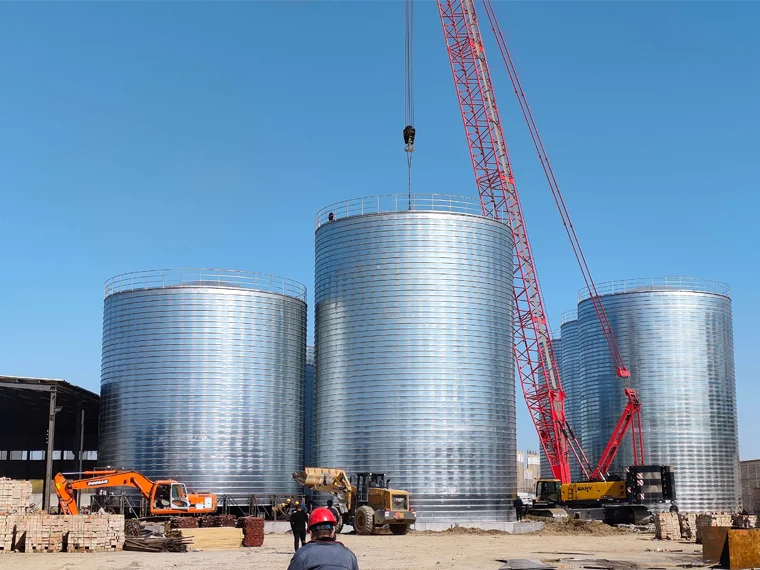
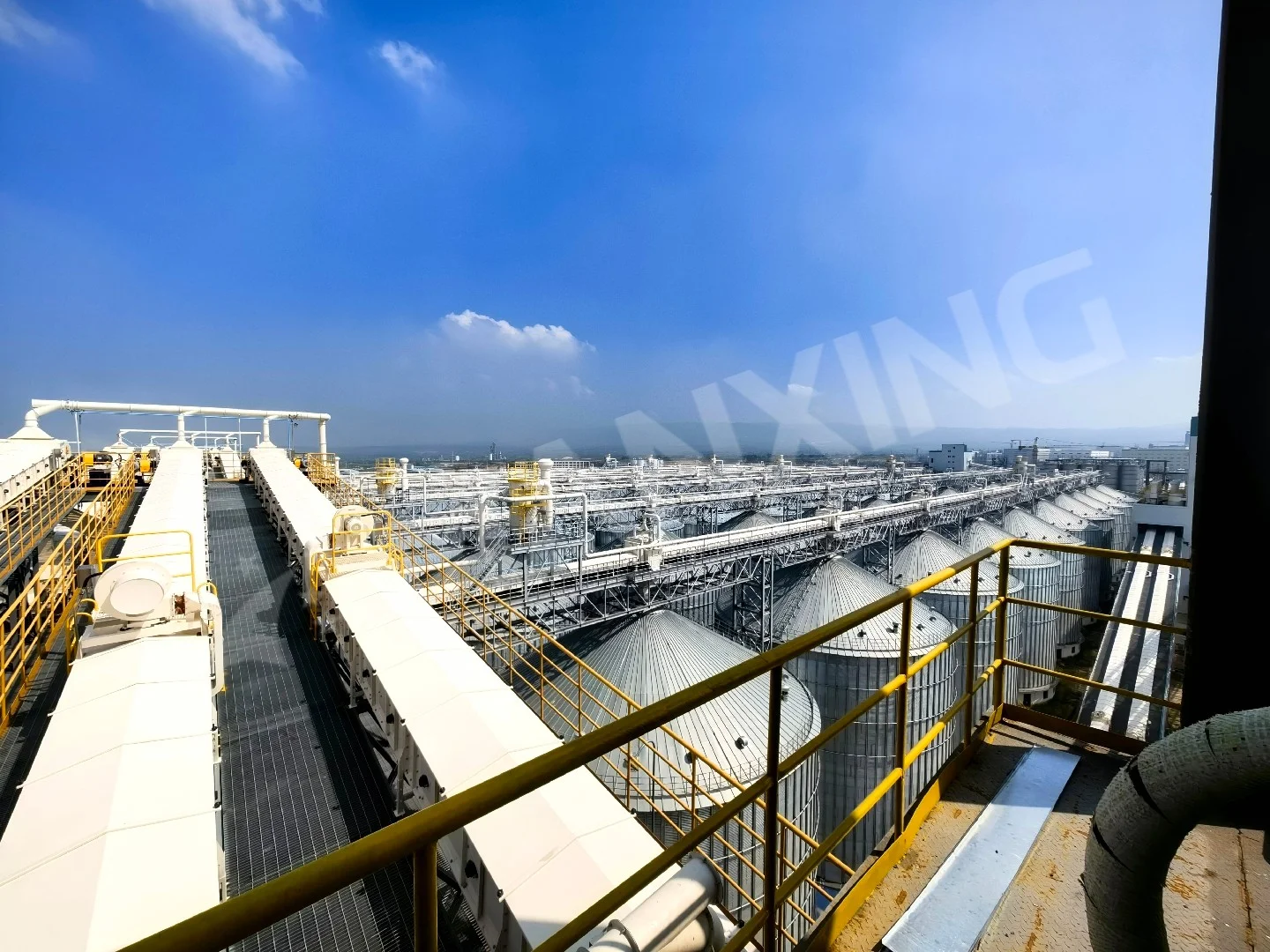


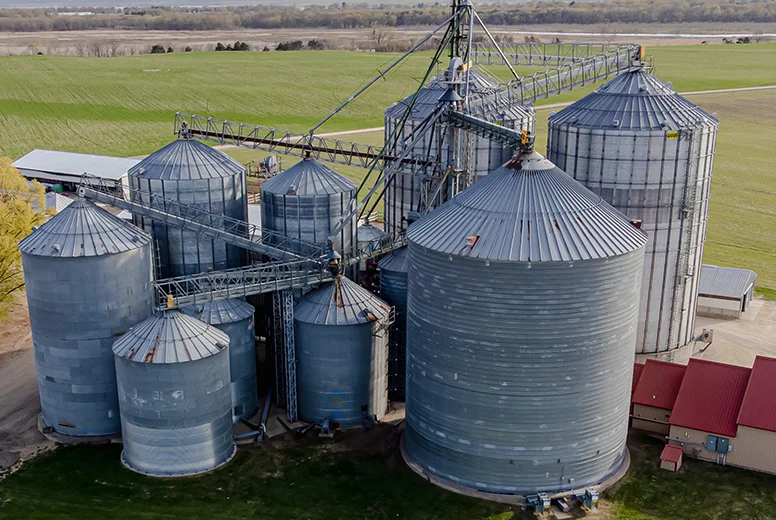
For large-scale corn storage, the flat bottom steel silo is emerging as the preferred solution for farms, cooperatives, and major grain depots due to its simple structure, cost-effectiveness, and ease of maintenance. Compared to traditional hopper bottom silos, the flat bottom design offers significant advantages in capacity utilization and return on investment, making it a core component of modern grain storage infrastructure.
Core Structural Design Advantages of Flat Bottom Corn Storage Silos
The most distinguishing feature of a flat bottom corn storage silo is its horizontal, level floor. This design greatly simplifies foundation work and the main structure's construction process. Unlike hopper bottom silos that rely on steep cones for gravity discharge, flat bottom silos typically use a ring beam foundation and a central conical discharge hopper, paired with mechanical clean-out equipment like sweep augers or screw conveyors for uniform unloading. This design not only eliminates discharge dead zones but also effectively prevents mold and caking caused by localized material accumulation, ensuring a "first-in, first-out" grain flow.
From a structural mechanics perspective, the silo wall of a flat bottom design experiences uniform stress, allowing for larger single-unit capacities. Whether using galvanized corrugated steel sheets with a spiral crimping process or welded steel plates, structural stability is maintained while achieving single-silo capacities ranging from hundreds to tens of thousands of tons. This design is particularly suited for long-term, large-volume static corn storage scenarios, maximizing land utilization and lowering per-unit storage costs.
Solving Quality Preservation Challenges in Long-Term Corn Storage
Corn, being a high-starch grain, is extremely sensitive to temperature and humidity control during extended storage. The flat bottom silo design naturally addresses this pain point. Its level floor provides an ideal platform for installing efficient aeration and air distribution systems. By
laying uniformly perforated aeration ducts or pipes on the floor and pairing them with powerful fans, comprehensive and even aeration of the grain mass is achieved, quickly removing heat and moisture to prevent localized heating and mold growth.Uniform Aeration and Temperature Control
The flat bottom structure allows the aeration system to cover the entire silo floor area. Combined with a central aeration duct and radial air channels, it creates a stable temperature gradient. When integrated with a grain condition monitoring system, operators can track temperatures at various levels within the silo in real time and automatically initiate aeration to keep corn temperatures within safe ranges (typically below 15°C in summer and below 5°C in winter), effectively suppressing pest activity and microbial growth.
Efficient Discharge and Clean-Out Mechanisms
While flat bottom silos cannot achieve complete gravity discharge, modern designs combine a central discharge hopper with sweep augers or paddle sweep systems for highly efficient mechanical clean-out. During discharge, the central cone guides the majority of grain by gravity, while the remaining portion is cleared by mechanical equipment. This process is highly automated with low labor requirements. Compared to hopper bottom silos, this design avoids "bridging" or "rat-holing" issues caused by insufficient cone angles, especially for corn with poorer flowability.
Key Takeaways
- Key Data: Flat bottom silos typically reduce per-unit storage costs by 15%–25% compared to hopper bottom silos of the same capacity, and foundation construction time can be shortened by 30%.
- Best Practice: For corn storage, use a "center discharge + sweep auger" combination and ensure an aeration rate of at least 0.1 m³/min·t to maintain grain quality.
- Watch Out For: Flat bottom silos are not suitable for long-term storage of high-moisture corn. Moisture content must be reduced below 14% before storage, and a comprehensive temperature monitoring system is essential.
- Pro Tip: When installing aeration ducts, ensure the perforation pattern is uniform and the duct spacing is optimized to avoid dead zones. This is the single most critical factor for preventing hot spots in large flat bottom silos.
- Bottom Line: For static, long-term grain reserves, the flat bottom silo delivers the lowest total cost of ownership and highest operational flexibility, making it the standard for modern grain storage.
Multi-Scenario Applications and Material Selection for Flat Bottom Silos
Although often called "corn storage silos," flat bottom silos are highly versatile. Beyond corn, they are equally suitable for wheat, soybeans, paddy rice, rapeseed, and other bulk grains. In large grain transfer terminals, port storage facilities, and feed processing plants, flat bottom silos are favored for their ability to enable rapid filling and segregated storage management. In terms of material selection, galvanized steel sheets are the mainstream choice due to their corrosion resistance and cost-effectiveness. For scenarios requiring higher durability or special anti-corrosion requirements (such as chemical storage), stainless steel sheets or specially coated materials can be used. For ultra-large capacities (single silos exceeding 10,000 tons), prestressed reinforced concrete flat bottom silos offer unparalleled structural stability.
Furthermore, flat bottom silos have significant potential for functional expansion. They can be easily integrated with insulation layers and airtight systems to meet the requirements of low-temperature grain storage or controlled atmosphere storage (e.g., nitrogen injection). For grain depots with drying needs, flat bottom silos can be seamlessly connected to drying towers, forming an integrated operation line from receiving and cleaning to drying and storage, greatly improving operational efficiency.
Frequently Asked Questions
Q: What are the specific differences in discharge efficiency and residual grain between flat bottom and hopper bottom corn silos?
A: Hopper bottom silos rely on gravity for self-flow discharge, offering fast unloading speed and very low residual grain (typically below 0.5%). However, their single-unit capacity is limited by cone height, and construction costs are higher. Flat bottom silos depend primarily on mechanical assistance for discharge, resulting in longer unloading times. However, by optimizing the central cone and sweep auger design, residual grain can be controlled within 1%–2%, which is acceptable for large-scale storage. The key advantage is that flat bottom silos can be built much larger, with significantly lower per-unit storage costs. For turnover warehouses requiring frequent in-and-out operations, hopper bottom silos are superior; for long-term static reserve storage, flat bottom silos offer better overall economics.
Q: How do flat bottom silos prevent moisture damage and mold at the bottom in humid, rainy regions?
A: This is a critical design consideration. First, the silo foundation must include moisture barrier treatment, typically involving a vapor barrier membrane and a ventilated layer. Second, the design of the floor aeration ducts is crucial—not only must they ensure uniform airflow, but they should also be paired with dehumidifying fans that can recirculate and remove moisture when ambient humidity is high. A more advanced solution is "bottom air injection" technology, which creates a slight positive pressure at the silo floor to prevent external moisture infiltration. Additionally, the joint between the silo wall and floor must be rigorously sealed to prevent rainwater ingress. Regular monitoring of bottom-layer moisture using a grain condition monitoring system is the most effective preventive measure against mold.
Q: Are flat bottom silo sweep auger systems prone to failure, and what routine maintenance is required?
A: The sweep auger (such as a rotating paddle or screw) is the core moving part of a flat bottom silo, and its reliability directly impacts discharge efficiency. Modern designs typically use heavy-duty chain or gear drives with overload protection devices, resulting in a low failure rate under normal operation. Routine maintenance should focus on checking lubrication of drive chains and bearings, inspecting the condition of auger flighting for wear, and verifying that electrical connections and safety limit switches are functioning properly. It is also essential to ensure that no foreign objects (e.g., stones, metal debris) enter the silo with the grain, as these can cause significant damage to the sweep system. With proper preventive maintenance, a sweep auger system can operate reliably for many years.
Q: What is the maximum practical capacity for a single flat bottom corn storage silo, and what factors limit it?
A: Flat bottom silos can be designed for single-unit capacities ranging from a few hundred tons to over 50,000 tons. The primary limiting factors are foundation soil bearing capacity, wind and seismic loads at the site, and the structural strength of the silo wall. For capacities up to 10,000–15,000 tons, bolted or spiral galvanized steel silos are common and cost-effective. Beyond that, welded steel or prestressed concrete silos become more practical due to the enormous hoop stresses involved. The discharge system also becomes a constraint—at very large diameters, the sweep auger must travel a long distance, which increases unloading time. Therefore, for mega-silos, multiple discharge points or center unloading with a large-diameter sweep system are typically employed.
Q: Can flat bottom silos be retrofitted for controlled atmosphere storage (e.g., nitrogen sealing) after initial construction?
A: Yes, flat bottom silos are well-suited for retrofitting with controlled atmosphere systems. Their simple geometry makes sealing relatively straightforward. The key modifications include: sealing all joints between wall panels, installing airtight access doors and inspection hatches, adding a gas-tight seal at the discharge outlet, and installing gas injection and recirculation ports. For galvanized steel silos, special sealant tapes and gaskets are used at bolted connections. The flat floor is actually advantageous for gas distribution, as nitrogen can be introduced through the existing aeration ducts to displace oxygen evenly throughout the grain mass. However, achieving a leak rate of less than 0.1% of silo volume per hour (a common standard for nitrogen storage) requires careful workmanship and post-installation leak testing.
Q: How does the cost of a flat bottom corn silo compare to a concrete silo for a 10,000-ton project?
A: For a 10,000-ton project, a steel flat bottom silo typically has a 30%–50% lower initial capital cost compared to a cast-in-place concrete silo. The steel silo also offers a much faster construction timeline—usually 4–6 months versus 12–18 months for concrete. However, concrete silos have a longer service life (50+ years vs. 25–35 years for galvanized steel) and lower maintenance costs over their lifetime. For projects where speed to operation and lower upfront investment are critical, steel is the clear winner. For permanent, long-term strategic reserves with a low discount rate, concrete may be more economical on a lifecycle basis. Hybrid solutions, such as a concrete foundation with a steel upper structure, are also used to balance cost and durability.
Need expert manxingsilo solutions for your project?
We provide professional design, manufacturing, and installation services for bulk storage and material handling systems worldwide.
Get a Free Technical Consultation →