
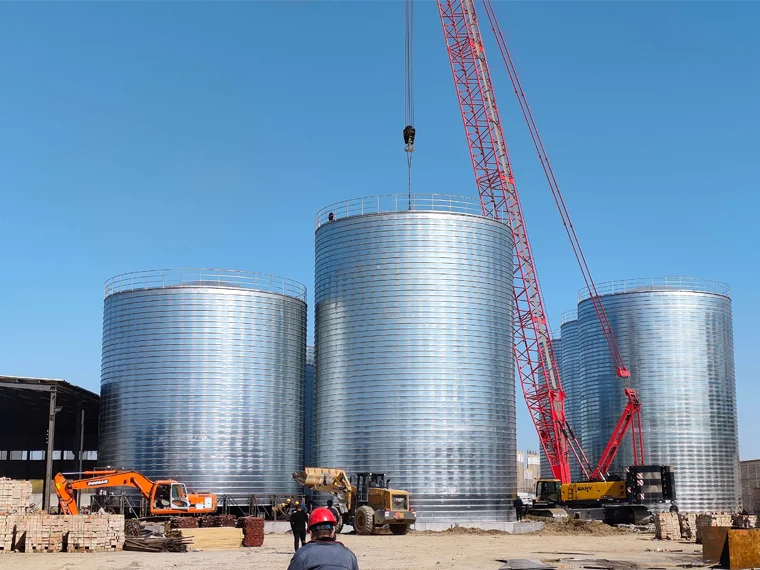
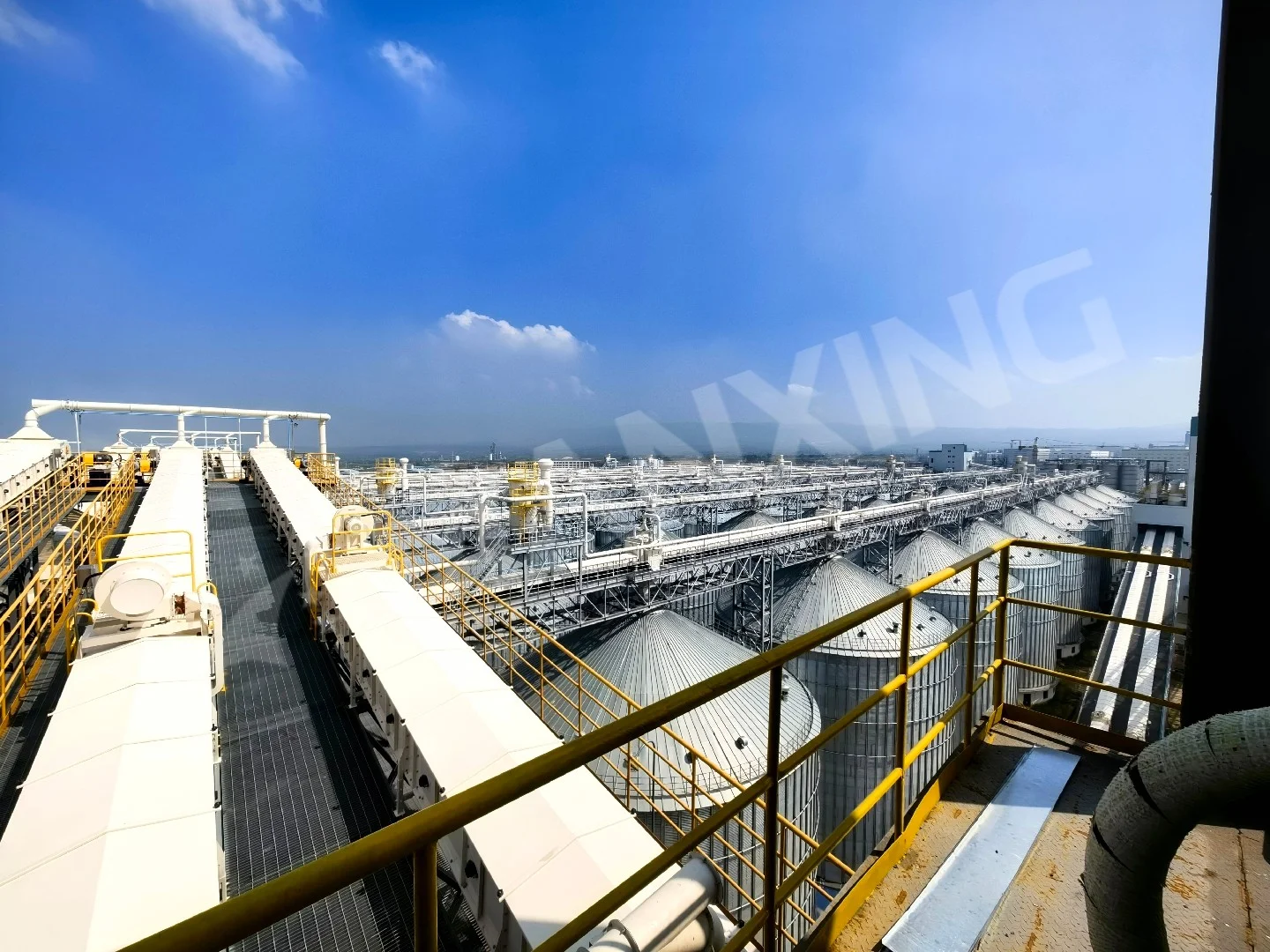


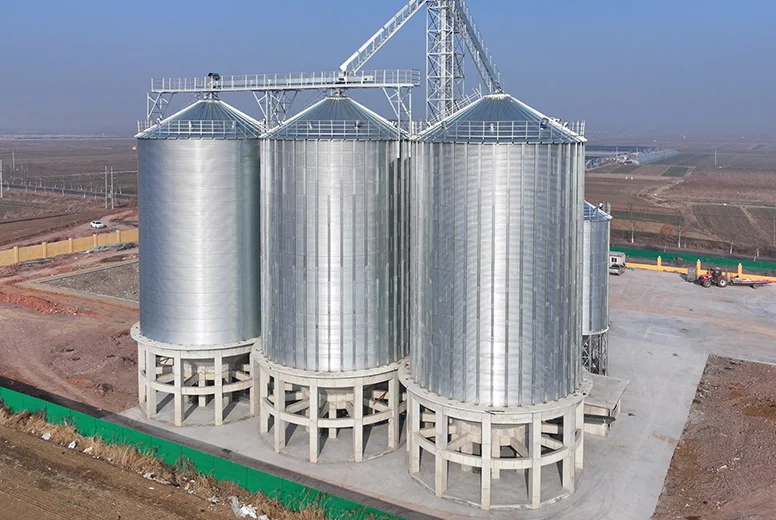
For long-term grain storage, concrete silos offer unmatched durability and thermal stability, providing a natural barrier against environmental degradation. With a service life exceeding 50 years—double that of typical steel bins—these structures maintain stable internal temperatures and humidity levels, significantly reducing the risk of mold, pests, and spoilage. This makes them the definitive choice for farmers, traders, and processors seeking to protect grain quality over extended periods.
Why Concrete Silos Dominate Long-Term Grain Storage
Concrete silos are engineered specifically for the safe, long-duration storage of bulk grains. Their core advantage lies in the physical properties of the material itself, which creates a "natural shield" for the stored commodity. Unlike steel or spiral-welded bins, the massive, dense structure of concrete offers unique performance characteristics. First, its exceptional structural durability withstands harsh weather, pest intrusion, and the mechanical wear of daily operations. Second, concrete's natural thermal inertia (or thermal mass) minimizes internal temperature fluctuations, preventing condensation caused by daily or seasonal temperature swings—a primary cause of localized grain spoilage. Modern construction techniques, including the use of waterproofing and anti-permeability admixtures during pouring, further enhance the silo's airtightness and moisture resistance, ensuring stable grain quality throughout the storage term.
Solving the Three Biggest Challenges of Long-Term Storage
For farm operators, grain traders, and large processing plants, the three greatest challenges in long-term storage are controlling temperature, managing moisture, and preventing pest infestation. Concrete silos address each of these through specific engineering mechanisms.
Superior Thermal Stability and Temperature Control
The high density and heat capacity of concrete mean it absorbs and releases heat very slowly. In summer, external heat cannot rapidly penetrate the silo interior; in winter, internally accumulated heat is not easily lost. This "thermos bottle" effect maintains a relatively constant internal temperature year-round, significantly reducing moisture migration and localized condensation caused by temperature gradients. This, in turn, suppresses the growth of mold and bacteria.
Exceptional Moisture Resistance and Airtightness
Through the use of pre-stressed or cast-in-place concrete technology, combined with professional waterproof coatings and meticulous joint sealing, concrete silos can achieve near-zero leakage rates. This characteristic is critical for storing high-moisture grains like corn or seed grains that require extremely low humidity. The airtight environment also effectively limits oxygen circulation, allowing fumigation or controlled atmosphere (CA) techniques to efficiently eliminate stored-grain pests without frequent chemical applications.
Natural Defense Against Environmental and Biological Threats
Concrete silos provide a formidable physical barrier against rodents and birds. The solid walls cannot be gnawed through, and the smooth interior surfaces prevent insect harborage. Furthermore, concrete is non-corrosive. Even in harsh environments like coastal areas or near chemical plants, its service life far exceeds that of metal structures, resulting in minimal maintenance costs.
Key Takeaways
- Key Data: A well-designed and properly constructed concrete silo has a design service life of over 50 years—double that of a steel silo (typically 20–30 years).
- Best Practice: Conduct detailed geological surveys and thermal calculations before construction. Customize insulation thickness and ventilation system layout based on the specific grain type (e.g., wheat, soybeans, corn).
- Watch Out For: The initial construction cost of a concrete silo is higher than a steel silo of equal capacity, but the total cost of ownership (TCO)—including long-term maintenance, energy consumption, and grain loss—is often significantly lower.
- Pro Tip: For maximum longevity, specify pre-stressed concrete for the silo walls. This reduces cracking and improves overall structural integrity, especially for large-diameter silos.
- Bottom Line: If your priority is preserving grain quality for years rather than months, and you are planning for a facility with a multi-decade operational life, a concrete silo is the most reliable and cost-effective investment. Related: Hopper bottom silo with moisture control >
Modern Applications and Customized Design for Concrete Silos
The application of concrete silos extends far beyond traditional on-farm storage. In modern agriculture and industrial logistics, they play a critical role. From port-side grain terminals for transshipment, to raw material storage at large flour mills and feed plants, to gene bank storage for seed companies, concrete silos offer customizable solutions. The
ir design flexibility allows for capacities ranging from a few hundred tons to tens of thousands of tons. Site conditions can dictate various layouts, including multi-silo clusters, interstice bins (star bins), or independent silos. When paired with advanced discharge systems (e.g., cone-bottom or flat-bottom sweep augers) and automated systems for temperature monitoring, aeration, and fumigation, concrete silos form the core of modern, intelligent grain storage facilities.Frequently Asked Questions
Q: How do concrete silos solve the problem of localized condensation caused by "thermal bridging" during long-term storage?
A: This is a critical and professional concern. While concrete itself has a uniform thermal conductivity, thermal bridges often form at the roof, inlet, and outlet where metal or thin-walled components connect to the concrete. Solutions include: adding a thick layer of insulation (e.g., polyurethane or extruded polystyrene) to the silo roof; installing thermal break pads at the interface between metal components and the concrete; and using a double-layer roof design. Furthermore, modern intelligent aeration systems automatically activate axial fans based on internal temperature and humidity sensor data when the outside air is dry, actively eliminating condensation risks rather than waiting for problems to occur.
Q: How do concrete silos compare to large steel silos in terms of seismic and wind resistance?
A: Concrete silos have a significant advantage in seismic performance. Their high self-weight and monolithic structure, combined with proper reinforcement and foundation design, can meet the requirements for high-seismicity zones. Steel silos, due to their light weight, are more prone to buckling, anchor bolt failure, or overall sliding during an earthquake. For wind resistance, both must account for wind loads, but the rigid structure of a concrete silo is insensitive to wind-induced vibrations (like vortex shedding). Tall steel silos, in contrast, may require wind rings or dampers to prevent resonance. For long-term reserve storage in earthquake-prone or high-wind areas, concrete is the safer, more reliable choice.
Q: Is it possible to retrofit an existing concrete silo with modern automation and monitoring systems?
A: Yes, absolutely. Modern sensors for temperature, humidity, and CO2 levels can be installed via existing access points or by core-drilling small holes in the concrete walls. Cable-based or wireless systems can be integrated. Automated aeration and fumigation systems can also be added to the roof and base. The robust nature of concrete makes it an ideal platform for retrofitting, as the structure can support the new equipment without significant reinforcement. This allows older silos to be upgraded to "smart silo" standards, extending their useful life and improving storage management.
Q: What are the specific maintenance requirements for a concrete silo over its 50+ year lifespan?
A: Maintenance is relatively low compared to steel. The primary tasks include: periodic inspection of the roof and wall joints for cracks (which can be sealed with epoxy); checking and recaulking sealants around the roof, hatches, and discharge openings; and inspecting the waterproof coating on the exterior every 10–15 years. The interior concrete surface, if properly finished, requires little to no maintenance. The biggest maintenance cost is typically associated with the mechanical equipment (conveyors, fans, sensors), not the concrete structure itself.
Q: For a grain processor, what is the real-world impact of concrete's thermal mass on energy costs for aeration?
A: The impact is substantial. Because a concrete silo's internal temperature is far more stable, the aeration system does not need to run as frequently to correct temperature gradients. In a steel silo, rapid external temperature changes can force the aeration system to cycle on and off many times a day to prevent condensation. In a concrete silo, the system runs less often and for shorter durations, primarily to manage moisture rather than wild temperature swings. This can reduce aeration energy consumption by 30–50% over the course of a year, directly lowering operational costs.
Need a professional long-term grain storage solution?
We provide a full chain of services from geological surveys and structural design to construction and automated control system integration, ensuring every grain you store receives the safest possible protection.
Get Your Free Technical Consultation & Project Quote →