
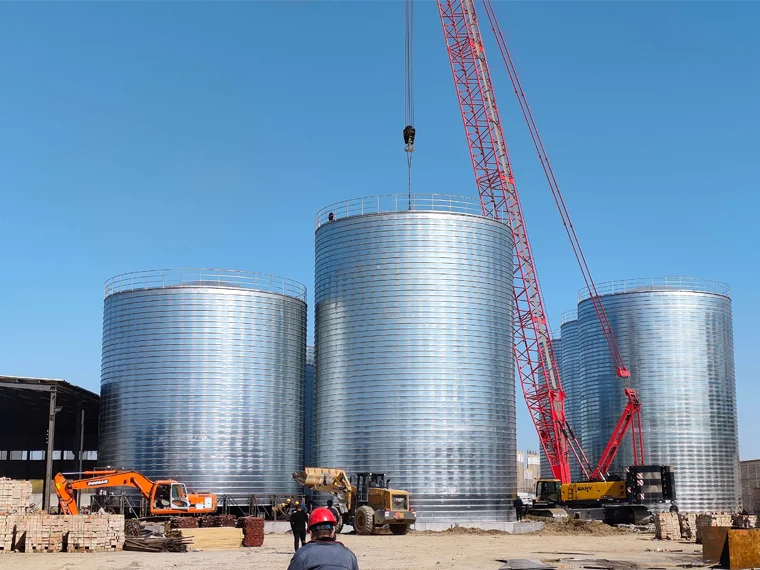
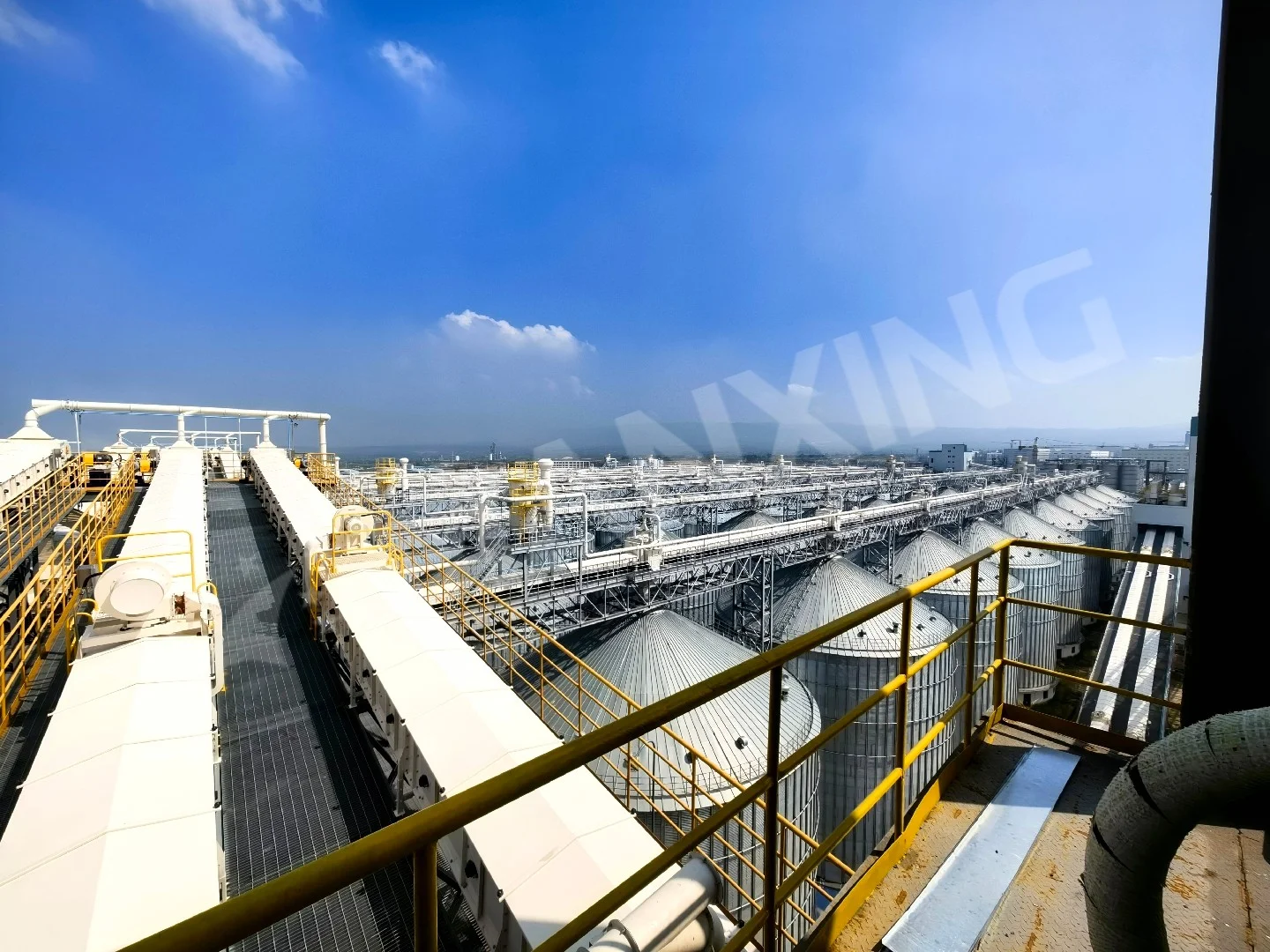


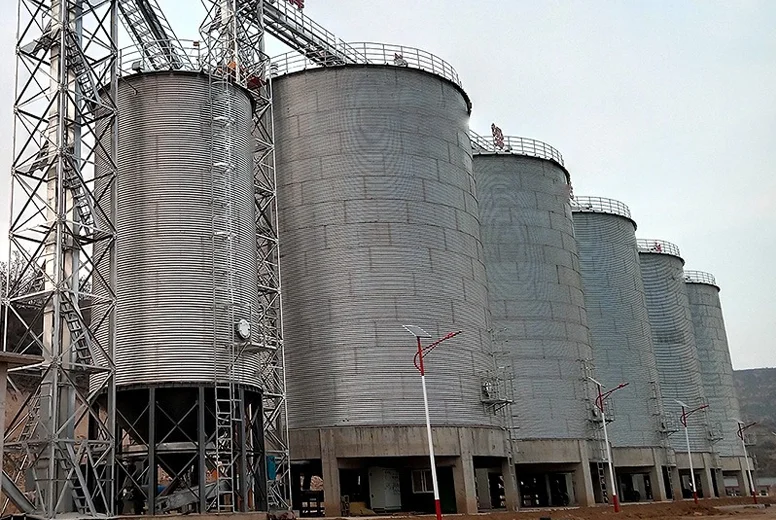
In industrial bulk storage, concrete silos are renowned for their structural integrity, but the true determinant of product quality lies in internal environmental control. A concrete silo with an integrated ventilation system actively manages temperature, humidity, and gas concentration, transforming it from a passive container into an intelligent climate management unit that prevents caking, spoilage, and spontaneous combustion in cement, grain, and powder materials.
Concrete Ventilated Silos: The Synergistic Design of Structural Strength and Environmental Control
Traditional concrete silos, built with reinforced concrete frames, offer exceptional resistance to seismic activity, wind loads, and mechanical impact. Their service life spans decades with minimal maintenance costs, making them a cornerstone of heavy-duty storage. However, structural strength alone cannot meet the stringent demands of modern industry—hygroscopic cement caking, exothermic grain spoilage, and dust explosion risks all point to one critical need: precise environmental regulation. A concrete ventilated silo is the product of deeply integrating structural durability with an active ventilation system, elevating the design philosophy beyond a mere "container" to a lifecycle-oriented "climate management unit."
The core of this synergistic design is that the ventilation system is not an afterthought retrofit but an integral component of the silo structure. From pre-embedded ventilation ducts during foundation work, to integrated natural ventilation caps and forced exhaust units at the roof, to temperature and humidity sensor networks embedded in the silo walls, every element undergoes dual verification for structural mechanics and fluid dynamics. This integrated approach maximizes ventilation efficiency while preventing structural damage from post-construction modifications.
How Ventilation Systems Solve the Three Deadly Threats of Material Storage
Whether storing cement, grain, or chemical powders, enclosed silos face three common threats: humidity-induced caking and mold, temperature-driven quality degradation and spontaneous combustion, and hazardous gas accumulation posing safety risks. A mature concrete ventilated silo system addresses these pain points through the following mechanisms.
Precision Humidity Control: From Passive Moisture Barrier to Active Dehumidification
For highly hygroscopic materials like cement, traditional methods rely solely on sealing to block external moisture. Yet internal moisture from the material itself and condensation from temperature differentials often become the root cause of caking. Concrete ventilated silos employ a dual-mode system of "natural ventilation + forced exhaust." During dry weather, low-energy air exchange is achieved through natural wind pressure and thermal buoyancy. In high-humidity or rainy seasons, dehumidifiers and forced exhaust fans activate, maintaining relative humidity below 40% and eliminating cement hydration reactions and grain mold at the source.
Temperature Balancing: Preventing Hot Spots and Spontaneous Combustion
During long-term storage, materials generate localized high-temperature "hot spots" due to microbial respiration (grain) or chemical reactions (cement hydration heat). Without intervention, these hot spots spread rapidly, causing material degradation or even dust explosions and fires. The ventilation system uses multi-point temperature sensors embedded in the silo wall for real-time monitoring. Upon detecting abnormal temperature rise, it initiates targeted directional ventilation in that zone, using airflow to dissipate heat and keep the temperature gradient within safe limits. For high-temperature materials like cement clinker, the system can even introduce cooling air for rapid post-entry cooling.
Key Takeaways
- Key Data: Concrete silos with integrated ventilation systems can reduce cement caking rates by up to 85% and keep grain storage loss rates below 0.5%.
- Best Practice: Ventilation system design must be deeply tailored to material properties (e.g., angle of repose, hygroscopicity, dust explosion lower limit)—never adopt a one-size-fits-all approach.
- Watch Out For: The junction between ventilation ducts and silo walls must undergo strict waterproofing and anti-corrosion treatment; otherwise, condensate backflow along the duct can cause severe material contamination.
- Pro Tip: For long-term strategic reserves exceeding three years, the superior insulation of concrete structures reduces ventilation energy consumption by 15–25% compared to steel silos, significantly lowering total cost of ownership.
- Bottom Line: A concrete silo with ventilation is not just a storage vessel—it is a precision environmental control system that preserves material quality and safety over decades of service. Related: Hopper bottom silo project in Peru >
Modular Ventilation Components: From Custom Design to Flexible Expansion
The ventilation system of a concrete silo is not fixed but consists of a series of modular components that can be flexibly configured based on stored material, silo capacity, and local climate conditions. Core components include: air inlets (with insect screens and louvers), natural ventilation caps (using wind pressure to create negative pressure), forced exhaust fan units (axial or centrifugal, variable speed), motorized or manual dampers, and high-precision temperature, humidity, and CO₂ sensors. These components connect through a network of air ducts pre-embedded in the concrete, forming a closed-loop intelligent control system.
The primary advantage of modularity is scalability and ease of maintenance. For example, when switching stored material from cement to grain, only the sensor type needs replacement and fan control logic adjustment to meet new storage requirements. For large silo groups, a central control room can achieve centralized monitoring and coordinated control of all ventilation units, significantly reducing manual inspection costs. Additionally, critical components like fans and sensors adopt quick-release designs, allowing repair or replacement without interrupting overall silo operations, ensuring production continuity.
Frequently Asked Questions
Q: What are the significant differences in long-term operating costs between a concrete ventilated silo and a common steel ventilated silo?
A: From a full lifecycle cost perspective, concrete silos typically have a higher initial investment than steel silos, but their maintenance costs are extremely low. Steel silos, due to corrosion, generally require a full anticorrosion coating renovation every 5–8 years—a recurring expense that concrete structures avoid entirely. Furthermore, the thermal insulation of concrete is far superior to steel, meaning that maintaining the target internal temperature requires 15–25% less energy for the ventilation system. For long-term reserve projects with storage periods exceeding three years, concrete ventilated silos offer a clear total cost advantage.
Q: In cement storage, how does a concrete ventilated silo solve the problem of "false set" or "flash set"?
A: Cement false set is usually linked to high storage temperature or abnormal humidity. Concrete ventilated silos address this through two-stage control. First, during cement entry, the system automatically activates forced ventilation based on the incoming material temperature, rapidly removing heat from the silo bottom to prevent heat accumulation. Second, during storage, the system maintains relative humidity below 45% to prevent premature hydration of cement particle surfaces. For highly reactive cement, an optional aeration system at the silo bottom can be fitted, using micro-positive pressure airflow to keep the material in a fluidized state, completely eliminating compaction. This solution has been successfully implemented in numerous projects worldwide.
Q: Can a concrete ventilated silo be retrofitted with a ventilation system after construction, or must it be designed from the start?
A: While retrofitting is technically possible, it is strongly discouraged. The optimal approach is to integrate the ventilation system into the initial structural design. Retrofitting often requires core drilling through reinforced concrete walls to install ductwork, which can compromise structural integrity, create stress concentrations, and introduce leak paths for moisture. Additionally, post-construction installation typically results in less efficient airflow distribution and higher installation costs. For new projects, specifying an integrated concrete silo with ventilation system from the design phase ensures maximum performance, structural safety, and long-term reliability.
Q: How does the ventilation system handle dust explosion risks in concrete silos storing combustible powders?
A: Dust explosion prevention is a critical design parameter. The system incorporates multiple safety measures: first, all electrical components (fans, sensors, controls) are rated for explosion-proof zones with appropriate ATEX or NEC certifications. Second, the ventilation rate is carefully calculated to keep airborne dust concentrations below the lower explosive limit (LEL). Third, the system includes pressure relief panels and explosion venting ducts integrated into the silo structure. Finally, continuous monitoring of CO and CO₂ levels provides early warning of smoldering combustion. These features make concrete ventilated silos a safe choice for storing materials like flour, starch, and chemical powders.
Q: What is the typical lifespan of a concrete ventilated silo, and how does the ventilation system affect it?
A: A well-constructed concrete silo can have a service life of 50 years or more with minimal structural maintenance. The ventilation system, when properly designed and maintained, does not shorten this lifespan; in fact, it can extend it by preventing moisture-related degradation of the concrete and reinforcing steel. The key is using corrosion-resistant materials for all ventilation components (e.g., stainless steel or coated ducts) and ensuring proper drainage to prevent water accumulation. Regular inspection of seals, dampers, and sensors—typically every 6–12 months—keeps the system operating efficiently. With this care, the ventilation components themselves last 15–25 years before major replacement is needed.
Need expert concrete silo with ventilation system solutions for your project?
We provide professional design, manufacturing, and installation services for bulk storage and material handling systems worldwide, including custom-engineered concrete ventilated silos for cement, grain, and industrial powders.
Get a Free Technical Consultation →