


Peru’s rapid agricultural and industrial modernization demands efficient bulk storage solutions. The hopper bottom silo, leveraging gravity discharge, minimal residue, and high customizability, is becoming a cornerstone of the country’s storage infrastructure. With over 15 years of industry experience, this article provides an in-depth analysis of hopper bottom silo applications, technical specifications, and common selection pitfalls specific to Peru.
Hopper Bottom Silo Project in Peru: Core Features and Technical Advantages
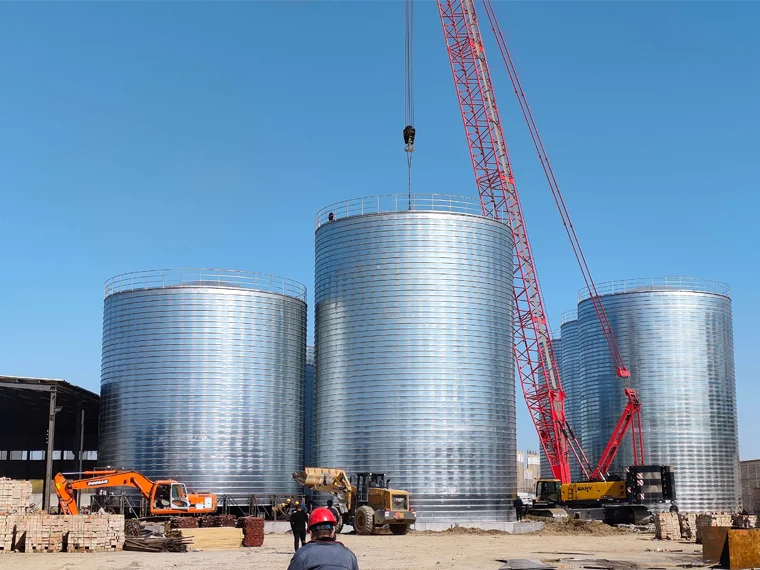
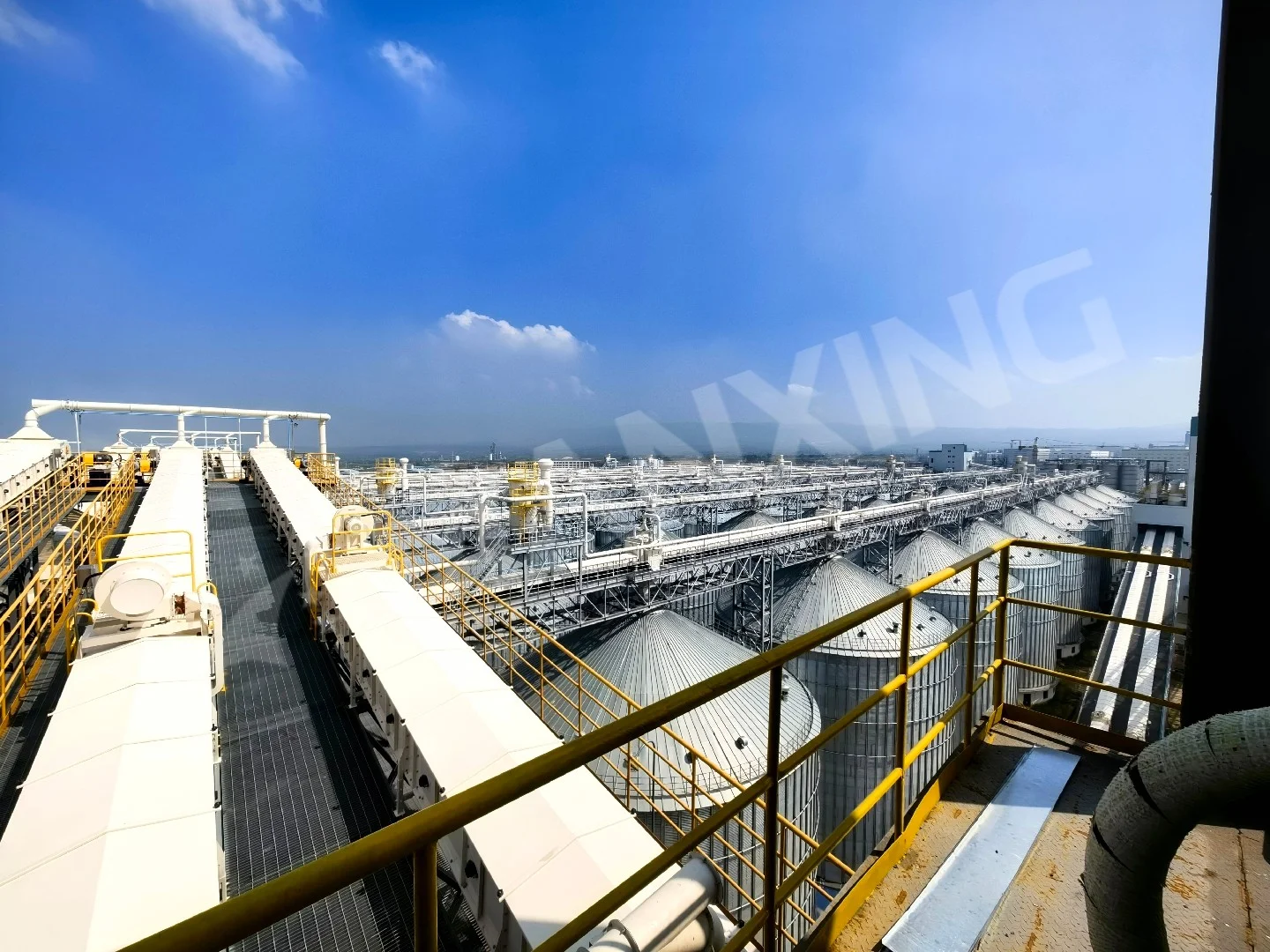
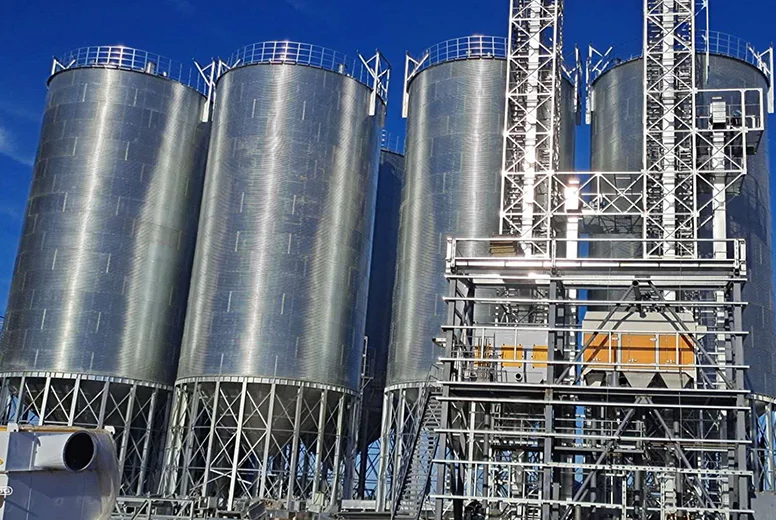
A hopper bottom silo is a bulk storage unit with a conical bottom, typically angled between 45° and 60°, designed for gravity-assisted material discharge without mechanical agitation. This design significantly reduces energy consumption while minimizing material residue and the risk of pest infestation. In Peru, these silos demonstrate exceptional adaptability, whether for agricultural products like grains, corn, and potatoes, or industrial materials such as cement, mineral powders, and fertilizers. Their core advantages include highly efficient gravity discharge—the conical bottom guides material smoothly to the outlet, preventing blockages; self-cleaning and flow control—the smooth interior walls and optimized cone angle effectively prevent bridging and rat-holing; and high customizability—the cone angle, outlet size, and silo height can be adjusted based on material flow properties (e.g., angle of repose, cohesion) and on-site spatial constraints.
Furthermore, Peru is located in the Pacific Ring of Fire, and some regions experience high humidity. Therefore, the structural design of hopper bottom silos must account for seismic ratings and corrosion protection. For example, fertilizer storage silos in coastal areas require an epoxy zinc-rich primer with a polyurethane topcoat, while highland grain silos in the Andes need enhanced insulation to prevent condensation.
How Hopper Bottom Silos Solve Specific Storage Challenges in Peru
Peru’s agricultural exports (such as asparagus, mangoes, and quinoa) and mining industry (copper and zinc concentrates) demand rapid material turnover and extremely low storage losses. Traditional flat-bottom silos or concrete silos often suffer from slow discharge, dead zones, and difficult cleaning. Hop
per bottom silos precisely address these pain points through the following methods:Agricultural Sector: Fast Discharge and Quality Preservation
For grains and legumes, the "first-in, first-out" characteristic of hopper bottom silos effectively prevents mold and pest infestations caused by long-term material accumulation. In Peru’s northern coastal corn-producing regions, using steel silos with a 45° cone angle can reduce discharge time by over 60%, with residue rates below 0.5%, significantly improving export loading efficiency.
Mining and Industrial Sector: Wear Resistance and Anti-Clogging Design
Peru is the world’s second-largest copper producer, and its mining companies frequently need to store highly abrasive concentrate powders. For such materials, the inner walls of hopper bottom silos must be lined with wear-resistant materials like UHMWPE or ceramic liners, and the cone angle must be increased to 55°–60° to handle the high internal friction angle. A customized hopper bottom silo project for a copper mine in central Peru reduced clogging-related downtime by 90%.
Key Takeaways
- Key Data: Hopper bottom silos improve discharge efficiency by 50%–70% compared to flat-bottom silos, with residue rates controllable below 0.3%.
- Best Practice: In Peru’s earthquake-prone regions, use spiral-locked steel silos with stiffening ribs and a flexible foundation design.
- Watch Out For: Never ignore the measured angle of repose of the material—selecting the cone angle based solely on experience can lead to severe bridging.
- Pro Tip: For high-humidity areas like the edge of the Amazon rainforest, specify hot-dip galvanized or weather-resistant polyester-coated silos with forced ventilation to prevent internal condensation.
- Bottom Line: A successful hopper bottom silo project in Peru requires a "one-site, one-strategy" approach that integrates seismic design, material-specific flow engineering, and local logistics. Related: International Logistics Documentation for Export Silo Equipment Shipments >
Key Considerations for Hopper Bottom Silo Selection and Construction in Peru
Implementing a hopper bottom silo project in Peru requires a comprehensive evaluation of geographic, logistical, and regulatory factors. First, seismic design is paramount: Peru lies within the Pacific Ring of Fire, and the connection between the silo body and foundation must incorporate seismic bearings capable of absorbing horizontal displacement. Second, transportation and installation: due to Peru’s long, narrow topography and challenging mountain road conditions, large silo components are often shipped in sections and assembled on-site using the "inverted method" or "lifting method." Finally, local compliance: projects must adhere to the Peruvian National Building Code (RNE) regarding fire protection, explosion prevention, and environmental emissions for industrial buildings. For example, silos storing dust-explosive materials like flour or sulfur must have explosion vents and explosion-proof electrical systems on the roof.
Additionally, for high-humidity regions, the silo body should be hot-dip galvanized or coated with weather-resistant polyester, and equipped with a forced ventilation system to prevent internal condensation. For high-altitude areas like the Puno region, the impact of low-oxygen environments on welding quality must be considered; a fully bolted connection structure is recommended to avoid on-site welding defects.
Frequently Asked Questions
Q: Why can’t standard North American or European designs be directly used for hopper bottom silo projects in Peru?
A: Peru presents unique challenges: ① Seismic intensity zones vary widely, with significantly different seismic parameters between coastal Zone 7 and mountainous Zone 8; ② Logistics costs are high, with transportation from the Port of Callao to the Andes potentially taking up to two weeks; ③ Material diversity is extreme—simultaneously storing highly cohesive potato starch and highly abrasive copper concentrate requires completely different liner materials. Therefore, a "one-site, one-strategy" customized design is essential, including modifications to the cone angle, wall thickness, and foundation type.
Q: Are hopper bottom silos suitable for storing easily damaged tuber crops like potatoes or onions in Peruvian agricultural applications?
A: Using a standard hopper bottom silo for tuber crops carries significant risk. The gravity discharge process can cause mechanical damage from drops, and the conical bottom can lead to crushing from material accumulation. An improved design is recommended: ① Install spiral chutes or buffer devices inside the silo; ② Reduce the cone angle to 30°–35° and use a vibratory discharger; ③ Alternatively, switch to a flat-bottom silo with a scraper discharge system. For potatoes specifically, a flat-bottom steel silo with a ventilation system is strongly preferred.
Q: What are the most common mistakes made when selecting a cone angle for a hopper bottom silo in Peru?
A: The most frequent error is assuming a standard 45° or 60° cone angle will work for all materials. In Peru, the angle of repose for materials like wet copper concentrate can exceed 50°, while dry quinoa might be as low as 25°. Using an angle too shallow for a cohesive material leads to arching and flow blockages, while an overly steep angle for a free-flowing material can cause uncontrolled flushing. The correct approach is to have the material’s angle of repose and cohesion tested in a lab, then design the cone angle to be at least 10°–15° steeper than the material’s effective angle of internal friction.
Q: How does the seismic design for a hopper bottom silo in coastal Lima differ from one in the highlands of Arequipa?
A: The difference is substantial. Coastal Lima is in Seismic Zone 4 (high seismicity) with soft soil conditions, requiring the silo to be anchored to a deep pile foundation with seismic dampers to absorb lateral forces. In contrast, the highlands of Arequipa (Zone 3) have stiffer soil but higher peak ground acceleration. Here, the silo body must be reinforced with additional stiffening rings, and the foundation may use a mat design to distribute loads. The cone’s structural support and the discharge hopper’s bracing must be calculated separately for each zone’s specific spectral acceleration values.
Q: What corrosion protection system is recommended for a hopper bottom silo storing fertilizers near the port of Callao?
A: The coastal environment of Callao is highly corrosive due to salt spray and high humidity. For fertilizer storage, the risk is compounded by chemical attack from ammonia and phosphates. The recommended system is: first, abrasive blast cleaning to Sa 2.5; then apply a high-build epoxy zinc-rich primer (≥80 microns); followed by a micaceous iron oxide intermediate coat (≥100 microns); and finally, a polyurethane topcoat (≥60 microns) resistant to UV and chemicals. All internal surfaces must be coated with a chemical-resistant epoxy lining. Hot-dip galvanizing is also an excellent alternative for the external structure, but the interior will still require a specialized lining.
Need a professional hopper bottom silo solution for your project in Peru?
We provide end-to-end services from geological surveys and structural calculations to manufacturing and local installation in Peru, with a proven track record of successful projects in Lima and Arequipa.
Get a Free Technical Consultation →