
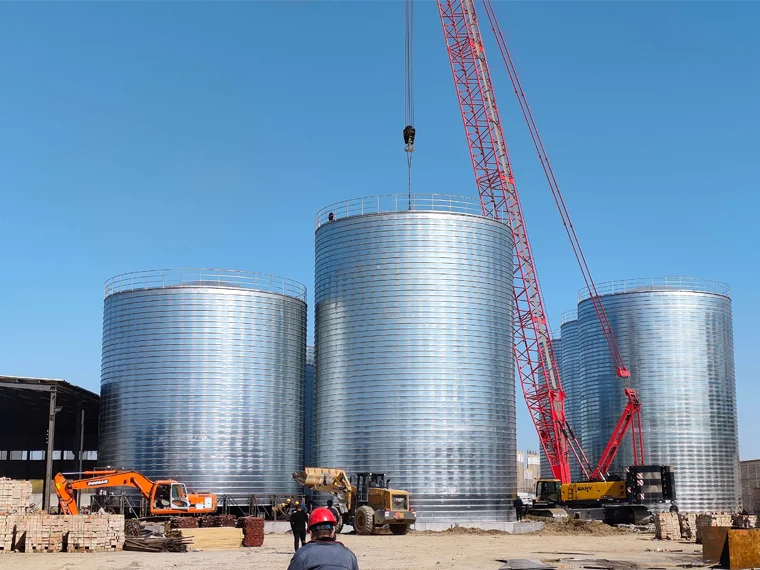
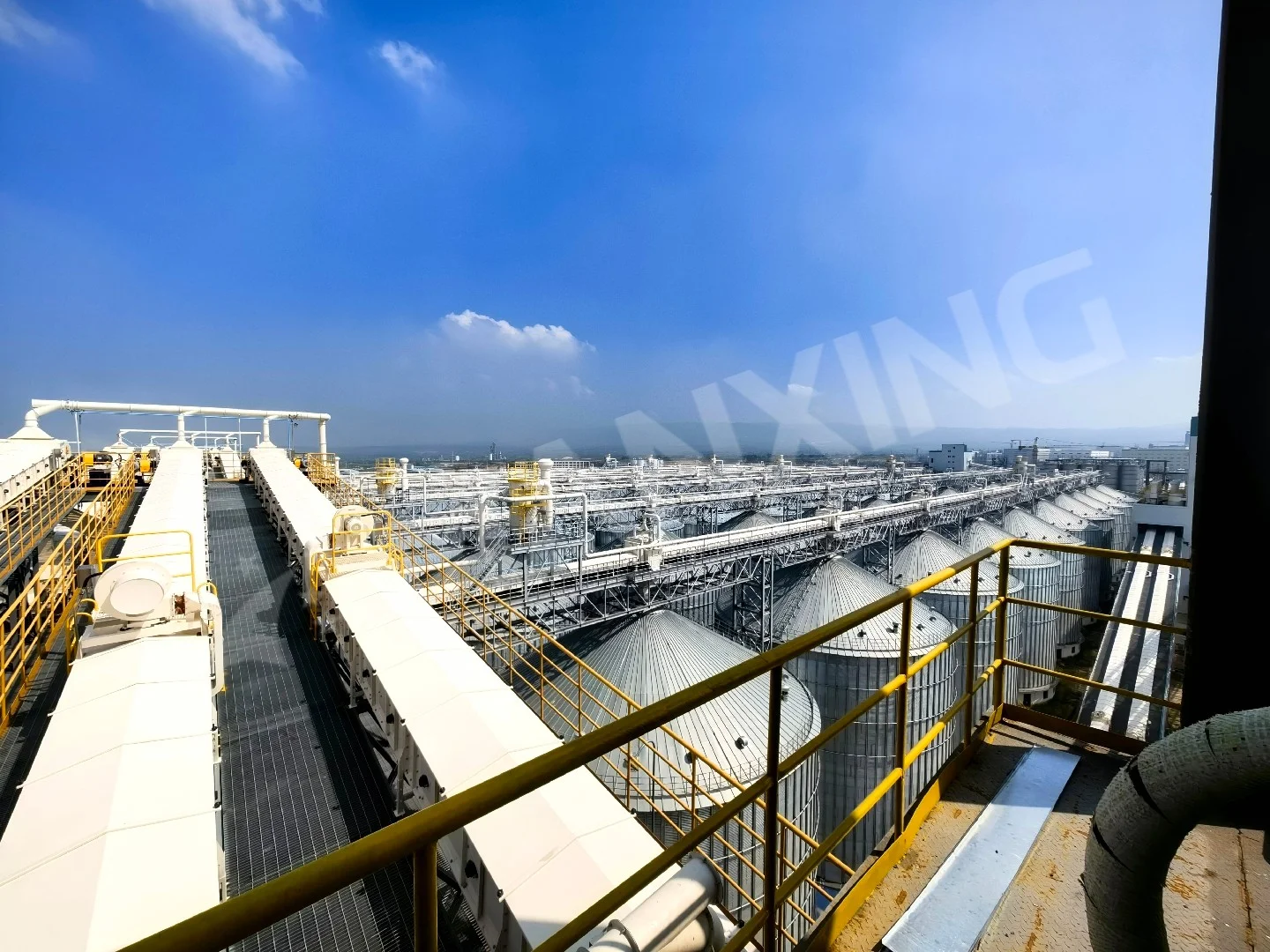


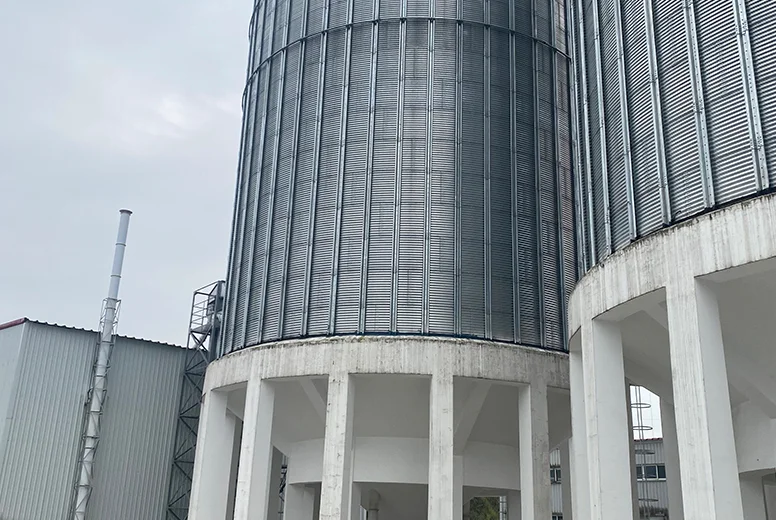
Concrete silos are rapidly becoming the preferred bulk storage solution across the Middle East, driven by extreme climatic conditions and the region's ambitious infrastructure projects. Unlike traditional steel alternatives, these structures offer superior durability, thermal stability, and a service life that can exceed 50 years with proper design. This comprehensive guide explores why concrete silos dominate markets in Saudi Arabia, the UAE, and Qatar, and how they deliver a 30-40% reduction in total lifecycle costs.
Why Concrete Silos Are the Preferred Solution for Middle East Bulk Storage
The Middle East presents a unique set of engineering challenges for industrial storage. With average summer temperatures exceeding 45°C, frequent sandstorms, and high humidity in coastal zones, traditional steel structures often suffer from thermal deformation and coating degradation within 3-5 years. Concrete silos, by contrast, are monolithic structures that naturally resist windblown sand abrasion and chemical corrosion. Their high specific heat capacity—approximately 0.84 kJ/(kg·K)—provides excellent thermal buffering, minimizing internal temperature fluctuations that can damage stored cement or grain.
For mega-projects like NEOM and the Red Sea tourism developments, concrete silos offer the necessary capacity—often exceeding 10,000 tons per unit—while requiring minimal maintenance in harsh desert environments. From an engineering perspective, the region's variable ground conditions, including soft desert sands and seismic zones near Iran and Turkey, demand adaptable foundation solutions. Concrete silos accommodate these challenges through flexible base designs, such as raft foundations or deep pile systems. Their inherent mass provides superior resistance to wind uplift and lateral forces, eliminating the structural sway common in tall steel bins. This adaptability has made concrete silos the dominant choice for cement plants, flour mills, and port terminals across the Gulf.
How Concrete Silos Solve the Middle East's Extreme Climate and Logistics Problems
The operational advantages of concrete silos in the Middle East go beyond mere durability. In a region where supply chains are often disrupted by geopolitical tensions and extreme weather, the reliability of concrete storage is a critical asset. The thermal mass of concrete, measured at a specific heat capacity of roughly 0.84 kJ/(kg·K), acts as a natural insulator. This prevents the "hot spot" formation inside stored materials that can lead to cement pre-hydration or grain spoilage. Add
itionally, the monolithic construction eliminates the joint and seam failures that plague bolted steel silos, ensuring a dust-tight and moisture-proof environment even during the most violent sandstorms.Thermal Performance and Material Integrity
In Saudi Arabia and the UAE, where ambient temperatures can swing by 20°C between day and night, concrete's thermal inertia is invaluable. It reduces the frequency of aeration cycles needed for grain cooling, cutting energy costs by up to 25%. For cement storage, it prevents the formation of "pack set" (hardened lumps) that can clog discharge systems, maintaining material flowability and reducing downtime for cleaning.
Lifecycle Cost Advantages Over Steel
While the initial capital expenditure for a concrete silo can be 15-20% higher than a comparable steel structure, the total lifecycle cost analysis tells a different story. Steel silos in the Middle East typically require recoating and corrosion repairs every 5-7 years, with major structural inspections every 10 years. Concrete silos, with proper reinforcement and waterproofing, can operate for 30-50 years with only routine maintenance. This results in a 30-40% reduction in total lifecycle costs, making concrete the economically superior choice for long-term projects.
Key Takeaways
- Key Data: Concrete silos in the Middle East can achieve a service life exceeding 50 years, compared to 15-20 years for steel alternatives in the same environment.
- Best Practice: Specify raft or deep pile foundations for concrete silos to handle soft desert sands and seismic zones near Iran and Turkey.
- Watch Out For: Avoid underestimating the impact of thermal cycling—concrete's specific heat capacity of 0.84 kJ/(kg·K) is critical for preventing material spoilage.
- Pro Tip: For mega-projects like NEOM, design concrete silos with capacities exceeding 10,000 tons per unit to maximize economies of scale in logistics.
- Bottom Line: Concrete silos deliver a 30-40% reduction in total lifecycle costs compared to steel, making them the most cost-effective solution for long-term bulk storage in the Middle East.
Engineering Adaptability for Regional Ground Conditions
The geological diversity of the Middle East—from the sabkha (salt flats) of the UAE to the rocky terrain of Oman—requires storage solutions that can be tailored to site-specific conditions. Con
crete silos excel here because their foundation design can be customized without altering the superstructure's performance. For soft desert sands, a deep pile system transfers loads to stable strata, while for rocky sites, a simple raft foundation suffices. This flexibility is a key reason why concrete silos are specified for port terminals in Qatar and cement plants in Saudi Arabia, where ground conditions vary dramatically even within a single project site.Frequently Asked Questions
Q: How do concrete silos compare to steel silos in terms of maintenance frequency in the Middle East's sandstorm-prone environment?
A: Concrete silos require significantly less maintenance than steel silos in sandstorm-prone areas. Steel structures need recoating every 5-7 years to prevent corrosion from abrasive sandblasting and high humidity. Concrete, being a monolithic material, naturally resists abrasion and does not require protective coatings. Routine maintenance for concrete silos typically involves only annual inspections of the roof and discharge equipment, with major structural maintenance needed only every 20-30 years.
Q: Can concrete silos be built on soft desert sands without deep foundations?
A: While concrete silos can be adapted to soft desert sands, deep foundations (such as pile systems) are almost always required for large-capacity units exceeding 5,000 tons. The mass of a concrete silo—often 3-5 times heavier than an equivalent steel silo—demands load transfer to stable strata. However, the foundation design is highly customizable: for smaller silos or sites with better soil, a reinforced raft foundation may suffice. A geotechnical survey is essential before design.
Q: What is the typical construction timeline for a concrete silo in the Middle East compared to a steel silo?
A: Concrete silo construction typically takes 6-12 months, depending on capacity and site conditions, while steel silos can be erected in 3-6 months. The longer timeline for concrete is due to concrete curing and formwork requirements. However, the total project schedule often favors concrete when considering the longer lifespan and reduced maintenance downtime. For urgent projects, slipform construction can accelerate concrete silo erection to as little as 4-8 months for standard designs.
Q: How does the thermal performance of concrete silos protect stored cement from pre-hydration in high-temperature climates?
A: Concrete's high specific heat capacity (0.84 kJ/(kg·K)) acts as a thermal buffer, absorbing heat during the day and releasing it slowly at night. This prevents the internal temperature from spiking above 50°C, which is the critical threshold for cement pre-hydration. In contrast, steel silos can see internal temperatures rise 10-15°C above ambient, leading to moisture condensation and premature hydration. Concrete silos maintain a more stable internal environment, reducing the risk of material degradation.
Q: Are concrete silos suitable for seismic zones in the Middle East, such as those near Iran and Turkey?
A: Yes, concrete silos are highly suitable for seismic zones. Their inherent mass provides stability, but more importantly, they can be designed with reinforced concrete walls and ductile detailing to withstand seismic forces. Foundation systems can include seismic isolation bearings or deep piles to decouple the structure from ground motion. Modern concrete silo designs in the Middle East follow international codes like ACI 313 and Eurocode 8, ensuring compliance with the region's seismic requirements.
Q: What is the maximum capacity of a single concrete silo unit available for Middle East projects?
A: Single concrete silo units in the Middle East can exceed 10,000 tons, with some custom designs reaching 20,000 tons or more. For mega-projects like NEOM, capacities of 15,000-20,000 tons per silo are common, allowing for efficient bulk storage of cement, grain, or industrial materials. The capacity is limited primarily by foundation design and construction logistics, not by the material itself. Multiple silos can be clustered for total storage capacities exceeding 100,000 tons.
Need expert concrete silo solutions for your Middle East project?
We provide professional design, manufacturing, and installation services for bulk storage and material handling systems worldwide, with proven expertise in the region's extreme conditions.
Get a Free Technical Consultation →