
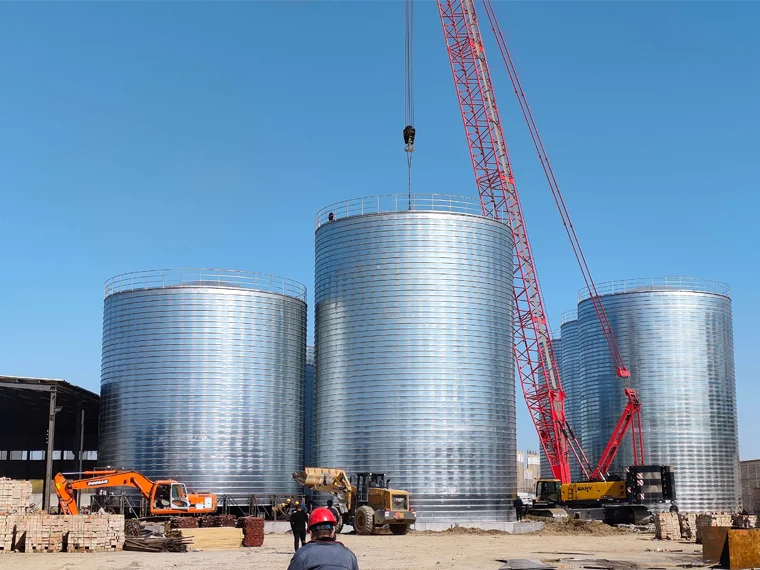
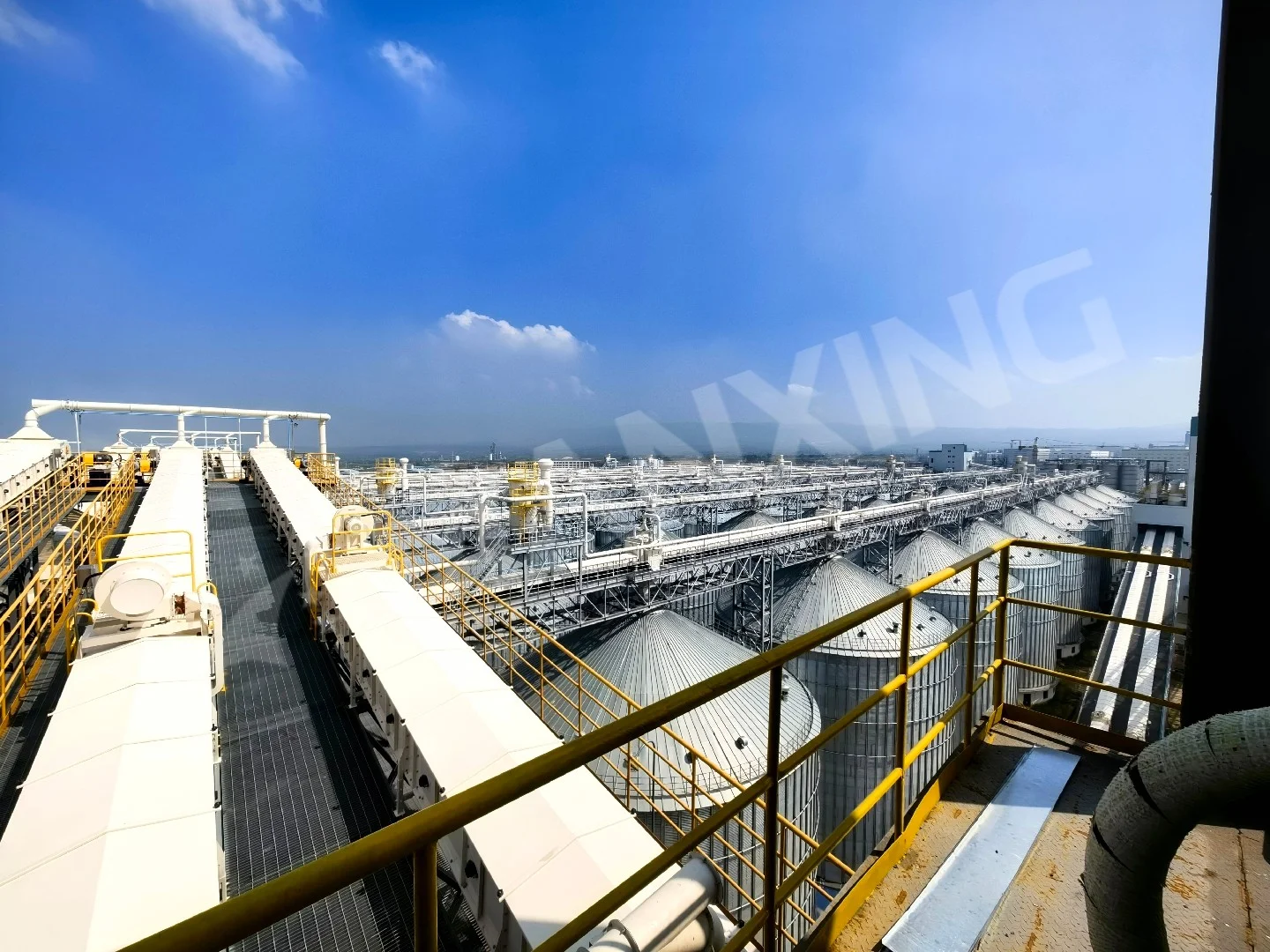


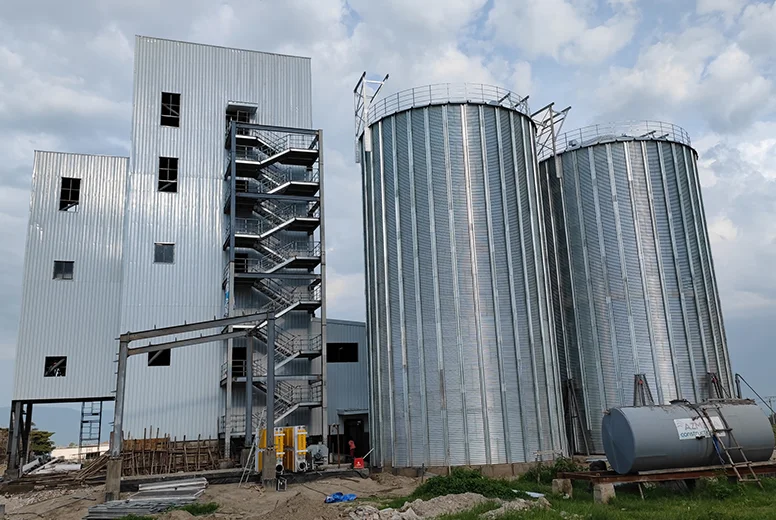
For modern agricultural operations, the flat bottom silo has become the preferred long-term storage solution for grain, feed, and fertilizer due to its simple structure, massive capacity, and exceptional cost-efficiency. This comprehensive guide dives deep into the design principles, agricultural applications, and operational best practices that make flat bottom silos a cornerstone of profitable post-harvest management.
Understanding Flat Bottom Silo Design Principles and Structural Advantages
The defining feature of a flat bottom silo is its cylindrical steel or concrete body paired with a horizontal, reinforced concrete or steel base. Thi
s design eliminates the complexity and higher fabrication costs associated with traditional cone-bottom hoppers. From a structural engineering perspective, the flat floor evenly distributes the vertical load of stored material across the entire foundation, significantly reducing the risk of localized stress points and extending the silo's operational lifespan. For agricultural use, these silos are typically constructed from hot-dip galvanized steel or weathering steel, offering superior corrosion resistance and the ability to withstand wide temperature fluctuations and high humidity common in farming environments.The discharge system is the critical component determining operational efficiency. Unlike cone-bottom silos that rely on gravity flow, flat bottom silos require mechanical clean-out equipment such as sweep augers, screw conveyors, or paddle scrapers to achieve complete material evacuation. While this adds initial capital expenditure, it provides a decisive advantage: the ability to handle poor-flowing materials like high-moisture corn or soybean meal, and the elimination of spoiled residual material that can compromise grain quality over long-term storage.
Core Agricultural Applications and Strategic Value
In modern agriculture, the flat bottom silo has evolved far beyond a simple storage container. It functions as a strategic asset for managing harvest peaks, stabilizing market prices, and ensuring feed quality throughout the year. Lar
ge-scale grain farms, cooperatives, and feed mills rely on these silos to store millions of bushels of corn, wheat, soybeans, and barley. The ability to aerate and monitor temperature within the silo is critical for preventing spoilage, especially in humid climates. Furthermore, flat bottom silos are ideal for storing fertilizers and animal feed ingredients, where moisture control and protection from contamination are paramount.Handling High-Moisture and Poor-Flowing Materials
One of the most significant advantages of the flat bottom silo in agriculture is its ability to handle high-moisture grains and sticky materials like soybean meal. Cone-bottom silos often experience bridging or ratholing with these substances, leading to downtime and manual intervention. The mechanical sweep system in a flat bottom silo ensures consistent, reliable discharge, making it the go-to choice for operations that store wet corn for livestock feed or processed byproducts.
Cost Efficiency and Scalability for Large Operations
For operations requiring capacities exceeding 10,000 metric tons, the flat bottom silo offers the lowest cost per ton of storage. The simple foundation design reduces civil engineering costs, while the bolted or welded steel panels allow for rapid on-site assembly. As a farm or cooperative grows, additional flat bottom silos can be added in a row configuration, sharing common walls or aeration tunnels to further optimize land use and capital investment.
Key Takeaways
- Key Data: Flat bottom silos can achieve capacities exceeding 50,000 metric tons, making them the most cost-effective solution for large-scale agricultural storage.
- Best Practice: Install mechanical sweep augers and aeration systems to ensure complete material evacuation and prevent spoilage during long-term storage.
- Watch Out For: Avoid using flat bottom silos without mechanical clean-out for free-flowing grains; the added cost of sweep equipment is essential for achieving full utilization and preventing quality loss.
- Pro Tip: Use hot-dip galvanized steel panels for the silo body to maximize corrosion resistance in humid agricultural environments, extending the silo's service life beyond 30 years.
- Bottom Line: The flat bottom silo is the undisputed workhorse of agricultural bulk storage, offering unmatched capacity, durability, and versatility for handling diverse materials.
Operational Best Practices for Flat Bottom Silos in Agriculture
To maximize the return on investment from a flat bottom silo, operators must implement rigorous maintenance and monitoring protocols. Regular inspection of the sweep auger and conveyor system is critical to prevent mechanical failures that can halt discharge during peak demand. Temperature cables should be installed at multiple levels within the grain mass to detect hot spots early. Aeration fans must be sized correctly to provide uniform airflow through the entire depth of the stored material, typically 0.1 to 0.2 cubic feet per minute per bushel for grain. Finally, a "first-in, first-out" (FIFO) inventory management strategy is highly recommended to minimize the age of stored material and reduce the risk of quality degradation.
Frequently Asked Questions
Q: What is the maximum capacity of a flat bottom silo for agricultural grain storage?
A: Flat bottom silos can be designed for capacities ranging from 1,000 metric tons to over 50,000 metric tons per unit. For very large installations, multiple silos are often grouped together. The practical upper limit is determined by foundation engineering and the availability of mechanical clean-out equipment capable of spanning the full diameter, which can exceed 30 meters (100 feet).
Q: How does a flat bottom silo discharge material without a cone bottom?
A: Flat bottom silos use mechanical sweep augers, screw conveyors, or paddle scrapers mounted on a rotating arm that sweeps the entire floor. The arm rotates around the center of the silo, pushing material toward a central or peripheral discharge hopper. This system ensures complete evacuation of the stored material, including poor-flowing products like high-moisture corn, which would bridge or clog in a cone-bottom design.
Q: What are the best materials for constructing a flat bottom silo in a humid agricultural climate?
A: Hot-dip galvanized steel is the industry standard for agricultural flat bottom silos due to its excellent corrosion resistance and durability against temperature fluctuations and high humidity. Weathering steel (Corten) is also used in some applications, but galvanized steel offers a longer maintenance-free service life. For the base, reinforced concrete is preferred for its strength and resistance to moisture wicking from the ground.
Q: Can a flat bottom silo be used for storing both grain and fertilizer?
A: Yes, flat bottom silos are versatile enough to store a wide range of agricultural materials, including grains (corn, wheat, soybeans), animal feed ingredients (soybean meal, corn gluten), and fertilizers (urea, DAP, potash). However, thorough cleaning is required between different product types to prevent cross-contamination. Fertilizers, in particular, are corrosive, so the silo must be constructed with appropriate protective coatings or stainless steel components for the discharge system.
Q: What is the typical lifespan of a flat bottom silo in agricultural service?
A: With proper maintenance, a hot-dip galvanized steel flat bottom silo can have a service life of 30 to 40 years or more. The key factors affecting lifespan are the quality of the galvanized coating, the effectiveness of the foundation's moisture barrier, and regular inspection and repair of the mechanical discharge equipment. Concrete flat bottom silos can last even longer, often exceeding 50 years, but may require periodic sealing of cracks.
Q: How does aeration work in a flat bottom silo compared to a cone bottom silo?
A: Aeration in a flat bottom silo is typically achieved through a network of perforated ducts or a full-floor aeration system installed beneath the stored material. Air is forced upward through the grain mass to control temperature and moisture. This system is more uniform and effective than in many cone-bottom silos, where the sloped sides can create dead zones. Proper aeration is critical for long-term storage of high-moisture grains, preventing mold growth and insect infestation.
Need expert flat bottom silo solutions for your agricultural operation?
We provide professional design, manufacturing, and installation services for bulk storage and material handling systems worldwide, from single silos to complete turnkey grain storage facilities.
Get a Free Technical Consultation →