
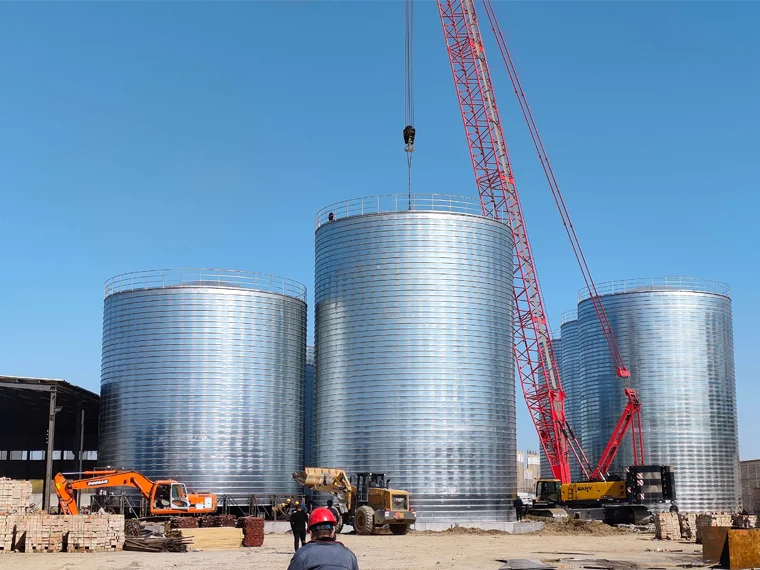
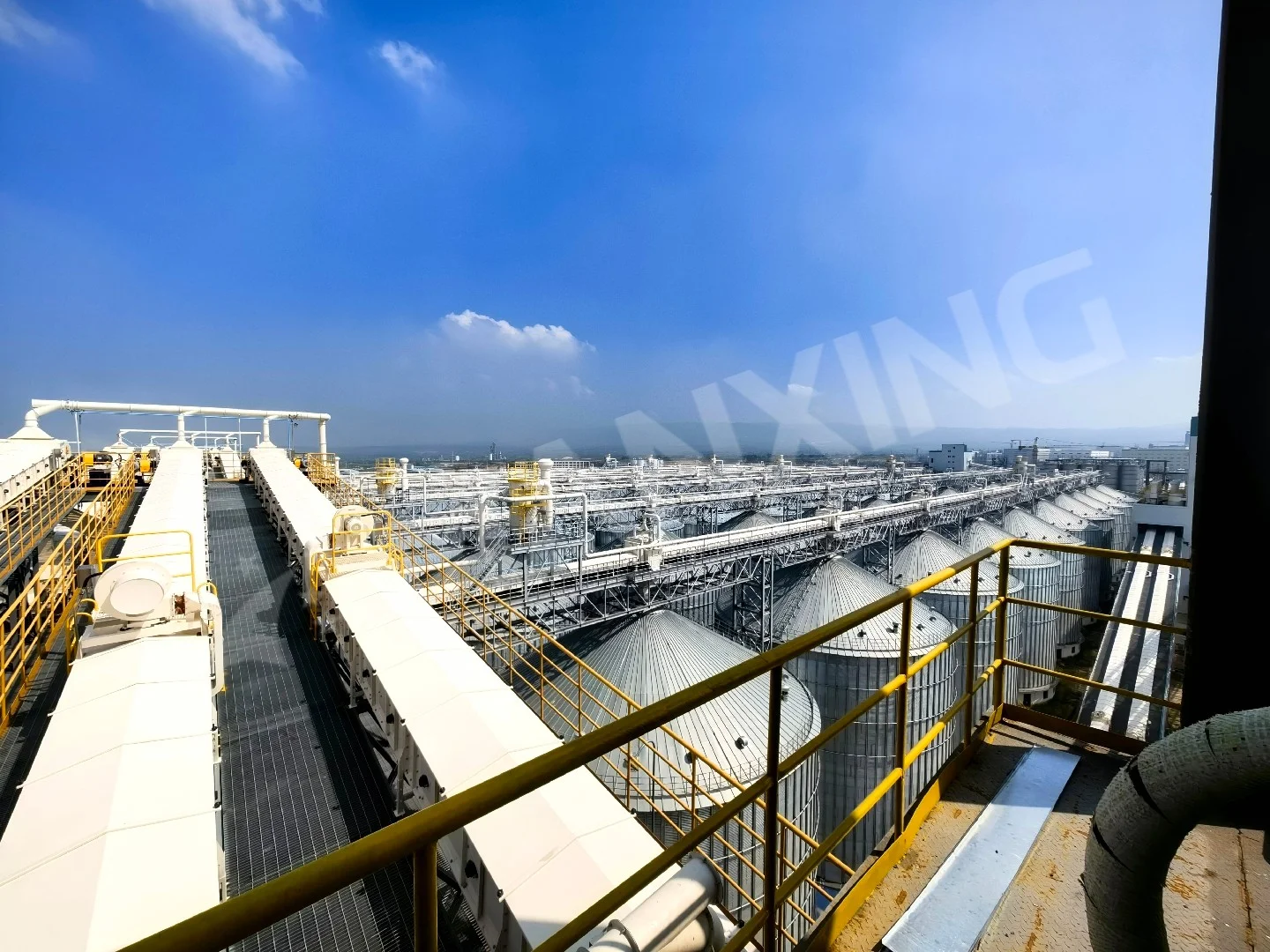


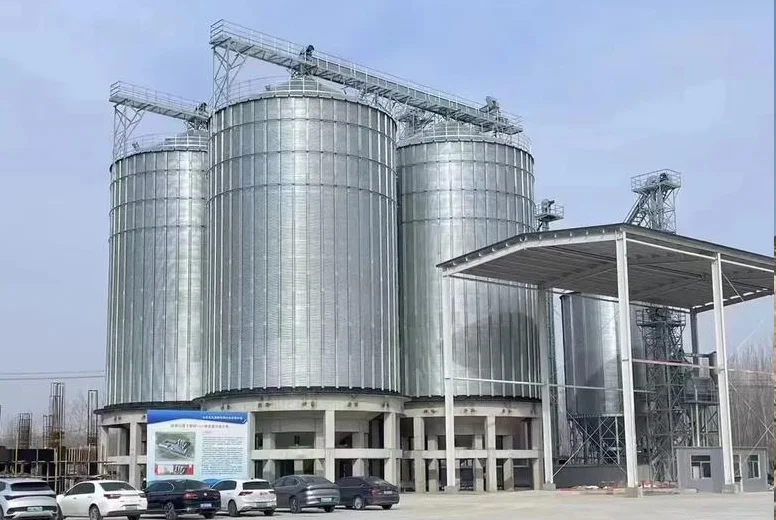
For bulk storage operations demanding exceptional durability, fire resistance, and gravity-driven discharge efficiency, the Concrete Foundation Hopper Bottom Silo stands as an industry benchmark. By combining the structural integrity of reinforced concrete with a precisely engineered hopper design, this silo type delivers a service life of 30–50 years—two to three times that of equivalent steel silos—while virtually eliminating material bridging and “ratholing” for smoother, more reliable downstream processing.Related: Concrete silo with reinforced structure
rong>Structural Superiority & Engineering Value of Concrete Hopper Bottom Silos
The core advantage of a concrete foundation hopper bottom silo lies in its marriage of high-strength concrete construction with a functional, gravity-assisted discharge system. Concrete inherently provides superior resistance to corrosion, UV radiation, and mechanical impact, enabling the structure to withstand extreme climatic conditions and continuous heavy loads without degradation. This makes it the preferred choice for high-capacity storage applications, such as large grain terminals, feed mills, and chemical raw material transshipment hubs.
Compared to steel silos, concrete hopper bottom silos offer significantly better fire performance and long-term durability. The inert nature of concrete means it will not rust or corrode when storing aggressive materials like fertilizers or salts, eliminating the risk of product contamination. Furthermore, the total lifecycle maintenance cost of a concrete silo is substantially lower, as it does not require periodic repainting or extensive corrosion protection. The hopper bottom itself is the key to operational efficiency: its precisely calculated incline angle—typically between 60° and 70°—ensures uniform, controlled material flow by gravity, effectively preventing “ratholing” (where material flows only through a central channel) and “bridging” (where material forms an arch above the outlet). For sticky or powdery materials, this design minimizes residue, reduces waste, and guarantees stable discharge rates.
Solving Common Storage Challenges: From Discharge Efficiency to Safety & Maintenance
In daily bulk storage operations, four core challenges consistently plague facility managers: poor discharge, material caking, structural corrosion, and safety hazards. The concrete foundation hopper bottom silo systematically addresses each of these pain points through intelligent design and material selection.
Precision Discharge: Eliminating Blockages and Residue
The hopper’s conical angle, typically designed at 60° to 70°, is deliberately set well above the angle of repose for most bulk solids. This steep geometry, combined with smooth inner liners or specialized coatings, allows material to flow freely under gravity. For materials with poor flow characteristics, auxiliary systems such as air cushions or vibratory arch-breakers can be integrated to achieve “zero-residue” discharge. This dramatically improves the continuity of downstream production lines, reducing costly downtime.
Structural Safety: Withstanding Environmental & Load Risks
Reinforced concrete provides exceptional compressive strength, and modern construction techniques—such as prestressing or post-tensioning—further enhance crack resistance and structural integrity. In seismically active zones or high-wind regions, the mass and rigidity of a concrete silo effectively dissipate and distribute dynamic loads. Moreover, the chemically inert properties of concrete make it ideal for storing corrosive materials like urea, potash, and various industrial salts, without the risk of metallic corrosion that can contaminate stored product and compromise silo walls.
Key Takeaways
- Key Data: A concrete hopper bottom silo’s design service life of 30–50 years is 2–3 times that of an equivalent steel silo.
- Best Practice: Install stainless steel or UHMWPE (Ultra-High Molecular Weight Polyethylene) wear liners on the hopper interior to extend discharge opening life and reduce frictional resistance.
- Watch Out For: Failing to calculate the hopper angle based on specific material properties (moisture content, particle shape, cohesion) can lead to persistent flow problems and bridging.
- Pro Tip: For ultra-fine powders, consider a “cone-in-cone” (BINSERT®) design or fluidized bed discharger to ensure reliable, complete evacuation.
- Bottom Line: While initial construction costs are 15–25% higher than steel, the concrete hopper bottom silo delivers a 30–40% total cost of ownership savings over a 30-year operational period.
Cross-Industry Applications: Customized Solutions from Agriculture to Heavy Industry
The application of concrete foundation hopper bottom silos has long since expanded beyond traditional agricultural grain storage. In the agricultural sector, they are widely used for storing corn, wheat, soybeans, and various animal feeds. Their superior temperature and humidity control, combined with effective pest and rodent resistance, offers a clear advantage over open-air stockpiling. In the industrial sector, their versatility is even more pronounced.
In the cement and building materials industry, these silos store clinker, slag, and fly ash. In the chemical sector, they safely house polyethylene pellets, urea, and various additives. At ports and logistics hubs, large concrete hopper bottom silos frequently serve as surge bins, efficiently linking ship, rail, and truck transport. Their weather resistance and low maintenance requirements are particularly valued in remote mining operations or regions with harsh climates, where access for repairs is limited and operational reliability is paramount.
Frequently Asked Questions
Q: What are the specific initial investment and long-term cost differences between a concrete hopper bottom silo and a steel hopper bottom silo of the same capacity?
A: The initial construction cost of a concrete silo is typically 15–25% higher than a comparable steel silo, primarily due to foundation work and formwork expenses. However, the lifecycle cost (LCC) is significantly lower. Concrete silos require virtually no periodic anti-corrosion painting, have excellent fire resistance (often eliminating the need for costly sprinkler systems), and require very infrequent repairs. Over a 30-year operational period, the total comprehensive cost of a concrete silo can be 30–40% lower. For enterprises focused on long-term, stable operations, the concrete solution is the more economical choice.
Q: For extremely poor-flowing ultra-fine powders like carbon black or calcium carbonate, does a concrete hopper bottom silo require special design modifications?
A: Yes, standard hopper designs are often inadequate for ultra-fine powders. Effective solutions include: (1) Using a “cone-in-curve” combination hopper (such as the BINSERT® design) to eliminate stagnant zones and improve flow patterns; (2) Installing low-frequency air hammers or air cannons on the hopper wall to periodically break any arches that form; (3) Employing a fluidized bed discharger that injects compressed air through a porous plate at the material’s base, effectively “liquefying” the powder for controlled discharge. These customized designs ensure clog-free, high-precision unloading of even the most cohesive fine powders.
Q: How does the seismic performance of a concrete hopper bottom silo compare to a bolted or welded steel silo?
A: Concrete silos generally exhibit superior seismic performance, especially in high-seismicity zones. Their inherent mass and monolithic rigid structure allow them to resist lateral forces more effectively than lighter, more flexible steel structures. Modern concrete silos are often designed with post-tensioning, which provides active compression to counteract tensile stresses during an earthquake. While steel silos can be designed to be ductile and absorb energy, they are more susceptible to buckling at the base or joint failure. Concrete’s rigidity helps ensure the structure remains intact and functional after a seismic event, which is critical for emergency supplies or continuous industrial operations.
Q: What is the typical construction timeline for a concrete foundation hopper bottom silo, and what are the critical phases?
A: The timeline varies by size and site conditions, but a typical project from groundbreaking to commissioning takes 4–8 months. The critical phases are: (1) Geotechnical investigation and foundation design (2–4 weeks); (2) Foundation construction and curing (4–8 weeks); (3) Silo wall construction, often using slipform or jumpform techniques (3–6 weeks); (4) Hopper and discharge system installation, including liner fitting (2–4 weeks); (5) Auxiliary system integration (conveyors, dust control, level sensors) and commissioning (2–4 weeks). Proper concrete curing is the most time-sensitive phase and cannot be rushed without compromising long-term durability.
Q: Can a concrete hopper bottom silo be retrofitted with new discharge technology or monitoring systems after years of operation?
A: Yes, concrete silos are highly adaptable for retrofits. Common upgrades include installing new wear-resistant liners (UHMWPE or ceramic tiles) to the existing hopper, adding pneumatic arch-breakers or vibrators, and integrating modern level sensing and inventory management systems. Because the concrete structure itself is robust and inert, modifications are often simpler and less risky than with steel silos, where corrosion or fatigue may compromise structural integrity. However, any structural modifications to the concrete (e.g., cutting new openings) require careful engineering analysis to maintain load-bearing capacity.
Need professional concrete hopper bottom silo solutions for your project?
We offer a full turnkey service—from geotechnical surveys and structural design to concrete placement and interior liner installation—for agricultural grain terminals, industrial raw material hubs, and everything in between. Our team has decades of experience customizing silo solutions for the world’s most demanding bulk storage environments.
Get a Free Technical Consultation →