
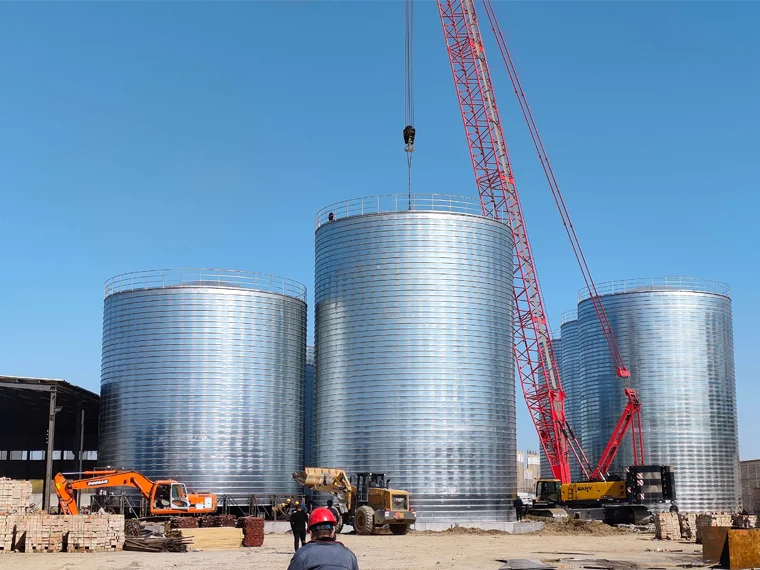
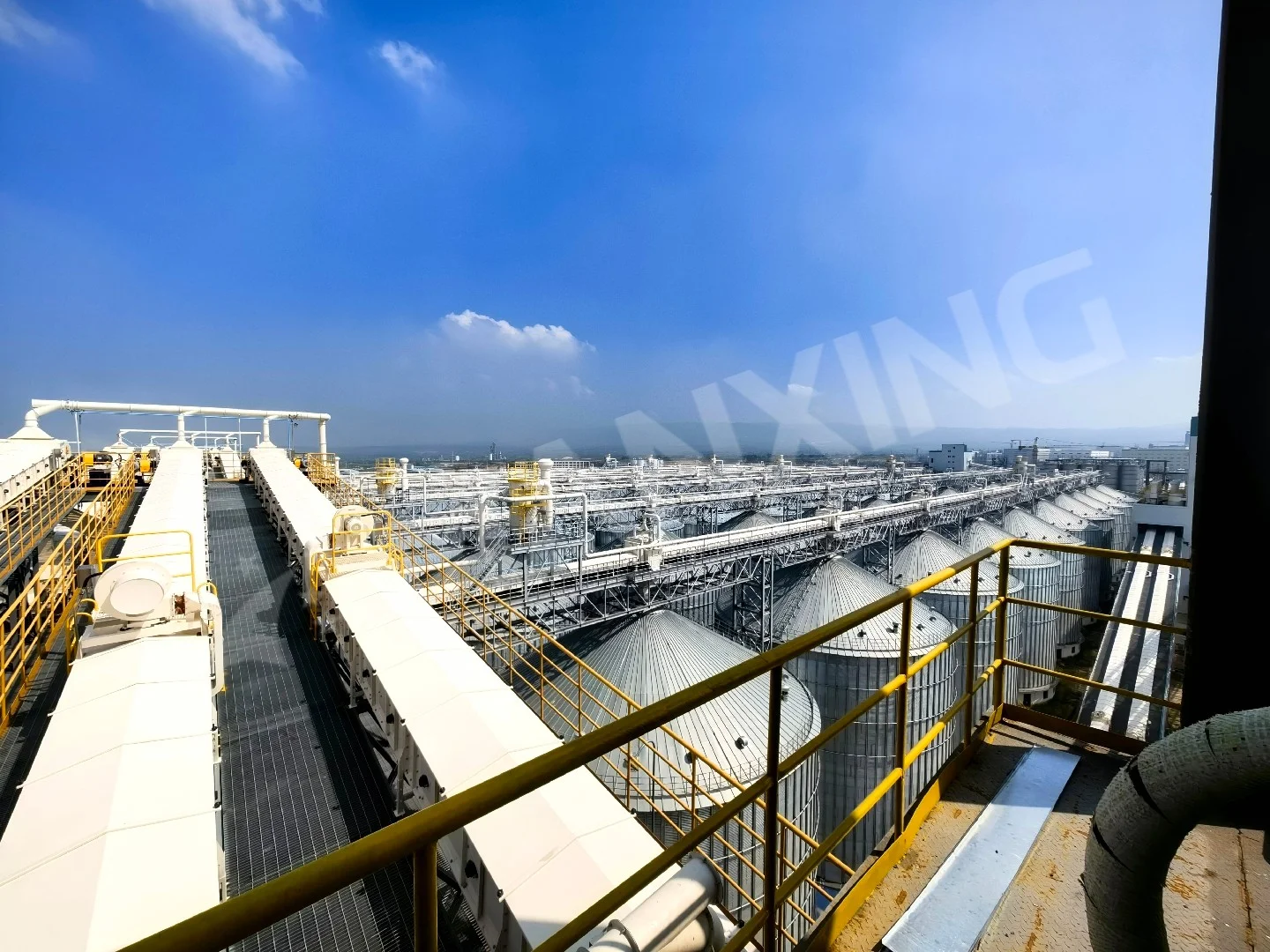


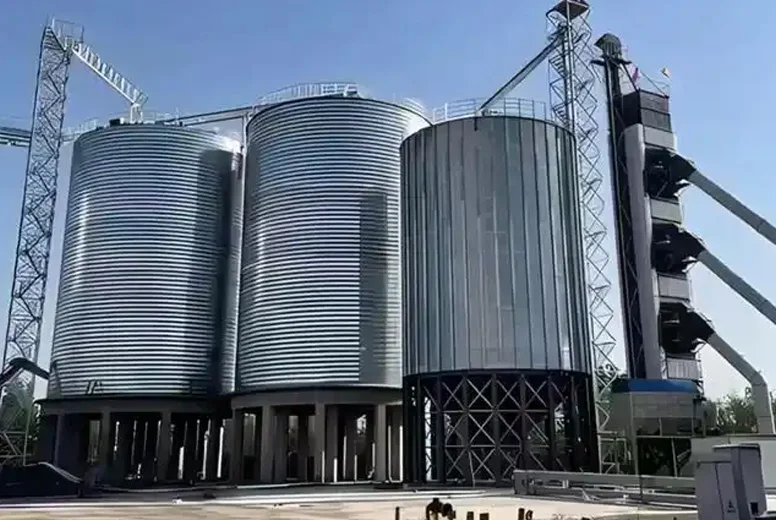
A farm concrete silo foundation is the invisible backbone of your agricultural storage system, directly determining the safety and service life of your silo for 20 years or more. This guide delivers a deep dive into the structural mechanics, geological adaptation strategies, and construction best practices that ensure your investment withstands the test of time, preventing costly failures and maximizing long-term ROI.
Structural Design and Load Distribution Principles for Farm Concrete Silo Foundations
The core function of a concrete silo foundation is to effectively transfer the combined forces of the silo's self-weight, stored material load, wind load, and seismic activity to the underlying soil. Unlike steel foundations, a concrete foundation forms a rigid monolithic chassis through integral pouring, capable of withstanding vertical loads ranging from 50 tons to over 500 tons. Thi
s makes it the preferred choice for large-scale farm tower silo clusters. The design process must prioritize bearing capacity, with a general requirement that the subgrade bearing capacity is no less than 150 kPa. For soft soil areas, pile foundations or soil replacement treatments are necessary to achieve this threshold.In practical engineering, the foundation thickness and reinforcement ratio are the critical parameters determining load-bearing capacity. Common foundation thicknesses for farm silos range from 300 mm to 800 mm. For silos with a diameter exceeding 6 meters, a double-layer, two-way steel mesh is standard, typically using rebar diameters of 12 mm to 20 mm with a spacing of 150 mm to 200 mm. This robust reinforcement pattern effectively prevents silo tilting caused by differential settlement, ensuring uniform material flow during discharge and protecting structural integrity.
Solving Foundation Stability Issues on Challenging Farm Terrain
Farm locations are often dictated by land-use planning, leading to encounters with problematic soils like clay, sand, or high-water tables. A concrete silo foundation employs several targeted technical solutions to overcome these challenges. First, water-resistant concrete with an impermeability grade of P6 or higher is used, combined with a waterproofing membrane, to prevent groundwater upwelling that can cause foundation corrosion. Second, in frost-prone regions, the foundation depth must extend below the local maximum frost line—typically 1.2 meters to 1.8 meters—to protect the structure from destructive frost heave forces.
Load Distribution and Settlement Control for Multi-Silo Layouts
For farms with multiple silos arranged side-by-side, a combined raft foundation is the optimal design. This approach distributes the load from each silo uniformly across the entire foundation area. Effective design can control differential settlement between adjacent silos to within 10 mm, a critical tolerance that prevents damage to connecting pipes, conveyors, and other handling equipment from structural deformation.
Durability and Anti-Corrosion Measures for Long-Term Performance
Agricultural environments pose a unique threat: acidic or alkaline substances from fertilizers, pesticides, and animal feed can seep into the ground and chemically attack the concrete. To counter this, the foundation surface should be coated with an epoxy anti-corrosion layer. Furthermore, using concrete with a low water-cement ratio (≤ 0.45) reduces porosity and enhances impermeability. Finally, a drainage ditch should be installed around the foundation's perimeter to prevent standing water from causing long-term damage through saturation and chemical exposure.
Key Takeaways
- Key Data: A well-designed concrete silo foundation has a service life of 25-30 years, with excellent maintenance extending it beyond 40 years—significantly outperforming steel foundations, which typically last 15-20 years.
- Best Practice: Always conduct a thorough geotechnical investigation before construction. Drill at least three boreholes to a depth of 1.5 times the foundation width to accurately characterize the bearing stratum.
- Watch Out For: Never estimate foundation dimensions based solely on experience without soil bearing capacity tests. This is the primary cause of silo tilting and structural failure.
- Pro Tip: For future expansion, design your foundation with a 20% load reserve and install connection rebar at the edges. This forward-thinking approach dramatically reduces future civil works costs and construction time.
- Bottom Line: The foundation is the single most critical component of your silo system. Investing in a properly engineered concrete foundation is the most cost-effective decision for long-term, trouble-free grain or feed storage.
Systematic Foundation Planning Strategies for Multi-Silo Farm Layouts
Modern farms often require simultaneous storage of multiple grains, feeds, or seeds, making foundation planning for silo groups essential. A concrete foundation can be designed using a modular approach, connecting individual silo bases with grade beams to form an integrated system. This provides flexibility for independent settlement while enhancing the overall resistance to overturning forces. During construction, it is best practice to pour the base slab first, then cast the silo walls in stages. This sequence minimizes shrinkage cracks in the concrete. Crucially, the positioning accuracy of embedded parts—such as anchor bolts and base plates—must be held to within ±5 mm, as this directly impacts the verticality and sealing of the entire silo installation.
For farms with potential expansion plans, the foundation should be designed with a 20% load reserve. Installing connection rebar at the foundation edges allows for a seamless structural connection to new silos in the future. This proactive design strategy significantly reduces civil engineering costs and project timelines when expansion is needed, turning a potential headache into a straightforward process.
Frequently Asked Questions
Q: For farm use, is a concrete silo foundation or a steel silo foundation more economical over the long term?
A: From a life-cycle cost perspective, a concrete foundation has a 30%-50% higher initial cost than a steel foundation. However, its lower maintenance frequency, longer lifespan (25-30 years vs. 15-20 years), and superior resistance to high-humidity and corrosive agricultural environments make it the more economical choice for large farms. For storage capacities exceeding 500 tons, the total cost advantage of a concrete foundation typically becomes evident after 10 years. Furthermore, concrete offers unmatched safety advantages against rodent damage and fire risk, which are significant vulnerabilities for steel foundations in agricultural settings.
Q: What is the most effective ground improvement method for building a concrete silo foundation on soft soil?
A: For soft soil with a bearing capacity below 100 kPa, the most effective solution is a composite foundation using cement-soil mixing piles or CFG (Cement Fly-ash Gravel) piles. Typically, piles are 400 mm to 600 mm in diameter, spaced 1.2 m to 1.5 m apart, and must penetrate the soft soil layer to reach the bearing stratum by at least 1 meter. This treatment can increase the composite foundation's bearing capacity to over 200 kPa and effectively control total settlement to within 30 mm. It is critical to allow a 28-day curing period after installation and to perform static load tests to verify the design performance before proceeding with the foundation pour.
Q: What are the most common quality defects in concrete silo foundation construction, and how can they be prevented?
A: The most frequent defects are base slab cracking and honeycombing (surface voids). Prevention involves a multi-pronged approach: use low-heat cement (like slag Portland cement) and incorporate water reducers and expansion agents into the mix; control the concrete pouring temperature to below 30°C, and for mass concrete, install cooling water pipes; immediately after pouring, begin wet curing and maintain it for no less than 14 days. For existing cracks, pressure grouting can be used for repair, but severe structural cracks will require demolition and re-pouring of the affected section.
Q: How do I determine the correct foundation size for a new farm silo without over-engineering it?
A: The correct foundation size is determined by a geotechnical report, not a rule of thumb. The design process starts with the total load (silo weight + maximum stored material + wind/seismic loads). This load is divided by the allowable soil bearing capacity from your soil test to get the required foundation area. For example, a 500-ton load on soil with a 150 kPa capacity requires roughly 3.3 m² of contact area. A structural engineer then uses this area to design the thickness and reinforcement, ensuring safety without unnecessary material waste. Skipping this step is the primary cause of silo failure.
Q: Can a concrete silo foundation be repaired if it has already settled unevenly?
A: Yes, but it is a complex and costly intervention. The most common method is underpinning, where the foundation is supported by installing new piles or micro-piles to transfer the load to deeper, more stable soil. Another technique is compaction grouting, where high-pressure grout is injected to densify the soil beneath the settled area. However, the success rate depends heavily on the cause of settlement and the extent of the damage. Prevention through proper geotechnical investigation and design is always vastly more effective and economical than any remedial work.
Need expert concrete silo foundation solutions for your farm?
We provide professional design, manufacturing, and installation services for bulk storage and material handling systems worldwide, from geotechnical surveys to construction supervision.
Get a Free Technical Consultation →