


For bulk material storage in cement, grain, and mining industries, the 2000-ton flat bottom silo offers superior structural stability and discharge efficiency compared to its hopper-bottom counterparts. With optimized design logic and a focus on solving bridging and rat-holing challenges, this silo type delivers a lower total cost of ownership for capacities exceeding 1,500 tons.
Structural Advantages and Design Logic of the 2000-Ton Flat Bottom Silo
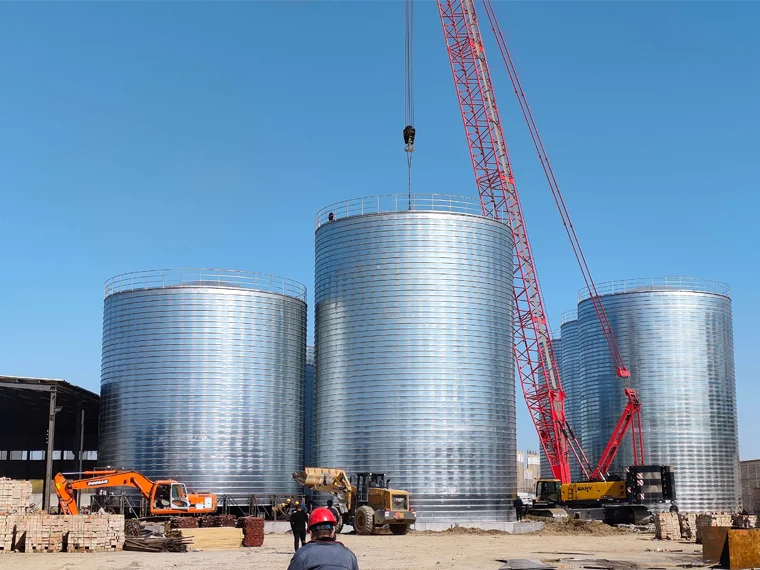
Unlike hopper-bottom silos, the 2000-ton flat bottom silo utilizes a horizontal base plate combined with reinforced ring beams and a column support system. This configuration ensures uniform load distribution across the entire foundation, significantly reducing the risk of localized stress concentrations. This design is particularly advantageous for storing materials with poor flowability, such as cement clinker and wet mineral powder. The flat bottom structure simplifies civil engineering requirements, typically reducing installation timelines by over 20% compared to equivalent hopper-bottom designs. In seismic zones classified as Intensity 8, optimized node connections ensure the structure remains compliant with the GB 50322 standard.
Manufacturing precision is a key differentiator. The inner walls of a high-quality flat bottom silo are fabricated using plasma cutting and automatic submerged arc welding, achieving a weld flaw detection pass rate exceeding 99.5%. A coating system consisting of an epoxy zinc-rich primer and a polyurethane topcoat provides corrosion resistance for over 15 years, even in high-salinity coastal environments. This design philosophy directly contributes to a "maintenance-free" operational goal, drastically lowering the total lifecycle cost for the owner.
Solving Discharge Challenges: Bridging, Rat-Holing, and Material Adaptability
The primary engineering challenge for a 2000-ton flat bottom silo is optimizing the discharge outlet design. Due to the flat floor, material can form "dead zones" where it stagnates. To counter this, we recommend a "multi-outlet + fluidization rod" combination. For cement storage, for example, configuring three DN300 rotary feeders in parallel with pneumatic arch-breaking devices achieves a discharge capacity of 150 tons per hour with a residual rate below 0.5%. For grain storage (e.g., corn, wheat), anti-segregation devices must be installed to prevent light impurities from concentrating and causing blockages.
Fluidization Rods and Air Cushion Systems
For powdery materials like fly ash or mineral powder, embedding aeration boxes or fluidization rods in the flat bottom area creates an "air cushion layer." This effectively breaks the internal cohesion of the material. In a case study, this design reduced discharge time by 40% and eliminated the need for manual silo cleaning, dramatically improving operational safety and efficiency.
Anti-Corrosion and Wear-Resistant Treatment
When storing materials containing sulfur or acidic components, such as desulfurized gypsum, the base plate must be fabricated from 316L stainless steel or lined with wear-resistant ceramic tiles. A power plant project that failed to implement this solution experienced base plate corrosion perforation within three years, resulting in repair costs amounting to 30% of the initial investment. Thi
s highlights the critical importance of material selection in the design phase.Key Takeaways
- Key Data: An optimized flat bottom silo can achieve a discharge residual rate of less than 0.3%, which is a 60% reduction compared to traditional designs.
- Best Practice: For materials with a repose angle greater than 35°, you must configure mechanical or pneumatic arch-breaking devices; otherwise, discharge efficiency will drop by over 50%.
- Watch Out For: Never directly apply valve selection parameters from a hopper-bottom silo. For flat bottom silos, torque must be calculated using a combined "maximum static pressure + dynamic impact" formula.
- Pro Tip: For mining applications like copper concentrate, enhance anti-sticking design by adjusting the base plate angle from 0° to 3°-5° to improve material flow.
- Bottom Line: The 2000-ton flat bottom silo offers a lower total lifecycle cost for large-scale storage of difficult-to-flow materials, provided the discharge system is engineered correctly.
Application Scenarios and Selection Decisions: From Cement to Grain
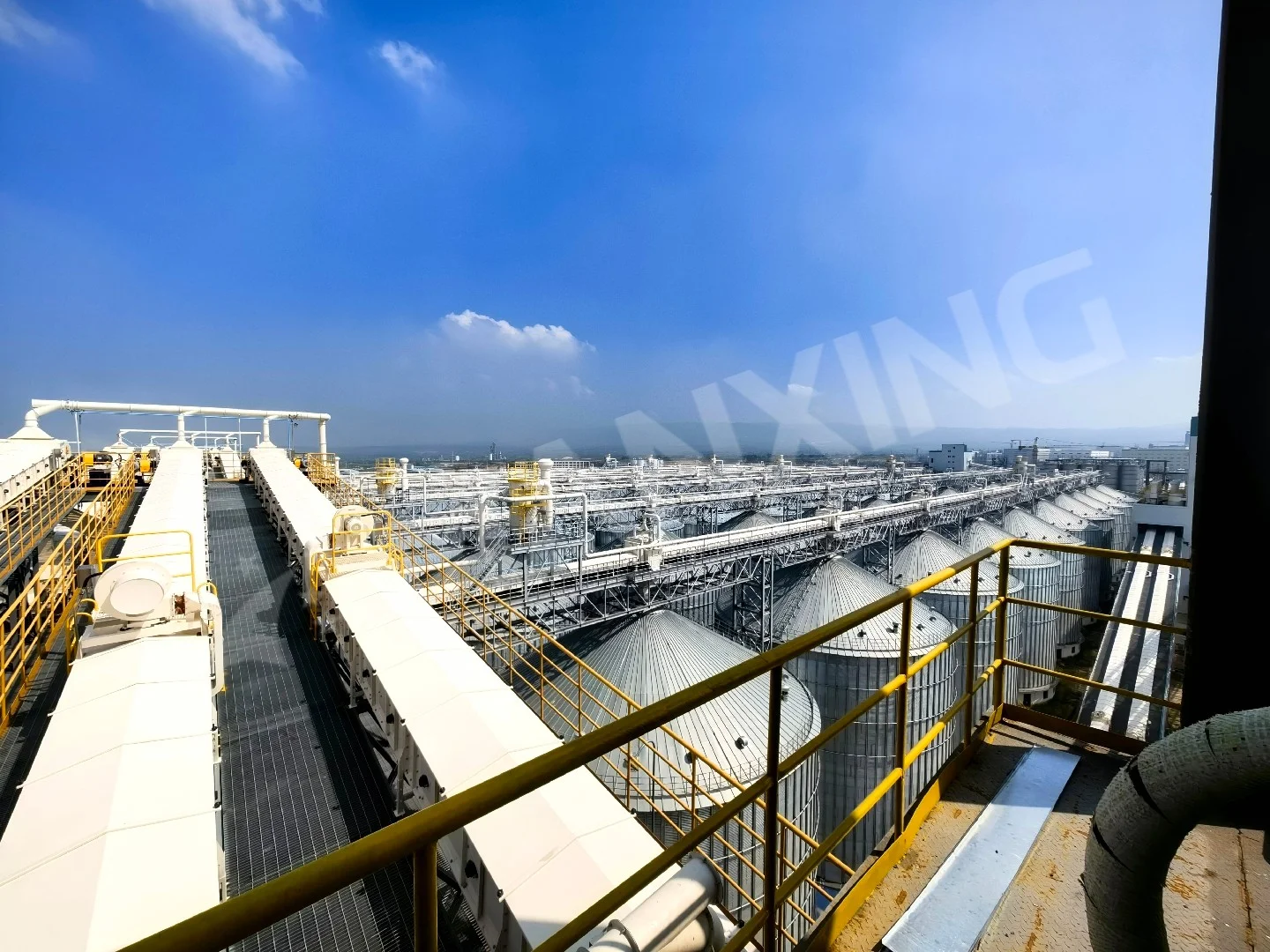
In the cement industry, the 2000-ton flat bottom silo frequently serves as a finished product or blending material silo. It is typically paired with a Roots blower and pneumatic conveying system for one-button automatic truck loading. In the grain sector, the silo must be integrated with temperature monitoring, ventilation, and fumigation systems, with explosion-proof pressure relief ports added to the roof. A large grain depot project successfully used a "flat bottom + cone hopper" composite structure, maintaining total capacity while reducing the cleaning cycle from 7 days to just 2 days. For mining applications like copper concentrate, the focus shifts to anti-sticking design, where the base plate angle is increased from 0° to 3°-5° to promote material flow.
Frequently Asked Questions
Q: What is the actual cost difference between a 2000-ton flat bottom silo and a hopper-bottom silo of the same capacity?
A: The steel structure weight for a flat bottom silo is typically 8%-12% higher than a hopper-bottom design. However, the civil foundation costs are 15%-20% lower. When total lifecycle costs (including maintenance) are considered for capacities over 1,500 tons, the flat bottom silo is actually 10%-15% cheaper. The key variable is material flowability; for extremely sticky materials like wet clay, the risk of blockages in a hopper-bottom silo often negates its initial cost advantage.
Q: How do I determine if my 2000-ton flat bottom silo requires an explosion-proof design?
A: According to GB 50016, if the stored material is a combustible dust (e.g., flour, starch) with a particle size under 500 μm, you must install explosion vents (with an area ≥ 0.05 m²/m³ of silo volume) and a suppression system. Our recommendation is to reserve explosion-proof interfaces even if the material is not explicitly classified as combustible, especially when the dust concentration could potentially exceed 25% of the lower explosive limit. A feed mill once suffered a roof rupture because it failed to account for the explosion risk of corn dust.
Q: What are the typical installation timeline and foundation requirements for a 2000-ton flat bottom silo?
A: For a spiral-formed steel silo, on-site installation usually takes 25 to 35 days, including foundation curing time. The foundation must meet a bearing capacity of at least 150 kPa, with differential settlement controlled to within L/500. Using a pre-stressed reinforced concrete foundation can further shorten the schedule. For
winter construction, we recommend adding an accelerating admixture and covering the foundation with insulation to prevent frost cracking.Q: Can a 2000-ton flat bottom silo be used for multiple different materials over its lifespan?
A: Yes, but it requires careful planning. The discharge system is the most critical variable. If you plan to switch between free-flowing grains and cohesive powders, you should design the discharge system with adjustable aeration and arch-breaking equipment from the start. A modular multi-outlet design is highly recommended, as it allows you to activate or deactivate specific outlets and fluidization zones depending on the material's properties, avoiding costly retrofits later.
Q: How does the maintenance of a flat bottom silo compare to a hopper-bottom silo in a corrosive environment?
A: The flat bottom silo has a distinct advantage here. Because the load is distributed evenly on a flat foundation, the stress on the sidewalls is more uniform, reducing the risk of stress corrosion cracking. Furthermore, the flat floor allows for easy inspection and reapplication of protective coatings. In a hopper-bottom silo, the cone section experiences high stress and is difficult to access for maintenance, often leading to premature failure. With proper coating (e.g., epoxy zinc-rich primer and polyurethane topcoat), a flat bottom silo can last 15+ years in a coastal environment with minimal maintenance.
Need expert 2000-ton flat bottom silo solutions for your project?
We provide professional design, manufacturing, and installation services for bulk storage and material handling systems worldwide, with over 300 projects successfully delivered.
Get a Free Technical Consultation →