
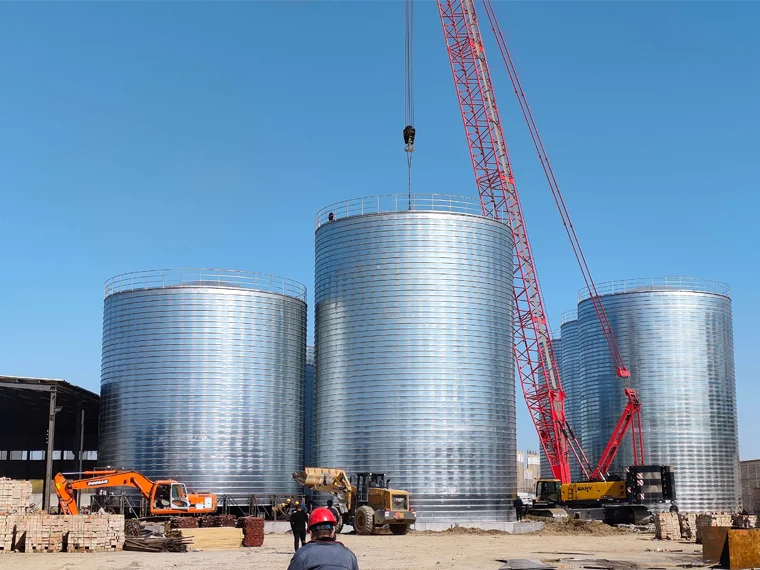
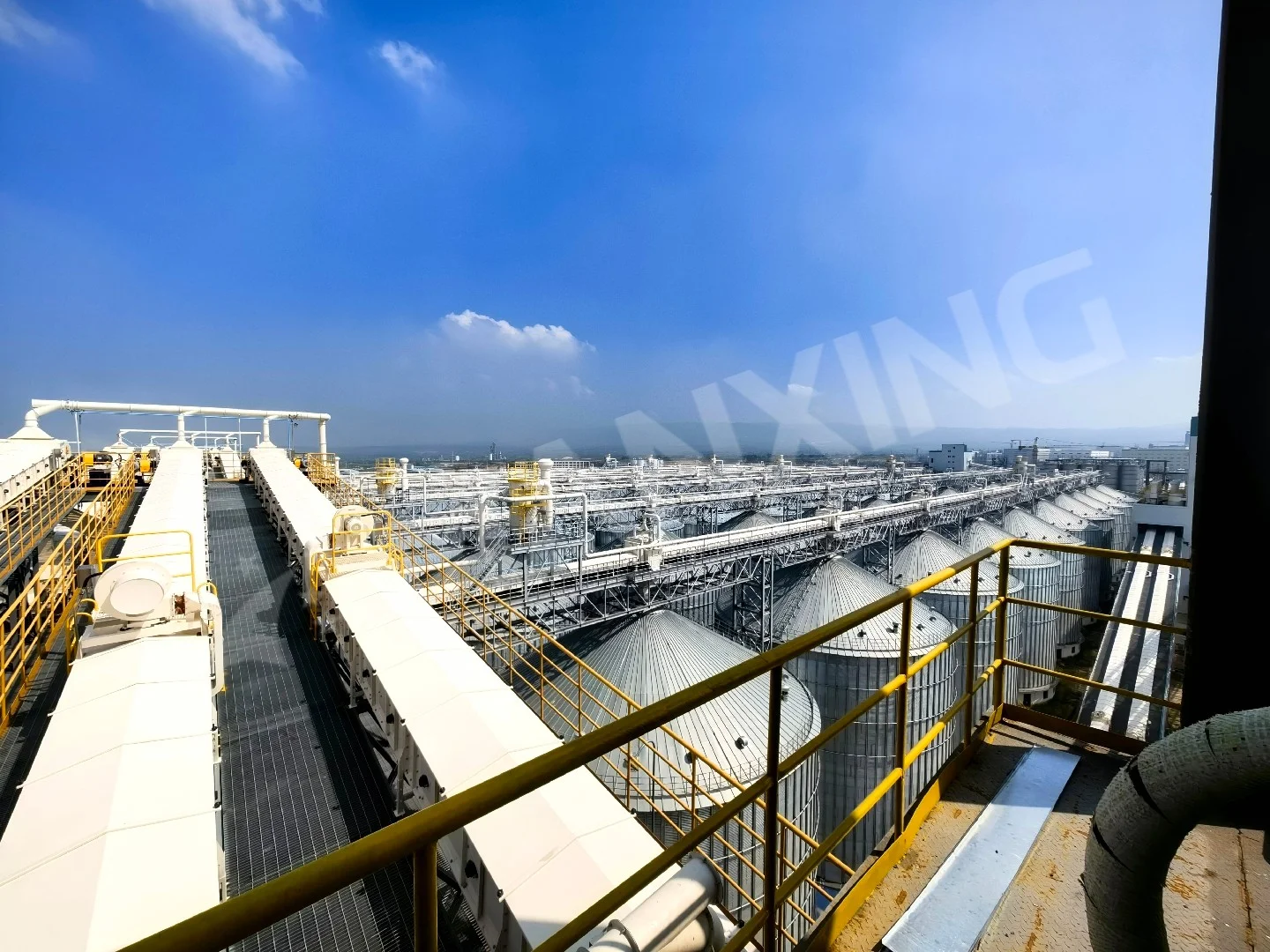


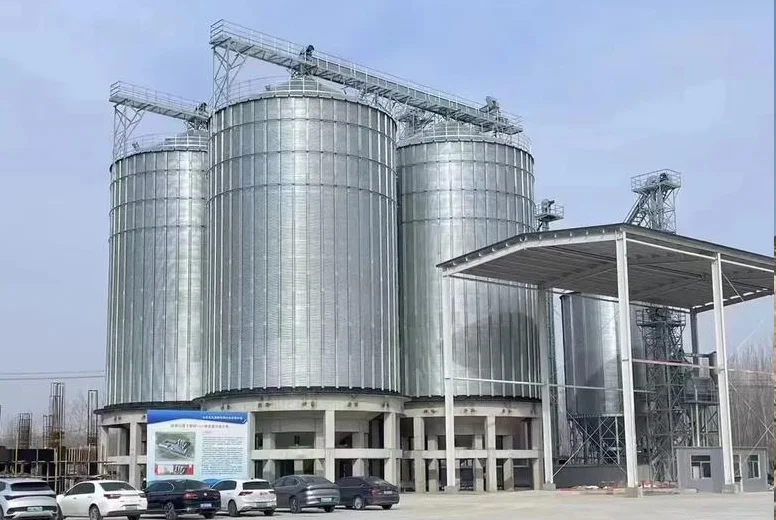
Concrete silos equipped with access doors represent the gold standard in bulk material storage, offering unparalleled structural integrity and customized entry solutions for agriculture, construction, and chemical industries. This guide explores the core advantages, design principles, and critical selection criteria to help you make a storage investment that delivers decades of reliable service.
Structural Advantages and Design Principles of Concrete Silos with Access Doors
Concrete silos occupy an irreplaceable position in bulk material storage due to their exceptional strength and durability. Compared to steel silos, concrete silos feature thicker walls capable of withstanding greater internal material pressure and external environmental loads, making them particularly suitable for storing high-density or corrosive materials. The access door, as a critical silo attachment, must balance structural safety with operational convenience. Modern concrete silo access doors are typically installed flush with the wall using an embedded mounting system, incorporating high-strength seals that maintain airtightness under frequent opening and closing cycles, preventing material leakage and external moisture ingress. This integrated design not only extends the silo's service life but also reduces long-term maintenance costs.
The positioning of access doors is the result of precise engineering calculations: top doors facilitate filling and ventilation inspection, side doors enable layered sampling and internal cleaning, while bottom doors directly serve discharge and cleanout operations. Eve
ry opening is reinforced with concrete ring beams or pre-embedded steel frames to compensate for any loss of structural strength, ensuring the silo's overall mechanical performance remains uncompromised.Optimizing Maintenance and Safety Through Access Door Design
Access doors are far more than simple entry points; they are essential safeguards for silo operational safety. In agricultural storage, regular internal inspections through access doors allow for early detection of caking, mold, or pest infestations, preventing the loss of entire batches of stored grain. In
cement and fly ash storage, access doors paired with pneumatic blockage-clearing systems can quickly resolve material bridging issues, significantly reducing downtime. From a safety perspective, modern access doors are universally equipped with dual-lock mechanisms and anti-misoperation interlocks to prevent accidental opening when the silo is under pressure or material is flowing. Furthermore, explosion-proof access doors are widely used in the chemical industry, featuring pressure-relief designs that directionally release energy during sudden internal pressure surges, thereby protecting the silo's main structure.Sealing and Automation Integration
High-quality access doors utilize EPDM or silicone rubber sealing strips that offer excellent aging resistance and compression recovery, ensuring reliable sealing performance across extreme temperatures ranging from -40°C to 80°C. For modern silos requiring automated management, access doors can be integrated with sensors and electric actuators, enabling remote open/close control and real-time status monitoring, which substantially enhances operational efficiency.
Material Selection and Corrosion Protection
Door frames in direct contact with concrete are typically constructed from hot-dip galvanized steel or stainless steel to prevent electrochemical corrosion. Door panel surfaces are treated with an epoxy zinc-rich primer plus polyurethane topcoat, providing weather resistance exceeding 10 years. For silos storing corrosive materials such as fertilizers or salts, all-stainless-steel access doors with Teflon seals are strongly recommended.
Key Takeaways
- Key Data: A concrete silo equipped with high-quality access doors can achieve a service life exceeding 50 years — 2 to 3 times that of a steel silo.
- Best Practice: Conduct a comprehensive internal inspection through access doors every quarter, with particular focus on seal aging and door panel deformation.
- Watch Out For: Never open an access door during the silo discharge process, as material ejection can cause serious safety incidents.
- Pro Tip: For large-diameter silos exceeding 15 meters, specify double-leaf access doors to reduce single-leaf weight and enable one-person operation.
- Bottom Line: The access door is not an afterthought — it is a structural component that, when properly specified, directly determines the silo's long-term reliability and safety.
Industry Applications and Selection Guide for Concrete Silo Access Doors
In the agricultural sector, concrete silos store grain, soybeans, and feed, requiring access doors with rodent-proof and insect-proof designs where door gap clearance does not exceed 6 mm. In the building materials industry, cement and mineral powder silos demand access doors with airtight locking mechanisms to prevent dust leakage. For chemical and food processing applications, access door materials must comply with food-grade or corrosion-resistant standards, typically utilizing 304 or 316L stainless steel. Selection decisions must consider silo diameter, material characteristics, operational frequency, and budget comprehensively. For scenarios requiring frequent entry, access doors with inspection windows are recommended to reduce the number of door openings.
Frequently Asked Questions
Q: What are the fundamental structural design differences between access doors for concrete silos versus steel silos?
A: The primary difference lies in the load-bearing system. Concrete silo access doors are typically installed using pre-embedded steel frames, where the frame is integrated with the concrete via anchor bars, transferring loads directly to the wall. In contrast, steel silo door frames are welded to the wall and require additional stiffeners to distribute stress. Consequently, concrete silo access doors are more robust but more difficult to retrofit later, while steel silo access doors offer greater installation flexibility but are prone to fatigue cracks at weld joints over extended service. Additionally, concrete silo access door seals are designed for rigid wall interfaces, whereas steel silo designs must account for the impact of wall flexibility on sealing performance.
Q: How can I verify whether a concrete silo access door meets required sealing standards? What simple field tests are available?
A: Sealing performance is a critical indicator. Field testing can employ several methods: the "paper strip test" — close the door and insert a thin strip of paper into the gap; if it can be easily pulled out, the seal is insufficient. The "smoke test" — release a small amount of safe smoke inside the silo and observe for smoke escaping around the door. For silos with high airtightness requirements, the "pressure decay test" — pressurize the silo to a set level and record the rate of pressure drop. During formal acceptance, verify that the compression ratio of the sealing strip is between 30% and 50%, and that the joint between the door frame and concrete is filled with elastic sealant. As a maintenance best practice, replace sealing strips annually to maintain optimal performance.
Q: What structural safety issues must be addressed when retrofitting an access door onto an existing concrete silo?
A: Adding an access door is a modification project that demands careful attention. First, a structural engineer must perform stress analysis on the silo wall to determine the opening location, avoiding high-stress zones and areas with dense reinforcement. Before cutting, use a rebar scanner to map the reinforcement within the wall, ensuring no primary reinforcing bars are severed. After the opening is created, a reinforcing steel frame or reinforced concrete ring beam must be installed around the perimeter, with its cross-section and reinforcement designed through calculation. The connection between the new frame and the existing concrete must be secured using chemical anchors or post-installed rebar, and the interface should be treated with a bonding agent to ensure monolithic action. Finally, a hydrostatic or air pressure test should be conducted to verify the integrity of the modified structure before returning the silo to service.
Q: For a cement silo with a 20-meter diameter, what access door configuration is recommended to balance structural integrity and operational convenience?
A: For a 20-meter diameter cement silo, we recommend a double-leaf access door configuration with a clear opening of at least 1.2 meters by 2.0 meters. Each leaf should be equipped with independent gas springs for assisted opening, reducing the force required to approximately 15 kg. The door frame should be fabricated from hot-dip galvanized steel with a minimum thickness of 6 mm, embedded into a reinforced concrete ring beam. The sealing system should utilize a dual-layer EPDM gasket with a compression stop to prevent over-compression. For dust control, integrate a pneumatic locking mechanism that engages automatically when the door is closed, ensuring an airtight seal compliant with cement industry emission standards.
Q: What are the specific requirements for access doors in food-grade grain storage silos regarding hygiene and pest prevention?
A: Food-grade grain storage silos require access doors manufactured from 304 stainless steel with a surface finish of Ra ≤ 0.8 μm to prevent bacterial growth and facilitate cleaning. All internal corners must have a minimum radius of 10 mm to eliminate crevices where pests or debris could accumulate. The door-to-frame gap must not exceed 6 mm to prevent rodent entry, and the sealing strip should be made of FDA-compliant silicone. Additionally, the door should incorporate a lockable handle with a padlock hasp to prevent unauthorized access, and the hinge pins must be removable for complete door disassembly during sanitation procedures. Regular inspection schedules should include checking for seal integrity and verifying that no material buildup occurs around the door perimeter.
Need expert concrete silo solutions for your project?
We provide professional design, manufacturing, and installation services for bulk storage and material handling systems worldwide, including custom access door configurations for any application.
Get a Free Technical Consultation →