
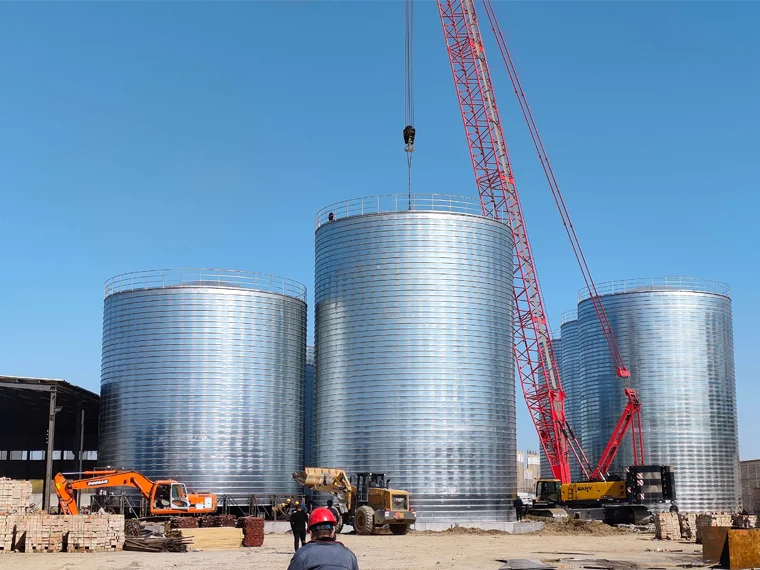
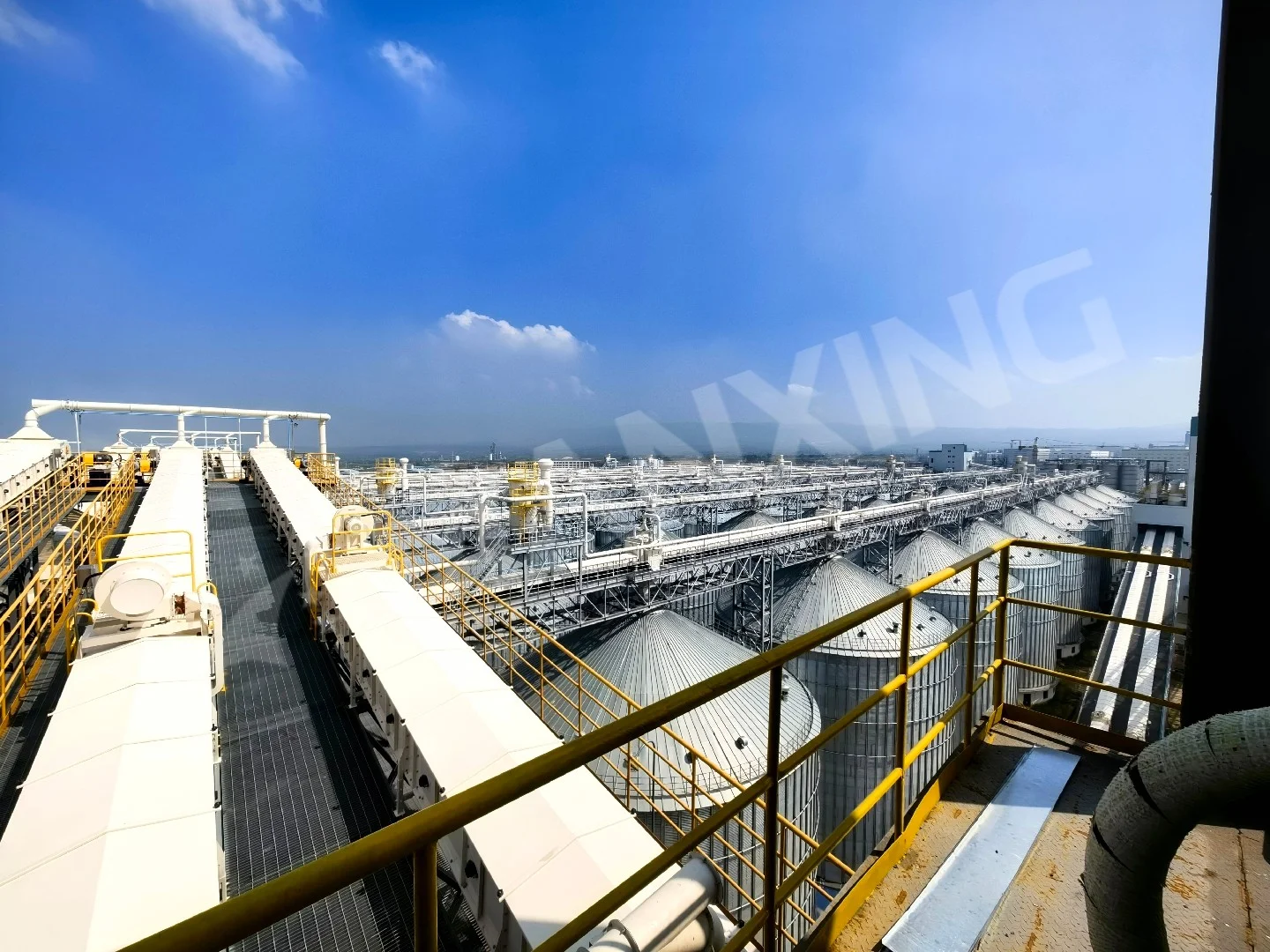


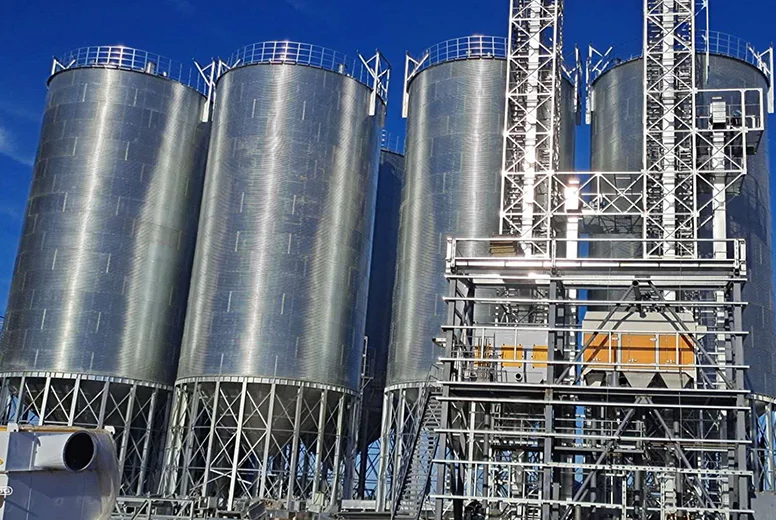
For modern flour mills, the efficiency of raw material and finished product storage directly dictates production line continuity and cost control. The hopper bottom steel silo, with its gravity-assisted discharge, zero-residue design, and compact footprint, has become the preferred upgrade solution for the flour milling industry. This comprehensive technical guide explores its structural principles, application scenarios, and common selection pitfalls to help you make an informed investment.
Structural Principles and Core Advantages of the Hopper Bottom Silo for Flour Mills
The hopper bottom silo—also known as a cone-bottom bin or conical-bottom silo—is defined by its large-angle conical base, typically inclined at 45° to 60°, combined with a central discharge outlet. This design enables complete, gravity-driven evacuation of bulk materials. It fundamentally eliminates the "dead zone" accumulation, caking, and pest infestation common in flat-bottom silos. In
a flour mill, whether storing raw grain like wheat and corn or intermediates like flour and bran, the hopper bottom ensures material flow follows the First-In-First-Out (FIFO) principle, preventing quality degradation from prolonged retention.From an engineering mechanics perspective, the conical structure converts vertical loads into circumferential tension, distributing stress more evenly across the silo wall. This makes the design particularly suitable for spiral-rolled or welded steel plate construction. Compared to concrete silos, steel hopper bottom silos are lighter, have lower foundation costs, and can reduce construction time by over 50%. For
urban flour mills where land costs are high, this vertical storage solution—"building upward for capacity"—delivers 3 to 5 times the storage efficiency per unit area of traditional warehouse-style storage.How Hopper Bottom Silos Solve Three Critical Pain Points in Flour Milling
In flour processing, material bridging, particle segregation, and excessive energy consumption are persistent operational headaches. The hopper bottom silo addresses each of these challenges through its engineered geometry and material flow dynamics. The steep cone angle (45° to 60°) ensures that materials like wheat, corn, flour, and bran flow freely without bridging, even when moisture content varies. This eliminates the need for mechanical agitators or air cannons, reducing both capital expenditure and maintenance costs.
Particle segregation—where heavier or larger particles separate from finer ones during discharge—is minimized because the central outlet creates a uniform flow profile. This is critical in flour milling, where consistent particle size distribution directly impacts extraction rates and final product quality. Furthermore, the gravity-assisted discharge reduces the energy required for material handling. Unlike flat-bottom silos that rely on screw conveyors or sweep augers to move material toward the outlet, the hopper bottom silo allows material to flow naturally, cutting energy consumption by up to 30% in some installations.
Eliminating Dead Zones and Contamination Risks
Flat-bottom silos often leave residual material in corners and along walls, creating breeding grounds for pests and mold. The hopper bottom design eliminates these dead zones entirely, ensuring that every kilogram of stored material exits the silo. This is particularly important for finished flour, which must meet strict food safety standards. With zero residue, cleaning between batches is faster and more thorough, reducing the risk of cross-contamination and enabling quicker product changeovers.
Optimizing Space Utilization in Urban Flour Mills
Urban flour mills face severe space constraints, making vertical storage essential. A hopper bottom silo with a diameter of 6 meters and a height of 15 meters can store over 400 tons of wheat, occupying less than 30 square meters of ground area. This is a 3 to 5 times improvement in storage density compared to warehouse-style storage, which requires extensive floor space for stacking and handling. For mills located in high-rent districts, this space efficiency translates directly into lower operating costs and higher profitability.
Key Takeaways
- Key Data: Hopper bottom silos reduce construction time by over 50% compared to concrete silos, while delivering 3–5× storage density over warehouse storage.
- Best Practice: Specify a cone angle of 45°–60° for flour mill applications to ensure complete gravity discharge and FIFO flow.
- Watch Out For: Avoid flat-bottom designs for flour or bran storage—dead zones lead to caking, pest infestation, and quality degradation.
- Pro Tip: Use spiral-rolled or welded steel plate construction for superior stress distribution and lower foundation costs.
- Bottom Line: The hopper bottom silo is the most cost-effective, space-efficient, and hygienic storage solution for modern flour mills.
Common Selection Pitfalls and How to Avoid Them
Despite its advantages, the hopper bottom silo is not a one-size-fits-all solution. One common mistake is selecting an insufficient cone angle. For flour and bran, which have higher cohesion and lower flowability, a cone angle of at least 55° is recommended. Angles below 45° can cause material bridging, especially in humid conditions. Another pitfall is neglecting the discharge outlet size. An outlet that is too small will restrict flow, leading to bottlenecks in the production line. The outlet diameter should be at least 3 to 4 times the maximum particle size of the stored material.
Foundation design is another critical factor. While steel hopper bottom silos are lighter than concrete alternatives, the concentrated load at the cone apex requires a properly designed foundation pad. For silos exceeding 500 tons capacity, geotechnical investigation is essential to avoid differential settlement. Finally, consider the material of construction. For food-grade applications, the interior surface must be smooth and free of crevices to prevent bacterial growth. Stainless steel or food-grade epoxy coatings are recommended for flour and bran storage.
Frequently Asked Questions
Q: What is the minimum cone angle required for a hopper bottom silo storing wheat?
A: For wheat, which has a typical angle of repose between 25° and 30°, a hopper cone angle of 45° is generally sufficient to ensure gravity flow. However, for flour and bran, which are more cohesive, a steeper angle of 55° to 60° is recommended to prevent bridging. Always consult with a silo engineer to determine the exact angle based on your specific material properties and moisture conditions.
Q: How does a hopper bottom silo compare to a flat-bottom silo in terms of maintenance?
A: Hopper bottom silos require significantly less maintenance than flat-bottom silos. Because material discharges completely by gravity, there is no need for mechanical sweep augers, screw conveyors, or air cannons to clear residual material. This eliminates the most common maintenance headaches. Additionally, the absence of dead zones reduces the risk of pest infestation and mold growth, which are frequent issues in flat-bottom designs. Cleaning between batches is also faster, as the smooth conical surface can be easily washed down.
Q: Can a hopper bottom silo be used for both raw grain and finished flour storage?
A: Yes, hopper bottom silos are versatile and can store both raw grains (wheat, corn, barley) and milled products (flour, bran, middlings). However, different materials may require different cone angles and discharge outlet sizes. For example, raw wheat with a lower moisture content flows easily at 45°, while fine flour may need a 55° to 60° angle. If the same silo will be used for multiple materials, consider a variable-angle cone or a larger outlet to accommodate the most challenging material.
Q: What is the typical lifespan of a steel hopper bottom silo in a flour mill?
A: With proper design, fabrication, and maintenance, a steel hopper bottom silo can last 25 to 35 years or more. Key factors affecting lifespan include the quality of the steel (typically Q235B or Q355B), the thickness of the wall plates (usually 3–6 mm for small to medium silos), and the effectiveness of the protective coating. Regular inspections for corrosion, especially at weld joints and the cone apex, are recommended every 5 years. Hot-dip galvanizing or food-grade epoxy coatings can significantly extend service life in humid environments.
Q: How does the hopper bottom silo support FIFO (First-In-First-Out) inventory management?
A: The conical geometry of the hopper bottom silo naturally promotes FIFO flow. As material is loaded from the top, it settles in layers. When the central outlet is opened, material from the bottom of the silo—the first material loaded—discharges first. This is in stark contrast to flat-bottom silos, where material near the walls can remain stagnant for months, leading to quality degradation. For flour mills, FIFO is critical for maintaining consistent freshness and preventing spoilage of intermediates like bran and middlings.
Q: What are the foundation requirements for a large hopper bottom silo in a flour mill?
A: The foundation for a hopper bottom silo must support the concentrated load at the cone apex, which can be several hundred tons for large silos. A reinforced concrete ring foundation or a full concrete pad is typically required. For silos exceeding 500 tons capacity, a geotechnical investigation is essential to assess soil bearing capacity and avoid differential settlement. The foundation should also include provisions for anchoring the silo against wind loads, especially in areas prone to high winds or seismic activity.
Need expert hopper bottom silo solutions for your flour mill?
We provide professional design, manufacturing, and installation services for bulk storage and material handling systems worldwide. Our team of engineers can help you select the optimal cone angle, material specification, and foundation design for your specific application.
Get a Free Technical Consultation →