


Corrosion in steel silos isn’t a matter of if, but when. Without active monitoring, you’re flying blind on asset integrity—and the average unplanned silo repair runs $50,000 to $200,000. Here’s how to catch corrosion before it catches you.
Key Takeaways
- Core Data Point: Electrochemical noise monitoring can detect pitting corrosion rates as low as 0.01 mm/year—far earlier than visual inspection.
- Best Practice: Deploy a layered monitoring strategy: ultrasonic thickness gauging quarterly, real-time corrosion probes in high-risk zones, and annual visual inspections.
- Risk Alert: Silo floors and the first 2 meters of wall above the discharge cone see 3–5× higher corrosion rates due to moisture and abrasion—these zones are often missed by standard inspection plans.
Why Passive Inspection Fails: The Limits of Visual Checks
Walking a silo and looking for rust is the oldest trick in the book—and it’s also the least reliable. By the time you see orange-brown staining or flaking scale on a flat bottom steel silo, the underlying steel has already lost 20–30% of its original thickness in that spot. Corrosion doesn’t announce itself; it eats from the inside out, especially under coatings or inside weld seams.
Thermal imaging can catch some subsurface moisture traps, but it misses localized pitting—the kind that punches a hole through a 6 mm wall in under two years if the stored material is hygroscopic or slightly acidic. For grain storage, the combination of temperature swings and condensation inside the headspace creates a perfect electrolyte film on the upper shell plates. Without a quantitative monitoring protocol, you’re relying on luck. And luck isn’t a maintenance strategy.
Sensor Technologies That Actually Work in Silo Environments
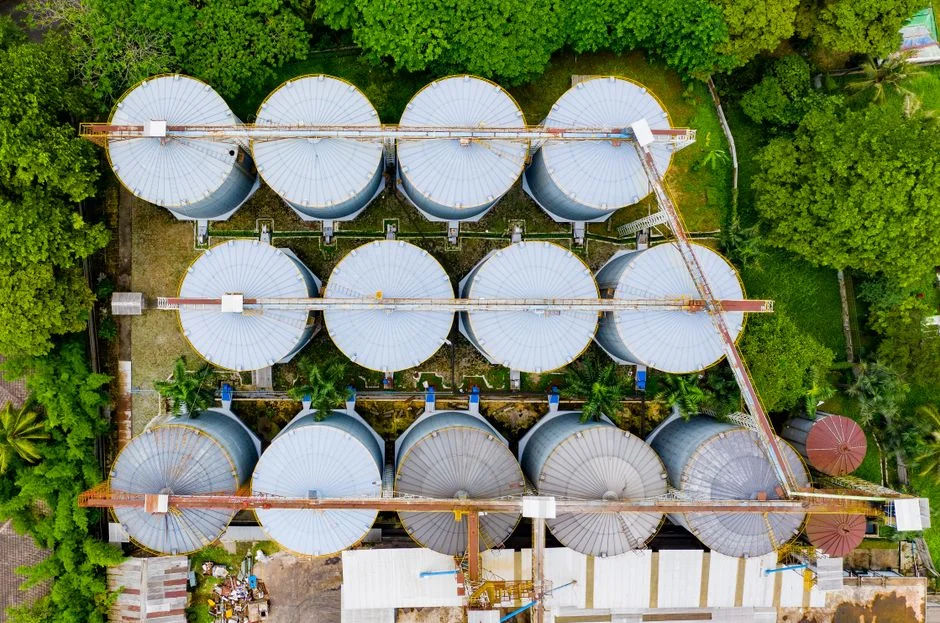
Real-time corrosion monitoring has moved out of the lab and into the field. Electrochemical impedance spectroscopy (EIS) probes can measure coating degradation and general corrosion rates continuously, while electrochemical noise (EN) sensors pick up the random current spikes that signal active pitting. For a typical 20-meter-diameter silo, installing 4–6 probes at critical elevations—near the inlet zone, at the cone-to-wall transition, and inside the headspace—gives you a live map of corrosion activity.
Ultrasonic thickness gauging remains the workhorse, but it’s only as good as the grid you scan. A 100 mm × 100 mm grid on a 10,000 m² shell surface means 10,000 measurement points. That’s impractical. Smart practice: focus on the bottom 3 meters and any area within 1 meter of a weld or stiffener ring. Those zones account for 80% of all corrosion-related failures in bolted silos. Pair that with wireless data loggers that send thickness trends to your CMMS, and you’ve got a system that flags a 0.5 mm loss before it becomes a leak.
Corrosion Monitoring by Silo Type: Matching the Method to the Structure
Not all silos corrode the same way. A hopper bottom silo with strong bolts sees concentrated wear at the discharge cone, where material flow scours the coating. Here, focused ultrasonic grids on the cone plates plus a sacrificial coupon rack inside the hopper give you both real-time and cumulative loss data. For a flat bottom silo for cooperative farm storage, the floor-to-wall joint is the critical zone—standing water from cleaning operations accelerates crevice corrosion. Install a flush-mounted EIS probe at that joint and monitor moisture cycles.
Sensor Placement: The 80/20 Rule
You don’t need to monitor every bolt. Place probes at three elevations: 1) the lowest 0.5 m of wall (splash zone), 2) the midpoint of the cylindrical section (condensation zone), and 3) the top ring (headspace corrosion). This covers 90% of failure points with less than 10% of the sensor cost of full coverage.
The False Economy of “Inspect Later”
I’ve seen operators skip corrosion monitoring for five years, then find a 3 mm hole in the cone during a plugged discharge. The repair cost was $85,000 and two weeks of downtime. A $4,000 sensor suite would have flagged the trend in year two. Don’t make that mistake.
Data-Driven Maintenance: Turning Corrosion Readings Into Action
Collecting data is useless if it sits in a spreadsheet. The goal is a corrosion rate threshold that triggers a work order. For carbon steel in dry grain storage, a rate above 0.1 mm/year is a yellow flag; above 0.25 mm/year demands immediate coating repair. For a hopper bottom silo for flour mill handling finer, more abrasive material, that threshold drops to 0.05 mm/year because the fines abrade the protective oxide layer faster.
Integrate your monitoring system with a simple dashboard that shows trending over 6, 12, and 24 months. If you see a consistent upward slope in corrosion rate at a specific elevation, you’re looking at a coating failure or a condensation issue—not random variation. Budget for a targeted repair in the next outage window. And always cross-reference sensor data with the product’s moisture content at fill time. A wet batch can spike corrosion rates for weeks afterward.
Frequently Asked Questions
Q: How often should I replace corrosion probes in a grain silo?
A: Replace electrochemical probes every 2–3 years, or sooner if the coating on the probe itself shows wear. Sacrificial coupons should be extracted and weighed annually. In high-abrasion zones like the hopper cone, coupons may need replacement every 6 months.
Q: Can I use corrosion monitoring data to extend my silo’s design life?
A: Yes, but only if you have at least 5 years of continuous data showing corrosion rates below 0.05 mm/year. With that evidence, a professional engineer can re-rate the remaining shell thickness and extend service life by 10–15 years. Without data, insurance and regulators will stick to the original design life.
Q: What’s the cheapest way to start monitoring corrosion on an existing silo?
A: Start with ultrasonic thickness measurements on a fixed grid—100 points total, focused on the bottom 3 meters and all weld seams. That costs about $1,500–$2,500 for a single silo. Then add one wireless EIS probe at the most corrosion-prone location for continuous data. That’s the minimum viable monitoring system.
Q: Do bolted silos corrode faster than welded ones?
A: Generally yes, because the bolt holes and lap joints create crevices that trap moisture. The corrosion rate at a bolted joint can be 2–3× higher than on a flat plate. That’s why bolt torque checks and sealant integrity inspections should be part of your monitoring program for bolted silos.
Q: How does stored product pH affect sensor selection?
A: For neutral products like wheat or corn (pH 5.5–7), standard carbon steel probes work fine. For acidic products like wet distillers grains (pH 3.5–4.5), you need Hastelloy or titanium probes to avoid the sensor itself corroding. Always match probe metallurgy to the most aggressive product you store.
Q: Should I monitor both internal and external corrosion?
A: Absolutely. External corrosion from rain and condensation is often slower but more widespread. Internal corrosion is faster but localized. A complete program includes external visual inspections and coating thickness checks every 2 years, plus internal ultrasonic and probe monitoring on the schedule above.
Looking for Professional Silo Storage Solutions?
We provide customized design, manufacturing, and installation services for steel silo systems worldwide, including corrosion monitoring integration.
Get Your Free Technical Consultation →