

1. Client Background & Needs Analysis
The Client
Our client is one of Rwanda’s fastest-growing agro-processors, sourcing maize from smallholder farmers across the Eastern and Northern Provinces. Their core business includes bulk maize storage, feed milling, and export-grade grain supply to regional markets including the Democratic Republic of Congo, Uganda, and Tanzania.
The Challenge
Prior to this project, the client relied on fragmented rented warehouses and manual grain handling operations. This resulted in high storage losses, limited intake capacity during harvest season, inconsistent drying quality, and inefficient export loading.
| Pain Point | Impact on Business |
|---|---|
| Post-harvest losses | Poor aeration and pest infestation caused 12–15% spoilage during the six-month rainy season. |
| Bottlenecks at intake | During peak harvest (February–May), trucks queued for 8–10 hours, forcing farmers to sell to competitors. |
| Inconsistent drying | Sun-drying was unreliable. Moisture content varied between 14–18%, resulting in rejection by regional millers requiring ≤14% moisture. |
| No bulk-out capability | Manual loading of 50 kg bags achieved only 4–5 tons/hour and required intensive labor. |
Client Requirements
Receive 50–70 tons/hour from trucks during peak harvest.
Clean incoming maize to ≤2% impurities.
Continuous drying capacity of 200 tons/day.
Reduce grain moisture from 18% to 13.5% in one pass.
Store 10,000 tons safely for up to eight months.
Aeration storage without chemical fumigation.
Automatic bagging at 12.5–15 tons/hour.
Suitable for export and local feed production.
Balanced, automated grain handling process.
2. Our Designed Solution
We proposed a fully integrated, flow-balanced grain handling system designed around the philosophy of "Capacity-Matched, Automated, and Climate-Resilient." Every section—from truck reception to export bagging—was engineered to eliminate bottlenecks while maximizing grain quality and operational efficiency.
A. Reception & Pre-Cleaning
A heavy-duty intake pit with reinforced steel grating was installed to receive tipper trucks at 50–70 tons/hour. Incoming maize first passes through a drum scalper and pre-cleaner to remove cobs, stones, and oversized debris before entering the aspiration system. A primary aspirator then removes dust and light impurities, improving downstream drying performance.
B. Cleaning Section
The cleaning system consists of a high-capacity gravity separator and a disc separator operating in parallel. Both units are rated at 50–70 tons/hour, ensuring the cleaning process fully matches the intake capacity without creating production bottlenecks during peak harvest.
C. Continuous Drying System
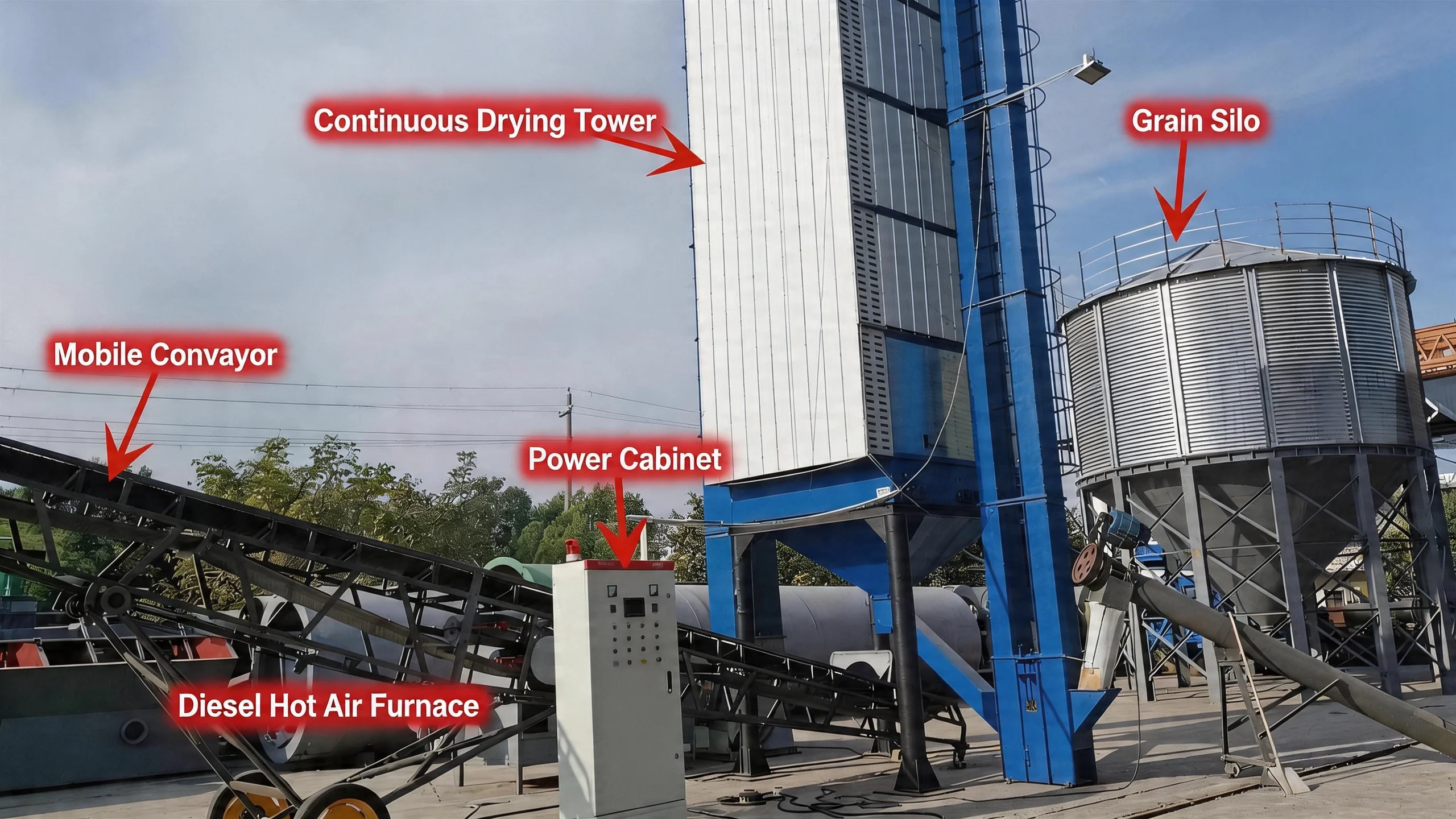
The drying system forms the core of the entire grain handling facility. We installed a 200 TPD Continuous Flow Grain Dryer utilizing advanced mixed-flow drying technology to ensure high drying efficiency, uniform moisture reduction, and continuous operation throughout the harvest season.
Dryer Type
200 TPD Continuous Flow Tower Dryer
Mixed-flow drying technology
Integrated cooling section
Continuous operation
Heating System
Biomass furnace
Maize cobs as fuel
Rice husks supported
Reduced operating cost
Moisture Control
Online NIR moisture sensor
Automatic temperature adjustment
Outlet moisture ≤13.5%
Consistent drying quality
D. Temporary Storage & Cooling
Immediately after drying, hot maize is transferred into a dedicated cooling silo with a storage capacity of approximately 70–100 tons. Ambient air is forced through the grain mass for approximately 4–6 hours, reducing grain temperature from around 40°C to ambient conditions before long-term storage.
Cooling Benefits
Prevents condensation inside storage silos.
Maintains stable grain temperature.
Reduces spoilage risks.
Improves long-term storage performance.
E. Main Storage System
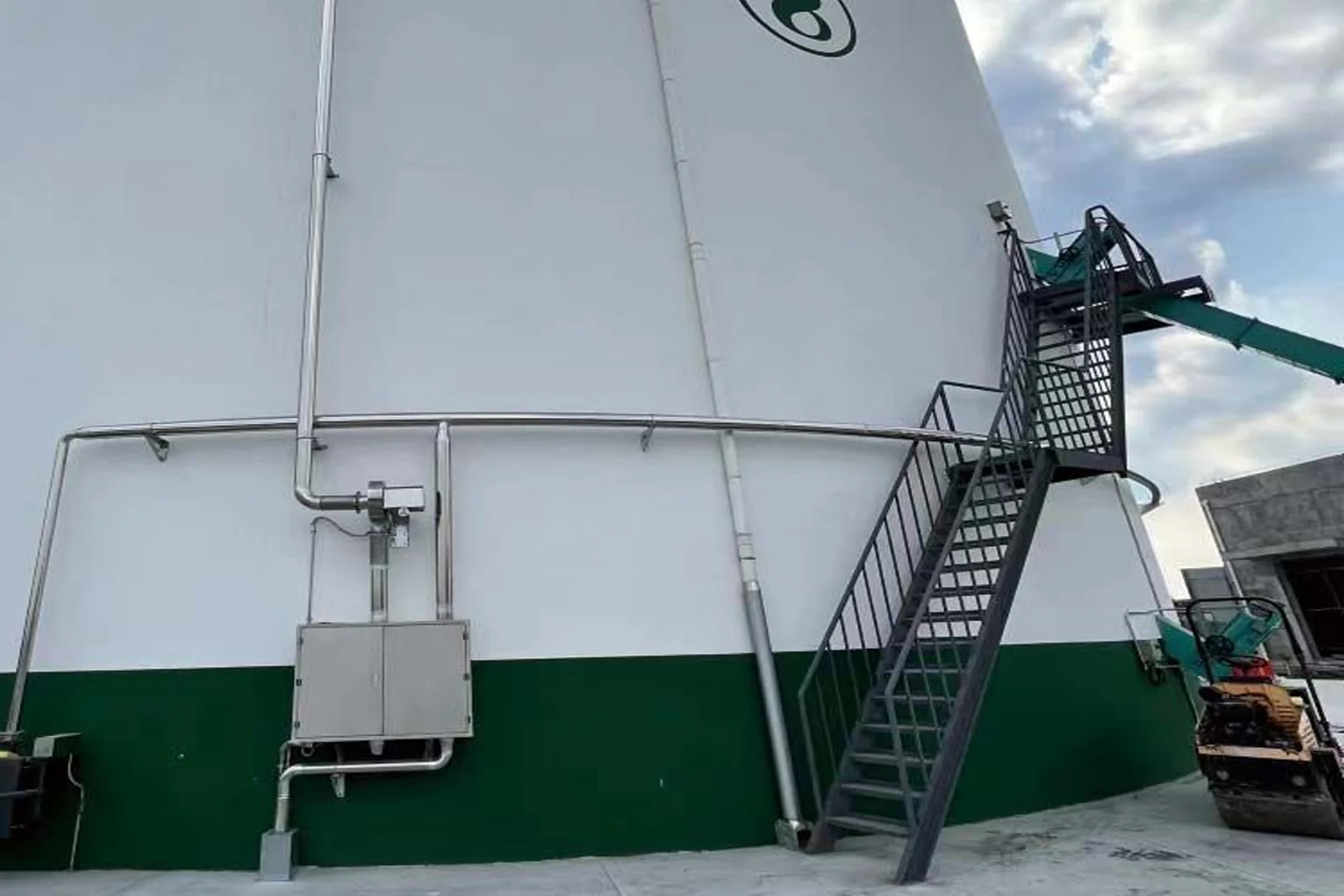
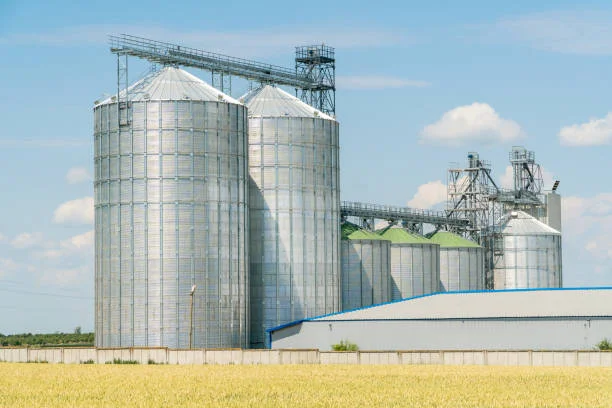
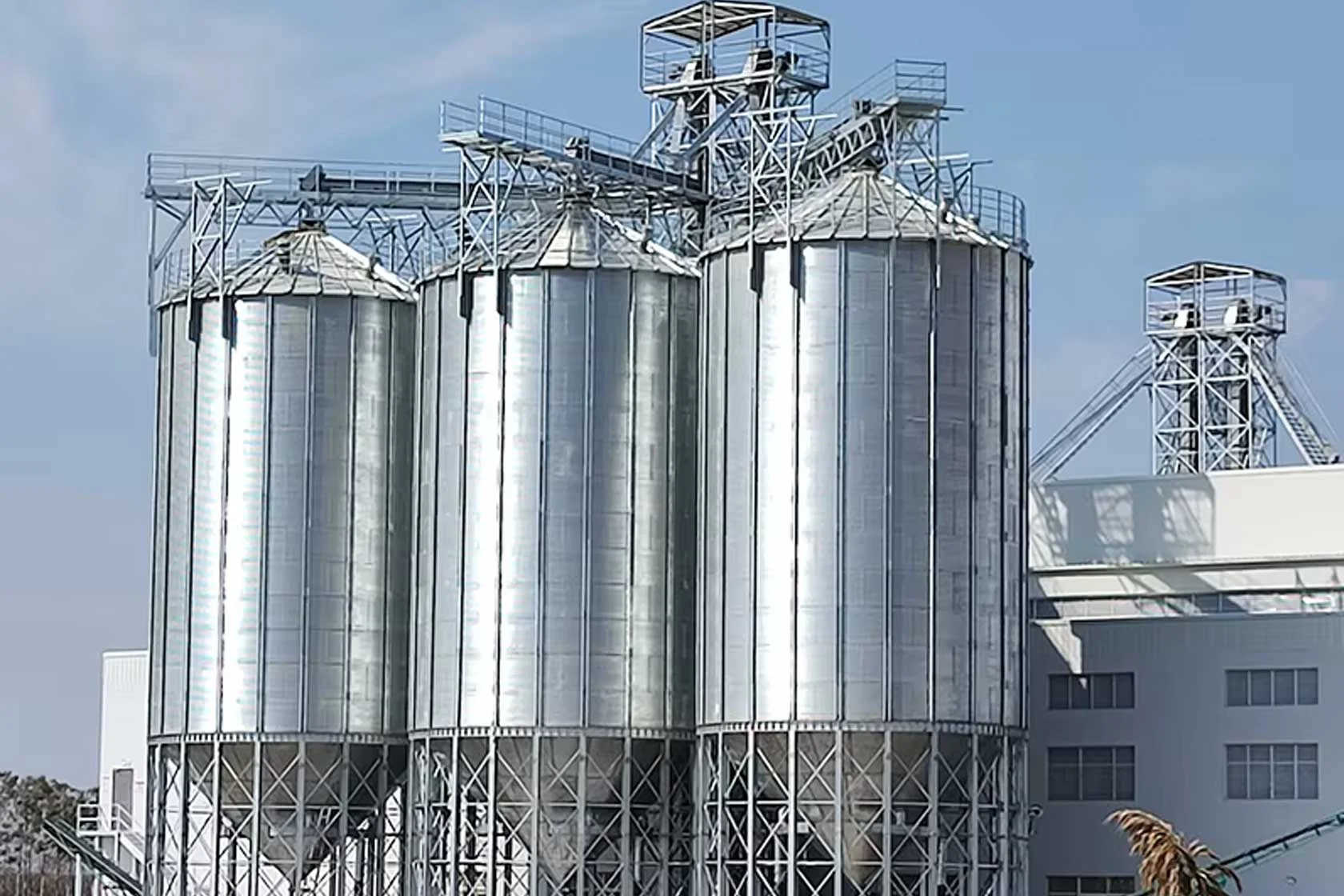
Long-term storage consists of four bolted steel silos, each providing a storage capacity of 2,500 tons, giving the facility a total storage capacity of 10,000 MT.
Main Storage Silos
4 × 2,500 MT Bolted Steel Silos
Total Capacity: 10,000 MT
Hot-dip galvanized structure
Long service life
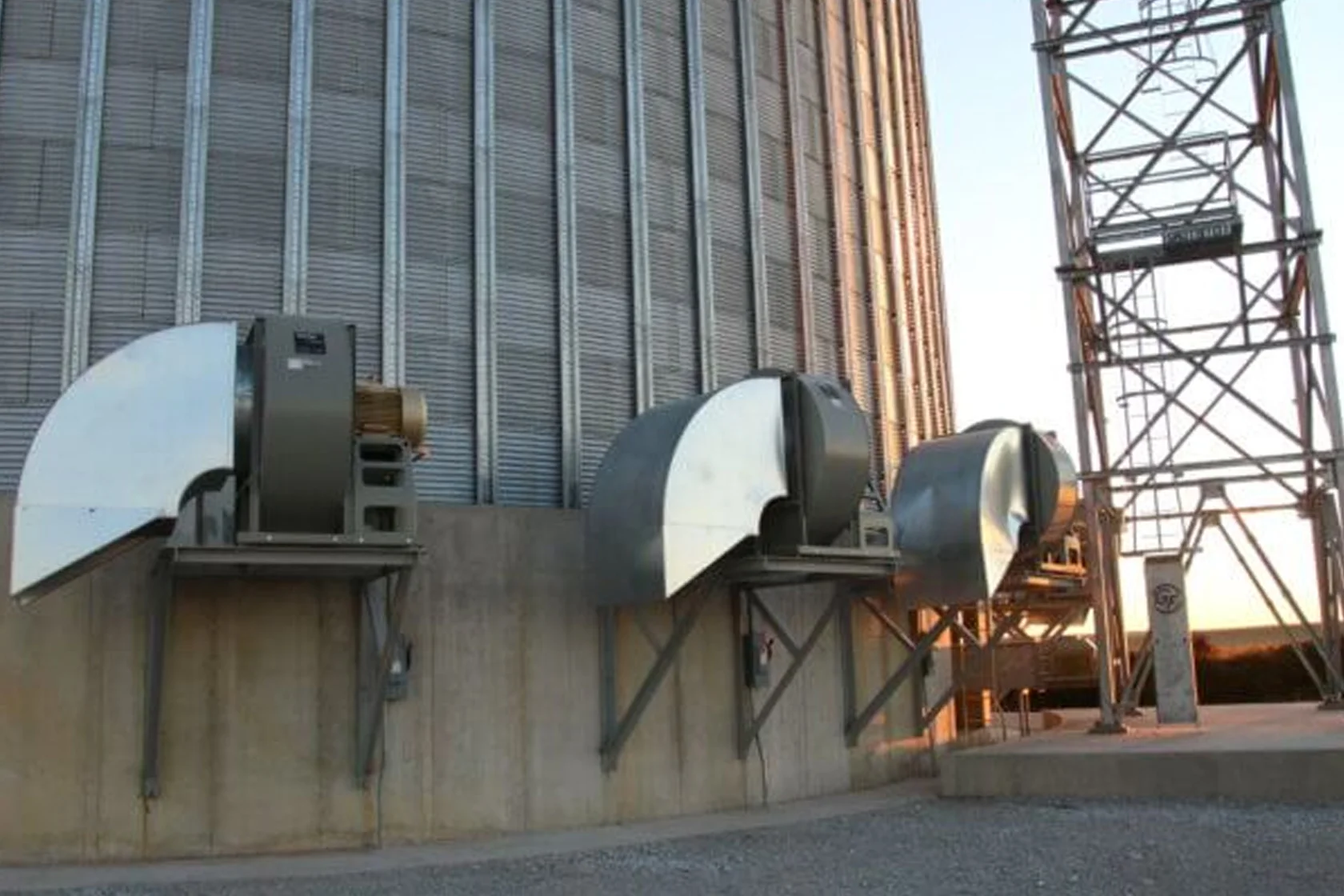
Aeration System
Floor air plenum
Dual centrifugal fans
Low-pressure / High-volume airflow
Grain temperature below 15°C
Monitoring
24-point temperature cables
Real-time hotspot detection
Central SCADA monitoring
Automatic alarm system
F. Conveying & Outbound Handling
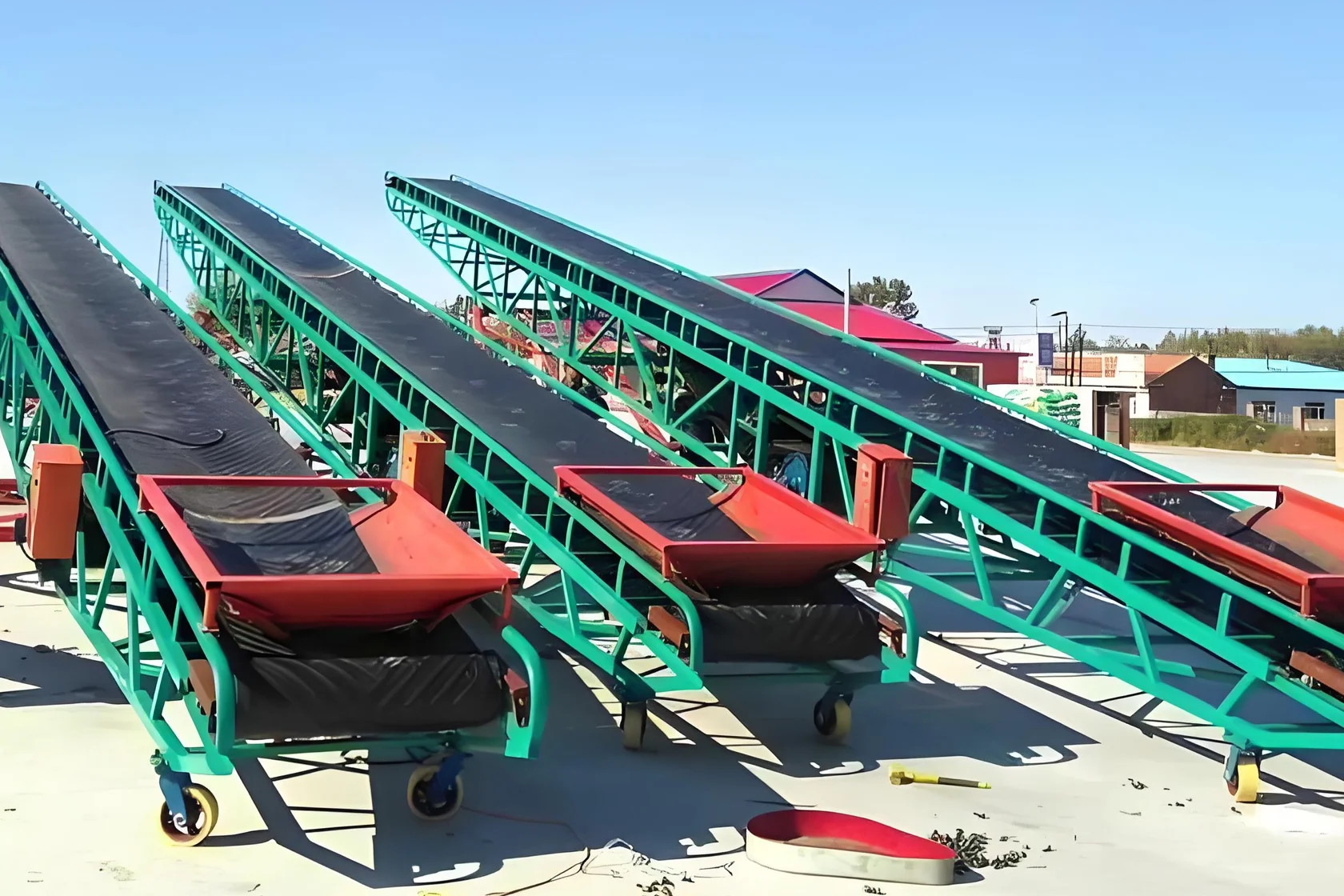
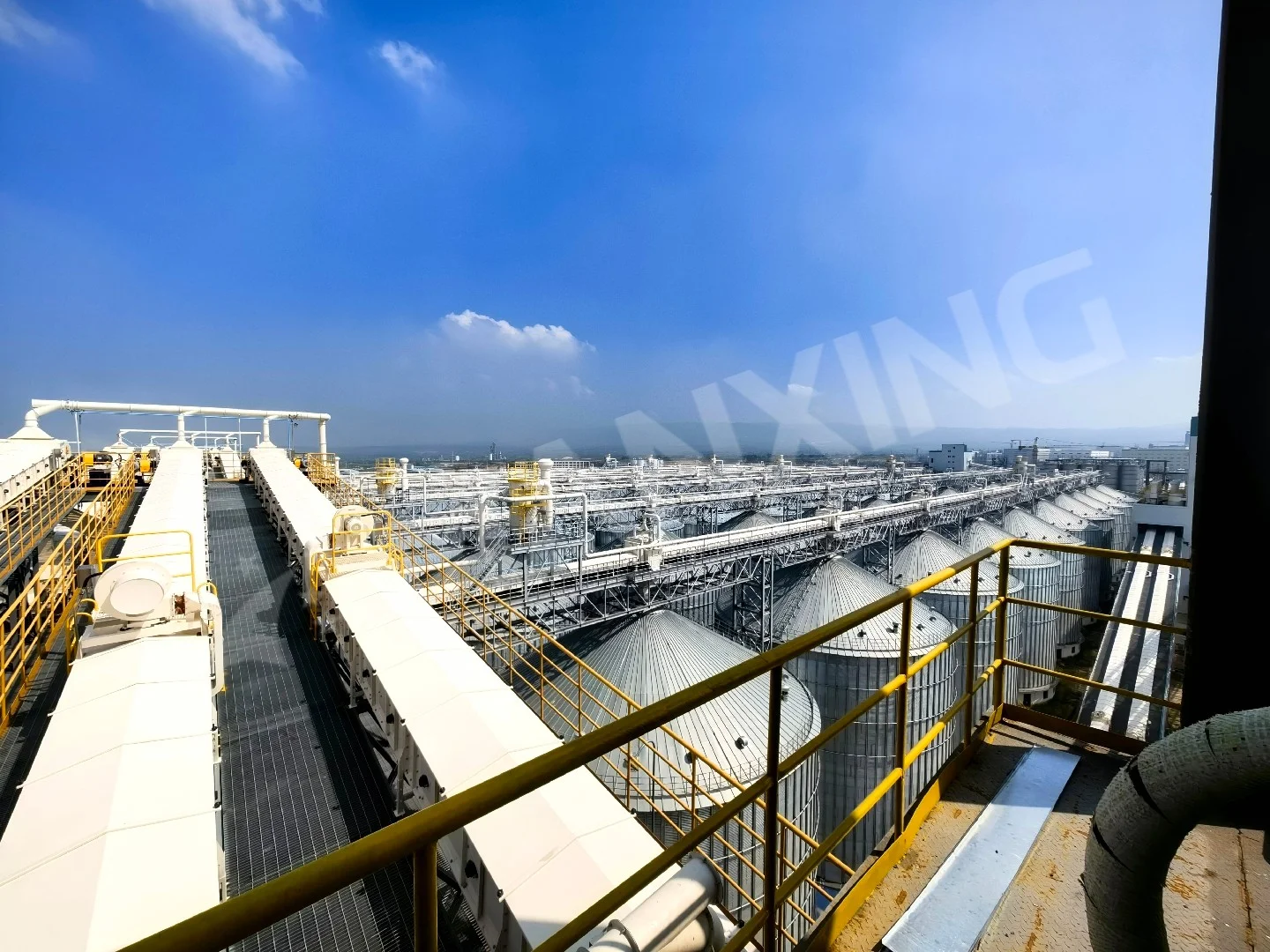
Heavy-duty belt conveyors rated at 50–70 tons/hour transport maize efficiently throughout the storage complex. A dedicated 100-ton discharge silo serves as a surge hopper, ensuring uninterrupted grain supply to the export bagging system.
Heavy-duty Belt Conveyors
Capacity: 50–70 TPH
Continuous conveying
100 Ton Discharge Silo
Buffer storage
Stable material supply
Flow-balanced layout
Automatic material transfer
Reduced manual handling
G. Automatic Bagging System
For export-ready packaging, the project includes a fully automatic bagging system capable of filling 50 kg polypropylene bags at a capacity of 12.5–15 tons/hour. The bagging line is integrated with automatic sewing equipment and a semi-automatic palletizing system.
Bagging Line Features
Automatic weighing system
50 kg export bag filling
Double-needle sewing head
Semi-automatic palletizing
Approximately 70% reduction in manual labor
H. Weighbridge & Logistics
To improve logistics efficiency and inventory accuracy, a 3 × 18 m, 100-ton digital weighbridge with Truck Management System (TMS) was installed. The system records all inbound and outbound truck weights while integrating directly with the client's ERP platform.
Truck Management Functions
Inbound truck weighing
Outbound truck weighing
ERP integration
Automatic record generation
Theft and fraud prevention
3. Operational Process Flow
| Stage | Equipment | Flow Rate | Function |
|---|---|---|---|
| 1. Intake | Receiving Pit + Bucket Elevator | 50–70 TPH | Truck unloading into receiving hopper. |
| 2. Cleaning | Pre-cleaner + Disc Separator | 50–70 TPH | Removal of stones, broken kernels, dust and chaff. |
| 3. Drying | 200 TPD Continuous Grain Dryer | ≈8.3 TPH | Moisture reduction from 18% to 13.5%. |
| 4. Cooling | 70–100 Ton Cooling Silo | Batch Holding | Cooling grain to ambient temperature. |
| 5. Storage | 4 × 2,500 MT Steel Silos | 10,000 MT | Long-term storage with aeration and monitoring. |
| 6. Outload | Discharge Silo + Belt Conveyors | 50–70 TPH | Transfer grain to bagging station. |
| 7. Bagging | Automatic Bagging Line | 12.5–15 TPH | Export-ready 50 kg bag filling. |
| 8. Weighing | 100 Ton Digital Weighbridge | Per Truck Cycle | Inbound and outbound weight verification. |
4. Key Design Innovations for the Rwandan Context
To maximize long-term operational efficiency and reduce operating costs, the entire grain handling facility was customized according to Rwanda's climate, energy availability, and agricultural production characteristics.
Biomass Heating System
Instead of conventional diesel burners, the drying tower is powered by a biomass furnace utilizing maize cobs and rice husks generated by the client. This renewable heating solution reduces drying fuel costs by approximately 60% while supporting Rwanda's sustainable agricultural development strategy.
Solar Pre-Drying Design
A translucent canopy was installed above the receiving pit to utilize passive solar energy before mechanical drying. This simple design reduces surface moisture and improves drying efficiency while lowering energy consumption.
Modular Bolted Steel Silos
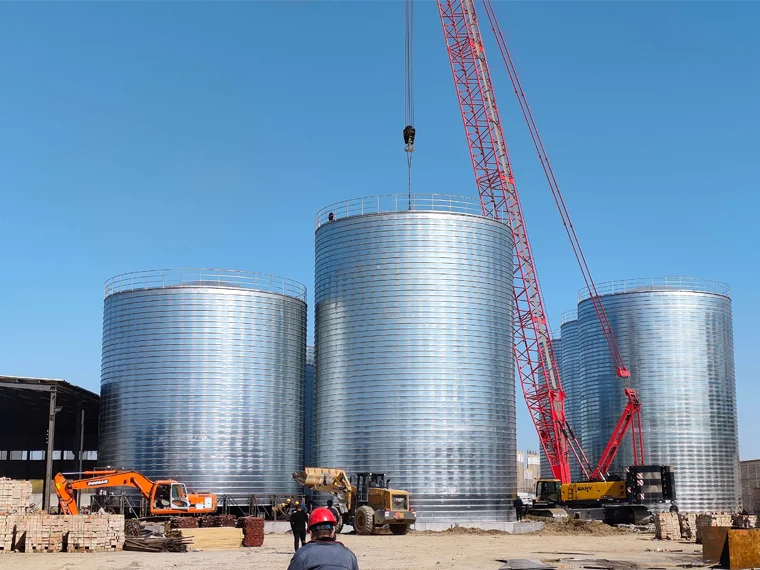
Bolted steel silos were selected instead of welded structures to simplify transportation, reduce installation time, utilize local labor, and provide convenient future expansion by adding two additional storage silos.
Backup Power System
A diesel generator equipped with an Automatic Transfer Switch (ATS) guarantees uninterrupted operation of aeration fans and monitoring equipment during power outages, preventing grain spoilage and protecting stored inventory.
5. Project Results & Client Benefits
Following commissioning in March 2026, the storage complex operated continuously throughout the harvest season. After six months of operation, the client reported significant improvements in productivity, storage performance, and operating efficiency.
| Performance Metric | Before | After Our Solution | Improvement |
|---|---|---|---|
| Truck Intake Speed | 15–20 TPH | 55–65 TPH | Approximately 3× Faster |
| Drying Capacity | 40 TPD | 200 TPD Continuous | 5× Higher Capacity |
| Storage Loss | 12–15% | <2% | Saved Approximately 1,200 Tons Per Year |
| Bagging Capacity | 4–5 TPH | 13–14 TPH | Nearly 3× Faster |
| Labor Requirement | 22 Workers / Shift | 8 Operators / Shift | Reduced Labor Cost by About 60% |
Project Achievements
Truck waiting time during harvest was virtually eliminated.
Continuous drying achieved stable moisture content of ≤13.5%.
Aeration and temperature monitoring reduced storage loss to below 2%.
Export bagging capacity successfully met regional delivery schedules.
Automated operation significantly reduced manpower requirements.
Biomass heating lowered drying fuel costs by more than 60%.
Client Testimonial
"This system has transformed our business. For the first time, we can confidently purchase 10,000 tons of maize during the harvest season, store it safely for long periods, and package grain efficiently to satisfy regional export contracts. The biomass drying system alone has reduced our fuel expenses by more than 60%. This project represents exactly the type of modern grain infrastructure Rwanda's agricultural industry needs."
— Managing Director
Leading Agricultural Company, Rwanda
6. Conclusion
This project demonstrates how an integrated grain handling solution can dramatically improve storage efficiency, grain quality, and overall operational performance. By carefully matching the capacity of every major component—from the 50–70 TPH receiving pit and cleaning line to the 200 TPD continuous dryer, 10,000 MT storage system, and 12.5–15 TPH automatic bagging line—the entire process operates smoothly without production bottlenecks.
The combination of intelligent automation, biomass heating technology, advanced aeration systems, and modular steel silos enables the client to safely purchase, dry, store, and distribute maize throughout the year while minimizing operating costs and protecting grain quality.
Today, this 10,000 MT maize storage complex serves as a benchmark project for modern grain handling and storage infrastructure across East Africa, providing an efficient, environmentally friendly, and highly reliable solution for commercial grain processing operations.
Looking for a Complete Grain Storage Solution?
Whether you are planning a grain storage facility, feed mill, grain depot, commercial silo complex, or agricultural processing plant, Manxing provides complete turnkey EPC solutions including grain receiving, cleaning, drying, conveying, storage, aeration, monitoring, bagging, and intelligent control systems.