
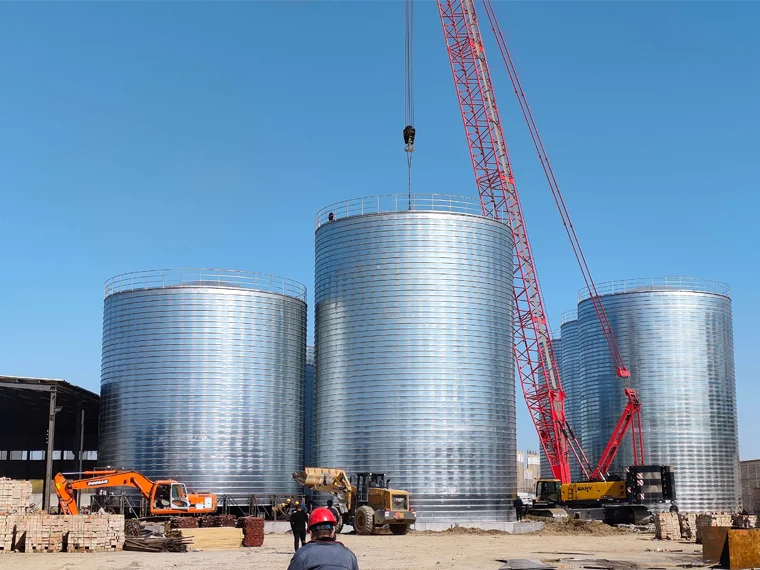
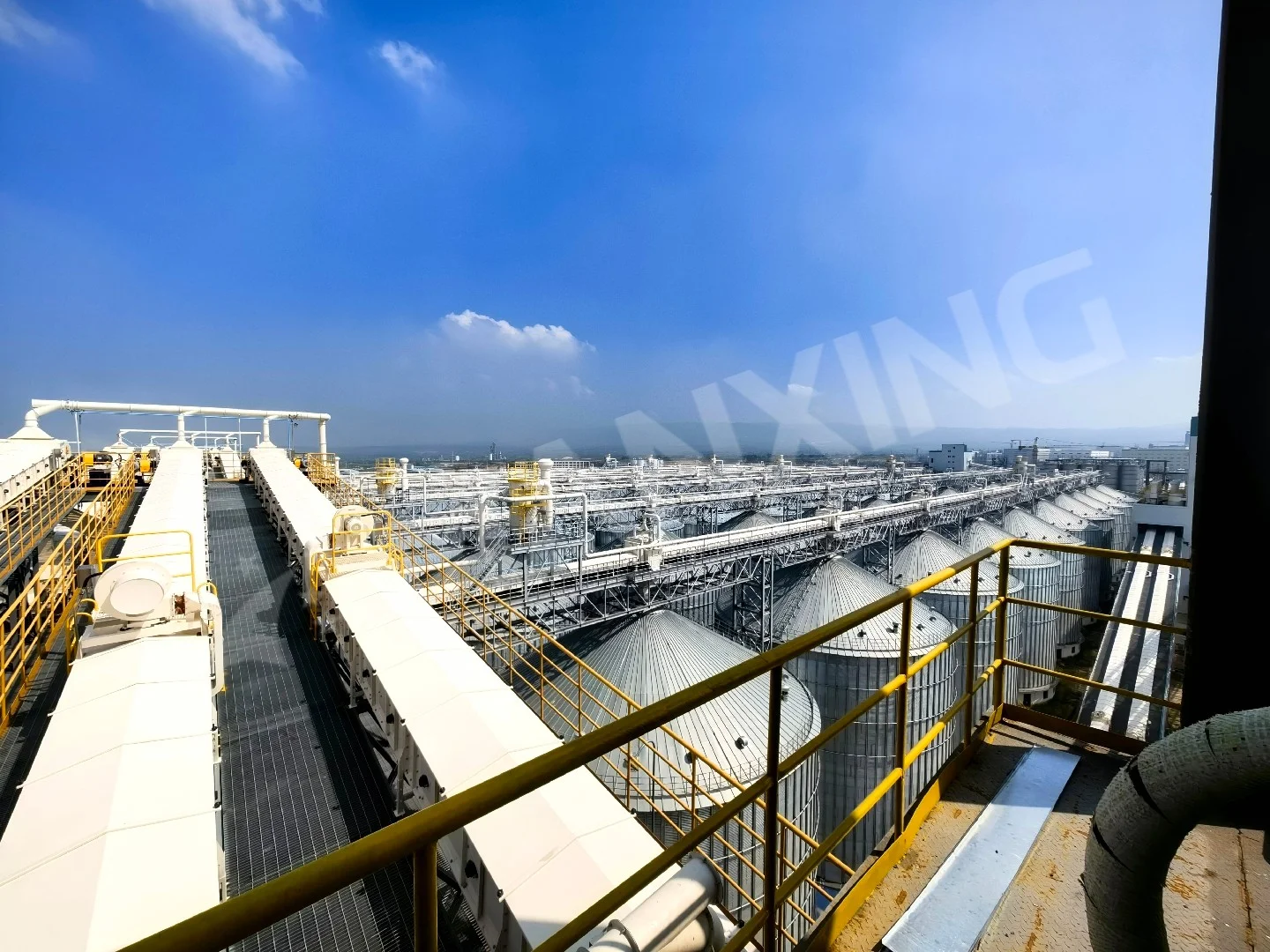


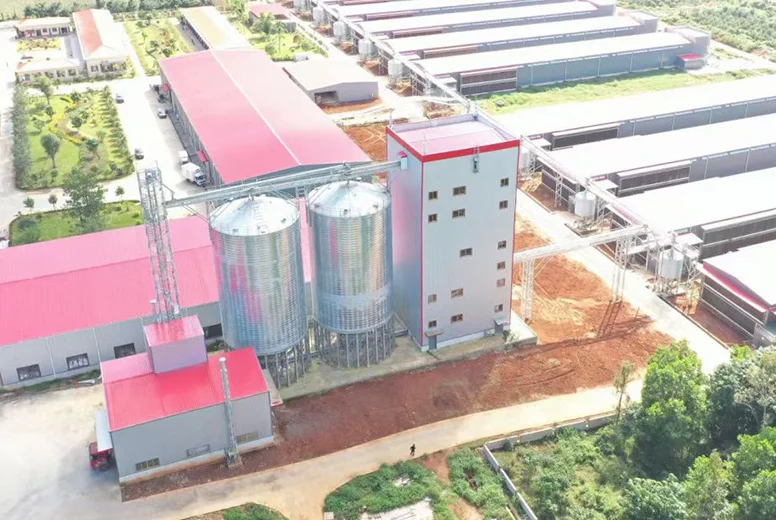
In the storage of mineral powders, hopper bottom silos are rapidly becoming the preferred solution for bulk materials like limestone, phosphate rock, and cement, thanks to their gravity-assisted discharge, anti-bridging design, and high adaptability. This technical guide explores the core geometry, material selection, and industrial applications that make these silos a critical asset for efficient bulk material handling.
How Hopper Bottom Silo Geometry Enables Efficient Discharge for Mineral Powders
The defining feature of a hopper bottom silo is its conical or wedge-shaped bottom structure, which is engineered specifically to facilitate gravity flow. Unlike flat bottom silos that rely on mechanical sweep augers or other clean-out devices, the tapered bottom allows mineral powders to naturally converge toward the discharge outlet without the need for vibration or pneumatic assistance. This design dramatically reduces energy consumption and mechanical maintenance frequency, making it particularly suitable for fine powders with poor flow characteristics.
Furthermore, the cone angle of the hopper can be customized based on the angle of repose and internal friction angle of the specific mineral. For example, for sticky clay powders with poor flowability, the cone angle is typically designed between 60° and 70°. For free-flowing limestone powder, the angle can be reduced to 45°–55°. This flexibility ensures smooth material flow and prevents common flow issues like bridging or rat-holing, which can cripple downstream processes.
Solving the Three Core Pain Points of Mineral Powder Storage
Mineral powder storage faces three persistent challenges: bridging, compaction, and moisture absorption. A well-designed hopper bottom silo addresses each of these problems through specific engineering solutions.
Eliminating Bridging with Gravity-Assisted Discharge Systems
Flat bottom silos often suffer from "dead zones" during the final stages of discharge, leading to incomplete emptying. The hopper bottom structure uses a gravity gradient to ensure uniform material flow from the center to the edges. When combined with a vibration breaker or pneumatic flow aid device at the discharge point, this design effectively prevents fine powders from forming an arch at the outlet, achieving an emptying rate close to 100%.
Preventing Compaction with Customized Cone Angles and Liners
Mineral powders left static for extended periods can compact under their own weight, severely impairing flowability. Hopper bottom silos mitigate this by optimizing the cone angle (typically 55°–70°) and using liners made of stainless steel or high-density polyethylene (HDPE). These materials lower the coefficient of friction between the powder and the wall, allowing the material to remain in a loose state under gravity and significantly reducing the risk of compaction.
Controlling Moisture with Integrated Ventilation and Dehumidification
For hygroscopic minerals like phosphate rock powder or cement, hopper bottom silos can be integrated with a bottom ventilation ring and a top breather valve. By
implementing forced ventilation or dry air displacement, the internal humidity can be maintained below the material's critical moisture content, effectively preventing caking and quality degradation.Key Takeaways
- Key Data: With an optimized cone angle, the discharge residue rate of a hopper bottom silo can be reduced from 5%–8% (typical for flat bottom silos) to below 0.5%, drastically cutting clean-out costs.
- Best Practice: For highly abrasive minerals like quartz sand, use a hardfacing weld overlay or ceramic liner on the internal walls. This can extend the silo's service life by 2–3 times compared to standard carbon steel.
- Watch Out For: A steeper cone angle is not always better. An excessively steep angle increases the overall silo height and civil construction costs. The optimal angle must be calculated based on the material's angle of repose and the required storage capacity.
- Pro Tip: When designing for cohesive powders, always add a safety margin of 5°–10° to the theoretical cone angle calculated from the angle of repose to account for variations in moisture content and particle size distribution.
- Bottom Line: A properly specified hopper bottom silo eliminates the mechanical complexity of flat bottom designs, offering higher reliability and lower operational costs for mineral powder storage.
Typical Applications of Hopper Bottom Silos in Mineral Processing and Building Materials
In the mineral processing industry, hopper bottom silos are extensively used for intermediate storage of gypsum, talc, and clay powders. For instance, in a phosphate fertilizer production line, ground phosphate rock must be temporarily stored before being metered into a mixer via a belt scale. The hopper bottom design ensures a stable and consistent discharge rate, preventing process fluctuations caused by material interruptions. In the cement and building materials sector, these silos are standard for storing limestone powder, ground granulated blast furnace slag (GGBS), and fly ash. Their excellent sealing properties effectively suppress dust emissions, helping facilities meet stringent environmental standards.
Beyond these core industries, hopper bottom silos are also used in the chemical and ceramic industries for storing high-purity materials like calcium carbonate and kaolin. By utilizing 304 stainless steel construction and a pneumatic clean-out system, these silos prevent metallic contamination and enable fully automated discharge, making them ideal for high-frequency batch production cycles.
Frequently Asked Questions
Q: What is the core difference between a hopper bottom silo and a flat bottom silo for mineral powder storage?
A: The core difference lies in the discharge method and residue rate. Flat bottom silos rely on mechanical clean-out devices like screw reclaimers, leaving a 5%–8% residue at the bottom, with fine powders prone to caking in dead zones. Hopper bottom silos rely on gravity flow, achieving a residue rate below 0.5% without frequent manual intervention. However, hopper bottom silos are typically 30%–50% taller than a flat bottom silo of the same capacity, requiring greater headroom on site.
Q: How do you choose the cone angle and liner material for a hopper bottom silo based on mineral powder characteristics?
A: Cone angle selection is primarily based on the material's angle of repose. For materials with an angle of repose ≤30° (e.g., dry sand), a cone angle of 45°–50° is suitable. For angles between 30° and 45° (e.g., limestone powder), increase the cone angle to 55°–60°. For materials with an angle of repose >45° (e.g., clay powder), the cone angle should be ≥65°. For liner materials, use abrasion-resistant steel or ceramic tiles for highly abrasive materials like iron powder. For corrosive materials like phosphate rock, prioritize 316L stainless steel or epoxy resin coatings to prevent chemical attack.
Q: How do you prevent moisture absorption from rain and snow when a hopper bottom silo is installed outdoors?
A: Outdoor hopper bottom silos must be equipped with a top rain cap and a bottom drainage system. A more effective solution is an "air cushion" bottom structure. This involves installing an annular air chamber around the cone bottom and using a low-pressure blower to inject dry, heated air into the silo. This creates an upward air barrier that prevents external moisture from entering. Additionally, install a humidity sensor at the discharge point to automatically activate a heating and ventilation system when the material's moisture content exceeds a preset threshold.
Q: Can a hopper bottom silo handle materials that are both abrasive and corrosive, such as wet slag?
A: Yes, but it requires a specialized design. For wet slag, which is both abrasive and slightly corrosive, the silo cone should be lined with a dual-layer system. A base layer of abrasion-resistant steel (e.g., AR400) is recommended, overlaid with a thick, flexible epoxy coating. This combination protects against both mechanical wear from the hard particles and chemical corrosion from residual moisture. The cone angle should also be increased by 5°–10° beyond the standard calculation to compensate for the reduced flowability caused by moisture.
Q: What is the typical payback period for upgrading from a flat bottom silo to a hopper bottom silo for a cement plant?
A: While the initial capital investment for a hopper bottom silo is higher due to the increased height and structural steel, the payback period is often 18 to 36 months. This is driven by several factors: elimination of mechanical sweep maintenance costs, near-zero product waste from incomplete discharge, reduced downtime for clean-outs, and lower energy consumption. For a plant processing 100,000 tons of cement per year, the reduction in waste and maintenance alone can save $50,000–$80,000 annually.
Q: How does the discharge flow rate of a hopper bottom silo compare to a flat bottom silo with a screw feeder?
A: A hopper bottom silo provides a mass flow pattern, meaning all material moves downward simultaneously. This results in a much more stable and predictable discharge rate compared to a flat bottom silo, which often exhibits funnel flow where material from the center discharges first and side material lags. For applications requiring precise metering, such as feeding a kiln or a mixer, the hopper bottom silo is superior because it eliminates the erratic flow and density variations common in funnel flow silos.
Need expert hopper bottom silo solutions for your mineral powder project?
We provide professional design, cone angle optimization, and liner selection services to ensure maximum discharge efficiency and product quality for your bulk storage needs.
Get a Free Technical Consultation →