
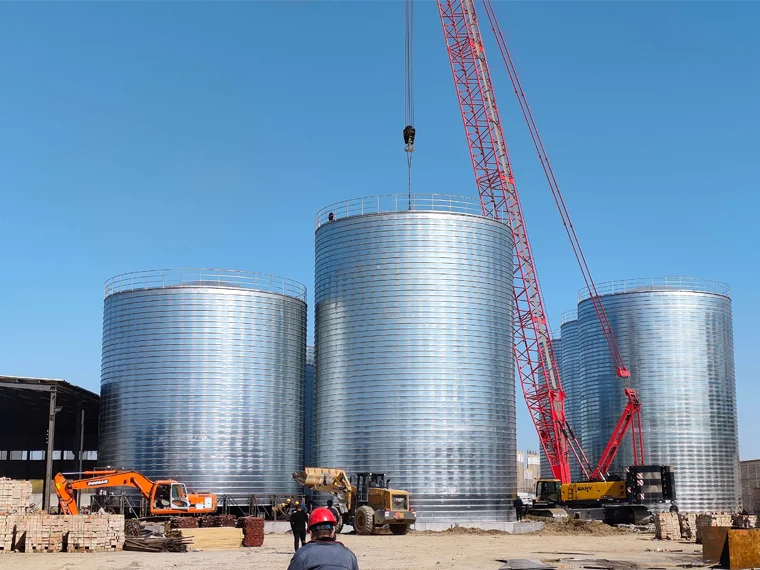
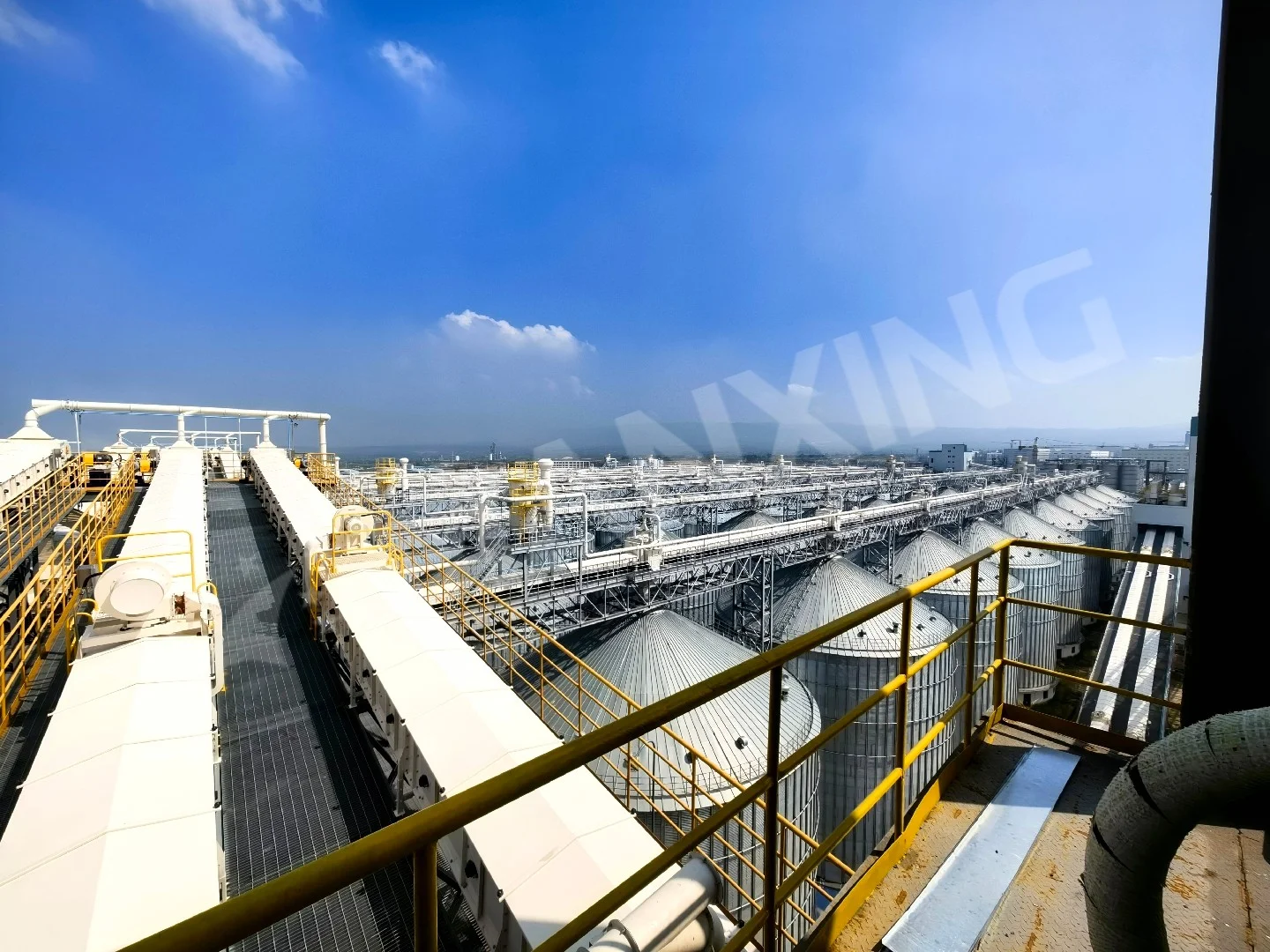


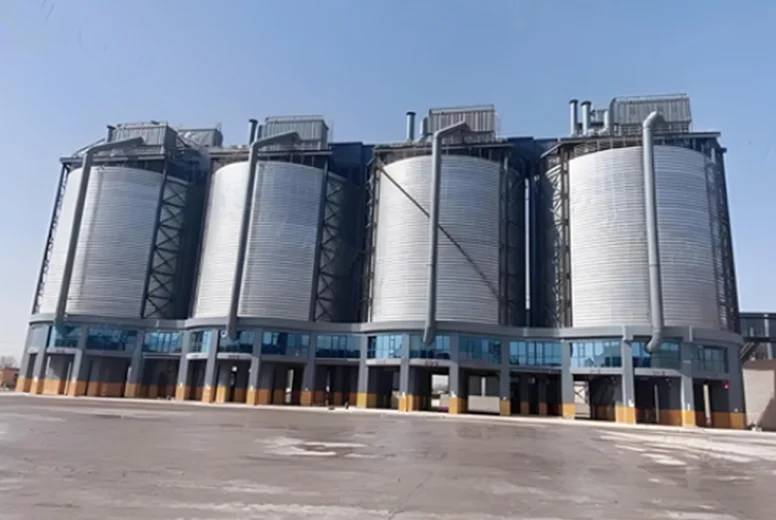
Concrete silos with automated systems represent the pinnacle of bulk storage technology, merging the unmatched structural durability of reinforced concrete with the precision of PLC-based controls. This integration transforms traditional storage into an intelligent, self-regulating hub that slashes inventory errors by 90% and reduces labor costs by up to 70%, making it the definitive solution for cement, grain, and industrial material management.
Concrete Silos with Automated Systems: The Fusion of Structural Strength and Smart Control
In the industrial storage sector, concrete silos have long been celebrated for their structural durability and resilience against natural disasters. When this traditional construction method is paired with advanced automation, a storage solution emerges that combines exceptional strength with intelligent management, fundamentally changing how bulk materials like cement, fly ash, aggregates, and grain are handled. As the construction and industrial storage industries evolve, efficiency, precision, and automation have shifted from optional advantages to operational necessities. The concrete automated silo is a breakthrough innovation that directly addresses this shift.
This system deeply integrates the robust nature of reinforced concrete with automation technologies such as PLC (Programmable Logic Controller) systems, radar level sensors, and intelligent ventilation. The result is a storage environment that is both durable and highly controllable. This combination not only maximizes storage capacity but also enables precise management of material flow, inventory status, and environmental parameters, significantly reducing operational costs and the risk of human error. Glo
bally, concrete silos dominate the cement, grain, and chemical industries due to their low maintenance requirements and decades-long service life. The addition of automation solves the traditional pain points of concrete silos—namely, inefficient material loading/unloading, lack of real-time data, and inadequate safety monitoring—establishing them as the preferred choice for modern industrial storage.Solving Core Pain Points in Traditional Bulk Storage
Traditional bulk material storage often faces three major challenges: safety risks from structural aging, inefficiencies from manual operations, and material degradation from inaccurate environmental control. Concrete automated silos systematically overcome these issues through specific technological pathways.
Structural Reliability: The Foundation for Harsh Environments
Reinforced concrete offers exceptional resistance to weathering, corrosion, and mechanical stress, making it ideal for long-term outdoor deployment. With customizable height, diameter, and inlet/outlet configurations, these silos can perfectly match the spatial and capacity requirements of any site. Furthermore, structural parameters can be specifically optimized for seismic and high-wind zones, ensuring absolute safety under extreme conditions. This inherent robustness provides a stable platform for sensitive automation equipment.
Automated Control Systems: Achieving Unmanned Precision Management
The PLC is the core of the entire automation system. It continuously monitors material levels inside the silo using radar, ultrasonic, or laser sensors, and automatically adjusts the opening of discharge valves to enable uninterrupted, hands-free material output. Additionally, integrated dust suppression and environmental control systems automatically activate ventilation or dust collection equipment based on sensor data, maintaining stable temperature and humidity levels inside the silo. This prevents material caking or spontaneous combustion, ensuring product quality is preserved throughout the storage cycle.
Key Takeaways
- Key Data: Concrete silos with automated systems reduce inventory measurement errors from the traditional ±5% down to ±0.5%, improving inventory management accuracy by tenfold.
- Best Practice: When constructing new concrete silos, prioritize embedding sensor cables and PLC control cabinet interfaces during the pouring phase to avoid the high costs and complexity of retrofitting.
- Watch Out For: Never neglect comprehensive training for operators on the automation system. Even the most advanced PLC requires human intervention for parameter setting and handling unexpected anomalies.
- Pro Tip: For multi-silo installations, design the control system for “silo group” management. This allows for automated blending of different materials based on downstream production demand, directly improving final product consistency.
- Bottom Line: The true value of a concrete automated silo lies not just in its strength, but in its ability to turn a static storage asset into a dynamic, data-driven component of the entire supply chain. Related: Flat bottom silo foundation design >
Core Technological Innovations and Differentiating Advantages
The innovation in concrete automated silos extends beyond hardware to a deep integration of software and algorithms. For instance, advanced level monitoring systems have evolved from simple "high/low" alarms to continuous volume calculation, automatically correcting measurement data based on the material's angle of repose. Furthermore, automated discharge systems support multi-silo coordination, allowing for the proportional blending of different materials based on real-time demand from downstream production lines. This capability enhances product quality right from the source. The application of Internet of Things (IoT) technology allows managers to remotely view the operational status of all silos via a smartphone or computer and receive equipment fault alerts, enabling true "unattended" operation and maintenance.
Frequently Asked Questions
Q: How much higher is the initial investment for a concrete automated silo compared to a traditional steel silo, and what is the typical ROI period?
A: The civil construction costs for a concrete silo are typically 20-40% higher than for a welded steel silo of equivalent capacity, and the automation system adds further to the initial outlay. However, considering the 50+ year design life of concrete silos (far exceeding the 20-30 years of steel), combined with labor savings from automation (often reducing operator headcount by 50-70%) and reduced material loss (saving 1-3% of inventory value annually), most projects recover the incremental investment within 3-5 years. For long-term storage projects involving commodities like cement or grain, the total lifecycle cost advantage is substantial.
Q: Is it feasible to retrofit an existing old concrete silo with an automation system, and what are the main technical difficulties?
A: Yes, it is feasible, but it is technically more challenging than a new build. The main difficulties include: 1) Structural assessment—the wall thickness and rebar layout of an old silo may not withstand the stress from new openings (e.g., for sensor mounts), requiring structural reinforcement. 2) Wiring complexity—cutting channels into hardened concrete for cabling is costly and can damage waterproofing layers. 3) Control system compatibility—older discharge equipment (like pneumatic gates) may not communicate directly with modern PLCs, necessitating protocol converters. A comprehensive structural inspection and detailed electrical design by a specialized firm are highly recommended before any retrofit work begins.
Q: What specific environmental conditions can the automated system control inside a concrete silo to prevent material spoilage?
A: The system can precisely regulate internal temperature and humidity through automated ventilation and aeration systems. Sensors continuously monitor these parameters and, when they exceed preset thresholds, trigger fans or heaters to restore optimal conditions. This is critical for preventing issues like cement hydration due to moisture, grain spoilage from heat and humidity, or the spontaneous combustion of coal and certain chemicals. The system can also be programmed to perform scheduled aeration cycles to equalize temperature and prevent condensation.
Q: How does the PLC system handle power outages or communication failures to ensure operational safety?
A: A robust automated system includes fail-safe protocols. In the event of a power outage, all motorized valves and gates are designed to fail in their last known safe position or move to a pre-defined safe state (e.g., closing all discharge gates). The system also includes uninterruptible power supplies (UPS) for the PLC and critical sensors, allowing for a controlled shutdown and data preservation. For communication failures, the local PLC can operate autonomously based on its last programmed parameters, ensuring continuous safe operation until the network is restored.
Q: What level of maintenance is required for the sensors and automation components inside a concrete silo?
A: While concrete structures are low-maintenance, the automation components do require periodic attention. Non-contact sensors (like radar) are preferred for their low maintenance, as they are not affected by material buildup. However, they should be inspected and cleaned periodically to ensure accurate readings. PLC cabinets and wiring need annual inspections for dust, corrosion, and loose connections. The key is to design the system with maintenance in mind—using sealed enclosures, easily accessible junction boxes, and robust cable protection. A well-designed system will have a predictive maintenance schedule built into its software.
Need professional concrete automated silo solutions for your project?
We provide comprehensive, customized services from foundation design and structural calculation to automation system integration, installation, and commissioning, ensuring your storage system is both durable and intelligent.
Get a Free Technical Consultation →