
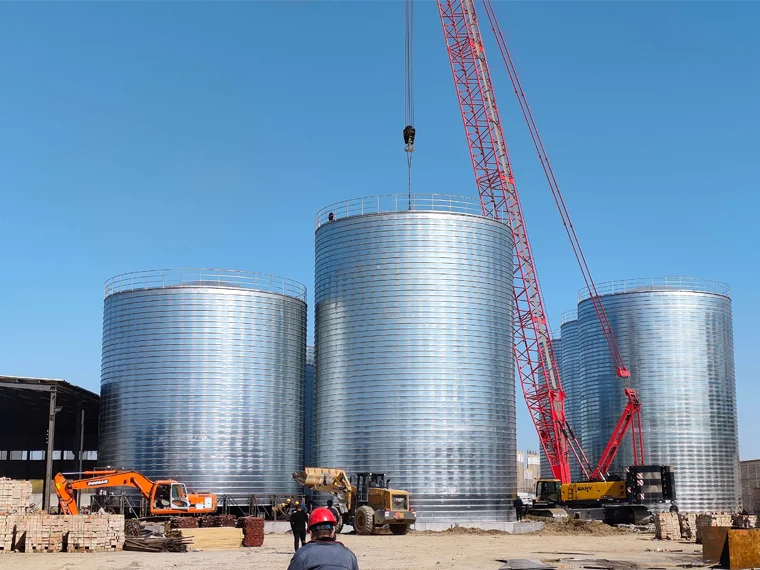
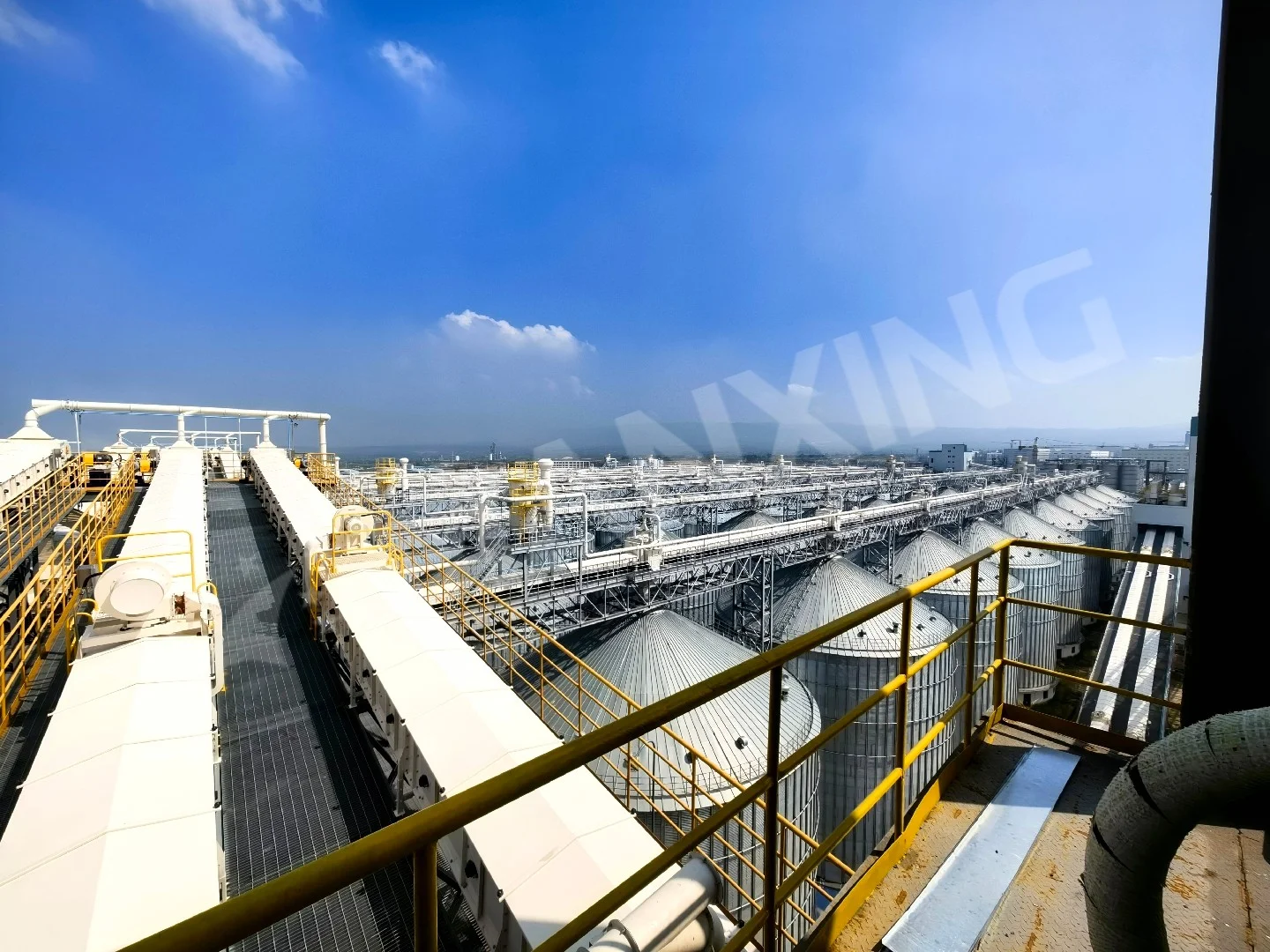


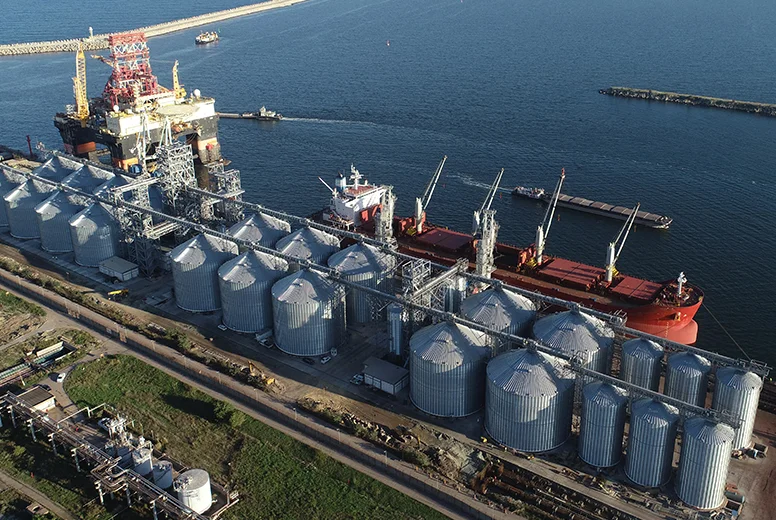
Combining a flat bottom silo with a reinforced concrete foundation delivers a time-tested solution that maximizes structural integrity and operational efficiency for bulk material storage. This engineering approach provides superior load distribution, exceptional durability, and long-term cost savings, making it the preferred choice for demanding applications in grain, cement, and industrial sectors.
Flat Bottom Silo Design and Reinforced Concrete Foundation: A Synergistic Engineering Approach
The defining feature of a flat bottom silo is its horizontal floor, which creates a stable and uniform support surface for stored materials. When this design is paired with a precisely engineered reinforced concrete foundation, the system achieves outstanding long-term stability. The reinforced concrete foundation is not merely a base; it is a critical structural element designed to withstand the immense static pressure from dozens of meters of bulk material. Furthermore, it effectively resists dynamic stresses from wind loads, seismic activity, and thermal expansion. The foundation is typically reinforced with a steel rebar cage or mesh to optimize tensile strength, preventing cracking caused by uneven soil settlement or temperature fluctuations. This meticulous design ensures the structure remains safe and reliable for a design life of 20 years or more, often exceeding 30 to 50 years with proper maintenance.
From a mechanical perspective, the load transfer path in a flat bottom silo is exceptionally clear and efficient. The weight of the material is transmitted through the silo walls and floor directly onto the reinforced concrete foundation, which then distributes the load evenly across the underlying soil. This "surface contact" load distribution is fundamentally different from the "point contact" or "line contact" of conical hopper bottoms. By
avoiding localized stress concentrations, this design significantly reduces the risk of differential foundation settlement. This characteristic is particularly critical for large-scale storage facilities constructed on soft soil or in geologically complex regions, where foundation stability is the paramount concern.Solving Operational Storage Challenges with Flat Bottom Silo Systems
In the day-to-day operations of industries like grain, cement, and chemicals, storage systems frequently face issues such as material bridging, difficult clean-out, and high maintenance costs. The flat bottom silo, integrated with a robust reinforced concrete foundation, provides systematic solutions to these problems directly through its design.
Eliminating Material Residue and Simplifying Cleaning
The horizontal floor of a flat bottom silo eliminates the dead zones inherent in conical hopper designs. While mechanical clean-out equipment (such as sweep augers or reclaimers) is required for complete discharge, the flat, smooth surface makes this process highly efficient and straightforward. For food-grade grain storage or chemical raw materials sensitive to cross-contamination, this design dramatically reduces the risk of residue between batches, enabling compliance with stringent hygiene and quality standards.
Enhancing Structural Durability and Disaster Resilience
Reinforced concrete foundations inherently offer superior fire resistance and corrosion resistance. When storing aggressive materials like cement, fly ash, or mineral powders, which can be highly alkaline or generate heat, the concrete base effectively resists chemical attack and thermal stress. Moreover, the monolithic nature of a reinforced concrete foundation exhibits far greater structural integrity under extreme conditions like earthquakes and high winds compared to steel grillage foundations. This makes it the preferred choice for industrial storage in high-risk seismic or cyclone-prone zones.
Key Takeaways
- Key Data: A flat bottom silo with a reinforced concrete foundation has a design service life of 30 to 50 years, which is over 1.5 times that of a typical steel foundation.
- Best Practice: Incorporating a slight floor slope (1 to 2 degrees) with a ring trench drain significantly improves clean-out efficiency and reduces manual labor.
- Watch Out For: The "dead material zone" is a critical design factor. Discharge outlet placement must be calculated based on the material's angle of repose, or an efficient mechanical reclaim system must be specified.
- Pro Tip: For cement and fly ash storage, the reinforced concrete foundation acts as an effective vapor barrier, isolating the stored material from ground moisture and preventing hydration.
- Bottom Line: For large-capacity, long-term storage of difficult or high-value bulk materials, the flat bottom silo on a reinforced concrete foundation offers unmatched reliability, safety, and lifecycle value.
Cross-Industry Applications: From Grain to Building Materials
The combination of a flat bottom silo and a reinforced concrete foundation demonstrates remarkable versatility across numerous bulk material sectors due to its high load-bearing capacity and design flexibility. In agriculture, these silos are ideal for storing grains like corn, wheat, and soybeans. Their large capacity and the ease of installing aeration systems help control grain temperature and moisture, preventing spoilage. In the building materials industry, they are the preferred solution for storing cement, fly ash, and ground granulated blast furnace slag (GGBS). The reinforced concrete foundation effectively isolates the storage from ground moisture, ensuring the product remains dry and free-flowing. Furthermore, these silos are widely used in the chemical and mining industries for storing various granular and powdered raw materials. The capacity range is exceptionally broad, from several hundred tons to tens of thousands of tons, accommodating the needs of small processing plants to large port terminals.
Frequently Asked Questions
Q: What are the significant operational cost differences between a flat bottom silo and a cone bottom silo?
A: The core difference lies in the discharge method and energy consumption. A flat bottom silo has a slightly higher civil foundation cost, but its discharge relies on mechanical equipment (e.g., sweep augers, belt conveyors), resulting in relatively predictable equipment investment and energy use. A cone bottom silo relies on gravity flow, which seems to save on mechanical costs. However, it demands high material flowability and requires a significantly taller structure, leading to much higher civil and steel costs. For materials that are prone to bridging or have poor flow characteristics, the flat bottom silo offers far greater operational reliability, and its total cost of ownership is often lower over the long term.
Q: What are the key engineering measures for building a large flat bottom silo on soft soil?
A: Soft soil is a common challenge. First, a detailed geotechnical investigation is mandatory to determine soil bearing capacity and compressibility. Second, foundation design typically requires deep pile foundations (like bored piles or driven piles) to transfer the load to a deeper, competent bearing stratum, rather than a simple shallow foundation. A cushion layer (e.g., a sand-gravel blanket) can be placed beneath the foundation to help mitigate differential settlement. During construction, rigorous settlement monitoring is essential. This data is used to dynamically adjust the construction schedule, particularly during the loading phase, to ensure the silo's safety as the weight is applied.
Q: How can you evaluate if an existing flat bottom silo's reinforced concrete foundation is aging or has hidden defects?
A: Regular professional inspection is critical. Key methods include: 1) Visual inspection for surface cracks, spalling, or exposed, corroded rebar. 2) Non-destructive testing (NDT) using a rebound hammer or ultrasonic pulse velocity to assess concrete strength, and a rebar scanner to locate rebar and detect corrosion. 3) Settlement monitoring by periodically measuring absolute and differential settlement. If differential settlement exceeds code limits (e.g., 1/500 of the span), structural reinforcement is needed. 4) For foundations with waterproofing requirements, a leak detection survey should also be performed.
Q: Can a flat bottom silo with a concrete foundation be used for materials that are prone to spontaneous combustion, like coal or biomass?
A: Yes, but with specific design adaptations. The reinforced concrete foundation itself is non-combustible and provides excellent fire resistance. The key is to integrate temperature monitoring systems (thermocouples) within the silo floor and walls, and to design an effective aeration and ventilation system to control material temperature and gas buildup. The flat bottom design facilitates the installation of these monitoring and aeration systems. The concrete foundation also provides a safe, inert barrier between the stored material and any potential ground-level ignition sources.
Q: What is the typical timeline for designing and constructing a flat bottom silo with a reinforced concrete foundation?
A: The timeline depends heavily on silo capacity and site conditions. For a mid-sized project (e.g., a 5,000-ton grain silo), the design and engineering phase typically takes 4 to 8 weeks. Foundation construction, including piling if required, can take another 4 to 10 weeks. The steel silo erection itself is often faster, taking 2 to 4 weeks. Total project duration from design approval to commissioning is usually between 3 to 6 months. Larger projects or those on challenging sites will require more time, particularly for foundation work.
Need expert flat bottom silo solutions for your project?
We provide professional design, manufacturing, and installation services for bulk storage and material handling systems worldwide, from geotechnical investigation to structural engineering and full turnkey delivery.
Get a Free Technical Consultation →