
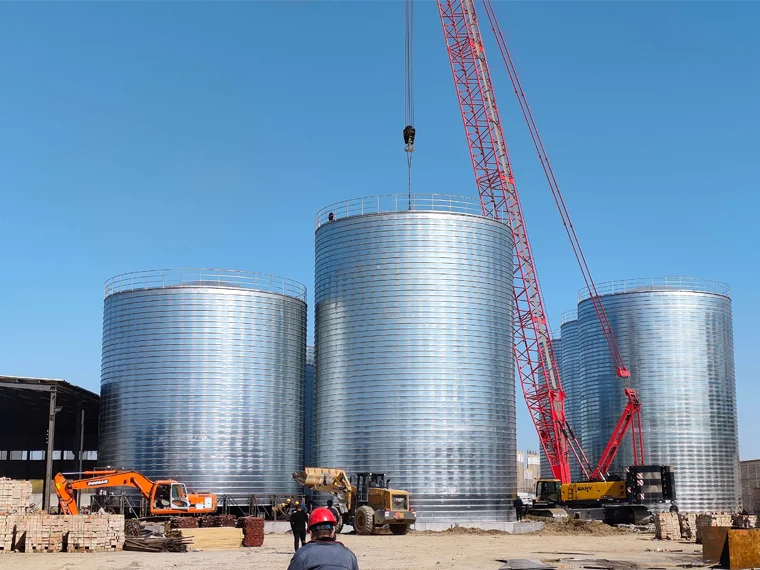
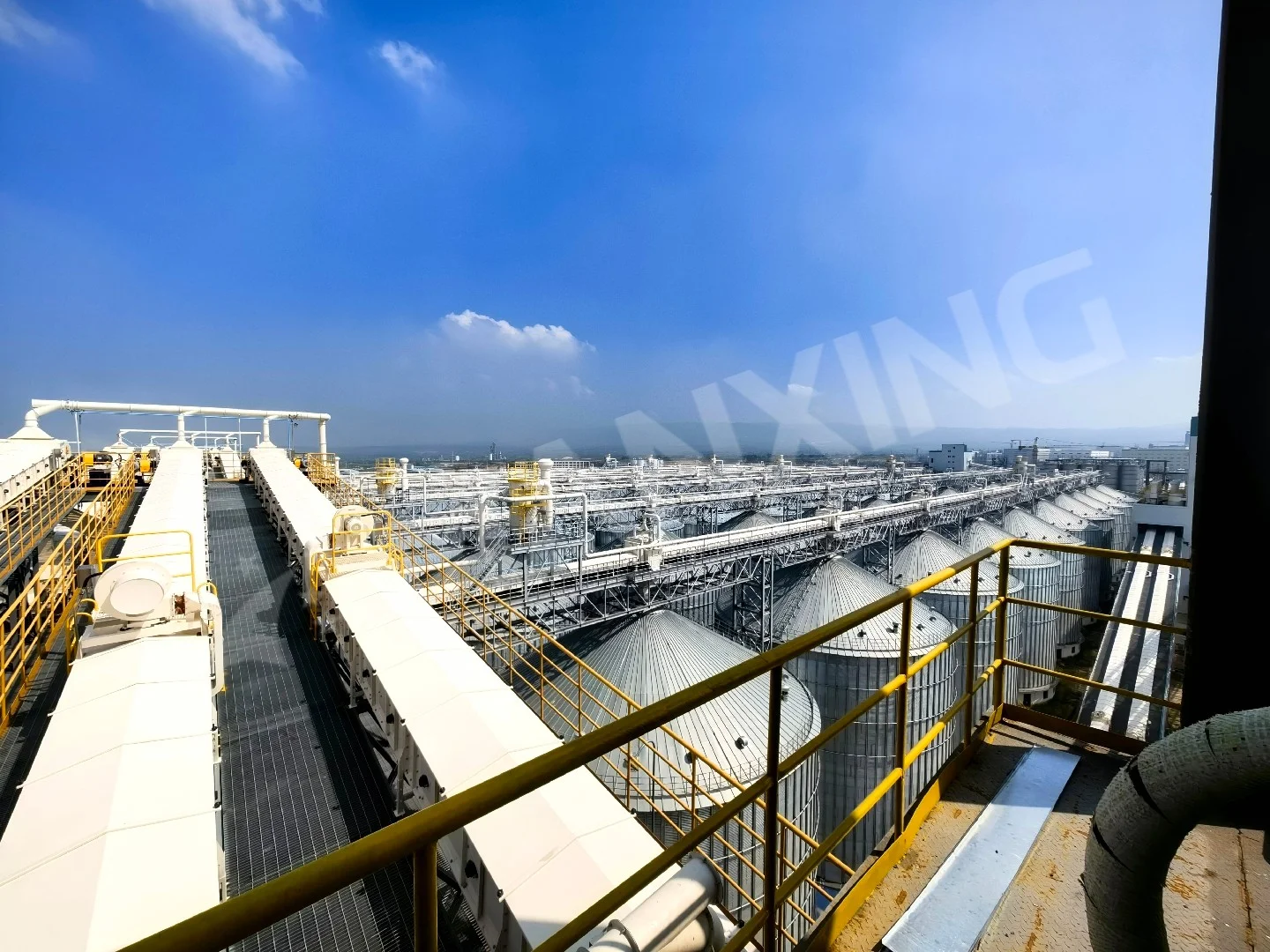


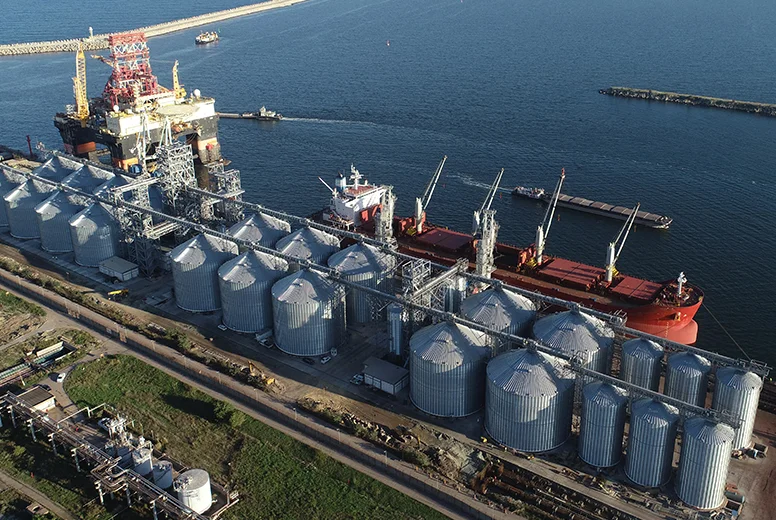
Thailand’s rapid agricultural and industrial modernization is driving an urgent need for efficient, high-capacity bulk storage solutions. The flat bottom silo, prized for its structural stability, cost control, and adaptability, has become the preferred choice for storing rice, cement, and industrial raw materials across the country. This article delivers a deep technical analysis of flat bottom silo projects in Thailand, covering structural advantages, local applications, and critical implementation factors.
Technical Advantages and Structural Characteristics of Flat Bottom Silos in Thailand
The flat bottom silo is defined by its level base design, which provides an exceptionally stable storage platform. This structure offers significant advantages under Thailand’s diverse geological conditions, from the alluvial plains of the Chao Phraya River basin to the harder soils of the northeastern plateau. The base uses a uniform flat slab support that effectively distributes loads evenly, reducing localized pressure on the foundation and minimizing the need for complex ground treatment or deep piling. Compared to cone-bottom silos, the flat bottom design simplifies civil construction, making it especially suitable for areas with constrained site conditions or softer soils, such as Thailand’s northeastern region (Isan) or mountainous zones in the north.
In terms of discharge efficiency, flat bottom silos typically incorporate internal conical or funnel-shaped discharge hoppers, combined with sweep augers or pneumatic clean-out systems. This configuration achieves a gravity self-flow discharge rate of over 95%, significantly reducing material residue and manual cleaning. This feature is particularly critical for storing high-value crops such as premium jasmine rice (Hom Mali) or powdery materials prone to caking like cement, effectively preventing cross-contamination and material waste. Furthermore, the capacity range of flat bottom silos is highly flexible, from small farm silos holding a few hundred tons to industrial-grade storage facilities of tens of thousands of tons, all customizable to meet the full-chain needs of Thailand’s operations, from family farms to large industrial complexes.
Optimizing Flat Bottom Silo Projects for Thailand’s Climate and Crops
Thailand’s tropical climate, characterized by high ambient temperatures (often exceeding 35°C) and humidity levels above 80% during the monsoon season, presents unique challenges for bulk storage. Flat bottom silo projects in Thailand must be engineered with robust aeration and temperature monitoring systems to prevent spoilage, mold growth, and insect infestation. For grain storage, particularly rice and maize, the silo design should incorporate aeration floors with high-static-pressure fans capable of delivering at least 0.1–0.2 cubic meters per minute per ton of grain, ensuring uniform cooling and moisture control. For cement storage, the focus shifts to airtight seals, moisture-proof liners, and efficient dust collection systems to maintain product quality and comply with Thai environmental regulations.
Another critical factor is the selection of materials for silo construction. Galvanized steel with a minimum coating thickness of 275 g/m² (Z275) is standard for grain storage to resist corrosion from humidity. For cement and industrial materials, epoxy-coated or stainless steel options may be required to withstand abrasive wear and chemical reactions. The flat bottom design also simplifies the integration of load-out systems, such as truck loading stations and bagging lines, which are essential for Thailand’s domestic distribution networks and export-oriented agricultural supply chains.
Foundation Design and Site Preparation
The success of any flat bottom silo project in Thailand hinges on proper foundation design. Soil bearing capacity must be verified through geotechnical surveys, with typical values ranging from 80–150 kN/m² for rice paddies to 200+ kN/m² for industrial zones. The uniform flat slab foundation, often reinforced with steel rebar and poured to a thickness of 300–500 mm, distributes the silo’s dead load and live load (wind, seismic, and stored material) evenly. In areas with high water tables, such as the Central Plains, a granular base layer and perimeter drainage system are essential to prevent uplift and long-term settlement.
Discharge and Clean-Out Systems
For flat bottom silos, achieving complete discharge without manual intervention is a key operational goal. The combination of a central discharge hopper (typically at a 60-degree angle for free-flowing materials) and a rotating sweep auger ensures that over 95% of stored material is recovered by gravity alone. For sticky or cohesive materials like wet rice or cement, pneumatic clean-out systems using air cannons or fluidizing pads can be added to break up bridging and ratholing. This design minimizes labor costs and downtime, which are critical for Thailand’s competitive agricultural and industrial markets.
Key Takeaways
- Key Data: Flat bottom silos achieve a gravity self-flow discharge rate of over 95%, reducing material residue and manual cleaning.
- Best Practice: For grain storage in Thailand, install aeration systems with a minimum airflow of 0.1 m³/min per ton to manage high humidity and temperature.
- Watch Out For: Inadequate foundation design on soft soils—always conduct a geotechnical survey and consider a reinforced flat slab to prevent differential settlement.
- Pro Tip: Use galvanized steel with Z275 coating for outdoor silos in Thailand’s humid climate to maximize corrosion resistance and service life.
- Bottom Line: The flat bottom silo’s structural simplicity, cost efficiency, and high discharge rate make it the optimal storage solution for Thailand’s diverse bulk material needs.
Applications Across Thailand’s Key Industries
Flat bottom silos are deployed across multiple sectors in Thailand, each with specific requirements. In the rice industry, which produces over 30 million tons annually, flat bottom silos are used for paddy storage at mills and export terminals. The large capacity (5,000–20,000 tons per unit) and gentle handling characteristics preserve grain quality and minimize breakage. For the cement industry, flat bottom silos provide cost-effective storage for clinker, fly ash, and finished cement, with capacities ranging from 1,000 to 50,000 tons. The flat base allows for easy installation of reclaim tunnels and multiple discharge points, enabling efficient blending and truck loading. In the animal feed sector, flat bottom silos store maize, soybean meal, and additives, with integrated blending and dosing systems to meet precise nutritional formulations.
Frequently Asked Questions
Q: What is the typical lifespan of a flat bottom silo in Thailand’s humid climate?
A: With proper design, materials, and maintenance, a galvanized steel flat bottom silo in Thailand can last 20–30 years. Key factors include using Z275 or higher galvanized coating, applying epoxy paint to exposed edges, and ensuring regular inspection of aeration systems and seals. For cement storage, epoxy-coated or stainless steel options can extend lifespan beyond 30 years. Routine maintenance, such as checking for corrosion at bolted joints and cleaning aeration floors, is essential to maximize service life in tropical conditions.
Q: How does the flat bottom silo compare to a cone-bottom silo for rice storage in Thailand?
A: Flat bottom silos offer several advantages over cone-bottom silos for rice storage in Thailand. The flat base design allows for larger capacities (up to 50,000 tons per unit) and simpler, more cost-effective foundation construction, especially on softer soils common in rice-growing regions. Discharge efficiency is comparable, with sweep augers achieving over 95% recovery. However, cone-bottom silos provide complete gravity discharge without mechanical systems, which can be beneficial for smaller installations. For large-scale rice mills and export terminals, flat bottom silos are generally preferred due to lower per-ton construction costs and easier integration with automated handling systems.
Q: What aeration system is recommended for flat bottom silos storing paddy rice in Thailand?
A: For paddy rice storage in Thailand’s hot and humid climate, a positive-pressure aeration system with a perforated floor is recommended. The system should deliver at least 0.1–0.2 m³/min per ton of grain, with fans sized to overcome static pressure losses from the grain column (typically 5–15 inches of water gauge). Aeration should be controlled by temperature and humidity sensors, with automatic activation when grain temperature exceeds 30°C or relative humidity in the headspace rises above 65%. This prevents moisture migration, mold growth, and insect activity, preserving the quality of high-value jasmine rice.
Q: Can flat bottom silos be used for both grain and cement storage in the same facility?
A: While it is technically possible, it is not recommended to use the same flat bottom silo for both grain and cement storage due to cross-contamination risks and different design requirements. Grain silos require aeration, moisture control, and food-grade coatings, while cement silos need airtight seals, dust collection, and abrasion-resistant liners. If a facility must handle both materials, dedicated silos should be used, each designed for its specific commodity. However, the same flat bottom design principles can be applied to both, allowing for standardized construction methods and cost savings in multi-silo projects.
Q: What are the main cost factors for a flat bottom silo project in Thailand?
A: The main cost factors include silo capacity (larger silos have lower per-ton costs), material selection (galvanized steel is most economical, while epoxy or stainless steel adds 20–40%), foundation design (softer soils require more concrete and reinforcement), and auxiliary equipment (aeration systems, sweep augers, dust collectors, and load-out conveyors). For
a typical 10,000-ton flat bottom silo for rice storage in Thailand, total project costs (excluding land) range from $800,000 to $1.5 million USD, with foundation and civil works accounting for 25–35% of the total. Local fabrication and installation can reduce costs compared to imported systems.Q: How do Thai building codes and environmental regulations affect flat bottom silo design?
A: Thai building codes require silos to be designed for seismic loads (Zone 2–3 in most areas) and wind loads (up to 120 km/h in coastal regions). Environmental regulations, particularly for cement and industrial silos, mandate dust emission controls (below 50 mg/Nm³ for particulate matter) and noise limits (below 70 dB(A) at property boundaries). Flat bottom silos must also comply with fire safety standards, including access for fire trucks and spacing between silos. Working with a local engineering firm familiar with Thai regulations (e.g., the Building Control Act and Ministry of Industry standards) is essential to ensure compliance and avoid project delays.
Need expert flat bottom silo solutions for your project in Thailand?
We provide professional design, manufacturing, and installation services for bulk storage and material handling systems worldwide, with extensive experience in Southeast Asia’s tropical climates. Our team can help you select the right silo type, capacity, and auxiliary equipment for your specific application.
Get a Free Technical Consultation →