
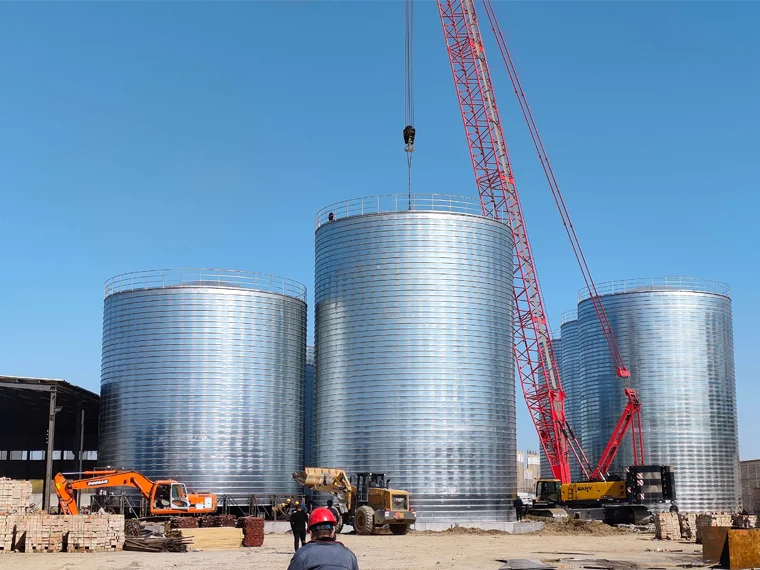
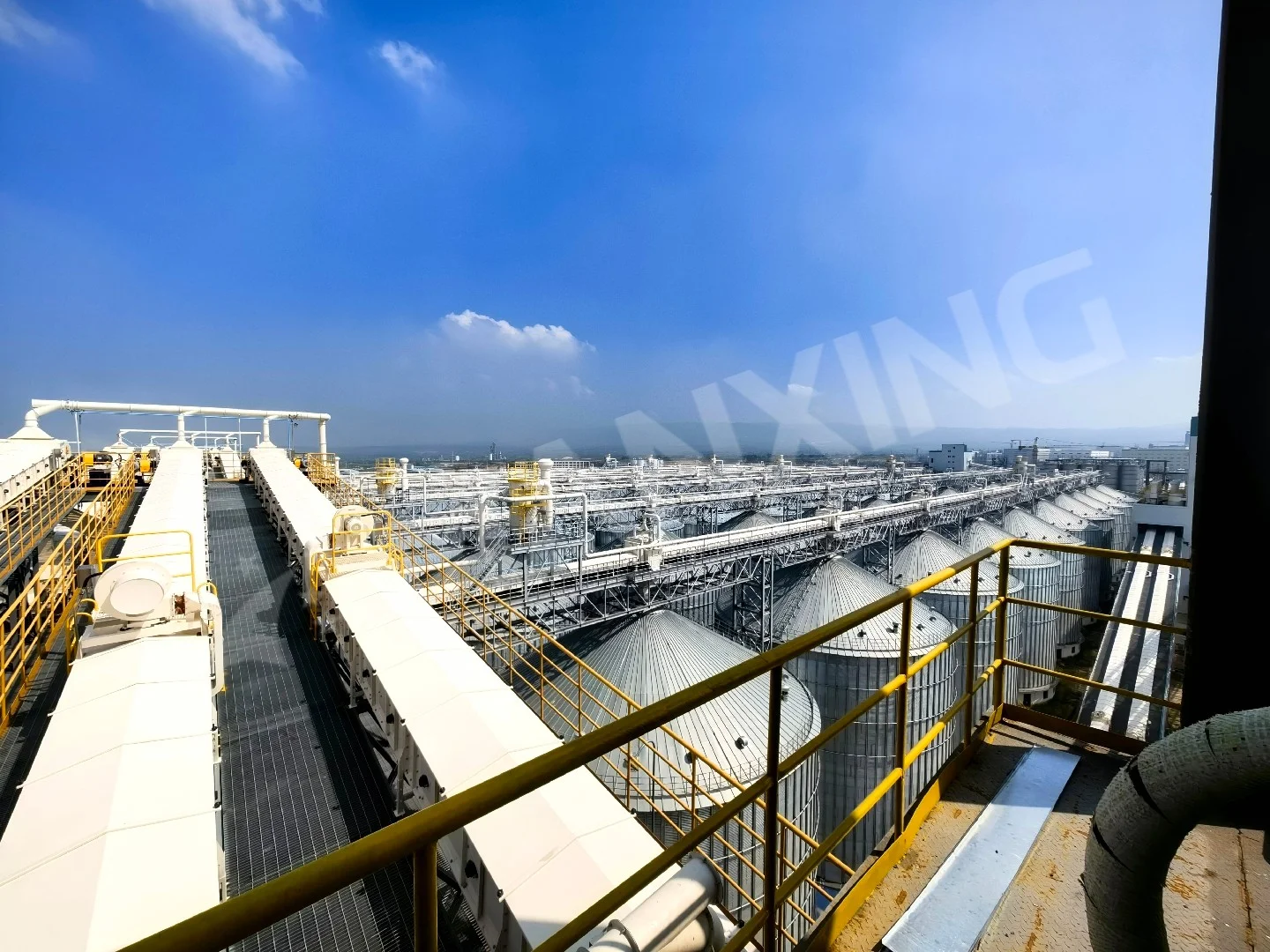


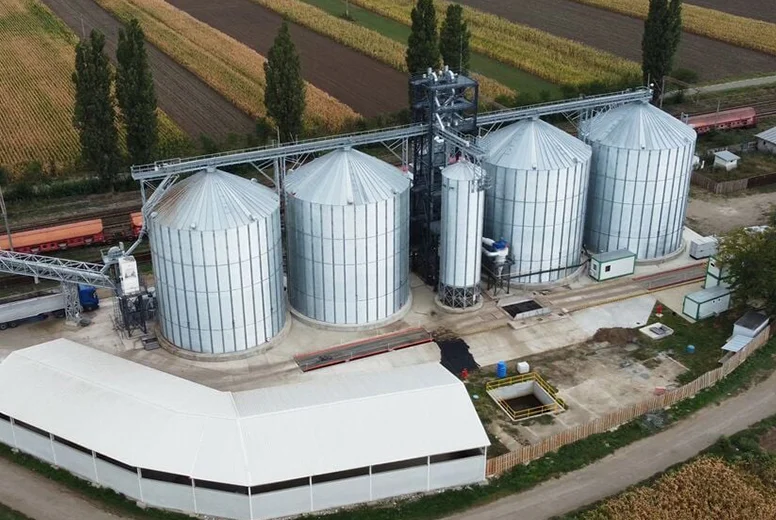
For industrial bulk storage, the flat bottom silo is the gold standard for structural stability and material handling flexibility. From cement and grain to chemicals and biomass, its unique design eliminates dead zones and reduces bridging, making it the preferred choice for demanding applications. This comprehensive guide explores its design principles, industrial applications, and maintenance best practices to help you make an informed selection.
Core Structural Design and Material Dynamics of Flat Bottom Silos
The defining feature of a flat bottom silo is its horizontal base, typically constructed from reinforced concrete or high-strength steel plates, which provides a uniform load-bearing surface. However, the design is not a simple flat plane; it cleverly incorporates a slight incline or a discharge hopper, creating a "flat bottom + auxiliary discharge" composite structure. Thi
s effectively eliminates the "dead zones" common in conical bottom silos, where material stagnates. For powdery materials with poor flowability, such as cement and fly ash, this design significantly reduces the probability of bridging and rat-holing.From a material dynamics perspective, the flat bottom alters the flow pattern within the silo. When combined with a central discharge outlet or pneumatic fluidization bars, the material achieves a mixed state of "mass flow" or "funnel flow." This ensures continuous, consistent discharge and prevents quality variation caused by material stratification. For long-term grain storage, this design minimizes the risk of spoilage from localized heat buildup, a critical advantage over traditional cone-bottom designs.
Four Core Industrial Applications and Selection Criteria
Flat bottom silos are not one-size-fits-all; their advantages are maximized in specific industrial scenarios. The following four areas represent the most mature global applications, where material characteristics and throughput demands are key selection factors.
1. Cement and Building Materials: The Backbone of High-Capacity Continuous Production
In cement production lines, flat bottom silos are commonly used to store clinker, gypsum, and additives. Their key advantage is single-silo capacities reaching tens of thousands of tons, enabling 24/7 uninterrupted discharge when paired with bottom chain conveyors or belt conveyors. For ultra-fine powders like fly ash, the silo can be equipped with aeration pads that use low-pressure air to break material cohesion, ensuring smooth flow. It is recommended to add a vibratory arch breaker at the bottom of powder silos to handle moisture-related caking during rainy seasons.
2. Grain and Oilseed Storage: A Quality-First Solution
For wheat, corn, and soybeans, temperature and humidity control are paramount. The flat bottom design facilitates the installation of multi-point temperature cables and ventilation ducts, enabling layered temperature management. Compared to cone-bottom silos, flat bottom silos have larger discharge openings, which, when combined with a sweep auger, allow for "First-In, First-Out" (FIFO) management, preventing the accumulation of old grain. Notably, the bottom slope for grain silos is typically designed at 5°-10°, balancing gravity-assisted discharge with maximizing storage capacity.
3. Chemical and Mining Industries: Handling High Wear and Corrosive Materials
In the chemical industry, flat bottom silos store materials like sulfur, soda ash, and phosphate rock. The silo body material must be upgraded to stainless steel or lined with wear-resistant ceramics. The flat bottom design facilitates the installation of rotary clearing machines or air cannons to effectively address the challenges of hygroscopic and caking chemical materials. For iron ore concentrate and pulverized coal in mining, the uniform discharge characteristics of flat bottom silos significantly reduce load fluctuations on downstream crushers.
4. New Energy and Environmental Protection: A Growing Application Frontier
With the rise of biomass power generation and waste incineration, flat bottom silos are used to store light bulk materials like wood chips, straw pellets, and RDF (Refuse Derived Fuel). In these applications, the silo roof must be equipped with explosion-proof pressure relief devices, and the bottom should use hydraulic pushers or screw reclaimers to accommodate the low density and fibrous nature of the materials. This field demands exceptionally high corrosion resistance and sealing performance from the silo.
Key Takeaways
- Key Data: Industrial-grade flat bottom silos can achieve a single-silo capacity of up to 50,000 tons, with bottom discharge rates reaching 500 tons per hour.
- Best Practice: For sticky materials, prioritize a "flat bottom + pneumatic fluidization + rotary clearing" three-in-one discharge system to reduce blockage failure rates by up to 90%.
- Watch Out For: Never interchange discharge equipment between flat bottom and cone bottom silos; auxiliary equipment like sweep augers and vibrators must be individually designed based on the material's angle of repose.
- Pro Tip: For long-term grain storage, combine a flat bottom with a central discharge and sweep auger system to reduce residual material to nearly zero after each batch.
- Bottom Line: The flat bottom silo’s true advantage lies in its adaptability—it can be customized with the right auxiliary systems to handle nearly any bulk material, from free-flowing grains to highly cohesive powders.
Maintenance and Inspection: Ensuring Long-Term Reliability
The ease of maintenance is a core selling point of flat bottom silos. Operators can enter the silo through a bottom manhole to perform thorough cleaning using high-pressure water jets or vacuum equipment. Compared to cone-bottom silos, the open bottom space of flat bottom silos makes it easier to install and replace sensors, temperature cables, and pneumatic piping. It is recommended to conduct ultrasonic testing of bottom welds quarterly and inspect anti-corrosion coatings semi-annually. For grain storage silos, residual material should be cleaned after each loading and unloading cycle to prevent pest infestation.
In terms of intelligent upgrades, modern flat bottom silos can integrate radar level meters, infrared thermal imaging cameras, and IoT modules for remote, real-time monitoring of material height, temperature, and humidity. When abnormal temperature rises or material caking is detected, the system can automatically activate ventilation or arch-breaking programs, significantly reducing manual inspection costs and safety risks.
Frequently Asked Questions
Q: How much difference is there in discharge efficiency between flat bottom and cone bottom silos? Are all materials suitable for flat bottom silos?
A: The discharge efficiency of a flat bottom silo depends primarily on the configuration of auxiliary discharge equipment, not solely on gravity. For materials with excellent flowability, such as dry plastic pellets, a cone bottom silo may discharge faster. However, for sticky, bridging-prone materials like wet fly ash or clay, a flat bottom silo equipped with a fluidized bed or sweep auger can actually achieve higher efficiency than a cone bottom silo. Material flowability testing is crucial during selection; for materials with an angle of repose greater than 45°, a flat bottom silo with a forced discharge system is strongly recommended.
Q: In grain storage, how does a flat bottom silo solve the problem of "old grain" accumulation? What is the typical bottom residual rate?
A: By designing an optimal bottom slope (typically 5°-10°) and using a "multi-point discharge" or "center discharge + sweep auger" system, a flat bottom silo can keep the bottom residual rate below 0.5% of total capacity. For long-term grain storage, a "First-In, First-Out" discharge logic is recommended. When combined with a bottom rotary clearing machine, residual material can be reduced to nearly zero after each batch. Compared to cone bottom silos, flat bottom silos offer more flexible residual management, though they require more precise discharge control algorithms.
Q: What are the key maintenance differences between a flat bottom silo used for cement and one used for grain?
A: For cement silos, the primary maintenance focus is on the aeration system and discharge equipment, as cement is abrasive and prone to caking. Regular inspection of the fluidization pads and air cannons is critical. For grain silos, the priority is temperature and humidity monitoring, along with pest control. The bottom must be cleaned after every cycle to prevent spoilage, and temperature cables should be checked for accuracy. While both require quarterly weld inspections, the specific auxiliary systems demand tailored maintenance schedules.
Q: Can a flat bottom silo be used for materials that are extremely corrosive, like certain chemicals?
A: Yes, but with significant material upgrades. The silo body must be constructed from high-grade stainless steel (e.g., 304 or 316L) or lined with corrosion-resistant materials like ceramic tiles or special polymers. The flat bottom design is actually advantageous here, as it allows for easier installation of cleaning and discharge mechanisms that can handle corrosive buildup. However, all seals, gaskets, and auxiliary equipment must also be specified for chemical resistance. Regular corrosion thickness monitoring is essential for safety.
Q: How do intelligent monitoring systems improve the operation of a flat bottom silo?
A: Modern flat bottom silos can be integrated with radar level meters, infrared thermal imaging, and IoT modules for remote, real-time monitoring of material height, temperature, and humidity. This allows for predictive maintenance, such as automatically activating ventilation or arch-breaking systems when abnormal temperature rises are detected. This reduces the need for manual inspections, lowers safety risks, and improves overall operational efficiency. The flat bottom design makes sensor installation and wiring more straightforward than in cone-bottom silos.
Need expert flat bottom silo solutions for your project?
We provide professional design, manufacturing, and installation services for bulk storage and material handling systems worldwide, serving the cement, grain, chemical, and energy sectors.
Get a Free Technical Consultation →