
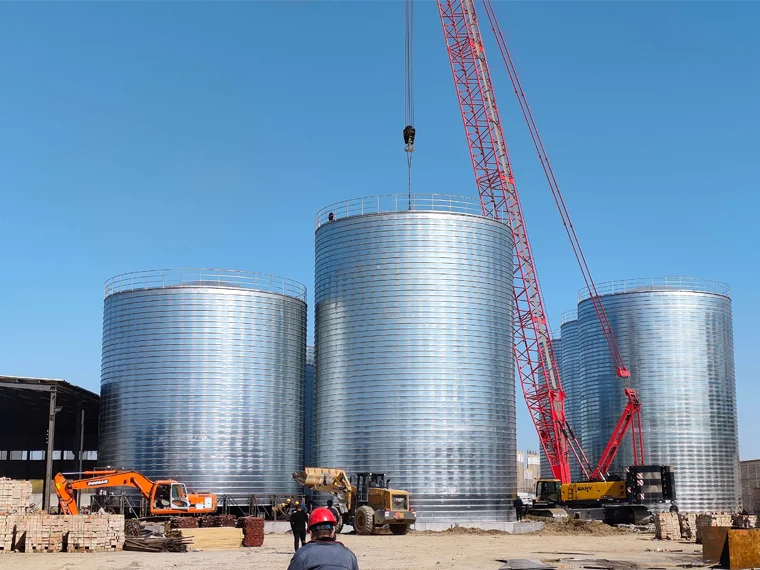
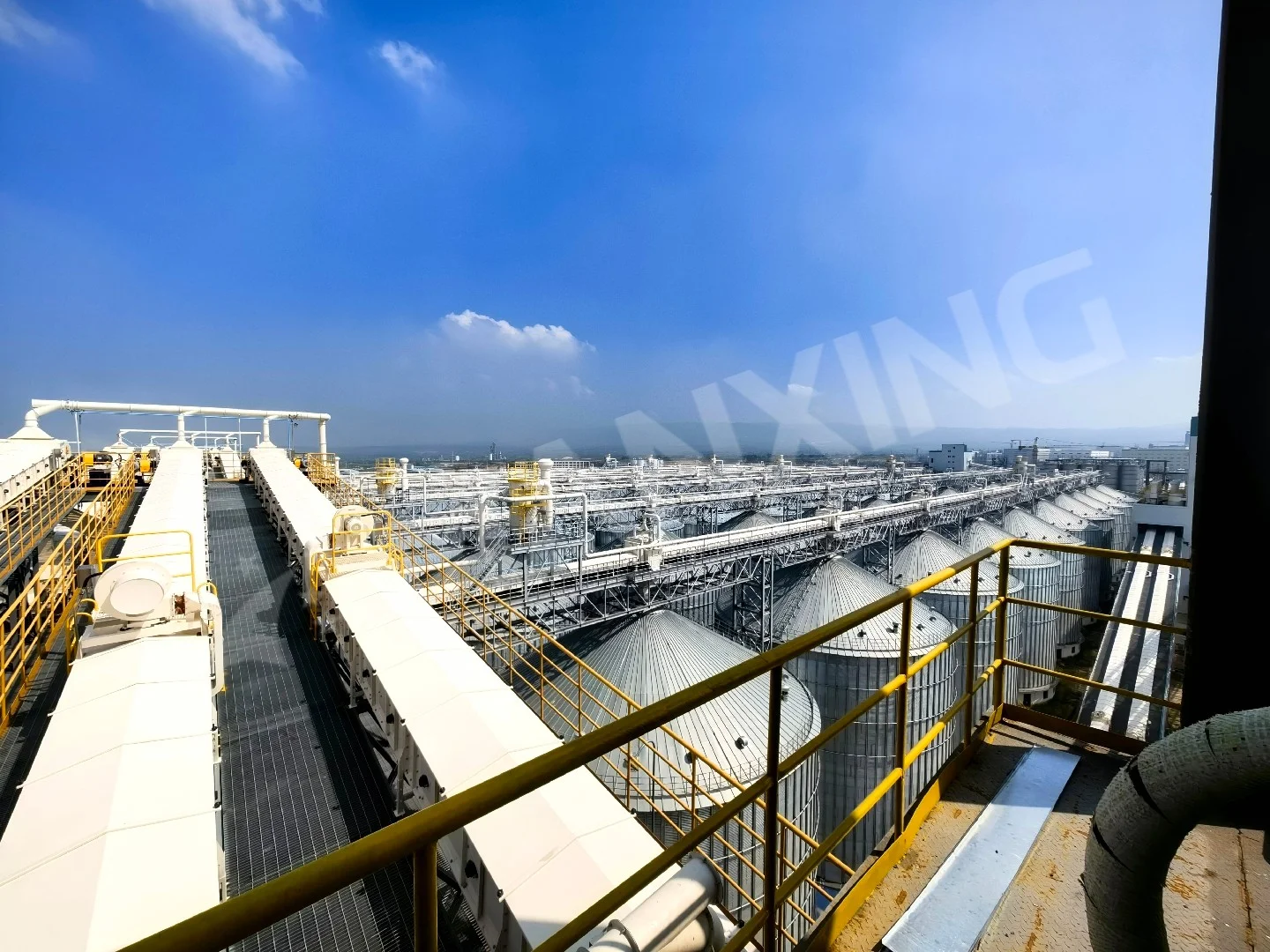


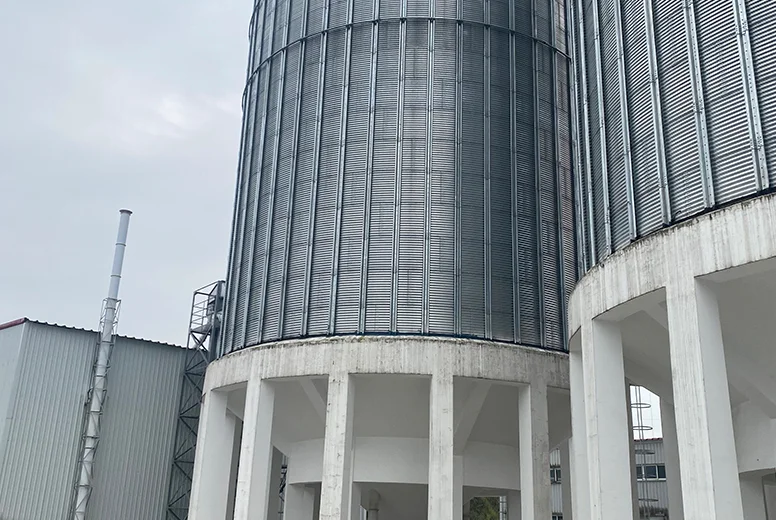
When storage demands exceed the thousand-ton threshold, the 2000-ton concrete foundation silo emerges as the cornerstone of industrial bulk handling. This heavy-duty structure is not merely a container; it represents a deep integration of advanced engineering, geotechnical precision, and sophisticated discharge technology. This comprehensive guide explores the technical characteristics, critical design considerations, and industry applications of these massive silos, providing authoritative insights for your next major storage project.
2000-Ton Concrete Foundation Silo: Structural Design and Core Characteristics
A 2000-ton concrete foundation silo is a heavy-duty industrial facility engineered to safely and efficiently store over 2000 metric tons of bulk materials. The structural design must simultaneously manage static loads (the self-weight of the stored material) and dynamic loads (impact and pressure fluctuations during filling and discharge). Engineering teams typically employ high-strength, corrosion-resistant reinforced concrete, with precisely calculated reinforcement layouts to withstand immense internal lateral pressures and stresses induced by thermal variations. The wall thickness, reinforcement ratio, and concrete grade are all customized based on material properties such as density and internal friction angle, ensuring structural integrity over decades of service.
Beyond the main structure, a key feature of the 2000-ton silo is its advanced sealing and discharge technology. To preserve material quality and enable precise control, the silo base is typically equipped with pneumatic or mechanical activation discharge systems, paired with a well-sealed roof and inlet to prevent dust leakage and rainwater ingress. The seamless integration of these systems with downstream conveying equipment, such as belt conveyors and pneumatic pipelines, is central to optimizing overall plant logistics efficiency.
Three Core Design Principles for a 2000-Ton Silo: From Foundation to Discharge
Designing a 2000-ton concrete foundation silo is far more than simply scaling up a smaller model. It requires solving three interconnected core engineering challenges: foundation bearing capacity, structural pressure resistance, and discharge flow reliability. A failure in any one of these areas can lead to serious operational incidents or prohibitively high maintenance costs.
Precision Foundation Engineering: Preventing Differential Settlement
The combined load of 2000 tons of material and the silo's self-weight can exceed 3000 tons. This immense force must be uniformly transferred to the subsoil through a meticulously designed foundation system. Depending on geological conditions, engineers typically employ raft foundations, deep pile foundations, or composite ground improvement. The key is to conduct a thorough geotechnical investigation, calculate final settlement, and design for pre-cambering or post-pour strips to control differential settlement to within millimeter tolerances, preventing silo tilting or structural cracking.
High-Strength Reinforced Concrete Structure: Resisting Internal Pressure
The silo walls must withstand enormous horizontal lateral pressures, especially near the bottom. Des
ign requires Finite Element Analysis (FEA) to simulate pressure distribution during filling and discharge. High-grade concrete (e.g., C40 and above) and high-strength steel reinforcement (HRB400/500) are standard. Fur thermore, post-tensioning prestressing technology is often applied to large silos. By applying a compressive force to counteract a portion of the internal pressure, this technique reduces wall thickness, lowers self-weight, and significantly improves crack resistance.Advanced Discharge and Activation Systems: Ensuring Material Flow
For a large-capacity 2000-ton silo, poor material flow—such as bridging, ratholing, or arching—is a common pain point. Solutions include: using a conical hopper with fluidizing pads or air cannons; installing a central discharge tube with a rotating sweep auger; or employing a vibrating bin activator. The design key is to match the discharge angle and drive mechanism to the material's angle of repose and flowability, ensuring a "first-in, first-out" flow pattern, eliminating dead zones, and guaranteeing discharge efficiency and material quality.
Key Takeaways
- Key Data: A 2000-ton silo's typical foundation load exceeds 3000 tons, requiring deep pile or raft foundations to control settlement.
- Best Practice: Using prestressed concrete technology can reduce silo wall thickness by 20-30% while enhancing crack resistance.
- Watch Out For: Neglecting material flowability testing when selecting a discharge system is the leading cause of blockages and flow interruptions.
- Pro Tip: Always conduct a site-specific geotechnical survey; a one-size-fits-all foundation design is a recipe for differential settlement.
- Bottom Line: A 2000-ton concrete silo offers superior fire resistance, durability, and lower total cost of ownership over a 50-year lifespan compared to steel alternatives.
Industry Applications and Differentiating Advantages of 2000-Ton Concrete Silos
In industries handling bulk materials like cement, grain, coal, and chemicals, the 2000-ton concrete foundation silo plays an irreplaceable role. In a cement plant, it often serves as a buffer silo for clinker or additives, connecting the kiln and grinding systems to ensure production continuity. In grain storage, it is ideal for large port terminals or transit depots storing corn, wheat, and other grains. Its excellent sealing properties help control temperature and humidity, reducing spoilage losses. Compared to steel silos of equivalent capacity, concrete silos offer superior fire resistance, explosion resistance, and a longer service life (typically exceeding 50 years). Although construction takes longer and initial investment is higher, the Total Cost of Ownership (TCO) is often more advantageous.
Furthermore, the configuration of concrete silos—round, rectangular, or in a group arrangement—can be flexibly designed based on site conditions. Their massive structure effectively insulates against external temperature fluctuations, making them particularly suitable for materials sensitive to storage temperature. For applications requiring frequent loading and unloading, their robust structural rigidity ensures long-term stable operation, minimizing maintenance downtime.
Frequently Asked Questions
Q: What is the fundamental difference in long-term operating costs between a 2000-ton concrete silo and a steel silo?
A: While the initial construction cost of a concrete silo is typically 15-30% higher than a steel silo, its Life Cycle Cost (LCC) advantage is significant. A steel silo requires comprehensive anti-corrosion maintenance every 10-15 years. In contrast, a concrete silo's maintenance cycle can be extended to 20-30 years, with primary work focused on the internal wear-resistant lining and discharge equipment. Moreover, concrete silos have a much higher fire resistance rating. In industries with high fire risks, such as cement and chemicals, this translates to lower insurance premiums and reduced potential loss risk. For 2000-ton scale storage, the comprehensive cost of a concrete solution over a 50-year operational period is generally lower than that of steel.
Q: What specialized settlement control techniques are used when building a 2000-ton concrete silo on soft ground?
A: Soft ground presents a major challenge for large silo construction. Beyond conventional pile foundations like PHC pipe piles or bored piles, several advanced techniques are employed. These include ground improvement methods like deep cement mixing or jet grouting to create a stiffer soil mass. Another approach is to use a compensated foundation design, where the weight of the excavated soil is nearly equal to the weight of the structure, minimizing net load increase. Crucially, engineers will design for a controlled, uniform settlement rate by installing settlement monitoring points and using a staged loading protocol during the initial fill, allowing the foundation to consolidate gradually and predictably.
Q: How does the Finite Element Analysis (FEA) process improve the design of a 2000-ton concrete silo?
A: FEA is critical for optimizing the wall thickness and reinforcement layout. It models the complex stress distribution from static and dynamic loads, including asymmetric pressures during eccentric discharge. The analysis simulates stress concentrations around openings like inlets and outlets. By identifying high-stress zones, engineers can strategically add reinforcement or adjust the concrete grade, while potentially reducing material in lower-stress areas. This leads to a design that is both safer and more economical than one based on simplified hand calculations, preventing both structural failure and material waste.
Q: What are the specific advantages of a concrete silo for storing temperature-sensitive materials like grain?
A: Concrete's high thermal mass acts as a natural thermal buffer. The thick walls and roof significantly dampen the impact of external daily temperature swings, keeping the internal environment more stable than a thin-walled steel silo. This reduces internal condensation and temperature gradients that can lead to grain spoilage and mold growth. Additionally, concrete's inherent airtightness, when properly sealed, allows for effective fumigation and controlled atmosphere storage, which are essential for long-term grain preservation and pest control.
Q: How can I prevent "ratholing" in a 2000-ton concrete silo handling cohesive materials?
A: Ratholing occurs when material flows only through a central vertical channel, leaving stagnant material against the walls. To prevent this, the hopper design must promote mass flow, where all material moves downward simultaneously. This requires a steep hopper angle (typically 60-70 degrees from horizontal) and a low-friction lining, such as stainless steel or ultra-high molecular weight polyethylene (UHMWPE). For highly cohesive materials, adding a flow aid like a vibrating bin activator or air cannons at strategic points is essential to break any initial arches and maintain a consistent, reliable flow across the entire silo cross-section.
Need expert manxingsilo solutions for your project?
We provide professional design, manufacturing, and installation services for bulk storage and material handling systems worldwide, from 2000-ton concrete silos to specialized steel structures.
Get a Free Technical Consultation →