


Mexico's rapid agricultural and industrial expansion demands high-capacity, reliable storage. Flat bottom steel silos, with superior volume efficiency and structural stability, are becoming the preferred solution for storing grain, cement, and chemicals. This article provides a technical deep dive into flat bottom silo projects in Mexico, covering design advantages, industry-specific applications, and critical implementation strategies for success.
Core Advantages and Structural Design of Flat Bottom Silos for the Mexican Market
Unlike cone-bottom or hopper silos, the flat bottom silo's defining feature is its horizontal, planar base. Thi
s design offers distinct advantages under Mexico's diverse geological and climatic conditions. The evenly distributed load across the base reduces foundation stress, effectively handling high internal pressures whether storing corn and wheat or powdery materials like cement and fertilizer. For facilities in coastal or high-altitude regions, the geometric efficiency of a flat bottom silo maximizes storage capacity within a limited footprint, a critical factor as land costs rise and site constraints tighten.From an engineering perspective, the flat bottom can be integrated with reinforced floors, aeration systems, and insulation layers, all customizable to project specifications. In arid northern Mexico, insulation prevents internal condensation; in the humid south, efficient aeration is vital for controlling grain moisture. This flexibility allows flat bottom silos to seamlessly adapt to applications ranging from agricultural cooperatives to large-scale cement plants, making them a versatile backbone for bulk storage in Mexico.
Industry-Specific Flat Bottom Silo Applications and Solutions in Mexico
As a major global producer of corn, wheat, and soybeans, Mexico's agricultural sector is the largest user of flat bottom silos. However, the booming construction and chemical industries also rely heavily on these storage systems. Below are tailored solutions for key sectors.
Agricultural Grain Storage: Mold Prevention and Pest Control
Flat bottom silos equipped with aeration systems and temperature monitoring probes significantly reduce the risk of grain spoilage. In Mexico's humid tropical regions, airtight designs with fumigation ports effectively break pest reproduction cycles. Compared to traditional stockpiling, flat bottom silos can reduce storage losses from over 5% to under 1%, while enabling faster turnover and preserving grain quality for domestic consumption and export.
Cement and Building Materials Storage: Moisture Resistance and Discharge Efficiency
Mexico's infrastructure development demands high-performance bulk cement storage. Flat bottom silos can integrate rotary valves and screw conveyors at the base for precise, controlled discharge. Coupled with roof-top dust collectors, these systems significantly reduce dust emissions, helping facilities comply with local environmental regulations. The flat floor is also ideal for installing fluidized beds, ensuring cement remains flowable even after long-term storage.
Chemical and Fertilizer Storage: Sealing and Corrosion Resistance
Given the hygroscopic and chemically reactive nature of fertilizers, flat bottom silos can be constructed with special coated steel plates or stainless steel liners. The airtight design prevents moisture ingress while containing hazardous dust. In Mexico's fertilizer distribution centers, these silos are often integrated with automated batching systems for precise recipe mixing, improving operational efficiency and safety.
Key Takeaways
- Key Data: Flat bottom silos offer 15-25% more storage volume than cone-bottom silos on the same footprint, a critical advantage in Mexico's space-constrained industrial zones.
- Best Practice: For coastal projects in Mexico, specify hot-dip galvanized steel and roof-mounted vents to resist salt spray corrosion and withstand tropical storm winds.
- Watch Out For: Never skip a thorough geotechnical survey. Mexico has areas with volcanic ash and soft soils that require deep foundation treatment to prevent uneven silo settlement.
- Pro Tip: For high-altitude sites like Mexico City (2,240m), derate fan and aeration system motors by 15-20% to compensate for lower air density, ensuring proper ventilation.
- Bottom Line: A well-designed flat bottom silo can last over 30 years with minimal maintenance, offering the best cost-per-ton storage solution for large-volume, slower-turnover bulk materials in Mexico.
Engineering Implementation and Maintenance Strategies for Mexican Flat Bottom Silo Projects
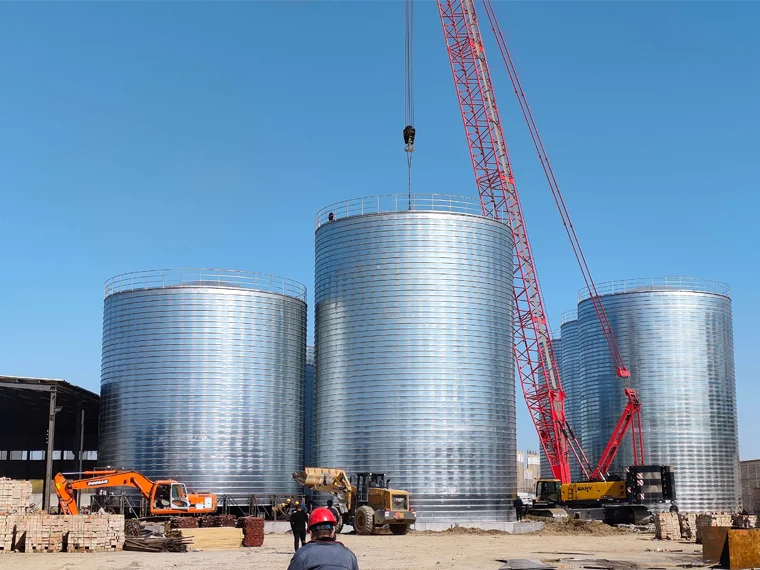
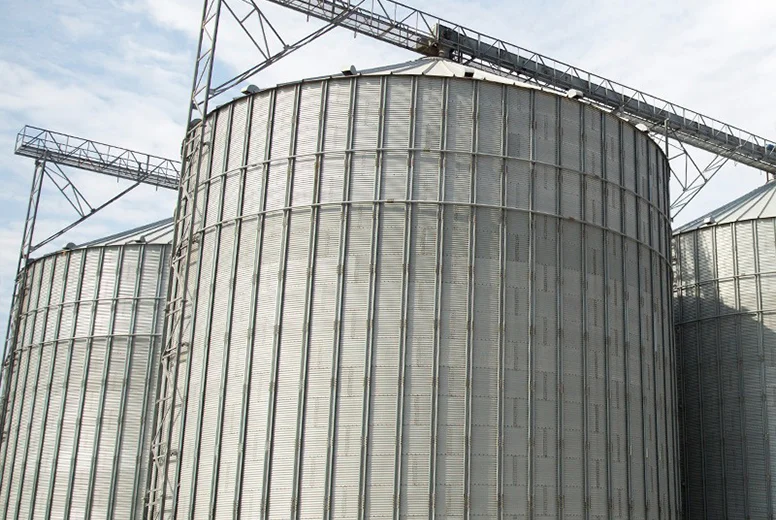
Successful delivery of a flat bottom silo project in Mexico requires end-to-end control from design through installation. Given local logistics and labor conditions, modular design is paramount. Using bolted or spiral-formed steel silos drastically reduces on-site welding time and minimizes high-altitude work risks. For maintenance, the flat bottom is a major advantage: workers can enter the silo with bulldozers or sweepers for easy cleaning, without complex scaffolding. Regular checks of airtightness, galvanized coating integrity, and discharge port wear are key to extending silo life, which can exceed 30 years with proper care.
Frequently Asked Questions
Q: What is the fundamental difference between choosing a flat bottom vs. a cone bottom silo for a project in Mexico?
A: The core difference lies in discharge method and storage purpose. Flat bottom silos excel in large-volume, low-cost storage for materials that turn over slowly, like grain reserves and cement. They require external equipment (front-end loaders) for emptying. Cone bottom silos rely on gravity for complete self-discharge, making them ideal for free-flowing pellets or seeds where total evacuation is needed. In Mexico, most large grain terminals and cement depots use flat bottoms, while feed mills and seed processing plants typically choose cone bottoms for their clean-out efficiency.
Q: What special design considerations are needed for flat bottom silos at high-altitude locations like Mexico City (2,240 meters)?
A: High altitude significantly impacts silo design. Lower air density reduces fan and aeration system efficiency by 15-20%, so motor power must be increased and airflow recalculated. Lower atmospheric pressure also causes internal gases to expand more; the pressure relief valve's opening threshold must be recalibrated to prevent the roof from being lifted. Additionally, intense UV radiation at high altitudes requires roof coatings with superior anti-aging properties to maintain long-term structural integrity.
Q: How can I accurately estimate the return on investment (ROI) for a flat bottom silo project in Mexico?
A: ROI depends primarily on the price spread between harvest and off-season, plus annual turnover. For corn in Mexico, the seasonal price difference can exceed 30%. A 5,000-tonne flat bottom silo turning over twice a year can recover 40-60% of its construction cost (approximately $200,000-$340,000 USD) from price arbitrage alone. Including savings from reduced spoilage and logistics, payback is typically 2-3 years. Be sure to factor in local electricity costs, as aeration and discharge systems can be a significant operational expense.
Q: What are the most common foundation problems for flat bottom silos in Mexico, and how are they solved?
A: The most common issues are differential settlement on soft soils (common in the Valley of Mexico) and volcanic ash deposits. A flat bottom silo's rigid structure is unforgiving of uneven ground. Solutions include soil replacement, deep pile foundations (concrete or steel piles driven to bedrock), or soil improvement techniques like dynamic compaction. A professional geotechnical survey is non-negotiable; skipping this step risks catastrophic structural failure and total project loss.
Q: Can flat bottom silos in Mexico be retrofitted with automation for inventory management and remote monitoring?
A: Yes, absolutely. Modern flat bottom silos are highly compatible with automation. You can integrate load cells for continuous weight measurement, temperature cables for real-time grain condition monitoring, and automated aeration controls that adjust fans based on ambient humidity. These systems can be linked to a central SCADA or cloud-based platform, allowing remote management from anywhere. This is especially valuable for silos in remote agricultural areas of Mexico, reducing the need for on-site personnel and improving operational efficiency.
Need expert flat bottom silo solutions for your Mexican project?
We provide professional design, manufacturing, and installation services for bulk storage and material handling systems worldwide. Our engineering team has over 15 years of experience with overseas projects and is familiar with local standards and construction environments.
Get a Free Technical Consultation →