
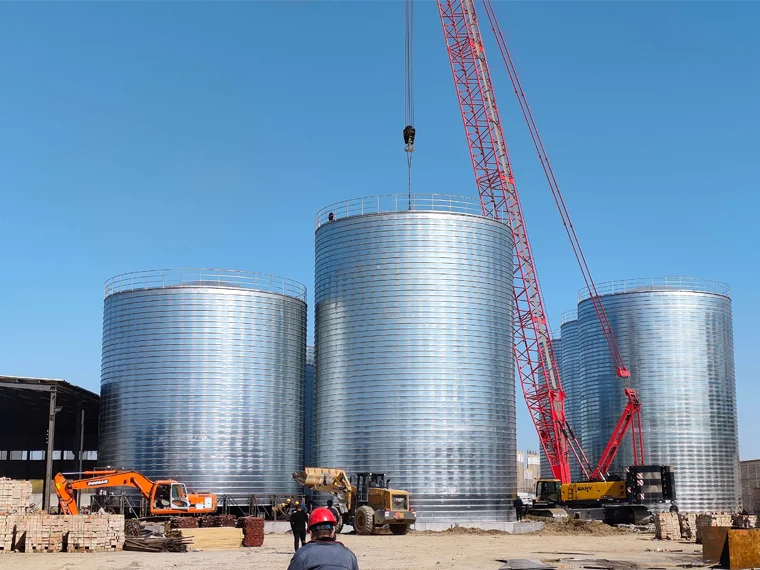
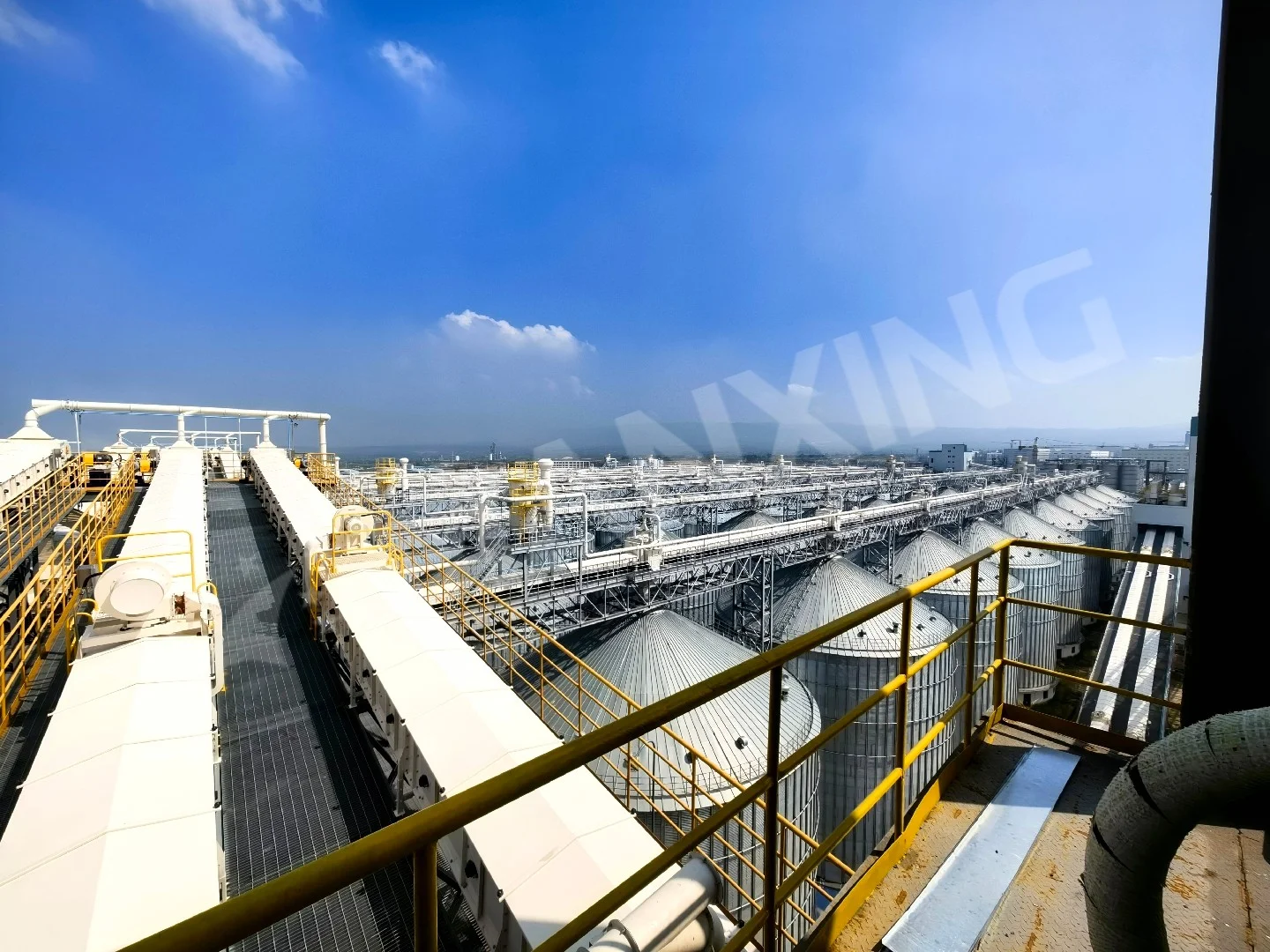


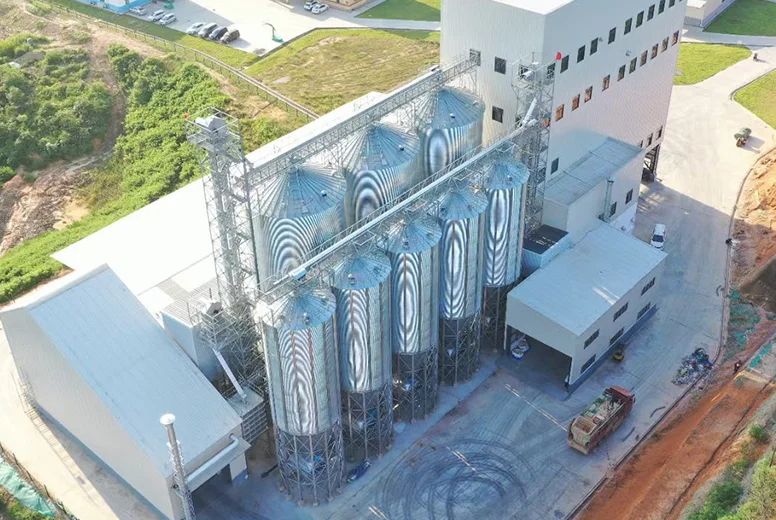
Nigeria’s rapidly expanding agricultural and industrial sectors face a critical storage bottleneck. The hopper bottom silo, with its gravity-assisted discharge, modular design, and exceptional adaptability, is emerging as the key infrastructure solution for improving bulk material storage efficiency and reducing losses across the country. This article explores how this technology is transforming the storage landscape in West Africa’s largest economy.
Why the Hopper Bottom Silo is Central to Nigeria’s Storage Transformation
As one of Africa’s largest economies, Nigeria is experiencing exponential growth in the storage demand for agricultural outputs like corn, sorghum, and cocoa, as well as industrial raw materials such as cement and plastic pellets. Traditional flat-bottom silos and bagged storage methods suffer from low discharge efficiency, material bridging or caking, and high cleaning costs. The hopper bottom silo, characterized by its conical or sloped base, solves these problems by enabling gravity discharge without complex mechanical aids. This design drastically reduces operational labor and energy consumption. In Nigeria’s variable tropical climate, it also minimizes the risk of mold and pest infestation caused by prolonged material retention, directly improving the economic returns of storage. From the industrial zones of Lagos to the agricultural hubs of Kano, the deployment of hopper bottom silos is moving from pilot projects to large-scale application. Their core value lies in optimizing material flow paths, cutting discharge time by 40%–60%, and reducing storage loss rates from the traditional 5%–8% to below 1%. For Nigerian businesses focused on supply chain efficiency, this is not just a technological upgrade—it is a critical lever for cost competitiveness.
Technical Features: Solving Three Major Tropical Storage Challenges
Nigeria’s high temperatures, humidity, and seasonal heavy rains impose stringent demands on storage systems. Hopper bottom silos address these challenges through precise engineering:
1. Gravity Discharge and Anti-Bridging Design
The bottom slope angle of the silo is typically set between 45° and 60°. This angle is optimized through fluid dynamics to ensure that different materials—such as corn, soybeans, and cement powder—slide down smoothly under gravity, completely eliminating “bridging” or “rat-holing” phenomena. Compared to flat-bottom silos that require vibrators or air cannons for assistance, the discharge system of a hopper bottom silo is simpler and has lower maintenance costs. This is especially advantageous in parts of Nigeria where power supply is unstable. The design ensures reliable operation even during power fluctuations, as it relies on gravity rather than electricity for primary discharge.
2. Weather-Resistant Materials and Structural Strength
Silo walls are manufactured from galvanized steel sheets or high-strength steel, treated with anti-corrosion coatings to withstand the high salt spray erosion of Nigeria’s coastal regions and the intense ultraviolet radiation of inland areas. The structure uses a mechanical synergy between annular stiffeners and the conical base to withstand local loads of up to 60 tons, while also accommodating thermal expansion and contraction caused by the large diurnal temperature swings typical of tropical climates. For projects storing corrosive materials like fertilizers, stainless steel or epoxy resin-lined options are available. This robust construction ensures a long service life even under the harshest environmental conditions.
3. Modular Expansion and Flexible Discharge
Hopper bottom silos are typically constructed using bolted connections or spiral crimping technology, giving them a modular nature. Companies can increase storage capacity in phases as their business grows, avoiding a massive one-time capital investment. The discharge outlet can be equipped with manual gate valves, pneumatic butterfly valves, or rotary feeders, and can be integrated with a PLC control system for automated, quantitative, and speed-controlled loading or conveying. This flexibility is crucial in Nigeria’s rapidly changing agricultural market: farmers can quickly expand capacity during harvest season, while processors can precisely control production rhythms. The modular design also simplifies transportation and on-site assembly, reducing installation time and costs.
Key Takeaways
- Key Data: A hopper bottom silo with a 45°–60° cone angle can increase discharge efficiency by over 40% and reduce storage loss rates from the traditional 5%–8% to below 1%.
- Best Practice: In Nigeria’s hot, humid regions, prioritize a galvanized steel sheet + epoxy coating solution. Ensure the silo foundation is raised at least 30 cm above ground level to prevent rainwater backflow.
- Watch Out For: Avoid storing high-moisture corn (above 14%) when the cone bottom angle is less than 45°, as this can easily lead to material caking and discharge blockages.
- Pro Tip: For poorly flowing materials like cocoa powder, consider installing fluidizing bars or an air cushion system at the cone bottom to ensure consistent discharge.
- Bottom Line: A properly designed hopper bottom silo system can deliver a service life of 15–20 years in Nigeria, with a typical payback period of no more than three harvest seasons.
Project Implementation: Full-Cycle Considerations from Design to Operation
Successfully deploying a hopper bottom silo project in Nigeria involves far more than equipment selection. Foundation treatment must be adapted to local soil conditions—for example, in the soft soil areas of the Niger Delta, pile foundations or soil replacement methods are necessary to prevent uneven settlement. Matching the discharge system to the material is equally critical: for materials with poor flowability, such as cocoa powder, installing fluidizing bars or an air cushion system at the cone bottom is recommended. Given the frequent grid fluctuations in parts of Nigeria, it is also advisable to equip the system with a backup power interface or a manual emergency discharge device. On the maintenance side, regularly inspecting the corrosion condition of cone bottom welds and cleaning dust accumulation at the discharge outlet are key to ensuring long-term, stable system operation. Experience shows that a well-designed hopper bottom silo system can have a service life of 15–20 years in Nigeria, with an investment payback period typically not exceeding three harvest seasons.
Frequently Asked Questions
Q: How can a hopper bottom silo prevent material from getting damp during Nigeria’s rainy season?
A: The key lies in the silo’s sealing design and ventilation system. The top should be fitted with a feed inlet cover equipped with a sealing gasket, and a passive or mechanical ventilation cap should be installed on the silo roof to expel hot, humid air using the stack effect. The connection between the silo wall and the foundation must be treated with waterproof membrane. For high-humidity areas, it is recommended to add a dehumidification unit or a hot air drying system near the cone bottom discharge outlet to ensure the material’s moisture content is within acceptable limits before discharge. This multi-layered approach is essential for protecting stored grain and other hygroscopic materials.
Q: What are the cost and performance differences between a hopper bottom silo and a spiral silo?
A: Spiral silos are generally used for large-capacity, low-cost grain storage. Their walls are continuously rolled, providing excellent sealing but making cone bottom modification difficult. The cone bottom structure of a hopper bottom silo increases steel usage by approximately 15%–25%, resulting in a higher initial investment. However, its gravity discharge characteristic saves ongoing mechanical maintenance and labor costs. In terms of performance, the hopper bottom silo is better suited for multi-product, small-batch material changes, such as those found in feed mills, while the spiral silo is more appropriate for long-term, single-product bulk storage. The choice should be based on a comprehensive assessment of material type, discharge frequency, and budget.
Q: What key capabilities should I look for when evaluating a hopper bottom silo supplier in Nigeria?
A: First, the supplier must hold international certifications such as ISO 9001 or CE and provide verifiable local project case studies. Second, assess whether they offer a full-cycle service that includes geological survey, foundation design, structural engineering, and on-site installation supervision—not just equipment supply. Third, inquire about their after-sales support network in Nigeria, including the availability of spare parts and local technical staff. A supplier with deep local experience will also be able to advise on customs clearance, transportation logistics for large components, and compliance with Nigerian building codes.
Q: Can hopper bottom silos be integrated with existing automated conveying and loading systems?
A: Yes, absolutely. The discharge outlet of a hopper bottom silo can be equipped with various valves—such as manual gate valves, pneumatic butterfly valves, or rotary feeders—that are fully compatible with PLC control systems. This allows for seamless integration with belt conveyors, screw conveyors, or truck loading spouts. The system can be programmed for quantitative, speed-controlled discharge, enabling automated batching or loading. This level of integration is particularly valuable for cement terminals, feed mills, and grain processing plants looking to optimize their entire material handling workflow from storage to dispatch.
Q: What is the typical timeline for a hopper bottom silo project from order to commissioning in Nigeria?
A: The timeline depends on project complexity and site conditions, but a typical schedule is 8–14 weeks. This includes 2–3 weeks for engineering design and foundation preparation, 4–6 weeks for manufacturing and shipping (including customs clearance), and 2–4 weeks for on-site erection and commissioning. Factors that can extend the timeline include challenging soil conditions requiring specialized foundation work, delays in obtaining local permits, or logistical bottlenecks at ports. A reputable supplier will provide a detailed project schedule and assign a project manager to coordinate all phases, helping to mitigate these risks.
Need expert manxingsilo solutions for your project?
We provide professional design, manufacturing, and installation services for bulk storage and material handling systems worldwide, with extensive experience in tropical climates like Nigeria.
Get a Free Technical Consultation →