
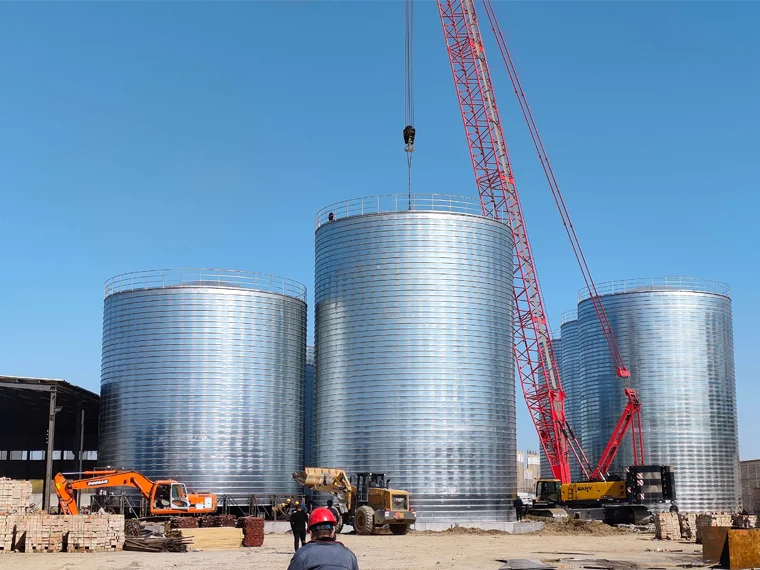
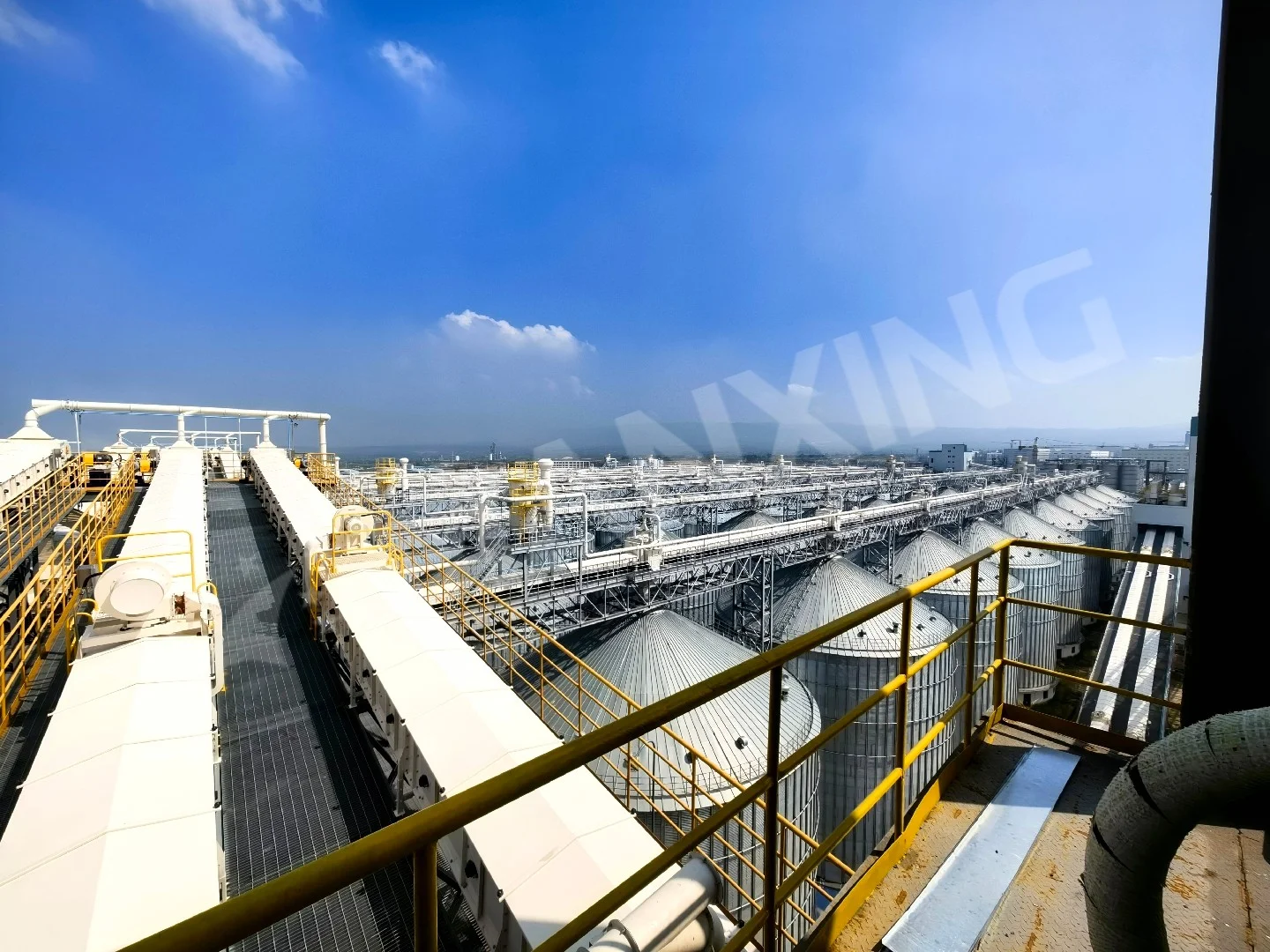


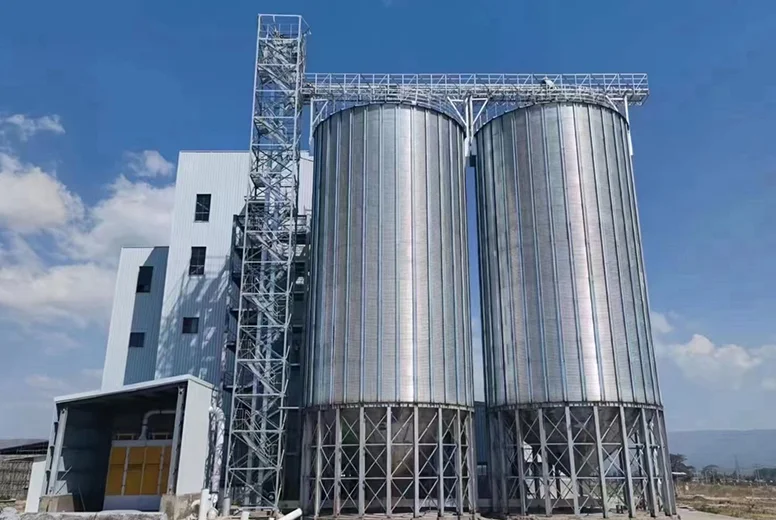
Argentina, a global agricultural powerhouse, is undergoing a silent revolution in grain storage infrastructure. Hopper bottom steel silos, with their gravity-assisted discharge, high-efficiency unloading, and modular design, are fundamentally transforming how soybeans, corn, and wheat are stored and transshipped across the nation. Drawing on 15 years of industry experience, this article provides an in-depth analysis of the application advantages, critical design parameters, and common pitfalls of this technology within Argentina’s unique climate and industrial landscape.
The Strategic Advantage of Hopper Bottom Steel Silos in Argentina’s Agriculture and Industry
Argentina’s vast territory spans from the humid plains of the Pampas to the arid foothills of the Andes, creating significant climatic diversity. Traditional flat-bottom silos often require manual cleaning or mechanical assistance during discharge, leading to inefficiency and higher operational costs. Hop
per bottom steel silos, featuring a conical discharge hopper angled between 45° and 60°, achieve complete gravity-assisted self-discharge, with residual material rates controllable to below 0.5%. This characteristic is critical for Argentina’s high-volume, high-turnover grain export system—it can reduce unloading times by over 30% while minimizing the risk of cross-contamination.In the industrial sector, these silos are equally well-suited for storing bulk materials such as cement, mineral powders, and plastic pellets. Argentina’s mining and construction materials industries are progressively phasing out aging concrete silos in favor of corrosion-resistant, rapidly deployable galvanized steel silos. According to industry surveys, over 40% of new steel silo projects in Argentina in 2023 adopted a hopper bottom design, a trend that continues to rise.
Core Technical Parameters and Selection Criteria for Hopper Bottom Silos
Selecting a hopper bottom steel silo is not a simple purchase; it requires a systematic design approach based on material characteristics, site conditions, and climate factors. Here are three core technical points that must be addressed:
Precise Calculation of the Discharge Hopper Angle
The internal friction angle of the material determines the minimum required hopper angle. For example, common Argentine soybeans (with a moisture content below 13%) have an internal friction angle of approximately 28°, making a 45° hopper sufficient for smooth discharge. However, for corn (especially high-moisture corn) or mineral powders treated with anti-caking agents, a steeper angle of 55° or even 60° may be necessary. Inadequate design can lead to "bridging" or "rat-holing" phenomena, which in severe cases requires a shutdown for cleaning.
Corrosion Protection Coating and Climate Adaptation
In certain regions of Argentina, such as Buenos Aires Province, high humidity and saline-alkaline environments are prevalent. Standard galvanized coatings (Z275) may show signs of rust within 5-7 years. For coastal or high-humidity projects, a Z600 or higher galvanized coating, or an additional polyurethane topcoat, is recommended. Furthermore, the ventilation system on the silo roof must be equipped with rainproof louvers and insect screens to prevent condensation buildup and subsequent mold growth.
Key Takeaways
- Key Data: A 45°-60° cone angle can reduce material residue by over 95% and improve discharge efficiency by 30%-50%.
- Best Practice: In Argentina’s rainy regions, install temperature monitoring and forced ventilation systems on the silo roof to prevent grain condensation.
- Watch Out For: Never select the discharge angle based on experience alone; always conduct an angle of repose test for the specific material to avoid wasted investment.
- Pro Tip: For high-oil-content soybeans (>20%), consider a 60° cone angle and a food-grade anti-stick coating like PTFE to prevent oil seepage and material adhesion.
- Bottom Line: Hopper bottom silos are not just a storage upgrade; they are a strategic investment in operational efficiency for Argentina’s export-driven bulk handling sectors.
Implementation and Maintenance Strategies for Argentine Hopper Bottom Silo Projects
Implementing a hopper bottom silo project in Argentina requires careful attention to local supply chains and construction conditions. As most high-strength steel plates need to be imported (e.g., from China or Brazil), it is advisable to secure orders 3-6 months in advance and account for shipping lead times. For foundation work, expansive soils are a known issue in northern Argentina. Foundation designs must incorporate piling or soil replacement to prevent uneven settlement and subsequent silo deformation. For maintenance, the wear on the discharge cone should be inspected quarterly—especially when handling ores or aggregates. Installing wear-resistant liners (such as UHMWPE or ceramic tiles) on the inner wall of the cone can extend its service life to over 10 years.
For grain storage projects, it is recommended to install pneumatic assist devices (such as air cannons or vibrators) at the silo bottom to handle material caking under extreme conditions (e.g., high-moisture seasons). Additionally, power supply in remote Argentine farms can be unstable. The design should include a manual emergency discharge port to ensure basic unloading operations can still be performed during a power outage.
Frequently Asked Questions
Q: Is a hopper bottom silo suitable for storing high-oil Argentine soybeans (e.g., with an oil content greater than 20%)?
A: Yes, but with special precautions. High-oil soybeans are prone to oil seepage during storage, which can cause material adhesion to the walls. A cone angle of 60° or more is recommended, along with a food-grade anti-stick coating (e.g., PTFE) on the silo walls. Furthermore, the silo should be equipped with multi-point temperature sensors. If a local temperature rise exceeding 35°C is detected, immediate grain transfer operations should be initiated. In this application, the residue problem with flat-bottom silos is often more severe, making the hopper bottom design a superior choice.
Q: Compared to concrete silos, how much total cost can be saved by installing a hopper bottom steel silo in Argentina?
A: Based on statistics from over 30 projects we have participated in across Argentina, the total cost of a steel hopper bottom silo (including foundation, installation, and transport) is typically 25% to 40% lower than that of a concrete silo of equivalent capacity. However, the more significant advantage is in time: the construction period for a concrete silo is about 6-8 months, whereas a steel silo can be completed in just 1-2 months. For export-oriented farms or ports that need to be operational quickly, the revenue gained from this time advantage often far exceeds the material cost difference. That said, concrete silos offer superior fire resistance and wind load capacity. In provinces with frequent thunderstorms, such as Córdoba, it is advisable to add extra lightning protection systems and wind tie-downs to steel silos.
Q: What are the most common causes of bridging or rat-holing in hopper bottom silos used for Argentine corn?
A: The primary cause is an insufficient hopper angle for the specific moisture content and physical properties of the corn. High-moisture corn, common during the harvest season, has a higher internal friction angle and is more cohesive. If the hopper angle is designed for dry corn (e.g., 45°), it will be inadequate for wetter loads. Another factor is prolonged storage without turnover, which allows the material to compact. A third cause is the presence of foreign materials like broken cobs or fines, which can create a stable arch. To mitigate this, always design for the worst-case moisture scenario, and consider installing air cannons or vibrators as a proactive measure.
Q: Can hopper bottom silos be used for storing cement or mineral powders in Argentina’s industrial sector, and what modifications are needed?
A: Absolutely. These silos are increasingly popular in Argentina’s mining and construction material sectors. The key modifications involve the discharge system. For cohesive powders like cement, a steeper hopper angle (often 60° or more) is required, and the use of aeration pads or fluidizing cones at the hopper outlet is standard to promote flow. The hopper must be designed to handle the material’s bulk density and abrasiveness. For abrasive materials, installing wear-resistant liners is critical. Additionally, the entire silo system must be sealed and equipped with dust collection to comply with environmental and safety regulations.
Q: What specific foundation challenges exist for hopper bottom silos in northern Argentina, and how are they addressed?
A: The primary challenge in northern Argentina is expansive (swelling) soil. These soils undergo significant volume changes with moisture fluctuations, which can cause differential settlement and structural damage to the silo. The standard solution is to use a deep foundation system, such as driven piles or drilled piers, that extends below the active zone of the expansive soil to a stable bearing stratum. Alternatively, soil replacement—excavating the expansive soil and replacing it with a compacted, non-expansive fill—can be effective for smaller silos. A proper geotechnical investigation is non-negotiable before any foundation design begins.
Need a professional hopper bottom silo solution for your project in Argentina?
We provide end-to-end services—from material analysis and structural design to manufacturing and on-site installation in Argentina. With 15 years of industry experience and over 200 international projects completed, we deliver reliable, efficient storage systems.
Get a Free Technical Consultation →