
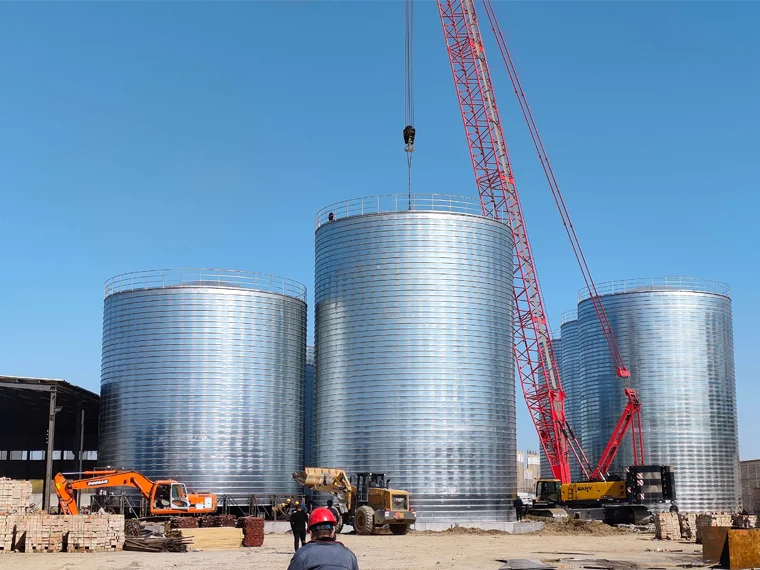
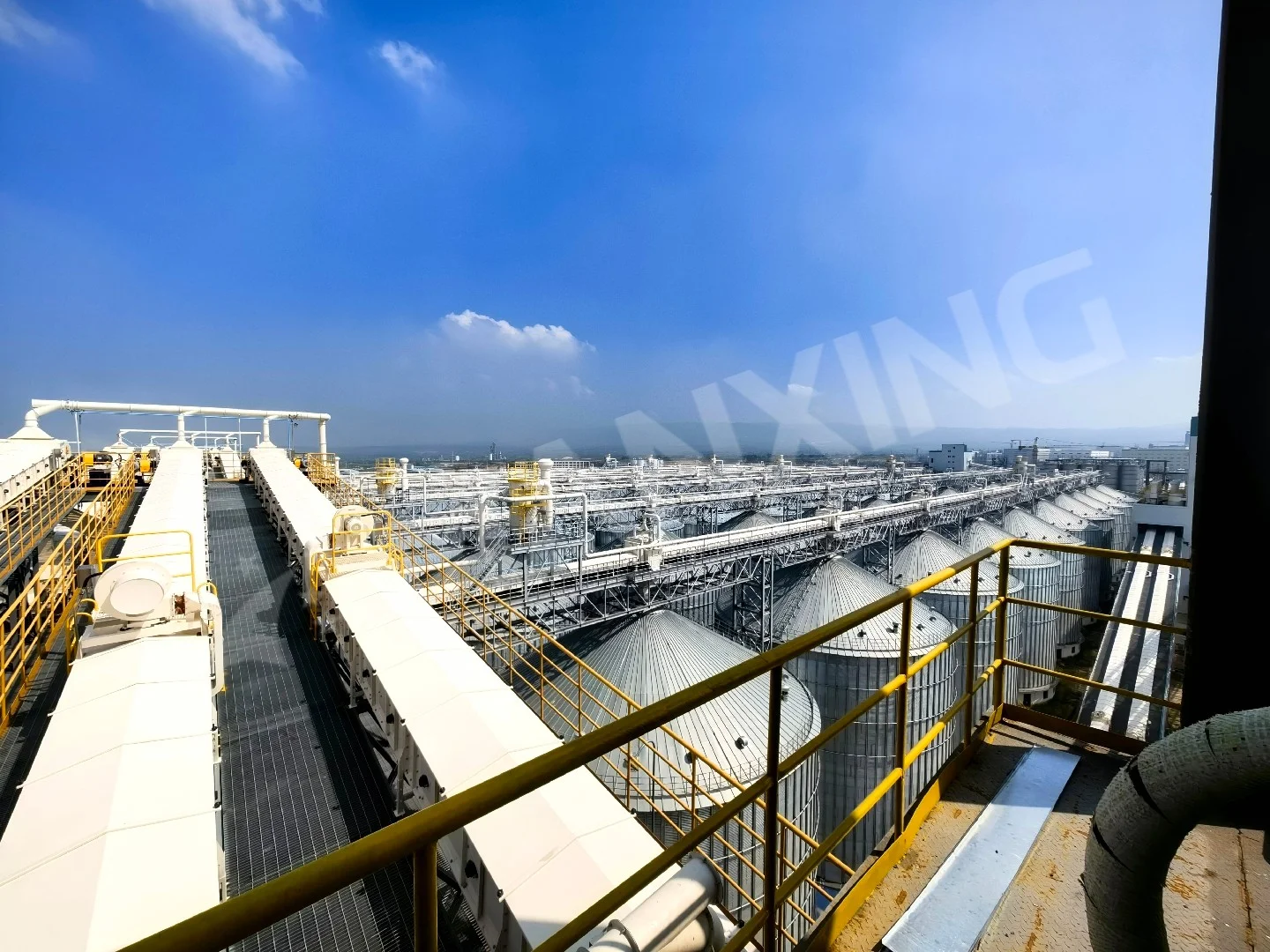


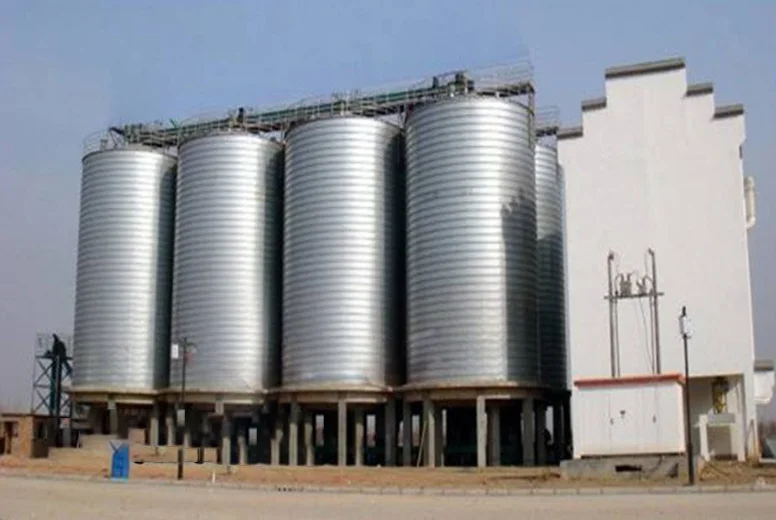
Concrete silo installation is a highly specialized engineering service that delivers ultra-large storage structures with decades of service life through precision slipform or jump-form construction techniques. For the cement, grain, and bulk material industries, selecting the right installation service directly impacts storage durability, operational efficiency, and long-term maintenance costs. This guide provides an in-depth look at the core features, engineering advantages, and critical success factors of professional concrete silo installation.
Core Features and Engineering Advantages of Concrete Silo Installation Services
Concrete silos are the preferred choice for large-scale industrial storage due to their unique material and structural benefits. Professional installation teams employ high-strength reinforced concrete technology to ensure the silo can withstand extreme environmental loads—including high winds, seismic activity, and lateral pressures from thousands of tons of stored material. Unlike steel silos, concrete structures offer inherent fire resistance, explosion resistance, and corrosion protection, making them ideal for storing cement, clinker, and fertilizers that demand stringent sealing performance.
Modern installation services emphasize the combination of "customized design" and "modular construction." Whether it is a small farm silo with a 6-meter diameter or an industrial-grade storage unit exceeding 30 meters in diameter, installation teams can provide cylindrical, rectangular, or specially shaped cross-section designs based on the client's geological conditions, material characteristics, and site constraints. This flexibility allows concrete silos to be seamlessly integrated into existing production lines, maximizing land utilization.
Solving Three Key Challenges in Concrete Silo Installation
The success of concrete silo installation often depends on meticulous control of construction details. Experienced service providers address industry pain points with the following solutions:
Slipform Construction and Structural Integrity Assurance
Slipform technology is the core process for large concrete silo installation. Through continuous pouring and uniform lifting of the formwork, a seamless, monolithic wall is created, fundamentally eliminating cold joints and leakage risks associated with traditional segmented pouring. Professional teams must precisely control the concrete's initial setting time and the slipform lifting speed, ensuring that verticality deviation of the silo wall is controlled within one-thousandth of the structure's height.
Eco-Friendly Construction and Dust Control
To meet the stringent cleanliness requirements of the cement and grain industries, modern installation services incorporate low-dust mixing systems and enclosed conveying pipelines. Inside the silo body, pre-embedded sealing strips and waterproof coatings effectively prevent material moisture absorption and caking. During construction, the use of reusable steel formwork and zero-wastewater discharge technology reduces construction waste by more than 30%.
Complex Foundation Treatment and Long-Term Stability
For soft soil foundations or high seismic intensity zones, installation services must include deep foundation reinforcement. Through the design of cast-in-place piles or raft foundations, the silo load is evenly transferred to the bearing stratum. Additionally, ring-shaped temperature-sensing optical fibers and strain sensors are installed at the silo base to enable real-time monitoring of structural health during operation.
Key Takeaways
- Key Data: Concrete silos constructed using slipform technology have a design service life exceeding 50 years, which is 2-3 times that of steel silos.
- Best Practice: Conduct concrete mix design tests for at least 30 days before installation to ensure strength meets requirements under specific temperature and humidity conditions.
- Watch Out For: Avoid pouring silo walls during winter low temperatures or the rainy season, as this can lead to insufficient concrete strength and surface cracking.
- Pro Tip: Prefabricate accessories like discharge cones, ladders, and pipe supports in the factory to significantly reduce on-site installation time and improve quality control.
- Bottom Line: While concrete silos have a higher initial investment, their extremely low maintenance costs—typically requiring only a waterproof coating renewal every 10 years—make them more cost-effective over a 20+ year lifecycle. Related: Flat bottom silo with long service life >
Industry Applications and Differentiated Value of Concrete Silos
In the agricultural sector, concrete silos equipped with intelligent ventilation and temperature monitoring systems can reduce grain storage loss rates from the 5% typical of traditional warehouses to below 0.5%. For the cement and building materials industry, the high sealing performance ensures that powdered materials do not cake due to moisture absorption during long-term storage, thereby guaranteeing the continuity of downstream production. Furthermore, in the chemical and mining industries, concrete silos can resist acid and alkali corrosion, making them suitable for storing special materials like phosphate fertilizers and pulverized coal.
Compared to spiral wound silos or bolted silos, concrete silos have a higher initial investment but offer significantly lower maintenance costs—typically requiring only an external waterproof coating renewal every 10 years. For large plants requiring over 20 years of operation, the total lifecycle cost is actually more advantageous.
Frequently Asked Questions
Q: How long does a typical concrete silo installation project take, and how can the timeline be shortened?
A: For a standard silo with a 15-meter diameter and 30-meter height, the installation period using slipform construction is approximately 45-60 days. The key to shortening the timeline lies in prefabrication: accessories like discharge cones, ladders, and pipe supports are manufactured in the factory in advance, requiring only hoisting and welding on-site. Additionally, using a double-slipform process (sliding both the inner and outer walls simultaneously) can compress the construction period by 30%. However, it is crucial to note that excessive schedule pressure can compromise concrete curing quality, so it is recommended to work with a professional service provider to develop a realistic milestone plan.
Q: After concrete silo installation, how is the sealing performance and structural safety verified?
A: The acceptance process is divided into two stages. The first stage is an airtightness test: the silo is sealed, and low-pressure air (approximately 500 Pa) is injected. The pressure drop is monitored over 24 hours, with the acceptable standard being a drop of no more than 15%. The second stage is a structural load test: water or material is added in stages up to 120% of the design load, while a total station monitors the radial displacement of the silo wall. For grain silos, an additional fumigation gas leak detection test is required to ensure the seal meets food safety standards.
Q: What is the difference in foundation requirements between a concrete silo and a steel silo?
A: Concrete silos are significantly heavier than steel silos, placing much higher demands on foundation bearing capacity. A concrete silo typically requires a deep foundation system, such as a pile foundation or a thick raft foundation, to distribute the massive dead load and live load evenly. In contrast, a steel silo, being lighter, can often be supported by a ring beam foundation on well-compacted soil. For concrete silos, a thorough geotechnical investigation is non-negotiable, and soil improvement (e.g., dynamic compaction or grouting) is often necessary for soft ground to prevent differential settlement.
Q: Can a concrete silo be expanded or modified after its initial installation?
A: While it is technically possible to modify a concrete silo, it is far more complex and costly than modifying a steel silo. Adding height to an existing concrete silo involves coring and connecting new rebar to the old structure, which requires careful structural analysis to ensure the existing foundation and walls can handle the additional load. Retrofitting to change the discharge system or add new inlets often requires cutting openings in the concrete walls, which must be reinforced with steel collars. For this reason, it is highly recommended to plan for future capacity needs during the initial design phase.
Q: What are the key quality control points during the slipform construction of a concrete silo?
A: The three most critical quality control points during slipform construction are concrete consistency, lifting speed, and verticality. First, the concrete mix must have a consistent slump to ensure it flows properly within the formwork without setting too quickly or too slowly. Second, the lifting speed of the slipform system must be precisely matched to the concrete's setting time—too fast and the green concrete may collapse; too slow and it may bond to the formwork. Third, continuous laser or theodolite monitoring is required to maintain verticality, with the deviation typically limited to 1/1000 of the structure's height. Any deviation must be corrected incrementally during the lift.
Q: What is the role of concrete additives in silo construction, and are they always necessary?
A: Concrete additives are not always mandatory, but they are highly recommended for silo construction to address specific challenges. For slipform construction, a set-retarding admixture is often used to control the concrete's setting time, preventing it from hardening too quickly inside the formwork. In cold climates, an accelerating admixture or antifreeze agent may be necessary to maintain strength gain. For high-sealing applications, a waterproofing admixture can be added to the mix to reduce permeability. The decision to use additives should be based on the project's specific environmental conditions and performance requirements, and the mix design should be validated through trial batches.
Need professional concrete silo installation solutions for your project?
We provide one-stop services from geological survey and foundation design to slipform construction and intelligent monitoring. With 20 years of industry experience and over 500 silos delivered across cement, grain, and chemical sectors, we ensure your storage infrastructure is built to last.
Get a Free Technical Consultation →